
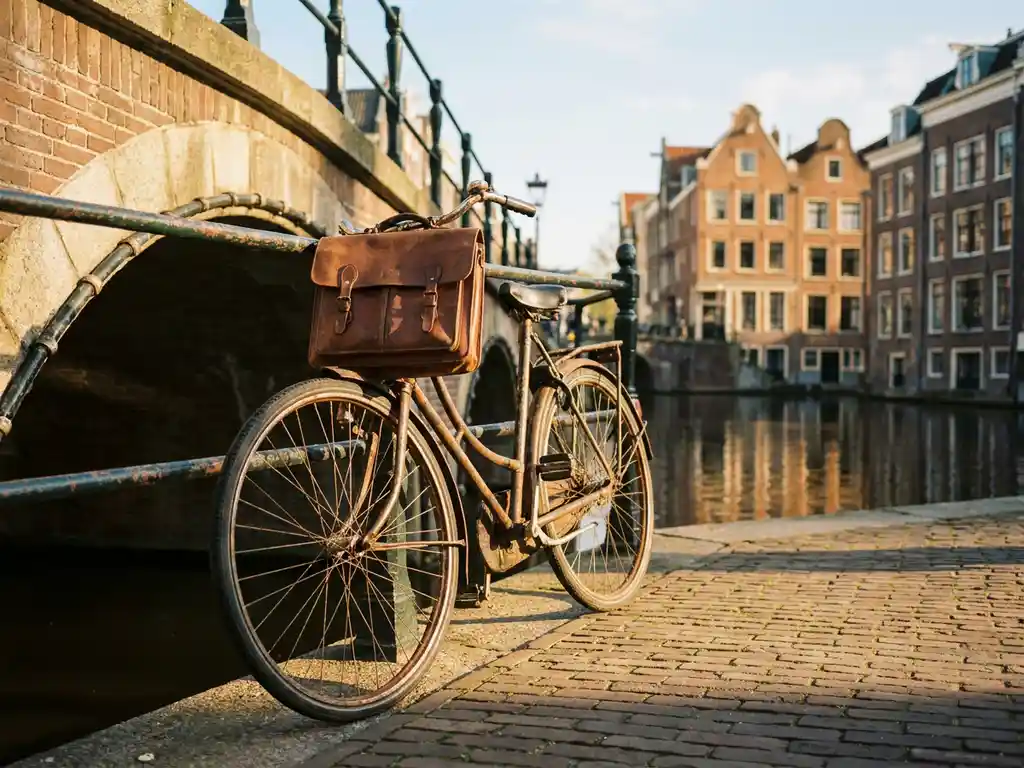
You can find a cheap hotel in Amsterdam without sacrificing location by targeting neighbourhoods just outside the historic centre — places like De Pijp, Oud-West, and the Jordaan fringes — where prices drop noticeably but you are still within easy cycling or walking distance of everything worth seeing. The key insight is that Amsterdam is a compact city, so “off-centre” rarely means inconvenient. The sections below walk through every practical angle: neighbourhoods, timing, booking strategy, hidden costs, and accommodation types.
What counts as a good location in Amsterdam for a hotel?
A good location in Amsterdam means being within 20 to 30 minutes of the major sights, restaurants, and transport links — on foot or by bike. Given how small the city is, that radius covers an enormous amount of ground. You do not need to sleep on top of Dam Square to feel like you are in the heart of things.
The most overrated hotel location in Amsterdam is the area immediately around Centraal Station and the Red Light District. Yes, it is central on a map. But it is also loud, crowded, and not remotely representative of what Amsterdam actually feels like to live in. Staying there puts you in the tourist bubble, not the city.
A genuinely good location means easy tram or metro access, a neighbourhood with actual bakeries and brown cafes nearby, and ideally a spot where you can rent a bike and reach the Rijksmuseum, the Jordaan, or the Vondelpark in under fifteen minutes. That description fits several neighbourhoods that cost significantly less than the canal belt.
Which Amsterdam neighbourhoods offer the best value for hotels?
De Pijp, Oud-West, and Amsterdam-Oost consistently offer the best value for budget-conscious visitors who still want a genuine Amsterdam experience. These are real neighbourhoods where locals actually live, eat, and drink — and hotel prices there tend to be meaningfully lower than in the canal ring or the Museum Quarter.
De Pijp
De Pijp is arguably the most liveable neighbourhood in Amsterdam right now. The Albert Cuyp market runs through the middle of it, the restaurant scene is excellent, and it is one tram stop from Museumplein. Hotels here are cheaper than in the Grachtengordel, and the trade-off in convenience is minimal. For anyone who wants to feel like a local rather than a tourist, this is the best neighbourhood to base yourself in.
Oud-West and Amsterdam-Oost
Oud-West sits just west of the Vondelpark and is packed with independent coffee bars, good food, and a relaxed atmosphere. Amsterdam-Oost, particularly around the Indische Buurt and Dappermarkt, has become one of the most culturally interesting parts of the city over the past decade. Both areas have seen budget and mid-range hotel options open up as Amsterdam’s accommodation market has spread outward. Prices in these neighbourhoods can be 20 to 40 percent lower than equivalent rooms in the canal belt, for a comparable or better street-level experience.
When is the cheapest time to book a hotel in Amsterdam?
The cheapest time to stay in Amsterdam is during late January, February, and the first half of March — after the holiday period ends and before spring tourism picks up. November and early December (excluding the holiday run-up) also offer relatively low rates. Avoiding King’s Day in late April, summer school holidays, and major conference weeks will save you a significant amount.
Amsterdam has a fairly predictable tourism calendar. Summer — particularly July and August — is peak season, and prices reflect that. Spring tulip season (late March through May) is another high-demand window, especially around King’s Day on April 27th, when the city fills up and accommodation prices spike sharply. If your travel dates are flexible, the shoulder seasons of late autumn and deep winter offer the best combination of lower prices and a more authentic, less crowded city experience. Winter Amsterdam, with its canal reflections and quieter streets, is genuinely beautiful and deeply underrated.
Booking timing also matters. Last-minute deals can occasionally appear on platforms, but Amsterdam is a popular enough destination that waiting too long usually means paying more or accepting limited options. Booking four to eight weeks in advance for off-peak travel, or three to four months ahead for peak periods, tends to hit the sweet spot.
What’s the difference between booking direct and using a platform?
Booking directly with a hotel often gets you a better rate, more flexible cancellation terms, and occasional perks like room upgrades or free breakfast — because the hotel avoids paying commission to a platform. Booking platforms offer convenience, price comparison across many properties, and buyer protection, but the listed price includes that commission baked in.
The practical advice is to use platforms for discovery and comparison, then check whether the hotel’s own website offers a direct-booking rate. Many Amsterdam hotels — particularly independent boutique properties — will match or beat a platform price if you contact them directly or book through their site. It is worth the two minutes it takes to check.
One important caveat: platform reviews are genuinely useful for cheap hotels in Amsterdam, where quality can vary considerably. A hotel that looks fine in photos but has a pattern of complaints about noise, cleanliness, or misleading location descriptions is worth avoiding regardless of price. Read the recent reviews, not just the headline score.
What hidden costs make a cheap Amsterdam hotel more expensive?
The most common hidden costs in Amsterdam hotels are tourist tax, breakfast add-ons, city centre parking, and resort or facility fees. Amsterdam’s tourist tax is charged per person per night and is not always included in the advertised room rate — it is worth checking whether the price you see is the price you will actually pay at checkout.
Breakfast is another area where cheap hotels quietly inflate the bill. A hotel that charges a low room rate but adds a compulsory or heavily pushed breakfast at inflated prices is not actually cheap. Amsterdam has excellent bakeries, markets, and cafes where you can eat far better for a fraction of the price. Skip the hotel breakfast almost every time.
If you are arriving by car, parking in central Amsterdam is extraordinarily expensive — among the most costly in Europe. Factor that in from the start. Hotels with parking facilities in the centre charge premium rates for it, and street parking is tightly controlled. Staying slightly further out, near a park-and-ride facility or a metro stop, can make a meaningful difference to your total trip cost.
Should you stay in a hostel, apartment, or budget hotel in Amsterdam?
The right choice depends on how you travel. Hostels offer the lowest nightly rate and are a good fit for solo travellers or those who want social connection. Apartments suit groups or longer stays where having a kitchen saves money on food. Budget hotels offer the most predictable experience with fewer trade-offs for short trips of two to four nights.
Amsterdam has a strong hostel scene, and several well-run options sit in genuinely good locations. The social atmosphere in a good hostel is a real feature, not just a compromise. For solo travellers on a tight budget, a reputable Amsterdam hostel in De Pijp or Oud-West will almost always beat a budget hotel on price and often on experience.
Apartments via short-term rental platforms are worth considering for groups of three or more, or for stays of five nights or longer. The per-person cost drops sharply, and having your own kitchen and living space changes the rhythm of a trip. Be aware that Amsterdam has tightened its short-term rental regulations considerably, so stick to listings that are clearly compliant and well-reviewed.
Budget hotels in Amsterdam range from genuinely good value to disappointing. The difference usually comes down to management quality and location honesty. A small, independently run budget hotel in a real neighbourhood, with honest reviews and transparent pricing, will almost always outperform a chain budget property near the station on both value and experience.
How Klagen Niet Klagen helps you find your way around Amsterdam
Finding a cheap hotel is one piece of the puzzle. Knowing which neighbourhoods are actually worth your time, what Amsterdam is like beyond the tourist layer, and how to get the most out of the city once you arrive — that is where most travel content falls short. Klagen Niet Klagen exists to fill that gap.
- Honest, insider commentary on Amsterdam neighbourhoods — written by someone who has lived and worked here for over three decades
- No tourism-board polish, no advertorial pressure — just a genuine point of view on what makes Amsterdam worth visiting and what makes it complicated
- Long-form essays and opinion pieces that give you the cultural and social context no hotel website will ever provide
- A perspective that covers the city’s contradictions honestly — the parts that are brilliant and the parts that are genuinely frustrating
If you want to understand Amsterdam before you arrive, or make sense of it after you leave, the blog archive is a good place to start. Read a few pieces and you will arrive in the city with a much sharper sense of what you are actually looking at.
And while you are planning your trip, put one evening aside for Boom Chicago. It is the comedy institution Andrew Moskos co-founded in Amsterdam back in 1993, and it has been making locals and visitors laugh ever since. An evening of sharp, live improvisation comedy is one of the best Amsterdam experiences you can book — and it happens to be a great way to understand the Dutch sense of humour from the inside. If you want to find out what is on, the shows and agenda page has everything you need.