
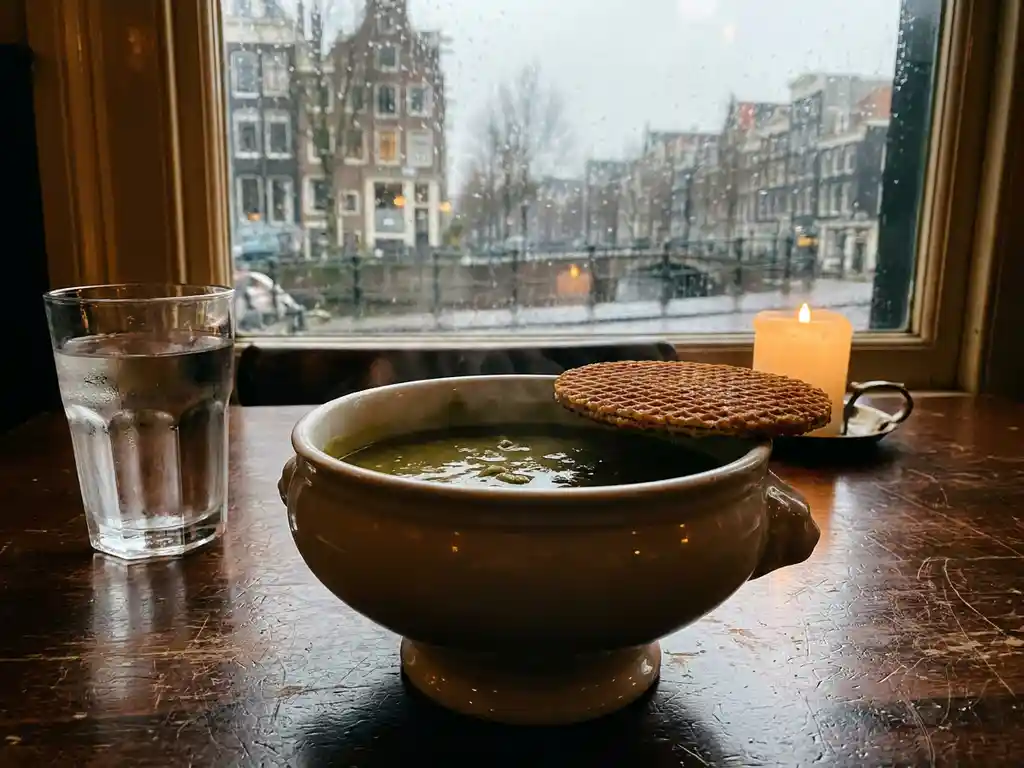
Where do locals actually eat cheaply in Amsterdam?
Locals eat cheaply in Amsterdam by avoiding the tourist corridors entirely and gravitating toward neighbourhood spots, street food stalls, and canteen-style eateries that never appear in travel roundups. The city centre is a trap for your wallet. Once you step outside it, prices drop noticeably and quality often improves.
The most reliable cheap-eat formats you will find locals using day to day include:
- Broodjeszaken — Dutch sandwich shops serving freshly made rolls for a few euros. These are the true backbone of the Amsterdam lunch scene and are wildly underrated.
- Surinamese and Indonesian takeaways — Amsterdam’s colonial history left behind an extraordinary food legacy. A plate of rice, vegetables, and protein from a Surinamese snackbar or Indonesian warung is filling, flavourful, and genuinely affordable.
- Bakeries with savoury pastries — Turkish and Moroccan bakeries, particularly in the Oud-West and Bos en Lommer areas, sell freshly baked börek, gözleme, and filled breads that make for an excellent cheap meal.
- Kroket and snack bars — The Dutch frituur culture is real and proud. A kroket from a wall vending machine or a broodje kroket from a snack bar is a local institution, not a guilty pleasure.
The key insight for newcomers is that Amsterdam’s affordable food culture is tied closely to its immigrant communities. The city’s diverse population has created a parallel food economy that runs entirely on value, flavour, and repeat custom rather than tourist footfall.
What types of cuisine offer the best value in Amsterdam?
Surinamese, Indonesian, Turkish, and Moroccan cuisines consistently offer the best value for money in Amsterdam. These cuisines are deeply embedded in the city’s food culture, served in no-frills settings, and priced for a local clientele rather than a tourist one. Dutch street food, particularly fried snacks and herring, also punches well above its price point.
Here is a practical breakdown by cuisine and what to look for:
- Surinamese: Look for roti (flatbread with curried meat and vegetables) or moksi alesi (rice with mixed proteins). Portions are generous and prices are honest.
- Indonesian: A rijsttafel at a tourist restaurant is expensive. A simple nasi goreng or babi pangang from a neighbourhood Indonesian takeaway is not. The difference is the setting, not the food.
- Turkish: Lahmacun, pide, and doner wraps from Turkish snack bars in the west of the city are some of the best value meals in Amsterdam, full stop.
- Dutch street food: Raw herring (haring) from a fishmonger stall is a genuine Amsterdam experience and costs very little. Stroopwafels, poffertjes, and bitterballen from market stalls are similarly affordable.
What these cuisines share is a tradition of feeding working people well and cheaply. That tradition has not disappeared in Amsterdam, it has just moved away from the postcard streets.
How do you use Amsterdam’s markets to eat well on a budget?
Amsterdam’s markets are one of the most effective tools a newcomer has for eating well on a budget. Markets combine fresh produce at lower-than-supermarket prices with hot food stalls, street snacks, and baked goods that can substitute for a full meal. The Albert Cuyp Market in De Pijp is the most famous and genuinely delivers on its reputation for affordable, diverse street food.
Beyond Albert Cuyp, the markets worth knowing for food value include:
- Dappermarkt in Oost — considered by many locals to be the most authentic and affordable daily market in the city. The food stalls here reflect the neighbourhood’s diverse population, and the prices are correspondingly low.
- Westermarkt and Noordermarkt — the Saturday Noordermarkt in particular has a farmers’ market section with excellent cheese, bread, and produce that rewards early arrivals.
- Ten Katemarkt in Oud-West — a neighbourhood market with a loyal local following, strong on fresh produce and Turkish and Moroccan food stalls.
The practical strategy at any Amsterdam market is to walk the full length before buying anything. Prices and quality vary stall to stall, and the best options are rarely at the entrance. Arrive hungry and treat the stalls as your lunch rather than buying ingredients to cook later — the hot food at most Amsterdam markets is genuinely excellent and far cheaper than any restaurant nearby.
What are the hidden costs that make eating in Amsterdam expensive?
The hidden costs that make eating in Amsterdam expensive are location, sitting down, and the service charge culture. A meal that costs eight euros as a takeaway can cost twice that the moment you sit at a table with a menu, even at the same type of establishment. Amsterdam restaurants in tourist areas also routinely charge for bread, water, and sauces that would be included elsewhere in Europe.
The specific traps to watch for include:
- Terrace surcharges: Sitting outside on a canal-facing terrace is a premium experience in Amsterdam, and some establishments price accordingly. Always check whether there is a price difference between inside and outside seating.
- Tourist-zone inflation: The Leidseplein, Rembrandtplein, and Damrak areas operate on a different price logic entirely. A coffee on the Damrak can cost more than a full lunch two kilometres away in Oud-West.
- Delivery app markup: Food delivery platforms add fees, service charges, and minimum order requirements that can turn a cheap meal into an expensive one. More on this below.
- Lunch versus dinner pricing: Many Amsterdam restaurants charge significantly more for the same dish at dinner. Eating your main meal at lunch is a consistent way to access better restaurants at lower prices.
The most effective defence against these hidden costs is simply to walk further. Amsterdam is a compact, walkable city, and a ten-minute walk from any tourist hotspot will almost always reveal a cheaper, better, and more local version of whatever you were about to pay too much for.
Should you use food delivery apps or eat out for cheap meals?
For cheap meals in Amsterdam, eating out or collecting in person is almost always better value than using food delivery apps. Delivery platforms add service fees, delivery charges, and minimum order thresholds that routinely add thirty to fifty percent to the base cost of a meal. The economics of delivery simply do not work in favour of budget eating.
That said, delivery apps have a legitimate use for newcomers: discovery. Browsing the app without ordering is an effective way to find neighbourhood restaurants you did not know existed, particularly Surinamese, Indonesian, and Turkish spots that do not have a strong online presence elsewhere. Once you have found them, visit in person.
If you are cooking at home and want to supplement with cheap prepared food, the better strategy is to use Amsterdam’s supermarkets. Albert Heijn, Jumbo, and Dirk van den Broek all carry affordable prepared meals, fresh bread, and deli items. Dirk in particular is known for being the most price-competitive of the three and has a loyal following among budget-conscious Amsterdammers.
Which Amsterdam neighbourhoods have the best cheap food scenes?
De Pijp, Oud-West, Amsterdam Oost, and Bos en Lommer are the Amsterdam neighbourhoods with the strongest cheap food scenes. These areas combine high population density, diverse communities, and a local customer base that demands value, which creates exactly the conditions for affordable, high-quality everyday eating.
De Pijp and Amsterdam Oost
De Pijp has gentrified considerably but still has a strong affordable food identity, anchored by the Albert Cuyp Market and the concentration of Surinamese and Indonesian restaurants along its side streets. Amsterdam Oost, particularly around the Dappermarkt and the Indische Buurt neighbourhood, is arguably the better choice for newcomers specifically seeking value. The food culture here is less polished and more genuinely local.
Oud-West and Bos en Lommer
Oud-West sits between the tourist city and the more residential western neighbourhoods and offers a good balance of quality and price. The Ten Katemarkt area is a reliable anchor. Bos en Lommer, further west and less visited by newcomers, is where you find some of the best Turkish and Moroccan bakeries and snack bars in the city at prices that feel almost anachronistically low by Amsterdam standards. It is one of the best-kept food secrets the city has left.
The general principle is that the further you move from the canal ring, the better the value. This is not a rule without exceptions, but it holds reliably enough that it should guide where a newcomer chooses to explore first.
How Klagen Niet Klagen helps you eat like a local in Amsterdam
Finding cheap, honest food in Amsterdam is exactly the kind of knowledge that takes years to accumulate or a good local source to shortcut. Klagen Niet Klagen exists to give newcomers and long-term residents alike the kind of insider perspective that no tourism board will ever publish. Here is what the blog brings to the table on this topic:
- Honest, opinionated commentary on Amsterdam food culture without advertorial influence or sponsored content
- Neighbourhood-level insight drawn from over three decades of living and working in the city
- Coverage of the cultural context behind Amsterdam’s food scene, including its Surinamese, Indonesian, and Dutch street food traditions
- Practical, experience-based guidance on where the tourist economy ends and the real city begins
If you are new to Amsterdam and want to understand the city beyond the obvious, the blog archive is the place to start. Read widely, form your own opinions, and eat accordingly.
And while you are building your Amsterdam life, consider spending an evening at Boom Chicago. Founded in Amsterdam in 1993, Boom Chicago has been feeding the city’s appetite for sharp, funny, English-language comedy for over thirty years. A night there is one of the genuinely good things about living in this city, and it pairs well with a cheap Surinamese dinner beforehand. Check the shows and agenda and come see what the fuss is about.
Frequently Asked Questions
How do I tell whether a cheap Amsterdam restaurant is actually good value or just cheap?
The most reliable signal is the clientele: if the majority of people eating there are locals rather than tourists with guidebooks or phone cameras, the place has earned its repeat business on merit. Look for handwritten menus, no English-language signage out front, and a queue at lunchtime — these are all indicators that a spot is priced for and trusted by the neighbourhood. A low price alone means nothing; a low price with a full room of regulars means everything.
Is it realistic to eat well in Amsterdam on a daily budget of under €10?
Yes, consistently and without much sacrifice, provided you follow the principles in this post: eat from broodjeszaken, Surinamese or Indonesian takeaways, Turkish snack bars, and market stalls rather than sit-down restaurants. A broodje kroket or a Surinamese roti plate will typically cost between €4 and €7, and a market lunch can come in even lower. The €10 daily budget becomes difficult only if you stay in the tourist centre or default to delivery apps — both of which this post specifically advises against.
What is the single biggest mistake newcomers make when trying to eat cheaply in Amsterdam?
Staying in the centre and assuming that cheap options there represent what Amsterdam affordable eating actually looks like. The tourist corridors around Damrak, Leidseplein, and Rembrandtplein are economically isolated from the rest of the city, and the cheap options within them — fast food chains, overpriced falafel wraps, €3 waffle stands — are a pale imitation of what exists ten minutes away in any residential neighbourhood. The mistake is not a lack of effort; it is a lack of geography.