Category: Niet Klagen

  • What do Amsterdam locals think tourists should skip?

    What do Amsterdam locals think tourists should skip?

    Amsterdam locals think tourists should skip the Red Light District, the overcrowded museum queues, and the generic canal boat tours in favour of experiences that actually reflect how the city lives. The tourist trail in Amsterdam is well-worn for a reason, but it rarely overlaps with where locals spend their time. Here is an honest insider breakdown of what to avoid, what to do instead, and when to come.

    Which Amsterdam attractions do locals actually avoid?

    Amsterdam locals avoid the Red Light District, Leidseplein on a Friday night, the Anne Frank House queue without a reservation, and the main canal boat departure points near Centraal Station. These spots share one thing in common: they are designed for visitors, not for people who actually live here. Locals have quietly rerouted their lives around the tourist infrastructure.

    The issue is not that these places are bad in themselves. The Anne Frank House is genuinely moving and historically important. The canal system is one of the most beautiful urban environments in the world. But the versions of these things that tourists typically encounter are filtered through crowds, overpriced entry points, and a kind of performance of Amsterdam rather than Amsterdam itself.

    Locals also tend to avoid the main shopping street, Kalverstraat, which has become a parade of international chains you could find in any European city. The same goes for most of the tourist-facing restaurants clustered around Dam Square, where the menus are laminated and the prices are not.

    Why do locals dislike the Red Light District as a tourist destination?

    Amsterdam locals dislike the Red Light District as a tourist destination because it has become a spectacle that crowds out the neighbourhood’s actual residents and creates a hostile street environment at night. What was once a functioning, if unconventional, urban neighbourhood has been overwhelmed by stag parties, pub crawls, and people treating the streets as an open-air attraction.

    The city has tried various interventions over the years, from guided tour restrictions to closing certain streets at night. But the fundamental problem persists: when a neighbourhood becomes primarily a destination for people who have no stake in its well-being, the social fabric frays. Long-term residents have moved out. Small local businesses have been replaced by souvenir shops and cannabis dispensaries targeting tourists.

    This does not mean the area is without interest. The architecture along the Oudezijds Voorburgwal canal is genuinely beautiful, and there are excellent restaurants and bars in the neighbourhood if you know where to look. But arriving as a spectator at the Red Light District experience itself is something locals find uncomfortable and, frankly, a bit embarrassing for the city’s reputation.

    What do Amsterdam locals actually do on weekends instead?

    Amsterdam locals spend weekends cycling through the Jordaan or De Pijp, visiting neighbourhood markets like the Albert Cuyp or the IJ-hallen flea market, eating at local Indonesian or Surinamese restaurants, and heading out to the parks or the woods at Amsterdamse Bos. The weekend rhythm here is relaxed, outdoor-oriented, and almost entirely off the tourist map.

    The Amsterdam weekend guide that locals follow is built around a few simple principles: avoid the centre on Saturday afternoon, find a good terrace, and cycle somewhere. The city’s best neighbourhoods for a genuine local weekend experience include:

    • De Pijp — lively, multicultural, and home to some of the best cheap restaurants Amsterdam has to offer
    • Oud-West — relaxed neighbourhood cafes, independent shops, and the Vondelpark nearby
    • Noord — reached by a free ferry across the IJ, with creative spaces, street food, and an increasingly interesting cultural scene
    • Oost — Dappermarkt, Flevopark, and a genuine neighbourhood feel that has not yet been fully discovered

    Locals also use weekends for Amsterdam day trips to places like Haarlem, Leiden, or the North Sea coast at Zandvoort, all reachable in under thirty minutes by train.

    Are Amsterdam’s most famous museums worth visiting for serious culture lovers?

    Yes, Amsterdam’s most famous museums are absolutely worth visiting for serious culture lovers, but the strategy matters enormously. The Rijksmuseum and the Van Gogh Museum are world-class institutions with collections that justify their reputations. The mistake is treating them as boxes to tick rather than places to spend real time in. Book in advance, arrive early, and go slowly.

    The Rijksmuseum in particular rewards patience. Most visitors sprint to Rembrandt’s Night Watch and leave, missing an extraordinary collection of Dutch Golden Age painting, decorative arts, and historical objects spread across multiple floors. The building itself is a masterpiece of nineteenth-century architecture.

    For serious culture lovers, the lesser-visited institutions are often more rewarding precisely because they are quieter. The Stedelijk Museum for modern and contemporary art is consistently underrated. The Jewish Historical Museum and the Portuguese Synagogue together form one of the most affecting cultural complexes in the city. The EYE Film Museum in Noord has a stunning building and a serious programme.

    The Amsterdam immersive experiences that have proliferated in recent years, the kind found in temporary pop-up venues, are a different category entirely. Some are genuinely well-produced. Most are expensive and thin. Locals tend to be sceptical.

    What parts of Amsterdam do tourists miss that locals love?

    The parts of Amsterdam tourists most often miss include the eastern harbour islands, the Amsterdamse Bos, the street markets in De Pijp and Oost, the canal belt beyond the main tourist loop, and the entire northern bank of the IJ. These are the Amsterdam hidden gems that locals genuinely love and that rarely appear in mainstream travel content.

    The eastern harbour islands, particularly Java-eiland and KNSM-eiland, offer some of the most interesting contemporary architecture in the city alongside waterfront walks that feel completely removed from the tourist centre. Borneo-eiland has a famous stretch of individually designed houses that architects make pilgrimages to see.

    Amsterdam Noord has transformed dramatically over the past decade. What was once an industrial backwater accessible only by ferry is now home to creative studios, excellent restaurants, and a genuine neighbourhood energy. The NDSM wharf hosts large-scale art installations, markets, and events throughout the year.

    For the best Amsterdam bike routes, locals tend to head out of the city entirely rather than cycling the tourist-clogged canal ring. The route along the Amstel river south towards Ouderkerk aan de Amstel passes windmills, farmland, and waterside cafes. The route through the Watergraafsmeer and out towards Muiden takes you through a completely different landscape within thirty minutes of the centre.

    Should tourists visit Amsterdam in summer or is there a better time?

    Tourists should seriously consider visiting Amsterdam in late spring or early autumn rather than summer. July and August bring the largest crowds, the highest hotel prices, and the longest queues at every major attraction. May, early June, September, and October offer excellent weather, manageable crowds, and a city that feels more like itself.

    The Amsterdam weather guide that locals would give is honest about this: summer is genuinely lovely, with long evenings, outdoor terraces, and the canal swimming spots busy with locals. But it is also the period when the city is most overwhelmed by tourism, and when cheap hotels Amsterdam are at their least cheap. The trade-off is real.

    April brings the tulip season and King’s Day on 27 April, which is one of the most extraordinary street parties in Europe and genuinely worth experiencing once. But it also brings significant crowds. December has the Amsterdam Light Festival, which is beautiful and much quieter than summer.

    The honest answer for most visitors is that late September and October represent the best balance: the summer crowds have thinned, the light is extraordinary, the cultural season is in full swing, and you can actually get a table at the restaurant you want without booking three weeks in advance.

    How Klagen Niet Klagen helps you navigate Amsterdam like a local

    Finding honest, insider commentary on Amsterdam is harder than it should be. Most English-language content about the city is either written for first-time tourists or stuck behind a Dutch language barrier. Klagen Niet Klagen exists to fill that gap with opinionated, long-form writing about Amsterdam life that does not pretend the city is perfect and does not read like a sponsored city guide.

    • Regular essays on Amsterdam’s best neighbourhoods, cultural life, and the tensions that make the city genuinely interesting
    • Honest takes on things to do in Amsterdam that go beyond the standard tourist checklist
    • Insider perspective built on over thirty years of living, working, and building something real in this city
    • Commentary written for expats, engaged visitors, and internationally minded locals who want more than surface-level content

    If this kind of honest Amsterdam perspective is what you are after, explore the full blog archive for more articles covering everything from Amsterdam weekend guides to the cultural contradictions that make this city endlessly fascinating.

    And if you want to experience Amsterdam’s sharpest comedy and most entertaining live shows, Boom Chicago has been doing exactly that since 1993. It is the kind of evening that locals actually recommend to their visiting friends rather than quietly dreading, which is a higher bar than it sounds. Check the current shows and agenda to see what is on, or get in touch if you want to know more. It is genuinely one of the best English shows Amsterdam has to offer, and it has been earning that reputation for a very long time.

    Frequently Asked Questions

    How do I get around Amsterdam like a local without renting a bike?

    While cycling is the definitive local mode of transport, the GVB tram network is fast, well-connected, and used daily by Amsterdam residents. Trams 2, 11, 12, and 17 cover most of the key neighbourhoods without dumping you into tourist-clogged areas. The free ferry from Centraal Station to Amsterdam Noord is also something locals use routinely and is one of the best free experiences in the city.

    What are the most common mistakes first-time visitors make when trying to explore Amsterdam beyond the tourist trail?

    The most common mistake is underestimating how compact and cyclable Amsterdam actually is — many visitors stick to the centre simply because they do not realise how quickly you can reach De Pijp, Oost, or Noord on foot or by tram. A second frequent error is booking accommodation right in the centre near Centraal Station, which places you at the epicentre of tourist infrastructure and makes it harder to feel the city’s real rhythm. Staying in or near a residential neighbourhood like Oud-West or De Pijp changes the entire experience.

    Are there any local food experiences in Amsterdam that are genuinely affordable and not aimed at tourists?

    Yes — Indonesian rijsttafel, Surinamese roti, and Dutch street food like raw herring (haring) or stroopwafels from a market stall are all genuinely affordable and eaten regularly by locals. The Albert Cuyp Market in De Pijp is the best single destination for cheap, authentic eating: fresh stroopwafels, poffertjes, herring, and international street food from vendors who have been there for decades. Avoid any restaurant with a photo menu near Dam Square and you are already most of the way there.

    Is Amsterdam Noord worth the trip across the IJ, or is it too out of the way for a short visit?

    Amsterdam Noord is absolutely worth the trip and the free ferry crossing takes less than five minutes from behind Centraal Station, making it one of the easiest neighbourhood detours in the city. The NDSM wharf, the EYE Film Museum, and the growing cluster of restaurants and creative spaces around Buiksloterweg make it a genuinely rewarding half-day. For a short visit, pairing Noord with the EYE Film Museum and lunch at one of the waterfront spots gives you a concentrated dose of what makes the neighbourhood interesting.

    How far in advance should I book tickets for the Rijksmuseum and Van Gogh Museum?

    During peak summer months (July and August), booking two to three weeks in advance is strongly advisable for both the Rijksmuseum and the Van Gogh Museum — the Van Gogh in particular sells out its timed entry slots quickly. In shoulder season (May, September, October), a week in advance is usually sufficient, though booking ahead is always recommended to avoid disappointment. Both museums offer timed entry tickets directly through their official websites, which is the only booking method worth using.

  • What are the best Amsterdam bike routes outside the city center?

    What are the best Amsterdam bike routes outside the city center?

    The best Amsterdam bike routes outside the city center take you into the polders, along the Amstel River, through the Waterland region to the north, and out toward the flower fields and windmills of the Haarlemmermeer. These routes start within minutes of leaving the ring road and deliver an almost instant shift from urban density to open Dutch countryside. This article answers the most common questions about cycling beyond Amsterdam’s crowded center.

    Which Amsterdam neighborhoods make the best starting points for rides?

    The best neighborhoods to start a ride out of Amsterdam are Amsterdam-Noord, De Pijp, and the eastern harbor district. Noord gives you immediate access to the Waterland region via the free ferry from Centraal Station. De Pijp puts you on the Amstel within ten minutes. The eastern docks connect directly to the IJmeer and the quieter IJburg routes heading east.

    Noord is arguably the strongest choice for escaping the city quickly. Once you roll off the Buiksloterweg ferry, the tourist density drops almost immediately. Within five minutes of cycling, you are passing community gardens and small industrial workshops rather than souvenir shops. The roads north toward Durgerdam and Ransdorp are flat, well-surfaced, and almost entirely free of cars.

    If you live in or near De Pijp, the Amstel route is your natural corridor. The river path heading south through Amstelveen and beyond is one of the most underused cycling routes in the greater Amsterdam area. It is scenic, logical, and easy to navigate without a map. Starting from the eastern harbor district, the IJmeer coastal path heading toward Muiden offers a different kind of Dutch landscape: wide water, open sky, and the occasional medieval fortress appearing on the horizon.

    What are the most scenic cycling routes just outside Amsterdam?

    The most scenic cycling routes just outside Amsterdam are the Waterland route to the north, the Amstel River route to the south, and the coastal IJmeer path heading east toward Muiden. Each offers a distinctly different Dutch landscape within thirty minutes of the city center, ranging from polder villages and wooden churches to open riverbanks and medieval fortifications.

    The Waterland route is the classic choice, and it earns that reputation. The villages of Durgerdam, Ransdorp, Holysloot, and Zunderdorp sit in a landscape that looks almost unchanged from seventeenth-century Dutch paintings. The roads are narrow, the houses are wooden, and the horizon is enormous. It is genuinely one of the most beautiful short cycling routes in the Netherlands, and it begins less than two kilometers from Amsterdam Centraal.

    The Amstel route heading south is slower to reveal itself but deeply satisfying. The river widens as you leave the city, and the banks become more rural with every kilometer. Ouderkerk aan de Amstel, about twelve kilometers from De Pijp, is a natural stopping point with a historic character that feels entirely removed from the city. The path continues further south through open polder country if you want to keep going.

    The IJmeer coastal route east is less well-known among visitors but genuinely worth the detour. The path hugs the shoreline, passes through IJburg, and eventually reaches Muiden, where the sixteenth-century Muiderslot castle sits at the mouth of the Vecht River. It is one of the better-preserved medieval castles in the Netherlands and makes for an excellent cycling destination.

    How far do you need to ride to escape Amsterdam’s tourist crowds?

    You need to ride roughly five to ten kilometers from Amsterdam’s historic center to leave the tourist crowds behind. In most directions, that is between fifteen and thirty minutes of easy cycling. The density of visitors drops sharply once you cross the ring road, and in some directions, particularly north into Waterland, the shift happens even faster.

    The tourist footprint in Amsterdam is heavily concentrated in a relatively small area: the canal ring, the museum quarter, and the main market streets. That concentration works in the cyclist’s favor. You do not need to travel far to find roads where the only other people are locals going about their day.

    Heading north via the ferry is the fastest escape. Within ten minutes of leaving the Buiksloterweg ferry terminal, you are in a landscape that most Amsterdam visitors never see at all. Heading south along the Amstel, the crowds thin out around Amstelveen. Heading east along the IJmeer, the tourist trail effectively ends at IJburg. In all three directions, a half-hour ride is more than enough to put genuine distance between yourself and the Heineken Experience.

    What’s the difference between cycling in the polders versus along the Amstel?

    Cycling in the polders means riding through open, flat agricultural land that sits below sea level, often with long straight paths, wide skies, and almost no shelter from the wind. Cycling along the Amstel means following a river corridor with more visual variety, riverside cafes, and a more gradual transition from urban to rural. The polder experience is more elemental; the Amstel route is more sociable.

    Cycling in the polders

    The polder landscape north of Amsterdam, particularly in the Waterland region, is one of the most distinctively Dutch environments you can cycle through. The land is reclaimed from water, the roads run along the tops of dikes, and the views extend to the horizon in every direction. It is beautiful, but it is also exposed. On a windy day, polder cycling can be genuinely hard work in one direction and effortlessly fast in the other. The villages are small, services are limited, and the experience rewards those who enjoy solitude and landscape over convenience.

    Cycling along the Amstel

    The Amstel route offers a more varied experience. The river path winds rather than runs straight, and the landscape changes more gradually. You pass houseboats, rowing clubs, riverside restaurants, and the occasional working farm. The wind is less of a factor because the river corridor provides some natural shelter. It is a more forgiving route for casual riders and a better choice if you want to stop frequently or ride with mixed-ability company. The trade-off is that it feels less wild and more managed than the open polder country to the north.

    Where can you stop for food and drink on rides outside the center?

    The best stopping points for food and drink on rides outside Amsterdam are Ouderkerk aan de Amstel on the southern Amstel route, the village of Durgerdam on the Waterland route, and the harbor area of Muiden on the eastern IJmeer path. Each offers at least one genuinely good cafe or restaurant within easy reach of the cycling path, without requiring a significant detour.

    Ouderkerk aan de Amstel is the most reliably rewarding stop. The village has a small cluster of cafes and restaurants along the river, a historic Jewish cemetery worth visiting, and the kind of quiet, unhurried atmosphere that makes a cycling lunch feel earned rather than rushed. It sits about twelve kilometers from the city center, which makes it a natural halfway point for a longer ride.

    Durgerdam, on the northern Waterland route, is smaller and quieter. The village has a handful of options, and the setting on the IJmeer is genuinely beautiful. It is not a destination for a long lunch, but it is a perfect place to stop for coffee and a view before continuing further into the polder landscape.

    Muiden, at the eastern end of the IJmeer route, has several good options near the castle and the harbor. It is a slightly longer ride from the city center, around twenty-five to thirty kilometers depending on your starting point, which makes it better suited to a full-day excursion than a quick spin.

    Should you rent a bike or use your own for longer Amsterdam rides?

    For longer rides outside Amsterdam’s center, using your own bike is almost always better than renting. Rental bikes in Amsterdam are built for short urban trips: heavy, upright, and limited to a handful of gears. They work well for navigating the canals but become tiring quickly on routes of fifteen kilometers or more. If you have access to your own bike, bring it.

    That said, if you are visiting Amsterdam without a bike, renting is perfectly viable for the shorter routes. The Waterland loop, for example, is entirely manageable on a standard Dutch rental bike because the terrain is flat and the distances are moderate. The key is managing your expectations: a rental bike will get you there, but it will not make the ride effortless.

    If you want a longer or more ambitious route and do not have your own bike, look at specialist rental shops rather than the large tourist-facing rental companies near Centraal Station. Several shops in Amsterdam rent better-quality city bikes and hybrid bikes that are more suited to half-day and full-day excursions. Electric bikes are also worth considering if you plan to cover significant distance or are riding into a headwind across open polder country.

    One practical note: whatever bike you use, bring a good lock. Bike theft is a genuine reality in Amsterdam, and leaving a rental bike unlocked outside a polder village cafe is not a risk worth taking.

    How Klagen Niet Klagen helps you discover Amsterdam beyond the obvious

    Amsterdam’s best cycling routes are just one layer of a city that rewards the curious and frustrates the passive. Klagen Niet Klagen exists precisely for people who want to go deeper: past the tourist trails, past the polished travel guides, and into the honest, sometimes contradictory, always interesting reality of what Amsterdam actually is.

    • Long-form essays on Amsterdam neighborhoods, culture, and city life written from three decades of lived experience
    • Honest opinions on what is genuinely worth your time in Amsterdam and what is overrated
    • An insider perspective on Dutch culture, social dynamics, and the unspoken rules that visitors and expats rarely find explained in plain English
    • Regular new content covering the full range of Amsterdam experiences, from cycling routes to cultural commentary

    If you found this useful, there is plenty more where it came from. Browse the full blog archive for more Amsterdam guides and essays, or head to the Klagen Niet Klagen homepage to get a sense of what the blog is about.

    And if you are spending time in Amsterdam, do yourself a favour and add Boom Chicago to your itinerary. The comedy shows are sharp, fast, and genuinely funny in a way that has nothing to do with tourist-friendly entertainment. Boom Chicago has been making Amsterdam audiences laugh since 1993, and the shows reward exactly the kind of curious, engaged visitor who ends up cycling to Ouderkerk on a Tuesday morning. Check the current shows and agenda to see what is on, or get in touch if you have questions.

    Frequently Asked Questions

    Can I combine multiple routes into a single day ride from Amsterdam?

    Yes, and it is one of the best ways to experience the variety of landscapes around the city. A popular combination is taking the ferry to Noord, riding the Waterland loop through Durgerdam and Ransdorp, then looping back via the IJmeer coastal path toward Muiden before returning to the city. Depending on your pace and how long you linger at stops, this kind of combined route typically runs between 50 and 70 kilometers and suits riders who are comfortable on a bike for four to six hours. Plan your stopping points in advance, since services in the polder sections are sparse.

    What are the most common mistakes cyclists make when riding outside Amsterdam for the first time?

    The most common mistake is underestimating the wind. The open polder landscape offers almost no shelter, and a headwind that feels manageable for the first few kilometers becomes genuinely exhausting over a longer ride. Check the wind direction before you leave and plan your route so that you ride into the wind on the outward leg and have it at your back on the return. A second common mistake is not bringing enough water and snacks, since the gaps between villages and cafes in the Waterland region can be longer than they appear on a map.

    Are the cycling routes outside Amsterdam suitable for children or riders who are not very experienced?

    Most of the routes described are well-suited to children and less experienced riders because the terrain is almost entirely flat and the dedicated cycling infrastructure is excellent. The Waterland route and the Amstel path both follow well-marked, low-traffic roads that are forgiving for mixed-ability groups. The main consideration is distance: keep the total ride to under 20 kilometers for younger children or beginners, and build in proper rest stops. The IJmeer coastal route to Muiden is longer and better suited to riders who are comfortable sustaining a steady pace for two or more hours.

  • What are the best hidden bars in Amsterdam locals keep secret?

    What are the best hidden bars in Amsterdam locals keep secret?

    The best hidden bars in Amsterdam that locals actually keep secret are tucked away in brown cafes down unmarked side streets, in converted canal houses, and in neighbourhoods that tourists rarely reach. These are not on any “top 10” list, and that is precisely the point. This article covers how to find them, what to order, and how to behave like you belong.

    Where do Amsterdam locals actually drink?

    Amsterdam locals drink in bruine kroegen (brown cafes), neighbourhood bars in De Pijp, Oud-West, and De Baarsjes, and in small canal-side spots that have no social media presence and no English menu. The defining characteristic is consistency: the same bartender, the same regulars, the same beer taps, year after year.

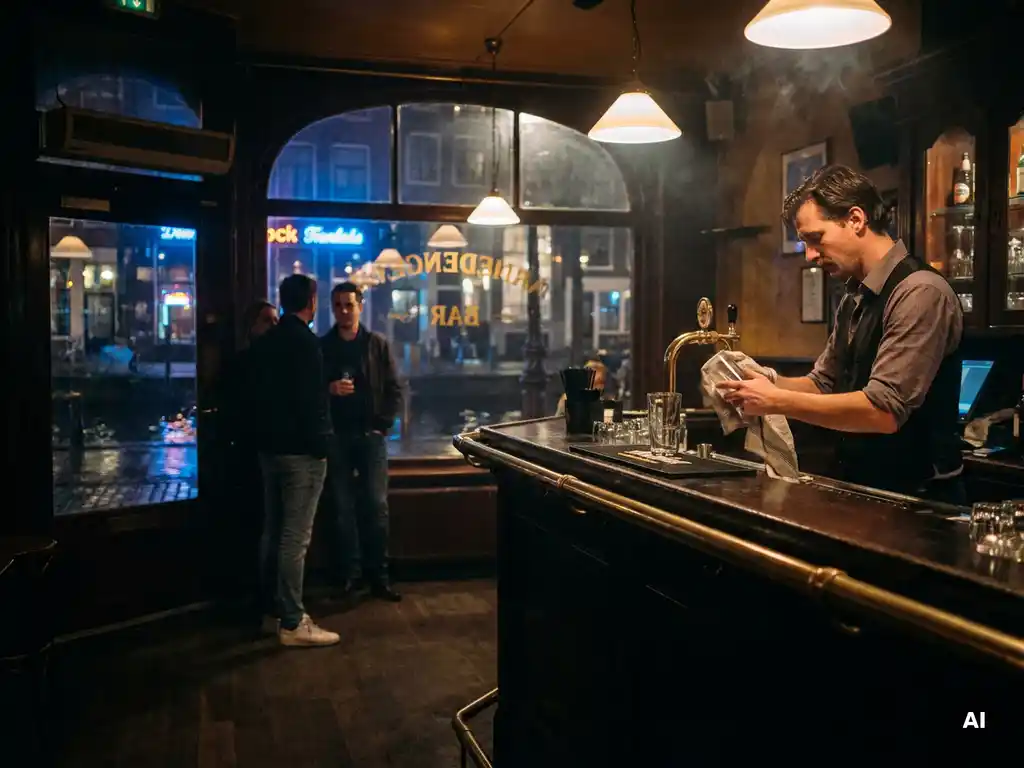
    The brown cafe is the spiritual home of Dutch drinking culture. The name comes from the nicotine-stained walls and dark wooden interiors that accumulated over decades of use. These places feel lived-in because they are. You will find a newspaper on the bar, a few older men nursing jenever, and absolutely no cocktail menu. The atmosphere is the product, not an aesthetic choice made by a designer.

    Beyond brown cafes, locals gravitate toward bars attached to cultural venues, neighbourhood sports clubs, and the occasional converted warehouse in Noord or Oost. These spaces serve their community first and visitors second, which is exactly what makes them worth finding. The further you walk from Leidseplein and Rembrandtplein, the more likely you are to stumble into something real.

    What makes a bar ‘local’ versus a tourist trap in Amsterdam?

    A local bar in Amsterdam has regulars who know the staff by name, prices that have not been inflated to match tourist expectations, and a clientele that is overwhelmingly Dutch. A tourist trap, by contrast, has laminated menus in six languages, branded cocktails named after Dutch painters, and staff trained to turn tables quickly.

    The clearest signal is the beer price. A standard draft beer in a genuinely local Amsterdam bar costs noticeably less than in the tourist corridor. If a bar is charging significantly above that benchmark, it is not operating for locals. Another reliable signal is the music volume: local bars tend to keep it low enough to hold a conversation, because the conversation is the point.

    Watch the clientele, too. A bar where every other table is occupied by people consulting Google Maps is a bar that has already been discovered. The best local spots have a social gravity of their own: people walk in without hesitation, greet someone they know, and settle in without looking around to see if they are in the right place. That unselfconsciousness is the real marker of an authentic local bar.

    What are the best hidden bars Amsterdam locals keep secret?

    The best hidden bars Amsterdam locals keep secret include small brown cafes in the Jordaan that predate the neighbourhood’s gentrification, unmarked basement bars near the Spui, neighbourhood locals in De Pijp that have resisted Instagram fame, and a handful of spots in Amsterdam-Noord that only became accessible once the free ferry made the crossing easy.

    Rather than naming specific bars (which defeats the purpose and tends to destroy the very thing you are looking for), it is more useful to describe the types of places worth hunting for:

    • Old Jordaan brown cafes that opened before the neighbourhood became fashionable and have simply refused to change. Look for hand-painted signs, no outdoor heaters, and a menu that stops at bitterballen.
    • Spui-area literary bars with a bookish, older clientele and a tradition of quiet conversation. These places have been serving the same crowd for thirty years.
    • De Pijp neighbourhood locals on the smaller streets running parallel to Ferdinand Bolstraat. These serve the people who actually live in the neighbourhood, not the weekend visitors flooding the Albert Cuyp market.
    • Amsterdam-Noord hidden spots in repurposed industrial buildings near the NDSM wharf, where the crowd skews younger and more creative but is still overwhelmingly local.
    • Oud-West street-corner cafes that anchor their block socially the way corner bars once did in every European city before chain hospitality swallowed the concept.

    The common thread is that none of these places are trying to be discovered. They exist for their regulars. Treat them accordingly and you will be welcomed. Walk in expecting the experience to perform for you and you will feel the temperature drop immediately.

    Why are the best Amsterdam bars so hard to find online?

    The best hidden bars in Amsterdam are hard to find online because they do not want to be found online. Many have no website, no Instagram account, and actively ignore review platforms. Their business model depends on a stable base of regulars, not on a rotating audience of first-time visitors who discovered them through an algorithm.

    There is also a structural problem with how online discovery works. Review platforms reward volume and recency, which means the bars that attract the most visitors get the most visibility. This creates a feedback loop that systematically buries quiet, consistent, low-traffic establishments in favour of high-turnover tourist destinations. The best local bars are not losing an SEO competition because they entered it and failed. They never entered it at all.

    Word of mouth remains the dominant discovery mechanism for genuinely local Amsterdam drinking spots. You find them through a Dutch colleague, a neighbour, or by simply walking a neighbourhood you do not know and trusting your instincts when a place looks right. That friction is not a bug. It is the filter that keeps them local.

    When is the best time to visit Amsterdam bars like a local?

    The best time to visit Amsterdam bars like a local is on weekday evenings, particularly Tuesday through Thursday, when the tourist crowd is thinner and the regular clientele fills the seats. Sunday afternoons also have a particular local character in Amsterdam: the city slows down, people linger over a beer, and the atmosphere is unhurried in a way that weekend nights never quite manage.

    Avoid Friday and Saturday nights in any bar that has become even slightly well-known. By that point, the tourist-to-local ratio has tipped in the wrong direction. The regulars either arrive early or skip those nights entirely. If you want to experience a bar the way its regulars do, come on a Tuesday at seven in the evening, order without consulting your phone, and stay for two hours.

    Seasonally, autumn and winter are when Amsterdam’s bar culture is at its most authentic. The summer months bring a surge of visitors and push locals toward terraces and parks. From October onward, the city contracts back into itself. The brown cafes fill up with people who are genuinely there for the warmth, the conversation, and the beer, not for the experience of being in Amsterdam.

    What should you order to fit in at an Amsterdam local bar?

    To fit in at an Amsterdam local bar, order a pils (a small draft lager, typically Heineken or Amstel), a jenever (Dutch gin, served neat in a small tulip glass), or a kopstoot (a beer paired with a jenever, drunk together). These are the three foundational orders of Dutch bar culture and signal immediately that you know what you are doing.

    Avoid ordering craft cocktails, wine by the glass, or anything that requires a lengthy explanation. Local Amsterdam bars are not cocktail bars. They are places built around simple, consistent drinks served quickly and without ceremony. Ordering something complicated in a brown cafe is the social equivalent of asking for a vegan menu at a traditional Dutch butcher. It is not offensive, but it marks you as someone who does not understand where they are.

    A few additional notes on bar etiquette that locals follow instinctively:

    • Pay as you go or keep a tab, but settle promptly when you are ready to leave. Lingering over the bill is not the local style.
    • Do not rearrange furniture or drag chairs from other tables without checking. Space is communal and managed by unspoken rules.
    • Keep your voice at a level that does not dominate the room. Dutch bar culture values conversation, not performance.
    • If the bartender is busy, wait. Signalling impatiently is noticed and remembered.

    The bitterballen are almost always worth ordering. These deep-fried Dutch snacks are the universal bar food of Amsterdam, and a shared plate of them is one of the most reliable social lubricants in the city.

    How Klagen Niet Klagen helps you find the real Amsterdam

    Finding the genuinely local side of Amsterdam requires exactly the kind of insider knowledge that tourism guides and review platforms cannot provide. That is precisely what Klagen Niet Klagen exists to offer: honest, experienced, opinionated commentary on Amsterdam city life written from the inside. Here is what you get from this blog that you will not find anywhere else:

    • Long-form essays on Amsterdam culture, neighbourhoods, and social dynamics written by someone who has lived and worked here for over three decades
    • A perspective free from tourism board influence, advertorial pressure, or the need to keep anyone happy
    • The kind of specific, earned knowledge that comes from actually building something in Amsterdam, not just visiting it
    • Regular new pieces covering the city’s contradictions, its hidden corners, and the gap between how Amsterdam presents itself and how it actually works

    If this piece gave you a more useful angle on Amsterdam bar culture than you expected, there is more where it came from. Browse the full blog archive for more pieces on Amsterdam life written with the same honesty and without the polish.

    And if you want the full Amsterdam experience in one evening, the most direct route is still a night at Boom Chicago. The comedy institution Andrew Moskos co-founded in 1993 has been making locals and visitors laugh together for over thirty years, in a way that no bar crawl quite replicates. Check the show’s agenda and see what is on, because a Boom Chicago night has a way of turning into exactly the kind of Amsterdam evening that people talk about for years afterward. If you have questions, the team is easy to reach via the contact page.

    Frequently Asked Questions

    How do I start a conversation with locals at an Amsterdam brown cafe without seeming intrusive?

    The key is to let the bar do the work for you. Sit at or near the bar rather than claiming a table, order simply, and be patient — Dutch bar culture is not unfriendly, it is just unhurried. A comment about the football on the TV or a nod to the bartender goes further than a direct introduction, and regulars will often open a conversation themselves once they have clocked that you are not behaving like a tourist.

    What are the most common mistakes visitors make when trying to blend in at a local Amsterdam bar?

    The biggest mistakes are arriving in a large group, photographing the interior, and over-explaining yourself — telling the bartender you found the place on a blog, for instance, is precisely the wrong thing to say. Coming in quietly, ordering without fuss, and not treating the bar as a backdrop for content creation are the three things that will earn you a neutral reception that can warm into a genuine one.

    Is it worth learning any Dutch phrases before visiting local Amsterdam bars?

    Even a handful of basic Dutch phrases makes a measurable difference in how you are received. ‘Een pils, alsjeblieft’ (a beer, please), ‘Proost’ (cheers), and ‘Mag ik afrekenen?’ (can I pay?) cover most of what you need and signal immediately that you have made some effort. Dutch people are perfectly comfortable switching to English, but the fact that you tried in Dutch is noticed and appreciated in a way that simply opening in English is not.

  • How do you explore Amsterdam like a local instead of a tourist?

    How do you explore Amsterdam like a local instead of a tourist?

    To explore Amsterdam like a local, skip the tourist circuit entirely and spend your time in the neighbourhoods, cafes, and cycling routes that residents actually use. The real Amsterdam is not the one on the postcard. It is found in the western canal ring on a Tuesday morning, in a brown cafe with no English menu, or on a bike route that takes you somewhere genuinely useful rather than scenic. The questions below unpack exactly how locals experience their city — and how you can too.

    Which Amsterdam neighbourhoods do locals actually spend time in?

    Amsterdam locals gravitate toward De Pijp, Oud-West, the Jordaan, Noord, and the eastern docklands. These are the best Amsterdam neighborhoods for experiencing the city as residents do — full of independent shops, neighbourhood cafes, and street life that has nothing to do with the tourist trail. The Rijksmuseum and the Red Light District are largely left to visitors.

    De Pijp is probably the most genuinely lived-in neighbourhood close to the centre. The Albert Cuyp market draws locals for actual grocery shopping, not Instagram content. The side streets are full of small restaurants where the clientele is overwhelmingly Dutch. Oud-West, just north of De Pijp, has a similar energy — Kinkerstraat and the streets around it feel like a real Amsterdam neighbourhood rather than a theme park version of one.

    Amsterdam Noord, across the IJ waterway, has transformed dramatically over the past decade and is now where a significant chunk of Amsterdam’s creative and younger population actually lives. The NDSM wharf, the neighbourhood around Buikslotermeerplein, and the quieter residential streets behind the ferry docks all reward exploration. And because Noord requires a short ferry crossing from Central Station, most tourists simply do not bother.

    The Jordaan is technically tourist-adjacent, but its smaller streets and courtyards — the hofjes — are still largely undiscovered. Go on a weekday morning and you will find it almost entirely populated by locals doing ordinary things.

    How do locals actually use cycling to get around Amsterdam?

    Amsterdam locals use cycling as pure transportation, not recreation. They cycle fast, they cycle in ordinary clothes, they cycle in the rain, and they almost never consult a map. The famous Amsterdam bike routes that appear in travel guides are largely irrelevant to residents — locals simply know where they are going and take the most direct line to get there.

    If you want to cycle like a local rather than a tourist, a few principles apply immediately. First, stay in the bike lane — always. Second, do not stop suddenly or without warning. Third, use hand signals. Fourth, do not be precious about your bike. Locals ride cheap, heavy, slightly beaten-up city bikes because they are practical and less attractive to thieves. A gleaming rental bike with a basket of tulips marks you immediately.

    The most useful cycling corridors for getting a genuine feel for the city are the routes that connect neighbourhoods rather than landmarks. Cycling from Oud-West through the Vondelpark to De Pijp, or from the Jordaan north to Amsterdam Noord via the ferry, gives you a cross-section of the city that no canal tour ever will. Speaking of which: if you want the water perspective, a Amsterdam canal tour is fine for orientation — but locals almost never take one.

    Where do Amsterdam locals eat and drink without tourists?

    Amsterdam locals eat and drink in neighbourhood spots that have no reason to market themselves to visitors: brown cafes with no social media presence, small Indonesian restaurants in De Pijp or Bos en Lommer, Turkish bakeries in the west, and Indonesian takeaways that have been in the same location for decades. The best cheap restaurants Amsterdam has to offer are almost never the ones that appear on travel lists.

    The brown cafe — bruin cafe in Dutch — is the cornerstone of local social life. These are old, dark, slightly worn bars that serve beer, jenever (Dutch gin), and simple bar snacks. They are not trying to be cool. They have regulars. The ones worth finding are not on the main tourist streets; they are tucked onto side streets in residential neighbourhoods where the clientele is almost entirely local.

    For food, Amsterdam’s Indonesian heritage produces some of the most interesting and affordable eating in the city. A rijsttafel — a Dutch-Indonesian spread of small dishes — is genuinely worth seeking out, but the best versions are not in the tourist centre. Surinamese food is similarly underrated and widely available at extremely reasonable prices. These are the cuisines that locals actually eat regularly, and they represent Amsterdam’s culinary identity far more honestly than any canal-side tourist restaurant does.

    The rule of thumb is simple: if the menu is in English only and there is a photo of every dish, keep walking.

    What are the unwritten social rules locals follow in Amsterdam?

    Amsterdam locals operate by a set of unwritten social rules that visitors frequently violate without realising it. The most important: stay out of the bike lane, do not walk slowly in groups across a pavement, do not block the tram doors, and do not treat the city’s public spaces as a backdrop for your holiday content. Dutch directness means you will be told when you have done something wrong — and that is not considered rude.

    Dutch culture values a concept roughly translated as doe maar gewoon — just act normal. Extravagant behaviour, excessive noise, and conspicuous consumption are all mildly frowned upon. This is not unfriendliness; it is a deeply embedded cultural preference for understatement. Locals are warm once you are actually in conversation with them, but they do not perform warmth as a default mode.

    A few practical rules that will immediately improve your standing with locals: do not cycle side by side on a busy bike path; do not stand on the left side of an escalator; do not haggle at markets (it is considered embarrassing); and do not assume that because someone speaks excellent English, they want to speak it with you. Many Dutch people will switch to English helpfully and immediately, but it is still worth trying a few words of Dutch first.

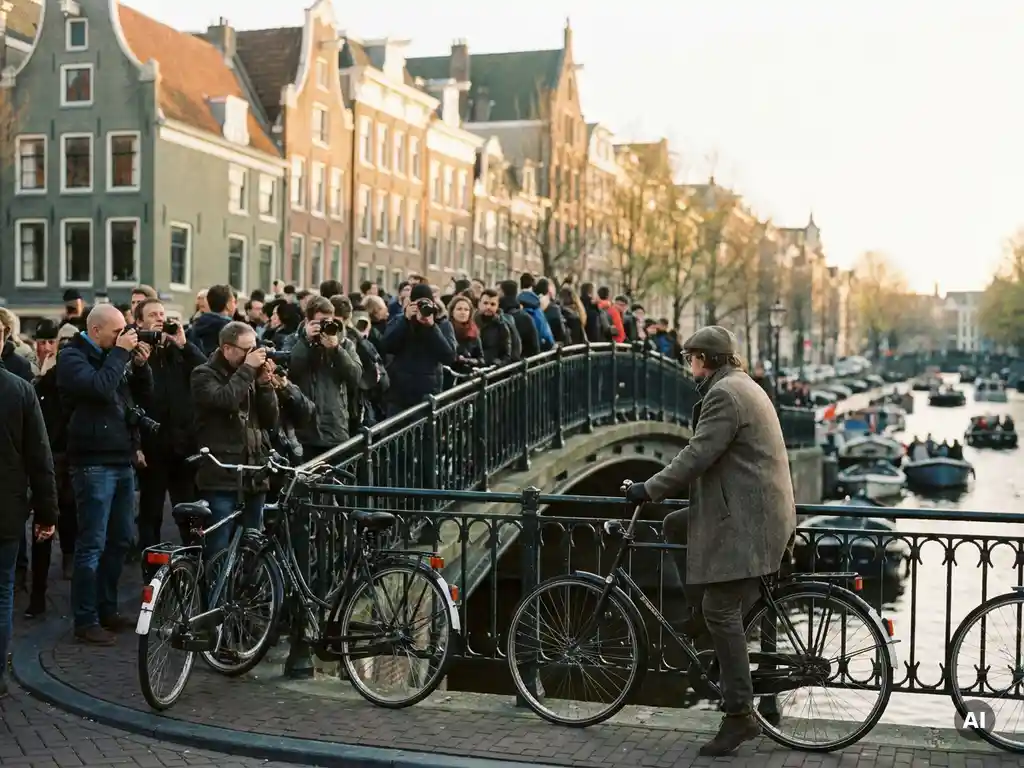
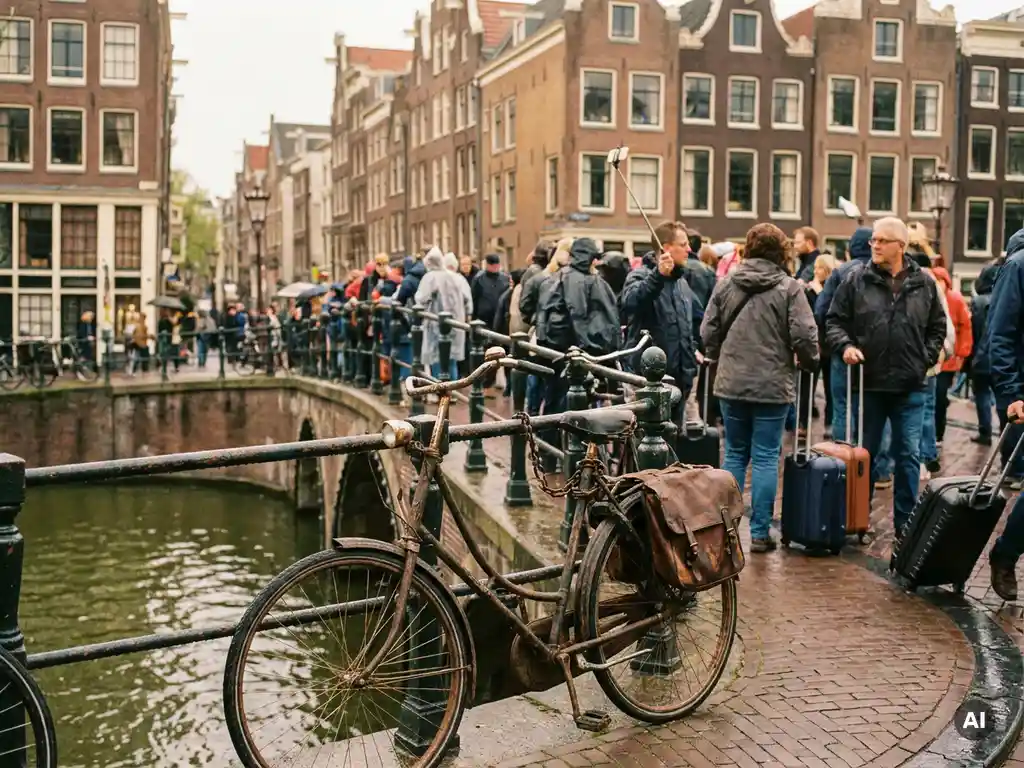
    The city also has a strong culture of directness about public space. Sitting on someone’s stoop, blocking a canal bridge for photographs, or walking four abreast on a narrow street are all behaviours that will generate visible irritation from locals. The city is genuinely crowded; people need to get places.

    When is the best time to experience Amsterdam without the crowds?

    The best time to experience Amsterdam without tourist crowds is during the winter months from November through February, on weekday mornings in any season, or during the shoulder periods of early March and late October. The Amsterdam weather guide reality is that winter is grey and cold — but the city is genuinely different when it is not overrun, and many locals consider it their favourite season.

    Spring — particularly April and May — is when Amsterdam is at its most beautiful and also its most overwhelmed. The tulip season and King’s Day draw enormous numbers of visitors, and the city’s infrastructure visibly strains under the pressure. If you can only visit in spring, go in early March before the main wave arrives.

    Summer weekends in the Jordaan or around Leidseplein can feel genuinely unpleasant if you dislike crowds. The same streets on a Tuesday morning in January feel like a completely different city. Locals who love Amsterdam often say they love it most in winter precisely because it becomes theirs again.

    For an Amsterdam weekend guide that actually works: arrive on a Friday evening, spend Saturday morning in a neighbourhood market, and save any central sights for Sunday morning when the overnight visitors have left and the day-trippers have not yet arrived. The window between 8am and 11am on a Sunday is genuinely the best Amsterdam has to offer in terms of atmosphere.

    What do most visitors get wrong about Amsterdam?

    Most visitors get Amsterdam wrong by treating it as a city of one neighbourhood — the historic centre — and one set of attractions. They also consistently underestimate how much of the city’s character comes from its residents rather than its buildings. The best Amsterdam experiences are almost never the ones that feature on the official tourism agenda.

    The biggest misconception is that Amsterdam is primarily a party destination. It has been marketed this way internationally for decades, and the result is a particular kind of visitor who arrives expecting a consequence-free holiday. Locals find this exhausting and demoralising. The city has genuine cultural depth — world-class museums, a remarkable architectural heritage, a thriving comedy and theatre scene, and a long tradition of political and creative radicalism — and most of it goes completely unseen by visitors who arrive with a narrow agenda.

    A second common mistake is confusing tolerance with permissiveness. Amsterdam’s famous liberal culture was built on a very specific set of civic values — a genuine respect for individual freedom combined with an equally genuine expectation of civic responsibility. The coffee shops and the red light district exist within a framework of social contract, not as an invitation to behave badly in public. Locals are increasingly frustrated by visitors who mistake the former for the latter.

    Finally, most visitors dramatically underestimate how much there is to do beyond the centre. Amsterdam day trips to Haarlem, Utrecht, or Leiden are genuinely worth taking — but so is simply crossing the river to Noord, or cycling west to the Westergasfabriek, or spending an afternoon in the eastern docklands. The city rewards curiosity and punishes those who stick to the map.

    How Klagen Niet Klagen helps you understand Amsterdam like an insider

    This article covers the basics of navigating Amsterdam the way residents do. But the honest, opinionated, and genuinely useful perspective on Amsterdam life goes much deeper than any single guide can capture. That is exactly what Klagen Niet Klagen exists to provide.

    • Long-form essays on Amsterdam neighbourhoods, culture, and contradictions — written from over three decades of lived experience in the city
    • Honest commentary that does not sanitise the city or pretend its problems do not exist
    • An independent, English-language perspective on Amsterdam that is free from tourism board influence or advertorial pressure
    • Regular pieces on the unwritten rules, the cultural tensions, and the things that make Amsterdam genuinely interesting rather than merely photogenic

    If you want to keep reading, the full blog archive is the place to start. There is no algorithm optimising for engagement — just honest writing about a city worth understanding properly.

    And if you want a live, in-person Amsterdam experience that locals actually go to, Boom Chicago has been making audiences laugh in this city since 1993. Sharp, fast, English-language comedy and improv that reflects the city’s spirit far better than any canal cruise ever could. Check the current shows and agenda — it is one of those Amsterdam experiences that genuinely belongs on any list of things worth doing here, tourist or local.

    Frequently Asked Questions

    How do I get started exploring Amsterdam like a local if I only have a weekend?

    Start by basing yourself in or near De Pijp or Oud-West rather than the tourist centre — this alone changes your experience dramatically. On your first morning, pick up a cheap second-hand bike from a rental shop that offers city-style bikes rather than tourist models, and use it to move between neighbourhoods rather than landmarks. Prioritise one neighbourhood market, one brown cafe, and one Indonesian or Surinamese meal, and you will have covered more authentic Amsterdam ground than most visitors manage in a week.

    What if I don't speak Dutch — will locals be unfriendly or unhelpful?

    Amsterdam locals are generally pragmatic and helpful, and virtually everyone speaks excellent English — so communication is rarely a real barrier. The key is to make a small effort first: attempting a few words of Dutch (even just ‘dank je wel’ for thank you) signals respect and is almost always warmly received. What locals respond negatively to is not the language gap itself, but the assumption that English is the automatic default and that the city exists to accommodate visitors on their own terms.

    Are there any common mistakes first-time visitors make that are easy to avoid once you know about them?

    The single most avoidable mistake is wandering into or stopping in the bike lane — this creates genuine danger and immediate irritation, and it happens constantly with tourists who are not used to how seriously cycling infrastructure is taken. The second is treating the historic centre as the whole city and never venturing beyond it, which means missing the neighbourhoods where Amsterdam’s actual character lives. A third is booking canal-side restaurants because they look atmospheric — they are almost universally overpriced and underperforming compared to the neighbourhood spots a few streets away.

  • What are the best Amsterdam experiences that cost nothing?

    What are the best Amsterdam experiences that cost nothing?

    Amsterdam’s best free experiences are genuinely excellent, not just budget compromises. The city’s canals, markets, parks, neighbourhoods, and cultural spaces offer a full day of rich, rewarding exploration without spending a single euro. Whether you live here or you’re visiting for a weekend, the free version of Amsterdam is often the most authentic version of the city.

    What makes Amsterdam unusual is that so much of what defines the city — its architecture, its street life, its waterways, its neighbourhood culture — exists entirely in the open air and public space. You don’t need a ticket to understand Amsterdam. You just need to know where to look.

    Below, the most useful questions about free things to do in Amsterdam get direct, honest answers — from someone who has lived and worked here for over three decades.

    Where in Amsterdam can you spend a full day for free?

    You can spend a genuinely full and satisfying day in Amsterdam without paying for anything. Start in the Jordaan, walk through the Negen Straatjes, follow the canals east toward the Plantage, cut through Artis to the Entrepotdok, and end the afternoon in Vondelpark. That route alone covers some of the most beautiful urban scenery in Europe.

    The key is understanding that Amsterdam’s real value is in its public space. The canal ring, a UNESCO World Heritage Site, is entirely free to walk. The city’s historic architecture lines every street. The markets at Noordermarkt on Saturday mornings or Albert Cuyp on any weekday cost nothing to browse. Vondelpark on a warm afternoon is one of the best free experiences in any European city — locals picnicking, musicians playing, dogs running free.

    If you structure your day around walking and neighbourhood exploration rather than attractions, you will consistently have a better time than people paying for the obvious tourist experiences. This is not a budget tip. It is genuinely how Amsterdam works best.

    What free museums and cultural spaces does Amsterdam offer?

    Several of Amsterdam’s most rewarding cultural spaces are completely free to enter. The Rijksmuseum gardens are open to the public at no cost, and the outdoor space alone — with its sculptures and architecture — is worth a visit. The Amsterdam Public Library (OBA) on Oosterdokskade is a genuinely impressive building with free access, great views from the top floor, and a welcoming atmosphere for anyone who wants to sit, read, or simply look out over the city.

    The Stedelijk Museum and the Rijksmuseum have permanent collections that require tickets, but both regularly host free events and open evenings. The FOAM photography museum occasionally offers free entry periods. Kunststad, the large creative complex in Amsterdam-Noord, is free to explore and houses dozens of artist studios and creative spaces.

    Amsterdam-Noord more broadly deserves attention as a free cultural destination. The EYE Film Museum building is architecturally striking and free to enter (exhibitions cost extra). The NDSM Wharf is a vast former shipyard turned creative hub with street art, studios, and a genuinely different energy from the city centre — and the ferry from Centraal Station to get there costs nothing.

    Are there free live performances and events in Amsterdam?

    Yes, Amsterdam has a steady calendar of free live performances and public events throughout the year. Vondelpark Open Air Theatre runs a full summer programme of free concerts, theatre, and children’s performances from June through August — it has been a beloved Amsterdam institution for decades. The programme covers everything from classical music to cabaret to dance.

    Museumplein regularly hosts free outdoor events, particularly around Koningsdag (King’s Day) and other national celebrations. The Concertgebouw offers free lunchtime concerts on Wednesdays — these are genuinely excellent performances in one of the world’s great concert halls, available to anyone who shows up.

    Street performance and live music are woven into Amsterdam’s public life. Leidseplein and Rembrandtplein attract buskers of real quality. During the summer months, impromptu performances appear across the city. If you want to see live comedy and theatre in Amsterdam, that is a paid experience — but the free outdoor performance culture in this city is rich enough to fill an entire visit on its own.

    What does Amsterdam look like from the water for free?

    The best free water experience in Amsterdam is the GVB ferry service from Centraal Station across the IJ to Amsterdam-Noord. These ferries run constantly, are free for pedestrians and cyclists, and give you an unobstructed view of the Amsterdam skyline from the water. The crossing takes only a few minutes, but the perspective it offers is one most visitors never see.

    For a longer water experience, walking along the Amstel river south of the city centre costs nothing and gives you a completely different, quieter view of Amsterdam — houseboats, drawbridges, and the occasional windmill. The Prinsengracht, Keizersgracht, and Herengracht are all best understood on foot along the canal edges, where the reflections, the bridges, and the architecture create the Amsterdam that ends up in every photograph.

    Paid canal tours exist and some are good, but the honest answer is that walking the canal ring yourself, at your own pace, gives you more time and more freedom than any boat. The best Amsterdam canal experience is not a tour — it is a slow afternoon walk with no agenda.

    Which Amsterdam neighbourhoods are most rewarding to explore on foot?

    The Jordaan is the most rewarding neighbourhood for free exploration in Amsterdam. It is dense with visual interest — narrow streets, hidden courtyards called hofjes, independent shops, and canal views at every turn. It rewards slow walking and genuine curiosity. The Negen Straatjes (Nine Streets) that cut across the main canals are among the most pleasant streets in Europe to simply wander.

    De Pijp is the neighbourhood that feels most alive on a daily basis. The Albert Cuyp market runs through its centre six days a week and is free to walk through — it is one of the largest street markets in Europe and a genuine cross-section of Amsterdam life. The neighbourhood’s cafes, side streets, and architecture make it one of the best Amsterdam neighbourhoods for anyone who wants to see the city as it actually functions.

    Amsterdam-Noord is the neighbourhood that surprises people most. A free ferry ride from Centraal Station delivers you into a completely different urban atmosphere — post-industrial, creative, and noticeably less crowded than the centre. The NDSM Wharf, the Buiksloterweg area, and the streets around the EYE Film Museum all offer a version of Amsterdam that feels genuinely current rather than preserved for tourism.

    For architecture and history, the Plantage neighbourhood east of the city centre is undervisited and completely free to explore. Wide streets, beautiful nineteenth-century buildings, and proximity to the Hortus Botanicus make it one of the most pleasant walks in the city.

    What free Amsterdam experiences do most visitors miss entirely?

    Most visitors miss the hofjes — Amsterdam’s hidden courtyard gardens tucked behind unmarked doors in the Jordaan and the city centre. These were originally built as almshouses and many are still residential, but several are open to respectful visitors during daytime hours. The Begijnhof, just off Spui, is the most famous and genuinely worth finding. Stepping inside feels like the city has gone quiet.

    The Hortus Botanicus garden is technically paid, but the streets around the Plantage and the Artis zoo perimeter are free to walk and give a sense of one of Amsterdam’s most elegant and undervisited areas. The Entrepotdok, a long row of former warehouse buildings converted into apartments, is one of the most photogenic streets in the city and almost no one goes there.

    Amsterdam’s street art scene in Noord and the NDSM Wharf is genuinely world-class and entirely free. The IJ-Hallen flea market at NDSM — Europe’s largest indoor flea market — charges a small entry fee but is worth mentioning as a near-free experience that most visitors never discover.

    Finally, the thing most visitors miss is simply slowing down. Amsterdam’s real character reveals itself in the details — the way light hits the canal in the morning, the rhythm of cyclists at an intersection, the sound of a neighbourhood on a quiet Sunday. None of that costs anything. It just requires paying attention.

    How Klagen Niet Klagen helps you get more from Amsterdam

    Finding the best Amsterdam experiences — free or otherwise — is much easier when you have access to genuinely honest, insider commentary rather than tourist-board content. That is exactly what Klagen Niet Klagen exists to provide.

    • Long-form essays and opinion pieces on Amsterdam city life, written from over thirty years of experience living and working here
    • Honest takes on what is actually worth your time — and what is overrated or overhyped
    • Neighbourhood guides, cultural commentary, and local perspective that no tourism website will give you
    • Content written for people who want to understand Amsterdam, not just visit it
    • A consistent, independent editorial voice with no advertorial agenda or tourism-board influence

    If you want to keep exploring Amsterdam through this kind of lens, the full blog archive has more where this came from. Read it before your next walk. You will notice things you would otherwise have walked straight past.

    And if you are looking for a genuinely great paid experience in Amsterdam — one that captures the city’s wit, energy, and irreverence in a single evening — Boom Chicago is it. Founded in Amsterdam in 1993, it is the city’s home of world-class comedy and improvisation theatre, and it has been making locals and visitors laugh for over thirty years. Check the current shows and agenda and book a night that Amsterdam will remember. Or at least one you will.

    Frequently Asked Questions

    Is Amsterdam genuinely enjoyable on a free itinerary, or does it feel like you're missing out?

    Amsterdam is one of the rare European cities where the free version is arguably the best version. The canal ring, the neighbourhoods, the markets, and the public cultural spaces are the heart of what makes Amsterdam worth visiting — and none of them require a ticket. Paid attractions like the Anne Frank House or the Van Gogh Museum are worthwhile on their own terms, but skipping them doesn’t leave a gap; it often just means more time for the city itself.

    What's the best time of year to explore Amsterdam for free?

    Late spring through early autumn (May to September) is when Amsterdam’s free outdoor life is at its richest — Vondelpark fills up, the Open Air Theatre programme runs, canal-side terraces buzz, and the city is at its most visually alive. That said, Amsterdam in winter has its own rewards: the canals under low grey light, the quieter streets, and the Concertgebouw’s free Wednesday lunchtime concerts running year-round. Avoid major event weekends like Koningsdag if you want space to actually enjoy the public areas.

    How do I find the open hofjes in the Jordaan without accidentally disturbing residents?

    The safest approach is to stick to the hofjes that are publicly documented as visitor-friendly, with the Begijnhof (off Spui) being the most accessible and well-signposted. For the Jordaan hofjes, a slow walk along Karthuizerstraat, Elandsstraat, and Lindengracht will reveal several — look for unmarked wooden doors left slightly ajar during daytime hours, which typically signals they are open to respectful visitors. The key etiquette is simple: enter quietly, don’t photograph residents or their windows, and leave the same way you came in.

  • What is the best time of year to visit Amsterdam?

    What is the best time of year to visit Amsterdam?

    The best time to visit Amsterdam is late April through May. The tulip fields are in full bloom, the weather is genuinely pleasant without being hot, the days are long, and the city has not yet been swallowed by peak summer crowds. For most visitors, this window offers the ideal balance of good conditions and manageable tourism pressure.

    That said, “best” depends on what you are actually looking for. A winter visit has its own quiet magic, summer has energy and festivals, and autumn offers something in between. The rest of this article breaks down each season honestly, so you can match Amsterdam to your actual travel style rather than just following the tourist calendar.

    Which month is the absolute best to visit Amsterdam?

    May is the single best month to visit Amsterdam. Temperatures hover between 12 and 18 degrees Celsius, the city is green and blooming, daylight stretches well into the evening, and the summer crush has not fully arrived yet. You can cycle along the canals, sit on a terrace, and actually enjoy the city without fighting through tour groups at every corner.

    April runs a close second, particularly for anyone making the trip specifically to see the tulip fields. The Keukenhof gardens are open from late March through mid-May, and peak bloom typically falls somewhere in mid-April. The trade-off is that April weather is unpredictable — you might get a brilliant warm week or a run of grey, drizzly days. Pack layers regardless.

    June is still excellent before the school holidays kick in. Once July arrives, the dynamic shifts noticeably. The city fills up fast, prices climb, and the famous Amsterdam canal tour queues grow long enough to test anyone’s patience. If you are flexible, avoid July and August, and you will have a meaningfully better experience.

    What is Amsterdam like in summer — and is it worth it?

    Amsterdam in summer is lively, warm, and extremely crowded. July and August bring the highest visitor numbers of the year, longer queues, higher hotel prices, and a city centre that can feel more like a theme park than a real place. The weather is genuinely warm — typically 20 to 25 degrees — and the outdoor culture is at its best, but you pay for it in every sense.

    That said, summer has real appeal if you go in with the right expectations. The canal-side terraces are buzzing, the parks fill with locals and visitors alike, and the city’s cultural programme is in full swing. Amsterdam’s outdoor festivals, open-air cinema events, and neighbourhood street parties all happen in this window. If you are coming for the energy and the social atmosphere, summer delivers.

    The honest advice is this: if you must visit in summer, come in June rather than July or August. You get most of the warmth and outdoor atmosphere without the absolute peak of the crowds. And if you are staying for more than a few days, push beyond the tourist centre. The best Amsterdam experiences in summer are found in the neighbourhoods where actual Amsterdammers spend their time — De Pijp, Noord, the Jordaan on a weekday morning — not on Damrak or near the Anne Frank House queue.

    When is Amsterdam least crowded?

    Amsterdam is least crowded from November through February. These months see the fewest tourists, the lowest hotel prices, and a version of the city that most visitors never encounter. The streets are quieter, the museums are accessible without advance booking weeks ahead, and you can walk through the canal district in genuine peace.

    Winter Amsterdam has a distinct atmosphere that is worth experiencing on its own terms. The canal houses look striking under grey skies, the city’s brown cafes and indoor food markets come into their own, and there is something genuinely charming about cycling past lit-up canal houses on a cold, clear evening. It is not a postcard version of the city, but it is an honest one.

    The main drawbacks are obvious: it is cold, it is often wet, and daylight is short. By mid-December, the sun sets around four in the afternoon, which limits outdoor time considerably. That said, the Christmas markets and the Amsterdam Light Festival — which runs through the canal district each winter — give the city a festive quality that partially compensates. If you are after cheap hotels in Amsterdam and are comfortable with a coat and umbrella, January and February are genuinely hard to beat on value.

    What Amsterdam events should influence your travel dates?

    Several Amsterdam events are worth planning around — or deliberately avoiding. King’s Day on April 27th transforms the entire city into an outdoor street party and is one of the most extraordinary urban events in Europe. The Amsterdam Dance Event in October draws the global electronic music world. And the Keukenhof tulip season runs roughly from late March to mid-May. These events add real colour to a visit, but they also spike crowds and prices significantly.

    Events worth planning your trip around:

    • King’s Day (April 27) — The city turns orange, the canals fill with boats, and everyone is in a good mood. One of the best days to be in Amsterdam, full stop.
    • Keukenhof tulip gardens (late March to mid-May) — Worth the trip from the city if you are visiting in spring. Book entry in advance.
    • Amsterdam Dance Event (October) — Five days of electronic music across hundreds of venues. The city fills with a specific, energetic crowd.
    • Amsterdam Light Festival (December to January) — Light installations along the canals. Genuinely beautiful and a good reason to visit in winter.
    • Amsterdam Open Air and other summer festivals (June to August) — Multiple outdoor music and cultural events throughout the warmer months.

    Events worth being aware of to avoid overcrowding: King’s Day, while brilliant, does mean the city is absolutely packed. If you are not there for the party specifically, it is one of the most chaotic days of the year. Similarly, the summer school holiday period in July and August brings family tourism to its annual peak. Plan accordingly.

    How does Amsterdam weather actually affect a visit?

    Amsterdam’s weather is genuinely unpredictable year-round, and it affects a visit more than most people anticipate. The city sits in a maritime climate, which means mild temperatures but frequent rain, wind, and rapidly changing skies at any time of year. A sunny April morning can turn grey and wet by afternoon. Summer is warm but not reliably so. The best Amsterdam weather guide is simple: always bring a waterproof layer, regardless of the forecast.

    In practical terms, the weather shapes how much of Amsterdam you can actually enjoy. The city is at its best outdoors — cycling, canal tours, terrace culture, the parks, the markets. When the weather cooperates, Amsterdam is genuinely one of the most enjoyable cities in Europe to move around in. When it does not, you retreat indoors, which means museums, cafes, and covered markets.

    The good news is that Amsterdam has excellent indoor options. The Rijksmuseum, the Van Gogh Museum, the Eye Film Institute in Noord, the indoor food halls, and the city’s dense concentration of brown cafes all make rainy days entirely manageable. The Amsterdam weather guide that actually serves visitors well is not about finding a guaranteed sunny window — it is about accepting the variability and building a trip that works in any conditions.

    Should you avoid Amsterdam during peak tourist season?

    If you have flexibility, yes — avoiding the peak of July and August will give you a significantly better experience. Amsterdam has been grappling with overtourism for years, and the city centre in high summer can feel overwhelmed. Prices are at their highest, queues are longest, and the neighbourhoods most worth seeing are hardest to enjoy. The city is not at its best when it is at its busiest.

    That said, “avoid peak season” is easier advice to give than to follow. Many people can only travel in summer due to work schedules, school calendars, or the simple fact that summer is when they want to be somewhere warm and outdoors. If that is your situation, the answer is not to skip Amsterdam — it is to be strategic about how you experience it.

    A few honest strategies for visiting in peak season:

    • Book accommodation well in advance and consider staying outside the immediate centre — the best Amsterdam neighborhoods for a more local experience include De Pijp, Oud-West, and Amsterdam Noord.
    • Visit the major museums first thing in the morning or late in the afternoon, and book timed entry tickets online before you arrive.
    • Avoid the most congested streets — Damrak, Leidseplein, and the immediate area around the Anne Frank House — during midday hours.
    • Use a bike. The Amsterdam bike routes that run through quieter residential areas are far more enjoyable than walking through the tourist centre.
    • Eat where locals eat. The best cheap restaurants in Amsterdam are rarely in the tourist centre — they are in the side streets and neighbourhood blocks that most visitors never reach.

    The deeper truth about peak season is this: Amsterdam the tourist destination and Amsterdam the actual city coexist in the same geography but barely overlap. The version of the city worth experiencing — the Amsterdam locals guide version — is always accessible, even in August. You just have to know where to look.

    How Klagen Niet Klagen helps you plan your Amsterdam visit

    Knowing the best month to visit is one thing. Knowing what to actually do when you get there — beyond the obvious, beyond the tourist trail — is where most travel content falls short. That is exactly the gap that Klagen Niet Klagen exists to fill.

    • Honest, insider commentary on Amsterdam life written by someone who has lived and worked here for over three decades
    • No tourism board influence, no advertorial pressure, no sanitised version of the city
    • Practical cultural context that helps you understand Amsterdam rather than just tick it off
    • Regular essays on Amsterdam neighbourhoods, events, food, culture, and the contradictions that make the city genuinely interesting
    • A perspective grounded in the real Amsterdam — the one locals actually inhabit

    Whether you are planning your first trip or your fifteenth, the blog archive is worth a read before you book anything. The best Amsterdam experiences are rarely the ones on the tourist map.

    And while you are planning your visit, consider adding one genuinely unmissable evening to the itinerary: a show at Boom Chicago. The comedy institution that helped put Amsterdam’s English-language cultural scene on the map has been running since 1993, and a live show there is one of those experiences that stays with you long after the canal tour fades from memory. It is sharp, funny, and deeply Amsterdam — exactly the kind of thing you came here for. If you want to know more or have questions before you visit, the Boom Chicago team is easy to reach.

    Frequently Asked Questions

    How far in advance should I book hotels and museum tickets for Amsterdam?

    For peak season visits (June through August), booking accommodation at least two to three months in advance is strongly recommended — popular hotels in central areas sell out fast and prices spike closer to your travel date. For major museums like the Rijksmuseum and Van Gogh Museum, timed-entry tickets should be booked online as soon as your dates are confirmed, ideally weeks ahead. Even outside peak season, booking museum tickets in advance saves you from long queues and occasional sold-out slots. The earlier you lock in the logistics, the more flexibility you have to focus on the parts of Amsterdam that actually make the trip memorable.

    Is Amsterdam worth visiting for just a weekend, or do you need more time?

    A long weekend — three to four days — is genuinely enough to get a meaningful feel for Amsterdam, provided you are selective about what you try to fit in. Rather than chasing every major sight, pick two or three museum visits, build in time to cycle or walk through a neighbourhood like De Pijp or the Jordaan, and leave room for the unplanned moments that define the city. Where visitors go wrong with short trips is over-scheduling: Amsterdam rewards slow exploration far more than box-ticking. If you only have two days, skip the tourist-centre scramble entirely and focus on depth over breadth.

    What are the most common mistakes first-time visitors make when planning an Amsterdam trip?

    The most common mistake is concentrating the entire trip within the tourist centre — Damrak, the Red Light District, and the Anne Frank House queue — and missing the neighbourhoods where Amsterdam actually lives. A close second is underestimating how much the weather can shift and not packing a waterproof layer, which turns an unexpected rainy afternoon into a miserable one. First-timers also frequently overlook the value of a bike: renting one for even a single day changes how the city opens up to you entirely. Finally, many visitors book nothing in advance and then lose hours of their trip standing in queues that a five-minute online booking would have eliminated.

  • What hidden gems in Amsterdam do expats actually recommend?

    What hidden gems in Amsterdam do expats actually recommend?

    Long-term expats in Amsterdam consistently recommend the same kinds of places: neighbourhood markets, canal-side brown cafés, independent cinemas, and tucked-away cultural venues that never appear in tourism roundups. These are not secret in any dramatic sense — they are simply places that reward curiosity and local knowledge over convenience. The questions below dig into exactly where expats spend their time, what they wish they had found sooner, and how their recommendations compare to what Dutch locals actually suggest.

    Where do long-term expats actually spend their time in Amsterdam?

    Long-term expats in Amsterdam spend most of their time in the city’s residential neighbourhoods rather than the historic centre. Areas like De Pijp, Oud-West, Noord, and the Jordaan are where daily life actually happens — local supermarkets, neighbourhood parks, and the kind of café where the owner knows your order. The canal belt is beautiful, but it is not where people who actually live here tend to linger.

    After the first year or two, most expats quietly abandon the tourist circuit and build routines around their own district. The Vondelpark on a weekday morning, the side streets around Kinkerstraat, the market squares in Noord — these become the reference points for what Amsterdam actually feels like. The best Amsterdam experiences, according to people who have lived here for years, are almost always neighbourhood-specific rather than city-wide.

    What expats tend to value most is proximity and repetition. Finding a café you can return to, a market stall that knows you want the good cheese, a bar where you can have a real conversation — these are the things that make Amsterdam feel like home rather than a long holiday.

    What are the best local markets expats recommend in Amsterdam?

    Expats consistently recommend the Albert Cuyp Market in De Pijp, the Noordermarkt on Saturday mornings, and the IJ-Hallen flea market in Noord as the markets most worth building a routine around. These are not the polished food halls aimed at visitors — they are working markets with real prices, real regulars, and genuine character.

    The Albert Cuyp is the most democratic of Amsterdam’s markets. It runs daily except Sundays and sells everything from fresh stroopwafels and raw herring to household goods and cheap textiles. It is loud, crowded, and entirely unpretentious — exactly what a city market should be.

    The Noordermarkt is a different animal. Saturday mornings bring an organic farmers market that attracts a loyal crowd of locals willing to pay for quality produce. The surrounding streets fill up with people who have made it a weekly ritual, and the cafés nearby are some of the best in the city for a slow morning.

    The IJ-Hallen is worth the trip across the water on its own terms. Held once or twice a month in a former shipping hall in Amsterdam Noord, it is one of the largest flea markets in Europe. Expats who discover it early tend to become regulars. The combination of genuine vintage finds, affordable furniture, and an industrial setting that feels entirely unlike the rest of Amsterdam makes it one of the best cheap experiences the city offers.

    Which Amsterdam cafés and bars do expats return to again and again?

    Expats return most reliably to Amsterdam’s traditional brown cafés — the dark, wood-panelled neighbourhood bars that have been serving the same clientele for decades. Places like Café ‘t Smalle in the Jordaan, Café de Sluyswacht near the Waterlooplein, and Café Gollem for serious beer drinkers are the kinds of spots that earn loyalty rather than just foot traffic.

    What distinguishes these places is atmosphere over novelty. Brown cafés were not designed for Instagram or tourism campaigns — they evolved organically from the Dutch tradition of the neighbourhood pub, and the best ones have a warmth and consistency that newer venues rarely match. The lighting is dim, the beer is cold, and conversations tend to last longer than intended.

    Expats also develop strong loyalties to specific coffee spots, particularly in De Pijp and Oud-West, where a wave of independent cafés has created a genuinely strong coffee culture. These are not the third-wave minimalist temples you find in London or Berlin — Amsterdam’s café scene has its own character, quieter and more lived-in, and the best ones become genuine social anchors for the people who live nearby.

    Are there hidden cultural venues in Amsterdam that most visitors miss?

    Yes. Amsterdam has a remarkable density of smaller cultural venues that receive almost no mainstream attention but offer some of the city’s best experiences. The EYE Film Institute in Noord, the Foam photography museum on the Keizersgracht, and the smaller performance spaces scattered across the Jordaan and De Pijp are consistently cited by expats as places they wish they had discovered earlier.

    The EYE is particularly worth singling out. It sits directly across the IJ from Centraal Station — a five-minute free ferry ride — and combines serious film programming with a building that is genuinely striking. The bar inside has one of the best views of the Amsterdam skyline, and the cinema itself shows a mix of retrospectives, international films, and Dutch premieres that the mainstream multiplexes do not touch.

    For live performance, Amsterdam’s smaller venues punch well above their weight. Comedy, improvisation, and experimental theatre thrive in the city’s mid-sized spaces in ways that are difficult to find in larger European capitals. shows at Boom Chicago are a strong example of this — English-language comedy and improvisation performed at a professional level, with a reputation that stretches well beyond the Netherlands. For expats and international visitors looking for the best English shows Amsterdam offers, this is a genuine answer rather than a consolation prize.

    What do expats wish they had known sooner about Amsterdam’s neighbourhoods?

    Most expats wish they had known sooner that Amsterdam’s best neighbourhoods are not the ones closest to the tourist centre. De Pijp, Oud-West, the Jordaan, and increasingly Amsterdam Noord offer a quality of daily life that the canal belt and Centrum simply cannot match — better local shops, quieter streets, more genuine community, and significantly more affordable options for eating and drinking.

    The Jordaan is perhaps the most instructive case. It is now one of the most expensive neighbourhoods in the city, but it retains a neighbourhood character that the centre has largely lost. The streets are narrow, the architecture is beautiful, and there are still enough independent shops and local cafés to make it feel inhabited rather than curated.

    Amsterdam Noord is the neighbourhood that surprises people most. A decade ago, it was largely industrial and overlooked. Today it has a creative energy that feels genuinely different from the rest of the city — larger spaces, lower prices, a mix of artists, young families, and long-term residents who got there early. The free ferries from Centraal Station make it more accessible than many people realise, and the combination of the IJ-Hallen, the NDSM wharf, and a growing number of excellent restaurants makes it worth serious attention.

    Expats also consistently wish they had explored Amsterdam’s canal tour options earlier and more deliberately. The standard tourist boat gives a surface-level view. Renting a small electric boat with a group of friends and navigating the smaller canals at your own pace is an entirely different experience — one of the genuinely distinctive things Amsterdam offers that other cities simply cannot replicate.

    Do expat recommendations for Amsterdam differ from what Dutch locals suggest?

    Expat and Dutch local recommendations for Amsterdam overlap significantly but diverge in interesting ways. Dutch locals tend to be more opinionated about specific neighbourhood loyalties, more likely to recommend spots that require Dutch language comfort, and more likely to express frustration about what the city has lost rather than what it still offers. Expats tend to approach Amsterdam with slightly more curiosity and less nostalgia, which can make their recommendations fresher but occasionally shallower.

    Where the two groups converge is on the basics: avoid the tourist centre for daily life, find your neighbourhood market, build relationships with a small number of reliable local spots, and invest time in Amsterdam Noord. These are not controversial recommendations among anyone who has spent real time in the city.

    Where they diverge is on cultural venues and nightlife. Dutch locals are more likely to recommend Dutch-language theatre, Dutch comedy, and Dutch-language media — which is entirely reasonable but not always accessible to expats. Expats, in turn, are better positioned to identify the best English-language experiences the city offers, from international film programming to English-language comedy and improvisation. The Amsterdam locals guide that actually serves both groups is one that takes both perspectives seriously rather than defaulting to either the tourist version or the hyper-local one.

    The other notable divergence is on Amsterdam bike routes. Locals cycle everywhere without thinking about it — they have internalised the city’s cycling infrastructure so thoroughly that they rarely think of it as a recommendation. Expats, particularly those arriving from cities without strong cycling cultures, often describe discovering Amsterdam by bike as one of the most transformative things they did in their first year. The routes along the Amstel river, through the Amsterdamse Bos, and out to the smaller towns and villages surrounding the city are genuinely among the best Amsterdam experiences available — and they are almost entirely free.

    How Klagen Niet Klagen helps you navigate Amsterdam like a local

    Finding honest, insider commentary on Amsterdam is harder than it should be. Most English-language content about the city is written for tourists, funded by tourism interests, or both. Klagen Niet Klagen exists to fill that gap — written by someone who has lived and built here for over thirty years, with no tourism board agenda and no obligation to be polite about the things that are genuinely frustrating.

    • Long-form essays on Amsterdam neighbourhoods, culture, and city life written from genuine insider experience
    • Honest assessments of what makes Amsterdam worth living in — and what makes it maddening
    • English-language commentary that speaks to expats, international visitors, and internationally minded Dutch readers equally
    • A perspective shaped by three decades of building something real in Amsterdam, not a journalistic visit or a sponsored trip

    If you want to understand Amsterdam beyond the surface, the full blog archive is the place to start. Read a few pieces and you will quickly develop a clearer, more honest picture of the city than any guidebook will give you.

    And if you want to experience one of Amsterdam’s genuinely great cultural institutions in person, Boom Chicago is the obvious next step. Over thirty years of English-language comedy and improvisation, performed by an international cast in the heart of the city — it is the kind of show that expats recommend to every visitor they have, and that visitors remember long after they leave. Check the current shows and agenda, or get in touch if you want to know more. It is, without exaggeration, one of the best things Amsterdam has to offer.

    Frequently Asked Questions

    How long does it typically take expats to stop feeling like a tourist and start feeling like an Amsterdam local?

    Most long-term expats describe a turning point somewhere between six months and two years, usually marked by a shift from exploring the city broadly to building reliable routines in a specific neighbourhood. The key accelerators are finding a local market you visit weekly, a café you return to regularly, and ideally a form of transport — almost always a bike — that makes the city feel navigable on your own terms. The transition is less about time and more about the habits you build.

    What are the most common mistakes newcomers make when trying to explore Amsterdam like a local?

    The most common mistake is spending too much of the early period in or near the Centrum and canal belt, which are visually impressive but not representative of how the city actually lives. A close second is relying on mainstream English-language guides and travel content, most of which is written for short-stay tourists rather than people building a life here. Starting with a specific neighbourhood — De Pijp, Oud-West, or Noord — and exploring it deeply tends to produce far better results than trying to cover the whole city quickly.

    Is Amsterdam Noord worth living in, or is it better as a day-trip destination from other parts of the city?

    Noord has genuinely crossed the threshold from day-trip curiosity to a credible place to live, particularly for people who value space, creative energy, and lower costs over central convenience. The free IJ ferries run frequently and make the commute to the rest of the city straightforward, and the neighbourhood has enough restaurants, cultural venues, and green space to sustain daily life without constant trips south. That said, it still feels distinctly different from the rest of Amsterdam — which is precisely what makes it appealing to the people who choose it.

  • How do you find a cheap hotel in Amsterdam without sacrificing location?

    How do you find a cheap hotel in Amsterdam without sacrificing location?

    You can find a cheap hotel in Amsterdam without sacrificing location by targeting neighbourhoods just outside the historic centre — places like De Pijp, Oud-West, and the Jordaan fringes — where prices drop noticeably but you are still within easy cycling or walking distance of everything worth seeing. The key insight is that Amsterdam is a compact city, so “off-centre” rarely means inconvenient. The sections below walk through every practical angle: neighbourhoods, timing, booking strategy, hidden costs, and accommodation types.

    What counts as a good location in Amsterdam for a hotel?

    A good location in Amsterdam means being within 20 to 30 minutes of the major sights, restaurants, and transport links — on foot or by bike. Given how small the city is, that radius covers an enormous amount of ground. You do not need to sleep on top of Dam Square to feel like you are in the heart of things.

    The most overrated hotel location in Amsterdam is the area immediately around Centraal Station and the Red Light District. Yes, it is central on a map. But it is also loud, crowded, and not remotely representative of what Amsterdam actually feels like to live in. Staying there puts you in the tourist bubble, not the city.

    A genuinely good location means easy tram or metro access, a neighbourhood with actual bakeries and brown cafes nearby, and ideally a spot where you can rent a bike and reach the Rijksmuseum, the Jordaan, or the Vondelpark in under fifteen minutes. That description fits several neighbourhoods that cost significantly less than the canal belt.

    Which Amsterdam neighbourhoods offer the best value for hotels?

    De Pijp, Oud-West, and Amsterdam-Oost consistently offer the best value for budget-conscious visitors who still want a genuine Amsterdam experience. These are real neighbourhoods where locals actually live, eat, and drink — and hotel prices there tend to be meaningfully lower than in the canal ring or the Museum Quarter.

    De Pijp

    De Pijp is arguably the most liveable neighbourhood in Amsterdam right now. The Albert Cuyp market runs through the middle of it, the restaurant scene is excellent, and it is one tram stop from Museumplein. Hotels here are cheaper than in the Grachtengordel, and the trade-off in convenience is minimal. For anyone who wants to feel like a local rather than a tourist, this is the best neighbourhood to base yourself in.

    Oud-West and Amsterdam-Oost

    Oud-West sits just west of the Vondelpark and is packed with independent coffee bars, good food, and a relaxed atmosphere. Amsterdam-Oost, particularly around the Indische Buurt and Dappermarkt, has become one of the most culturally interesting parts of the city over the past decade. Both areas have seen budget and mid-range hotel options open up as Amsterdam’s accommodation market has spread outward. Prices in these neighbourhoods can be 20 to 40 percent lower than equivalent rooms in the canal belt, for a comparable or better street-level experience.

    When is the cheapest time to book a hotel in Amsterdam?

    The cheapest time to stay in Amsterdam is during late January, February, and the first half of March — after the holiday period ends and before spring tourism picks up. November and early December (excluding the holiday run-up) also offer relatively low rates. Avoiding King’s Day in late April, summer school holidays, and major conference weeks will save you a significant amount.

    Amsterdam has a fairly predictable tourism calendar. Summer — particularly July and August — is peak season, and prices reflect that. Spring tulip season (late March through May) is another high-demand window, especially around King’s Day on April 27th, when the city fills up and accommodation prices spike sharply. If your travel dates are flexible, the shoulder seasons of late autumn and deep winter offer the best combination of lower prices and a more authentic, less crowded city experience. Winter Amsterdam, with its canal reflections and quieter streets, is genuinely beautiful and deeply underrated.

    Booking timing also matters. Last-minute deals can occasionally appear on platforms, but Amsterdam is a popular enough destination that waiting too long usually means paying more or accepting limited options. Booking four to eight weeks in advance for off-peak travel, or three to four months ahead for peak periods, tends to hit the sweet spot.

    What’s the difference between booking direct and using a platform?

    Booking directly with a hotel often gets you a better rate, more flexible cancellation terms, and occasional perks like room upgrades or free breakfast — because the hotel avoids paying commission to a platform. Booking platforms offer convenience, price comparison across many properties, and buyer protection, but the listed price includes that commission baked in.

    The practical advice is to use platforms for discovery and comparison, then check whether the hotel’s own website offers a direct-booking rate. Many Amsterdam hotels — particularly independent boutique properties — will match or beat a platform price if you contact them directly or book through their site. It is worth the two minutes it takes to check.

    One important caveat: platform reviews are genuinely useful for cheap hotels in Amsterdam, where quality can vary considerably. A hotel that looks fine in photos but has a pattern of complaints about noise, cleanliness, or misleading location descriptions is worth avoiding regardless of price. Read the recent reviews, not just the headline score.

    What hidden costs make a cheap Amsterdam hotel more expensive?

    The most common hidden costs in Amsterdam hotels are tourist tax, breakfast add-ons, city centre parking, and resort or facility fees. Amsterdam’s tourist tax is charged per person per night and is not always included in the advertised room rate — it is worth checking whether the price you see is the price you will actually pay at checkout.

    Breakfast is another area where cheap hotels quietly inflate the bill. A hotel that charges a low room rate but adds a compulsory or heavily pushed breakfast at inflated prices is not actually cheap. Amsterdam has excellent bakeries, markets, and cafes where you can eat far better for a fraction of the price. Skip the hotel breakfast almost every time.

    If you are arriving by car, parking in central Amsterdam is extraordinarily expensive — among the most costly in Europe. Factor that in from the start. Hotels with parking facilities in the centre charge premium rates for it, and street parking is tightly controlled. Staying slightly further out, near a park-and-ride facility or a metro stop, can make a meaningful difference to your total trip cost.

    Should you stay in a hostel, apartment, or budget hotel in Amsterdam?

    The right choice depends on how you travel. Hostels offer the lowest nightly rate and are a good fit for solo travellers or those who want social connection. Apartments suit groups or longer stays where having a kitchen saves money on food. Budget hotels offer the most predictable experience with fewer trade-offs for short trips of two to four nights.

    Amsterdam has a strong hostel scene, and several well-run options sit in genuinely good locations. The social atmosphere in a good hostel is a real feature, not just a compromise. For solo travellers on a tight budget, a reputable Amsterdam hostel in De Pijp or Oud-West will almost always beat a budget hotel on price and often on experience.

    Apartments via short-term rental platforms are worth considering for groups of three or more, or for stays of five nights or longer. The per-person cost drops sharply, and having your own kitchen and living space changes the rhythm of a trip. Be aware that Amsterdam has tightened its short-term rental regulations considerably, so stick to listings that are clearly compliant and well-reviewed.

    Budget hotels in Amsterdam range from genuinely good value to disappointing. The difference usually comes down to management quality and location honesty. A small, independently run budget hotel in a real neighbourhood, with honest reviews and transparent pricing, will almost always outperform a chain budget property near the station on both value and experience.

    How Klagen Niet Klagen helps you find your way around Amsterdam

    Finding a cheap hotel is one piece of the puzzle. Knowing which neighbourhoods are actually worth your time, what Amsterdam is like beyond the tourist layer, and how to get the most out of the city once you arrive — that is where most travel content falls short. Klagen Niet Klagen exists to fill that gap.

    • Honest, insider commentary on Amsterdam neighbourhoods — written by someone who has lived and worked here for over three decades
    • No tourism-board polish, no advertorial pressure — just a genuine point of view on what makes Amsterdam worth visiting and what makes it complicated
    • Long-form essays and opinion pieces that give you the cultural and social context no hotel website will ever provide
    • A perspective that covers the city’s contradictions honestly — the parts that are brilliant and the parts that are genuinely frustrating

    If you want to understand Amsterdam before you arrive, or make sense of it after you leave, the blog archive is a good place to start. Read a few pieces and you will arrive in the city with a much sharper sense of what you are actually looking at.

    And while you are planning your trip, put one evening aside for Boom Chicago. It is the comedy institution Andrew Moskos co-founded in Amsterdam back in 1993, and it has been making locals and visitors laugh ever since. An evening of sharp, live improvisation comedy is one of the best Amsterdam experiences you can book — and it happens to be a great way to understand the Dutch sense of humour from the inside. If you want to find out what is on, the shows and agenda page has everything you need.

  • What are the best cheap restaurants in Amsterdam locals love?

    What are the best cheap restaurants in Amsterdam locals love?

    The best cheap restaurants in Amsterdam that locals love are found far from the tourist corridors, in neighbourhood spots, ethnic eateries, and market stalls where the food is honest and the prices reflect what people who actually live here are willing to pay. Amsterdam has a reputation for being expensive, but that reputation mostly applies to the canal-side terraces where tourists outnumber locals ten to one. Once you know where to look, eating well on a budget is genuinely achievable. Below, the most useful questions about cheap eating in Amsterdam, answered directly.

    Where do Amsterdam locals actually eat on a budget?

    Amsterdam locals on a budget eat in neighbourhood restaurants in De Pijp, Oud-West, Oost, and Noord, in Turkish and Surinamese lunch spots, in Indonesian warungs, and at the city’s covered and outdoor markets. The further you move from the Rijksmuseum, Dam Square, and Leidseplein, the better the value gets.

    The logic is simple: restaurants in tourist-heavy areas charge tourist prices because they can. Locals gravitate toward their own neighbourhoods, where a restaurant that overcharges for mediocre food simply closes within the year. In areas like De Pijp, Indische Buurt, and Amsterdam Noord, you find a competitive, community-driven food scene where quality and price are kept honest by the people who actually eat there regularly.

    Specific types of places to look for include family-run Indonesian restaurants, Surinamese snack bars serving roti and pom, Turkish bakeries and pide spots, and small Vietnamese or Chinese lunch counters. These are not hidden gems in the Instagram sense. They are just ordinary, excellent places that locals use without making a fuss about it.

    What types of cuisine are cheapest in Amsterdam?

    The cheapest cuisines in Amsterdam are Surinamese, Turkish, Indonesian, Chinese, and Vietnamese. These food traditions have deep roots in the city’s history and are served in unpretentious neighbourhood spots at prices that reflect local rather than tourist demand.

    Amsterdam’s culinary diversity is genuinely one of the city’s great strengths, and it is most affordable when you lean into its immigrant food culture. Surinamese food in particular offers extraordinary value: a full plate of rice, roti, or noodles with braised meat and sambal can cost under ten euros and will keep you full for hours. Indonesian restaurants, especially the older family-run ones, offer rijsttafel at a fraction of what you would pay at a polished city-centre version of the same meal.

    Turkish cuisine is another reliable cheap option. Pide, lahmacun, and kebab spots throughout the city serve generous portions quickly and cheaply. Vietnamese and Chinese lunch spots, particularly around the Zeedijk area and in Oost, are similarly good value. Dutch food itself, by contrast, tends to be expensive or deeply unexciting in its budget form.

    What is a typical cheap meal in Amsterdam and what does it cost?

    A typical cheap meal in Amsterdam costs between six and twelve euros and might be a Surinamese roti with chicken, a Turkish pide, a Vietnamese pho, an Indonesian nasi goreng, or a Dutch broodje kroket from a snack bar. Street food and market lunches often come in under eight euros.

    For context, a sit-down lunch at a mid-range Amsterdam restaurant in 2026 runs roughly fifteen to twenty-five euros per person. Dinner at a tourist-facing restaurant on a canal can easily reach forty euros before drinks. The gap between eating like a local and eating like a tourist is real and measurable.

    A broodje haring from a herring cart is one of Amsterdam’s great cheap pleasures, typically costing around four euros for a raw herring with pickles and onion on a soft roll. A portion of patat with mayonnaise from a proper Dutch chip shop runs about three to five euros. These are not compromise meals. They are exactly what locals eat, and they are genuinely good.

    Which Amsterdam markets and street food spots are worth it?

    The Albert Cuyp Market in De Pijp is the best market for cheap street food in Amsterdam, offering everything from stroopwafels and fresh herring to Indonesian snacks and Surinamese street food. Dappermarkt in Oost is less famous but equally good and even more local in character.

    Albert Cuyp runs Monday through Saturday and is one of the longest outdoor markets in the Netherlands. The food stalls are the main attraction for budget eating: fresh stroopwafels made on the spot, raw herring, poffertjes, and a wide range of international street food, all available for a few euros each. It is not a food market in the artisanal weekend-market sense. It is a working neighbourhood market that happens to have excellent food.

    Dappermarkt is worth seeking out specifically because it is less visited by tourists and more genuinely diverse. The food options there reflect the neighbourhood’s Moroccan, Turkish, and Surinamese communities, and the prices are correspondingly lower. For a covered market experience, the Foodhallen in Oud-West offers a higher-end street food hall format that is still cheaper than most restaurants, though it skews more toward the younger, creative crowd than toward pure budget eating.

    How do you avoid tourist-trap restaurants in Amsterdam?

    To avoid tourist-trap restaurants in Amsterdam, stay away from any restaurant with a laminated photo menu displayed outside, a host standing at the door actively inviting you in, or a location directly on the main tourist routes between the station, Dam Square, and the museum quarter. These are reliable warning signs.

    The most practical rule is location. If a restaurant is within fifty metres of a major tourist attraction and has an English-only menu with photographs of the food, it is almost certainly not where locals eat. This does not mean all canal-side restaurants are bad. Some are genuinely excellent. But the ones that are good do not need to hustle for customers on the pavement.

    Other practical filters worth applying:

    • Look for restaurants where the staff are not performing hospitality but simply doing their job
    • Check whether the menu has a Dutch version, which usually signals a local customer base
    • Eat where you see other people eating, particularly at lunch when locals are more likely to be out than tourists
    • Walk one or two streets back from the main canal or tourist route – prices often drop and quality often rises within a single block
    • Avoid restaurants that advertise “authentic Dutch food” in large letters to passing tourists

    Are there cheap restaurants in Amsterdam that are also good?

    Yes, there are many cheap restaurants in Amsterdam that are genuinely good. The best cheap restaurants in Amsterdam are almost always in the city’s immigrant food traditions: Surinamese, Indonesian, Turkish, Vietnamese, and Chinese spots that have been feeding local neighbourhoods for decades and have no interest in compromising on quality.

    The assumption that cheap means low quality is a tourist-area problem, not a city-wide one. In working neighbourhoods, a restaurant that is both cheap and bad simply does not survive. The local customer base is loyal but unforgiving, and the competition from home cooking and other neighbourhood spots keeps standards up.

    What you will not find at the cheap end of Amsterdam’s restaurant scene is elaborate presentation, extensive wine lists, or the kind of experience designed to photograph well. What you will find is food that tastes like it was cooked by someone who cares about the recipe rather than the margin. That trade-off is, for most people, entirely worth it.

    How Klagen Niet Klagen helps you eat like an Amsterdam local

    Finding the best cheap restaurants in Amsterdam is easier when you have a guide that is not trying to sell you anything. That is exactly what Klagen Niet Klagen is built for: honest, insider commentary on Amsterdam city life from someone who has lived and worked here for over thirty years, with no tourism board agenda and no advertorial pressure.

    • Real recommendations based on lived experience, not press trips or sponsored content
    • Cultural context that helps you understand why certain food traditions are central to Amsterdam life
    • Honest takes on what is genuinely worth your time and money versus what is overrated
    • A consistent editorial voice you can trust, whether you are visiting for a weekend or have lived here for years

    Explore more Amsterdam guides, opinions, and cultural commentary in the blog archive and find the insider angles that no tourist guide will give you.

    And while you are planning your Amsterdam time, consider spending an evening at Boom Chicago. After thirty years of feeding Amsterdam audiences sharp, funny, and genuinely entertaining comedy, Boom Chicago is as much a part of the city’s cultural fabric as any market or neighbourhood restaurant. A great cheap meal followed by a great show is, frankly, one of the better ways to spend an evening in this city. Get in touch if you want to know more.

    Frequently Asked Questions

    Is it possible to eat cheaply in Amsterdam as a tourist without speaking Dutch or knowing the city well?

    Absolutely — the key is using neighbourhood names as your compass rather than relying on restaurant apps that tend to surface tourist-facing results. Head to De Pijp, Oost, or Noord, walk into any busy-looking Surinamese, Turkish, or Indonesian spot, and point at what others are eating if the menu is unfamiliar. The language barrier is rarely a real obstacle in Amsterdam, and staff at local neighbourhood restaurants are used to a mixed crowd.

    What are the biggest mistakes people make when trying to eat on a budget in Amsterdam?

    The most common mistake is eating near wherever you are staying without first checking whether that area is tourist-heavy. A second mistake is using Google Maps reviews filtered by ‘popular’ or ‘top-rated,’ which tends to surface well-marketed restaurants rather than genuinely local ones. Eating at conventional mealtimes in tourist zones — particularly dinner between 6 and 8pm — is when prices and crowds peak, so shifting your main meal to lunch and exploring residential neighbourhoods makes a significant practical difference.

    Are there cheap options for dietary restrictions — vegetarian, vegan, or gluten-free — in Amsterdam?

    Yes, and several of the best-value cuisines in Amsterdam happen to be naturally accommodating. Indonesian and Surinamese food both include substantial vegetable-based dishes, and many Turkish spots offer strong vegetarian options like mercimek çorbası (lentil soup) and cheese pide. Amsterdam also has a well-developed vegan food culture, with affordable plant-based options increasingly available at market stalls and neighbourhood lunch spots — though dedicated vegan restaurants tend to sit at a slightly higher price point than the ethnic eateries covered in this post.

  • What are the best English-language cultural events in Amsterdam?

    What are the best English-language cultural events in Amsterdam?

    Amsterdam offers a genuinely rich calendar of English-language cultural events year-round, from stand-up comedy and improv theatre to literary evenings, film screenings, and live music. The city’s large international community and long history of English-language entertainment mean you rarely have to look far. Whether you just landed or have lived here for years, this guide covers where to find events, which venues to trust, and how the scene stacks up against the rest of Europe.

    Where can you find English-language events happening in Amsterdam?

    The best places to find English-language events in Amsterdam are dedicated event listing platforms like Eventbrite, the I Amsterdam website, and Time Out Amsterdam, alongside venue newsletters and social media accounts. For comedy and improv specifically, checking theatre websites directly is the most reliable approach — listing aggregators often miss smaller or recurring shows.

    Beyond the big platforms, some of the most useful discovery tools are community-driven. Facebook groups for Amsterdam expats regularly share event tips that never make it onto official listings. Meetup.com has a strong Amsterdam presence, particularly for English-language book clubs, debate nights, and cultural outings. If you live here, subscribing directly to the mailing lists of three or four venues you trust will serve you better than any aggregator.

    Word of mouth still travels fast in Amsterdam’s international community. Once you attend a few events, you quickly build a network that surfaces things before they sell out. The city is large enough to have real cultural density, but small enough that communities overlap and people talk.

    What types of English cultural events does Amsterdam regularly offer?

    Amsterdam regularly offers English-language comedy shows, improv theatre, stand-up nights, literary events, film screenings, debate evenings, and networking gatherings with a cultural angle. The range is broader than most expats expect when they first arrive, and the quality is consistently high given the city’s deep ties to international creative communities.

    Comedy and improv are the most established English-language performing arts in the city, with a history stretching back decades. But the scene extends well beyond laughs. English-language book clubs and author readings happen regularly, particularly around the Spui literary quarter. The Eye Film Institute screens international films in their original language, often English, with Dutch subtitles. Debate and discussion events in English have grown significantly, fuelled by the city’s large expat professional population.

    Seasonal highlights add texture to the year. The International Documentary Film Festival Amsterdam (IDFA) draws global audiences every November and operates largely in English. Crossing Border festival combines literature and music with a strong international programme. These larger festivals complement the steady weekly rhythm of smaller, more intimate English-language events happening across the city.

    Which Amsterdam venues consistently programme in English?

    Several Amsterdam venues reliably programme English-language content throughout the year. Boom Chicago is the most established, having built its entire identity around English-language comedy and improv since 1993. The Melkweg and Paradiso host international acts who perform in English. De Balie is a leading cultural and political debate centre with a strong English-language programme. The English Theatre Amsterdam stages full productions in English.

    For film, the Eye Film Institute and Pathé cinemas screen international releases in original language versions, which are predominantly English. The OBA (Amsterdam Public Library) on Oosterdok regularly hosts English-language talks, readings, and cultural events, often free of charge.

    It is worth distinguishing between venues that occasionally programme in English and those where English is genuinely central to their identity. Boom Chicago falls firmly in the second category. De Balie has made a deliberate effort in recent years to expand its English-language offering, reflecting the city’s growing international audience. These are the venues worth following closely if you want a consistent supply of quality English cultural programming.

    Are there English-language comedy and improv shows in Amsterdam year-round?

    Yes, Amsterdam has English-language comedy and improv shows running year-round, making it one of the few European cities outside London and Dublin where you can reliably find live English-language comedy on any given weekend. Boom Chicago has anchored this scene since 1993 and continues to perform regularly with both resident and visiting performers.

    Beyond Boom Chicago, stand-up comedy nights in English have multiplied across the city. Venues like Comedy Café Amsterdam and various pop-up nights in bars and smaller theatres host English-language stand-up on a weekly basis. The quality varies, but the volume is there. Amsterdam also benefits from its position as a touring stop for international comedians, meaning the city regularly gets visiting acts from the UK, US, and Australia.

    Improv specifically has a deeper cultural footprint in Amsterdam than in most European cities. Boom Chicago introduced the art form to the Netherlands in the early 1990s, and the ripple effects are still visible in the number of Dutch performers and companies who trained there or were inspired by its work. That legacy means Amsterdam’s improv scene has genuine roots, not just a transplanted format.

    What English cultural events are best for newly arrived expats?

    For newly arrived expats, the best English cultural events in Amsterdam are those that combine cultural experience with community connection. Comedy and improv shows are ideal because the shared laughter breaks the ice immediately. Expat networking events with a cultural hook, English-language pub quizzes, and guided city walks in English all offer a low-pressure way to meet people while engaging with the city.

    The practical logic here is straightforward: when you are new, you are not just looking for entertainment, you are building a social foundation. Events where conversation is built into the format work better than passive experiences like concerts or film screenings, at least in the early months.

    A few specific recommendations for new arrivals:

    • Boom Chicago shows, where the audience interaction format makes it easy to talk to strangers before and after the performance
    • English-language Meetup groups focused on specific interests, from hiking to entrepreneurship to book clubs
    • De Balie debate evenings, which attract intellectually curious internationals and always generate post-event conversation
    • The OBA’s free English-language events, which are a genuinely low-stakes way to explore the city’s cultural life

    The expat community in Amsterdam is well organised and welcoming to newcomers. Showing up consistently to a handful of recurring events is the fastest way to go from stranger to regular.

    How does Amsterdam’s English cultural scene compare to other European cities?

    Amsterdam’s English cultural scene is stronger than almost any other non-anglophone European city, rivalled only by cities with very large English-speaking populations like Brussels or The Hague. The combination of high English fluency among Dutch people, a large international resident community, and decades of established English-language institutions gives Amsterdam a depth that cities like Paris, Berlin, or Barcelona simply cannot match in this specific niche.

    The Dutch relationship with English is a genuine structural advantage. The Netherlands has among the highest English proficiency rates in the world for non-native speakers, which means venues are comfortable programming in English without it feeling forced or catering exclusively to tourists. Performers feel at home. Audiences are engaged. The cultural exchange is real.

    That said, Amsterdam is not London. The volume of English-language events is smaller, and if you are used to a city where you can find live English comedy five nights a week in multiple venues, Amsterdam will feel more curated. The upside of that is that the scene is tight-knit and the quality tends to be higher relative to the quantity. You are less likely to stumble into something mediocre, and more likely to find yourself in a room where everyone is genuinely there because they wanted to be.

    How Klagen Niet Klagen helps you navigate Amsterdam’s English cultural scene

    Finding good English-language cultural events in Amsterdam takes local knowledge, and that is exactly what Klagen Niet Klagen is built to provide. Written by Andrew Moskos, a co-founder of Boom Chicago with over three decades of Amsterdam experience, the blog cuts through the tourist noise to give you an honest, insider perspective on what is actually worth your time in this city.

    • Honest recommendations from someone who has lived and worked in Amsterdam’s cultural scene since 1993
    • Long-form essays that go beyond listings to explain the cultural context behind what you are experiencing
    • A perspective that is neither tourist-facing nor insular, written for internationally minded people who want real insight
    • Coverage of Amsterdam’s English-language scene that mainstream Dutch media simply does not provide

    Explore the full blog archive for more articles on Amsterdam life, culture, and the honest contradictions of living in one of Europe’s most fascinating cities.

    And if you want to experience Amsterdam’s English-language comedy scene firsthand, Boom Chicago is the obvious starting point. After more than thirty years of making Amsterdam audiences laugh, it remains one of the best live entertainment experiences the city offers, for newcomers and long-timers alike. Check the current shows and agenda to find something that fits your week, or get in touch if you are interested in private events or corporate shows. There is genuinely nothing else like it in the city.

    Frequently Asked Questions

    How far in advance should I book tickets for English-language events in Amsterdam?

    For well-established venues like Boom Chicago, booking at least a week in advance is advisable, especially for weekend shows or special performances with guest acts. Smaller pop-up comedy nights and free events at places like the OBA can often be attended with little notice, but for festivals like IDFA or high-profile debate evenings at De Balie, tickets can sell out weeks ahead. Subscribing to venue newsletters is the best way to catch early-bird availability before shows are promoted more widely.

    Are English-language cultural events in Amsterdam expensive, or are there affordable options?

    The range is wide — from completely free events at the OBA and many Meetup gatherings to ticketed shows at Boom Chicago or the Melkweg that typically fall in the €15–€35 range. Many debate evenings at De Balie are free or low-cost, and the Eye Film Institute offers reasonably priced screenings. If you are on a budget, focusing on the OBA’s free programming and English-language Meetup events will give you a rich cultural life without significant expense.

    What is the best way to stay updated on new or one-off English-language events that do not appear on major listing sites?

    The most reliable strategy is a combination of direct venue newsletters and active participation in Amsterdam expat Facebook groups and Meetup communities, where one-off events are frequently shared before they appear anywhere else. Following the social media accounts of two or three trusted venues gives you real-time updates, particularly for last-minute additions or special guest announcements. Word of mouth from people you meet at recurring events is also surprisingly effective — the Amsterdam international community is well-connected and people share good tips quickly.