
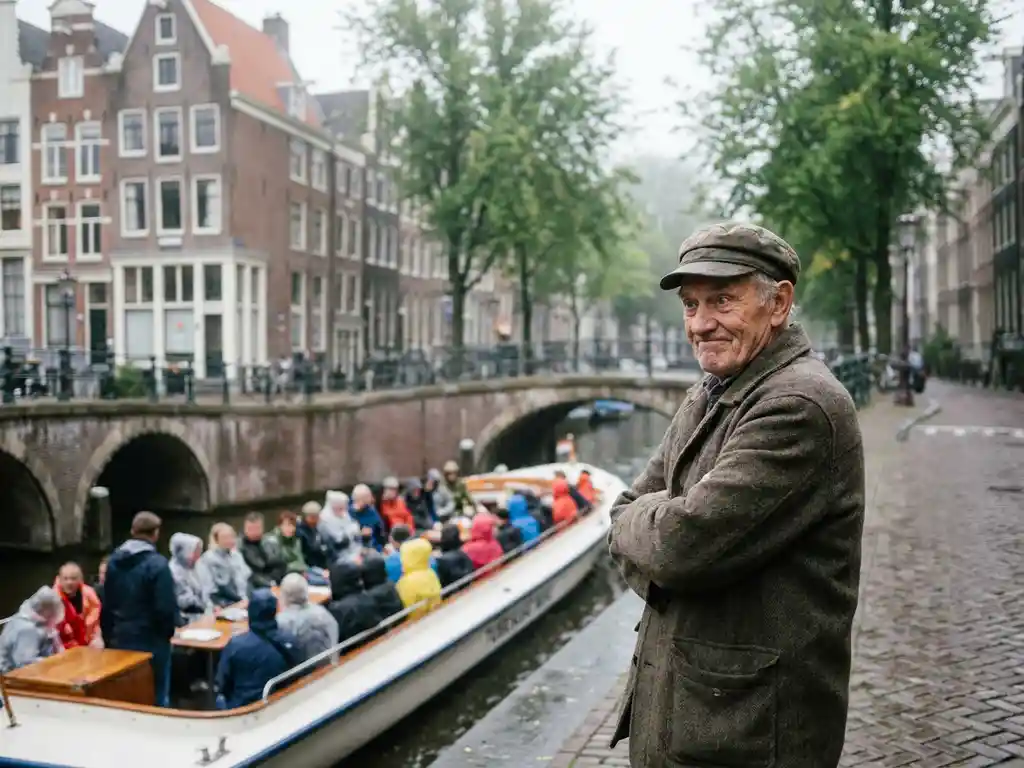
Amsterdam locals think tourists should skip the Red Light District, the overcrowded museum queues, and the generic canal boat tours in favour of experiences that actually reflect how the city lives. The tourist trail in Amsterdam is well-worn for a reason, but it rarely overlaps with where locals spend their time. Here is an honest insider breakdown of what to avoid, what to do instead, and when to come.
Which Amsterdam attractions do locals actually avoid?
Amsterdam locals avoid the Red Light District, Leidseplein on a Friday night, the Anne Frank House queue without a reservation, and the main canal boat departure points near Centraal Station. These spots share one thing in common: they are designed for visitors, not for people who actually live here. Locals have quietly rerouted their lives around the tourist infrastructure.
The issue is not that these places are bad in themselves. The Anne Frank House is genuinely moving and historically important. The canal system is one of the most beautiful urban environments in the world. But the versions of these things that tourists typically encounter are filtered through crowds, overpriced entry points, and a kind of performance of Amsterdam rather than Amsterdam itself.
Locals also tend to avoid the main shopping street, Kalverstraat, which has become a parade of international chains you could find in any European city. The same goes for most of the tourist-facing restaurants clustered around Dam Square, where the menus are laminated and the prices are not.
Why do locals dislike the Red Light District as a tourist destination?
Amsterdam locals dislike the Red Light District as a tourist destination because it has become a spectacle that crowds out the neighbourhood’s actual residents and creates a hostile street environment at night. What was once a functioning, if unconventional, urban neighbourhood has been overwhelmed by stag parties, pub crawls, and people treating the streets as an open-air attraction.
The city has tried various interventions over the years, from guided tour restrictions to closing certain streets at night. But the fundamental problem persists: when a neighbourhood becomes primarily a destination for people who have no stake in its well-being, the social fabric frays. Long-term residents have moved out. Small local businesses have been replaced by souvenir shops and cannabis dispensaries targeting tourists.
This does not mean the area is without interest. The architecture along the Oudezijds Voorburgwal canal is genuinely beautiful, and there are excellent restaurants and bars in the neighbourhood if you know where to look. But arriving as a spectator at the Red Light District experience itself is something locals find uncomfortable and, frankly, a bit embarrassing for the city’s reputation.
What do Amsterdam locals actually do on weekends instead?
Amsterdam locals spend weekends cycling through the Jordaan or De Pijp, visiting neighbourhood markets like the Albert Cuyp or the IJ-hallen flea market, eating at local Indonesian or Surinamese restaurants, and heading out to the parks or the woods at Amsterdamse Bos. The weekend rhythm here is relaxed, outdoor-oriented, and almost entirely off the tourist map.
The Amsterdam weekend guide that locals follow is built around a few simple principles: avoid the centre on Saturday afternoon, find a good terrace, and cycle somewhere. The city’s best neighbourhoods for a genuine local weekend experience include:
- De Pijp — lively, multicultural, and home to some of the best cheap restaurants Amsterdam has to offer
- Oud-West — relaxed neighbourhood cafes, independent shops, and the Vondelpark nearby
- Noord — reached by a free ferry across the IJ, with creative spaces, street food, and an increasingly interesting cultural scene
- Oost — Dappermarkt, Flevopark, and a genuine neighbourhood feel that has not yet been fully discovered
Locals also use weekends for Amsterdam day trips to places like Haarlem, Leiden, or the North Sea coast at Zandvoort, all reachable in under thirty minutes by train.
Are Amsterdam’s most famous museums worth visiting for serious culture lovers?
Yes, Amsterdam’s most famous museums are absolutely worth visiting for serious culture lovers, but the strategy matters enormously. The Rijksmuseum and the Van Gogh Museum are world-class institutions with collections that justify their reputations. The mistake is treating them as boxes to tick rather than places to spend real time in. Book in advance, arrive early, and go slowly.
The Rijksmuseum in particular rewards patience. Most visitors sprint to Rembrandt’s Night Watch and leave, missing an extraordinary collection of Dutch Golden Age painting, decorative arts, and historical objects spread across multiple floors. The building itself is a masterpiece of nineteenth-century architecture.
For serious culture lovers, the lesser-visited institutions are often more rewarding precisely because they are quieter. The Stedelijk Museum for modern and contemporary art is consistently underrated. The Jewish Historical Museum and the Portuguese Synagogue together form one of the most affecting cultural complexes in the city. The EYE Film Museum in Noord has a stunning building and a serious programme.
The Amsterdam immersive experiences that have proliferated in recent years, the kind found in temporary pop-up venues, are a different category entirely. Some are genuinely well-produced. Most are expensive and thin. Locals tend to be sceptical.
What parts of Amsterdam do tourists miss that locals love?
The parts of Amsterdam tourists most often miss include the eastern harbour islands, the Amsterdamse Bos, the street markets in De Pijp and Oost, the canal belt beyond the main tourist loop, and the entire northern bank of the IJ. These are the Amsterdam hidden gems that locals genuinely love and that rarely appear in mainstream travel content.
The eastern harbour islands, particularly Java-eiland and KNSM-eiland, offer some of the most interesting contemporary architecture in the city alongside waterfront walks that feel completely removed from the tourist centre. Borneo-eiland has a famous stretch of individually designed houses that architects make pilgrimages to see.
Amsterdam Noord has transformed dramatically over the past decade. What was once an industrial backwater accessible only by ferry is now home to creative studios, excellent restaurants, and a genuine neighbourhood energy. The NDSM wharf hosts large-scale art installations, markets, and events throughout the year.
For the best Amsterdam bike routes, locals tend to head out of the city entirely rather than cycling the tourist-clogged canal ring. The route along the Amstel river south towards Ouderkerk aan de Amstel passes windmills, farmland, and waterside cafes. The route through the Watergraafsmeer and out towards Muiden takes you through a completely different landscape within thirty minutes of the centre.
Should tourists visit Amsterdam in summer or is there a better time?
Tourists should seriously consider visiting Amsterdam in late spring or early autumn rather than summer. July and August bring the largest crowds, the highest hotel prices, and the longest queues at every major attraction. May, early June, September, and October offer excellent weather, manageable crowds, and a city that feels more like itself.
The Amsterdam weather guide that locals would give is honest about this: summer is genuinely lovely, with long evenings, outdoor terraces, and the canal swimming spots busy with locals. But it is also the period when the city is most overwhelmed by tourism, and when cheap hotels Amsterdam are at their least cheap. The trade-off is real.
April brings the tulip season and King’s Day on 27 April, which is one of the most extraordinary street parties in Europe and genuinely worth experiencing once. But it also brings significant crowds. December has the Amsterdam Light Festival, which is beautiful and much quieter than summer.
The honest answer for most visitors is that late September and October represent the best balance: the summer crowds have thinned, the light is extraordinary, the cultural season is in full swing, and you can actually get a table at the restaurant you want without booking three weeks in advance.
How Klagen Niet Klagen helps you navigate Amsterdam like a local
Finding honest, insider commentary on Amsterdam is harder than it should be. Most English-language content about the city is either written for first-time tourists or stuck behind a Dutch language barrier. Klagen Niet Klagen exists to fill that gap with opinionated, long-form writing about Amsterdam life that does not pretend the city is perfect and does not read like a sponsored city guide.
- Regular essays on Amsterdam’s best neighbourhoods, cultural life, and the tensions that make the city genuinely interesting
- Honest takes on things to do in Amsterdam that go beyond the standard tourist checklist
- Insider perspective built on over thirty years of living, working, and building something real in this city
- Commentary written for expats, engaged visitors, and internationally minded locals who want more than surface-level content
If this kind of honest Amsterdam perspective is what you are after, explore the full blog archive for more articles covering everything from Amsterdam weekend guides to the cultural contradictions that make this city endlessly fascinating.
And if you want to experience Amsterdam’s sharpest comedy and most entertaining live shows, Boom Chicago has been doing exactly that since 1993. It is the kind of evening that locals actually recommend to their visiting friends rather than quietly dreading, which is a higher bar than it sounds. Check the current shows and agenda to see what is on, or get in touch if you want to know more. It is genuinely one of the best English shows Amsterdam has to offer, and it has been earning that reputation for a very long time.
Frequently Asked Questions
How do I get around Amsterdam like a local without renting a bike?
While cycling is the definitive local mode of transport, the GVB tram network is fast, well-connected, and used daily by Amsterdam residents. Trams 2, 11, 12, and 17 cover most of the key neighbourhoods without dumping you into tourist-clogged areas. The free ferry from Centraal Station to Amsterdam Noord is also something locals use routinely and is one of the best free experiences in the city.
What are the most common mistakes first-time visitors make when trying to explore Amsterdam beyond the tourist trail?
The most common mistake is underestimating how compact and cyclable Amsterdam actually is — many visitors stick to the centre simply because they do not realise how quickly you can reach De Pijp, Oost, or Noord on foot or by tram. A second frequent error is booking accommodation right in the centre near Centraal Station, which places you at the epicentre of tourist infrastructure and makes it harder to feel the city’s real rhythm. Staying in or near a residential neighbourhood like Oud-West or De Pijp changes the entire experience.
Are there any local food experiences in Amsterdam that are genuinely affordable and not aimed at tourists?
Yes — Indonesian rijsttafel, Surinamese roti, and Dutch street food like raw herring (haring) or stroopwafels from a market stall are all genuinely affordable and eaten regularly by locals. The Albert Cuyp Market in De Pijp is the best single destination for cheap, authentic eating: fresh stroopwafels, poffertjes, herring, and international street food from vendors who have been there for decades. Avoid any restaurant with a photo menu near Dam Square and you are already most of the way there.
Is Amsterdam Noord worth the trip across the IJ, or is it too out of the way for a short visit?
Amsterdam Noord is absolutely worth the trip and the free ferry crossing takes less than five minutes from behind Centraal Station, making it one of the easiest neighbourhood detours in the city. The NDSM wharf, the EYE Film Museum, and the growing cluster of restaurants and creative spaces around Buiksloterweg make it a genuinely rewarding half-day. For a short visit, pairing Noord with the EYE Film Museum and lunch at one of the waterfront spots gives you a concentrated dose of what makes the neighbourhood interesting.
How far in advance should I book tickets for the Rijksmuseum and Van Gogh Museum?
During peak summer months (July and August), booking two to three weeks in advance is strongly advisable for both the Rijksmuseum and the Van Gogh Museum — the Van Gogh in particular sells out its timed entry slots quickly. In shoulder season (May, September, October), a week in advance is usually sufficient, though booking ahead is always recommended to avoid disappointment. Both museums offer timed entry tickets directly through their official websites, which is the only booking method worth using.