Category: Niet Klagen

  • What do locals actually do in Amsterdam on weekends?

    What do locals actually do in Amsterdam on weekends?

    Amsterdam locals spend their weekends doing almost nothing you’d expect from a tourist itinerary. Forget the canal tours and the Heineken Experience — residents are cycling through neighbourhood markets, sitting on terraces with friends, playing sports in the parks, and eating at the kind of places that rarely make it onto any “top 10” list. The rhythm of a local Amsterdam weekend is slower, more social, and far more neighbourhood-specific than any visitor guide will tell you. Here’s what it actually looks like, from the inside.

    Where do Amsterdam locals actually spend their Saturday mornings?

    Amsterdam locals spend Saturday mornings at neighbourhood markets, local bakeries, and coffee spots within cycling distance of home. The Albert Cuypmarkt in De Pijp is a genuine local institution, not a tourist trap, drawing residents for fresh stroopwafels, fish, flowers, and cheap produce. Smaller neighbourhood markets in the Jordaan, Noord, and Oost attract an even more local crowd.

    The ritual of Saturday morning in Amsterdam is deeply tied to food and coffee. Locals pick up their weekend groceries at the market, grab a coffee at a neighbourhood café, and often run into people they know. It is unhurried, conversational, and entirely at odds with the pace of the tourist centre a few kilometres away.

    Bread is a surprisingly serious matter. Many locals have a favourite bakery they cycle to specifically on Saturday mornings. Places like Hartog’s Volkoren in De Pijp or a neighbourhood bakker in Bos en Lommer have regulars who show up every week without fail. This is not a romantic quirk — it is simply how people here shop and start their weekend.

    What do Amsterdam locals do on Sunday that tourists miss?

    Sunday in Amsterdam belongs to brunch, cycling, and the kind of deep leisure that requires no agenda. Locals gather for long, unhurried brunches at neighbourhood spots, cycle out to the Amsterdamse Bos or along the IJ, or simply spend the morning at home before heading out in the afternoon. Sunday is slower, quieter, and more domestic than Saturday.

    The Noordermarkt on Sunday morning is one of the best-kept open secrets in the city. It draws a local crowd for organic produce and second-hand books, and has none of the tourist energy of the bigger weekend markets. If you want to see Amsterdam residents actually living their lives, this is where to go.

    Sunday afternoons often involve visiting friends, taking long bike rides, or heading out of the city entirely. Day trips to Haarlem, Utrecht, or the polders are common among residents who want space and quiet. The city empties slightly on Sunday afternoons, which is partly why it feels so different from Saturday.

    Which Amsterdam neighborhoods are locals actually in on weekends?

    On weekends, Amsterdam locals gravitate toward De Pijp, the Jordaan, Oost, Noord, and Bos en Lommer. These are the neighbourhoods where residents actually live in significant numbers, where the terraces fill with people who know each other, and where the atmosphere reflects the city’s day-to-day social life rather than its tourist economy.

    Noord has become increasingly central to local weekend life over the past decade. The NDSM wharf, the markets, and the growing cluster of bars and restaurants around Buikslotermeerplein draw a mixed crowd of long-term residents and newer arrivals. Crossing the IJ on the free ferry still feels like a genuine local move, even in 2026.

    De Pijp remains the neighbourhood most associated with the Amsterdam locals guide experience. It is dense, diverse, and walkable, with a concentration of independent cafés, restaurants, and shops that have survived the pressure of rising rents. On a Saturday afternoon, the streets around the Albert Cuypmarkt buzz with exactly the kind of mixed local energy that makes Amsterdam worth living in.

    The Jordaan, despite its reputation for tourists, still has pockets of genuine local life, particularly on the quieter streets north of Elandsgracht. Long-term residents who have been there for decades coexist with newer arrivals, and the neighbourhood’s brown cafés remain stubbornly local in character.

    Do Amsterdam locals ever go to the museums or tourist spots?

    Yes, Amsterdam locals do visit museums, but rarely on weekends and almost never without a specific reason. The Rijksmuseum, the Van Gogh Museum, and the Anne Frank House are genuinely world-class institutions that residents are proud of — but they tend to visit on quiet weekday afternoons, with a Museumkaart (the annual museum pass that makes entry free), and usually when hosting visitors from abroad.

    The Museumkaart is close to universal among culturally engaged Amsterdam residents. It removes the cost barrier entirely and makes spontaneous visits to smaller, less crowded institutions much easier. The Stedelijk Museum, the Jewish Historical Museum, and the EYE Film Institute in Noord are all popular with locals precisely because they are less overwhelmed by tourist traffic than the big three.

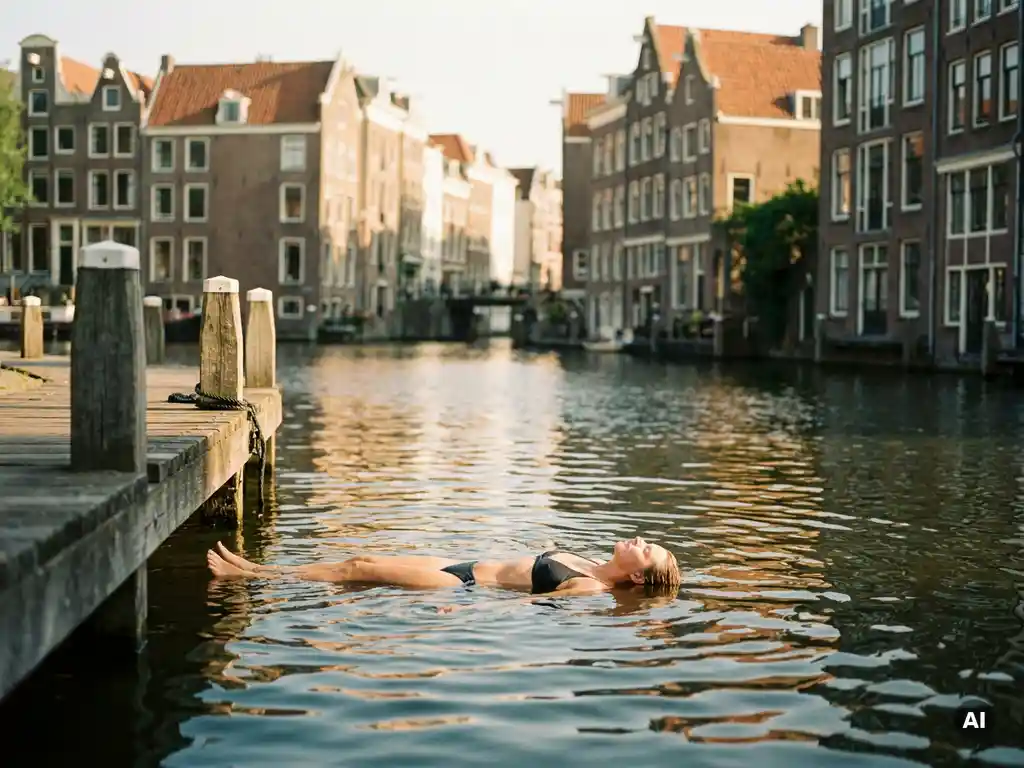
    What locals almost never do is join a canal tour on a weekend afternoon, visit the Heineken Experience, or queue for the Anne Frank House without booking months in advance. These are experiences designed for visitors, and residents are acutely aware of the difference. That said, the canals themselves are a constant part of local life — swimming in them in summer, cycling alongside them year-round, and simply living next to them in a way that makes a formal tour feel redundant.

    What’s the role of sport and the outdoors in a local Amsterdam weekend?

    Sport and outdoor activity are central to how Amsterdam locals spend their weekends. Cycling is the default mode of weekend transport and recreation simultaneously. The Amsterdamse Bos is the city’s main outdoor escape, offering running trails, open-air swimming, rowing, and enough space to feel genuinely away from the city without leaving it. Weekend sports culture here is active, unpretentious, and deeply embedded in daily life.

    Cycling as weekend recreation

    The Amsterdam bike routes that locals actually use on weekends extend well beyond the city centre. Routes through the Watergraafsmeer, along the Amstel river south of the city, or out through the polders toward Aalsmeer are popular for longer Saturday or Sunday rides. These are not scenic tourist routes — they are the rides that residents do when they want fresh air and distance.

    Parks, swimming, and outdoor sport

    The Vondelpark is famous, but locals tend to use it for running or a quick coffee stop rather than as a destination in itself. On warm weekends, the outdoor swimming pools at Sloterplas or the Flevoparkbad draw long queues of residents who have no interest in fighting for a spot on the Vondelpark grass. Football, tennis, and rowing clubs are well-attended, and the social dimension of club sport is a significant part of how many Amsterdammers structure their weekends.

    How does a typical Amsterdam weekend evening actually look for residents?

    A typical Amsterdam weekend evening for locals involves dinner at home or at a neighbourhood restaurant, drinks at a brown café or a friend’s place, and occasionally a show, concert, or comedy night. It is rarely as wild as Amsterdam’s reputation suggests. Most residents are not in the Leidseplein or Rembrandtplein on a Saturday night — those areas belong almost entirely to tourists and students by the evening.

    Dinner culture in Amsterdam leans social and informal. Residents cook for each other frequently, and when they do go out, they tend to favour neighbourhood spots over the city’s destination restaurants. The best cheap restaurants Amsterdam has to offer are almost always in residential neighbourhoods rather than the centre — places in Oost, Noord, or De Pijp where the food is honest, the prices are reasonable, and the room is full of people who live nearby.

    After dinner, a brown café is the default. These are Amsterdam’s most distinctive institution: dark, wood-panelled, unhurried, and entirely focused on conversation and beer. They close earlier than you might expect, which is why the Amsterdam evening often ends at a reasonable hour by European standards. The city’s nightlife reputation is real, but it belongs to a specific subset of venues and a specific demographic — most residents are home by midnight.

    Comedy and live performance are a genuine part of local evening culture for a certain crowd. Amsterdam has a lively English-language performance scene, and shows that combine sharp writing with live performance draw a mixed audience of expats, Dutch locals, and international visitors. This is one of the few areas where the best English shows Amsterdam offers genuinely serves both locals and visitors equally well.

    How Klagen Niet Klagen helps you understand the real Amsterdam weekend

    Most Amsterdam content online is written for people who are visiting for three days. Klagen Niet Klagen is written for people who actually live here, or who want to understand the city the way a long-term resident does. Here’s what you’ll find that you won’t get elsewhere:

    • Honest, opinionated takes on Amsterdam neighbourhoods, culture, and city life — written by someone who has lived and worked here for over thirty years
    • No tourism board influence, no advertorial pressure, no sanitised “hidden gems” content
    • Long-form essays that treat Amsterdam as a complex, contradictory, genuinely interesting city rather than a backdrop for a weekend trip
    • An English-language perspective that is insider by nature, not by claim
    • Regular new pieces covering the tensions, pleasures, and absurdities of Amsterdam life as a resident experiences them

    If you want to go deeper on what Amsterdam is actually like to live in, the full blog archive is the place to start. Read a few pieces and you will quickly understand why this city is both infuriating and irreplaceable.

    And if you want to experience the Amsterdam that locals actually love on a weekend evening, there is no better starting point than a night at Boom Chicago. For over thirty years, Boom Chicago has been making Amsterdam audiences laugh with sharp, intelligent, improvised comedy performed entirely in English. It is the kind of show that works for expats, Dutch locals, and international visitors in equal measure — which is rare, and worth something. Check the current shows and agenda and book ahead. It fills up.

    Frequently Asked Questions

    Is it worth staying in a residential neighbourhood like De Pijp or Oost instead of the city centre?

    Absolutely — staying in a residential neighbourhood puts you within walking or cycling distance of the markets, cafés, and terraces that locals actually use, rather than the tourist-facing businesses that dominate the centre. You’ll pay less for accommodation, eat better for less money, and get a much more accurate sense of what Amsterdam is actually like to live in. De Pijp in particular is compact, well-connected, and dense with exactly the kind of independent spots this post describes.

    What's the best way to get around Amsterdam on a weekend like a local?

    Rent a bike — full stop. Amsterdam’s cycling infrastructure makes it the fastest, cheapest, and most enjoyable way to move between neighbourhoods, markets, parks, and evening destinations. Most bike rental shops offer day or weekend rates, and services like MacBike or Swapfiets are easy to use. Avoid e-bikes if you want to blend in; locals ride standard bikes at a relaxed pace and park them everywhere.

    How far in advance do I need to book things like Boom Chicago or the Noordermarkt brunch spots?

    For Boom Chicago, booking at least a few days ahead is strongly recommended — popular shows sell out, especially on Friday and Saturday evenings. For brunch spots in De Pijp or the Jordaan, walk-ins are often possible early (before 10am), but by mid-morning on a Saturday the best neighbourhood places fill up fast. The Noordermarkt itself needs no booking — just show up Sunday morning before noon.

  • What are Amsterdam’s real hidden gems tourists never find?

    What are Amsterdam’s real hidden gems tourists never find?

    Amsterdam’s real hidden gems are the places, neighbourhoods, and experiences that locals return to again and again — not because they’re secret, but because they require curiosity, time, and a willingness to walk past the obvious. Most tourists never find them simply because the city’s famous highlights are so magnetic that few visitors look beyond them. This guide answers the questions that genuinely curious visitors and new expats ask once the postcard version of Amsterdam stops being enough.

    Where do Amsterdam locals actually spend their time?

    Amsterdam locals spend their time in the neighbourhoods just beyond the tourist belt: De Pijp, Oud-West, De Baarsjes, and Noord. These are the areas where you find neighbourhood cafes that have served the same regulars for decades, markets that sell food rather than souvenirs, and parks where people actually go to relax rather than take photos.

    The Vondelpark gets the tourists, but locals tend to head to the Rembrandtpark or the Flevopark when they want space and quiet. The Albert Cuyp market is well known, but the Ten Katemarkt in Oud-West draws a genuinely local crowd without the same foot traffic. Noord, across the IJ waterway, has transformed over the past decade into one of the most interesting parts of the city — full of creative studios, independent restaurants, and a waterfront energy that feels nothing like the canal ring.

    The honest answer is that locals avoid the centre on weekends. If you want to experience Amsterdam the way residents do, you need to get on a bike and follow the residential streets rather than the tourist maps.

    What makes a spot a ‘hidden gem’ in a city this famous?

    In Amsterdam, a hidden gem is not necessarily unknown — it is simply a place that has survived the pressure of mass tourism without changing what made it worth visiting in the first place. The city is small and densely covered by travel media, so true secrecy is rare. What matters is whether a place still serves its original purpose and its original community.

    A brown cafe that has been on the same corner since 1920 and still draws neighbourhood regulars is a hidden gem, even if it appears in a few guidebooks. A canal-side restaurant that pivoted entirely to tourist menus and group bookings is not, even if it looks charming from the outside. The distinction is about authenticity and function, not obscurity.

    For anyone looking for the best Amsterdam experiences rather than just the most photographed ones, the question to ask is simple: do locals still come here? If the answer is yes, you are probably in the right place.

    Which Amsterdam museums do tourists almost never visit?

    The museums tourists almost never visit in Amsterdam include the Tropenmuseum, the Electric Ladyland fluorescent art museum, the Museum Geelvinck, and the Amsterdam Museum (now in a transitional home while its original building is renovated). These offer genuinely distinctive experiences without the queues or the ticket prices of the Rijksmuseum or the Van Gogh Museum.

    • Tropenmuseum: A world cultures museum housed in a stunning colonial-era building. The collection is vast, thoughtful, and almost always quiet.
    • Electric Ladyland: A tiny, eccentric museum in the Jordaan dedicated entirely to fluorescent art and minerals. There is nothing else quite like it in the city.
    • Museum Geelvinck: A 17th-century canal house preserved with period interiors. It gives you a far more intimate sense of Golden Age Amsterdam than the bigger institutions.
    • Foam Photography Museum: Well regarded by photography enthusiasts but largely bypassed by general tourists, Foam consistently shows some of the best contemporary photography in Europe.

    The Stedelijk Museum for modern and contemporary art also deserves a mention. It sits right next to the Van Gogh Museum on Museumplein, yet on any given weekday the queues outside are a fraction of its neighbour’s. The collection is world-class and the building is beautiful.

    Are there parts of Amsterdam that tourism hasn’t changed?

    Yes. The residential neighbourhoods beyond the canal ring have remained largely intact as genuine living communities. Areas like Bos en Lommer, the Indische Buurt, and the older parts of Noord are still shaped primarily by the people who live there rather than by visitor footfall. These are not tourist destinations — they are simply Amsterdam neighbourhoods doing what Amsterdam neighbourhoods do.

    Even within the canal ring, pockets survive. The quieter streets of the Jordaan away from the main shopping routes, the eastern islands of Sporenburg and Borneo, and the stretch of canal along the Prinsengracht north of the Westerkerk all retain a residential quality that the busiest parts of the city have lost.

    What tourism has changed most visibly is the commercial layer: the shops, the restaurants, the short-stay apartments. The architecture, the water, the cycling culture, and the social atmosphere of residential streets have proven more resilient. Amsterdam’s best neighbourhoods are still recognisably themselves — you just have to know which streets to turn down.

    What do long-term expats discover about Amsterdam that tourists miss?

    Long-term expats in Amsterdam discover that the city rewards consistency more than exploration. The best experiences come from having a regular cafe, a regular market stall, a regular bike route — and from the slow accumulation of familiarity that turns a city from a backdrop into a home.

    Specifically, expats tend to discover a few things that tourists rarely encounter:

    • The cycling infrastructure as a daily pleasure: Tourists cycle in Amsterdam, but they usually stick to the obvious routes. The best Amsterdam bike routes are the ones that take you through residential streets, along lesser-known waterways, and out into the Amsterdamse Bos — a forest park on the edge of the city that is enormous, beautiful, and almost entirely off the tourist radar.
    • The neighbourhood food scene: The best cheap restaurants in Amsterdam are not in the centre. They are in De Pijp, in De Baarsjes, and increasingly in Noord — neighbourhood spots that rely on local regulars and price their food accordingly.
    • The cultural calendar beyond the headline acts: Amsterdam has an extraordinary density of live music, comedy, theatre, and spoken word that most tourists never access. The best English shows in Amsterdam are not always in the biggest venues.
    • The seasonal rhythm of the city: Amsterdam in winter is a completely different place to Amsterdam in July. Understanding the Amsterdam weather guide — the grey, the rain, the extraordinary light on a clear November morning — changes your relationship with the city entirely.

    How do you actually find Amsterdam’s hidden gems yourself?

    The most reliable way to find Amsterdam’s hidden gems is to follow local behaviour rather than curated lists. Walk the streets of residential neighbourhoods with no destination in mind. Eat where the menus are written on a chalkboard in Dutch. Ask the person behind the bar where they go on their day off. These approaches work because they bypass the commercial layer that most tourist content reflects.

    A few practical starting points:

    1. Cross the IJ to Noord. Take the free ferry from behind Centraal Station. Noord is where a large part of Amsterdam’s creative and independent food scene has moved over the past decade.
    2. Explore the Amsterdam best neighbourhoods on a bike, not on foot. Walking keeps you on the main streets. Cycling lets you move through residential areas at the right pace to notice what is actually there.
    3. Use the Amsterdam locals guide principle: if the menu has photos and is available in six languages, keep walking.
    4. Time your visits differently. The same street at 8am on a Tuesday and 2pm on a Saturday are two completely different experiences. Amsterdam’s hidden character is most visible outside peak hours.
    5. Look for the things Amsterdam does that no other city does as well: the brown cafes, the canal tour best taken on a small private boat rather than a glass-topped barge, the comedy and improv scene, the independent cinema culture.

    The Amsterdam weekend guide principle that works best for curious visitors is simple: pick one neighbourhood and spend a full day there rather than trying to cover the whole city. Depth beats breadth every time.

    How Klagen Niet Klagen helps you find the real Amsterdam

    Most Amsterdam content online is written for people who have never been here. Klagen Niet Klagen is written for people who want to understand the city the way a long-term resident does — honestly, critically, and with genuine affection for what makes it worth the frustration.

    • Long-form essays on Amsterdam city life written from over three decades of lived experience in the city
    • Commentary on Amsterdam best neighbourhoods, cultural life, and the tensions that mainstream media tends to smooth over
    • An honest, English-language perspective free from tourism board influence or advertorial pressure
    • Regular new pieces covering everything from Amsterdam immersive experiences to the social dynamics of Dutch city life

    If you want to go deeper than the guidebook version of Amsterdam, the blog archive is a good place to start. Or head to the Klagen Niet Klagen homepage to get a sense of what this project is about.

    And if you are looking for a genuinely Amsterdam experience that combines sharp comedy, improvisation, and a room full of people who actually live here — that is exactly what Boom Chicago has been delivering since 1993. Check the current shows and agenda and come and see what three decades of Amsterdam-rooted comedy looks like live. It is, without question, one of the best things to do in Amsterdam that tourists almost never put on their list — and locals almost always recommend.

    Frequently Asked Questions

    How long do I need to spend in Amsterdam to get beyond the tourist experience?

    Most visitors start to scratch the surface of the real Amsterdam after three to four days — but only if they deliberately step away from the canal ring and Museumplein from day one. The key is to treat at least one full day as a neighbourhood day: pick somewhere like De Pijp or Noord, arrive in the morning, and don’t leave until evening. That single commitment will teach you more about the city than three days of landmark-hopping.

    What's the best way to get to Amsterdam Noord, and is it worth the trip?

    The free ferry from behind Centraal Station takes less than five minutes and runs around the clock — it’s one of the easiest journeys in the city. Noord is absolutely worth the trip: the NDSM wharf, the independent restaurants along the waterfront, and the creative studio culture make it feel like a different city entirely. Go on a weekday if you can, when it’s quieter and the neighbourhood energy is most authentic.

    Are the lesser-known Amsterdam museums worth visiting even if you're short on time?

    Yes — especially because the time investment is actually lower than at the major institutions. Skipping the Rijksmuseum queue alone can save you two hours; spending that time at Museum Geelvinck or Foam gives you an experience that’s just as rich and far more personal. If you only have one alternative museum slot, Electric Ladyland in the Jordaan is the most genuinely unique thing you can do in under an hour.

  • What is the best canal tour in Amsterdam worth taking?

    What is the best canal tour in Amsterdam worth taking?

    The best canal tour in Amsterdam worth taking is on a small, open boat on the narrower canals of the Jordaan and the canal ring — not the giant glass-topped cruise vessels that dominate the main waterways. The difference is not just aesthetic: smaller boats reach places the big operators cannot, and the experience feels like Amsterdam rather than a floating airport lounge. Below, every question worth asking before you book gets a straight answer.

    Which type of canal tour actually shows you Amsterdam?

    The canal tours that actually show you Amsterdam are on small open boats navigating the historic canal ring and the Jordaan’s side canals, ideally with a local guide or skipper who knows the city rather than pre-recorded audio commentary. These tours put you at water level, close to the canal houses, and away from the cruise-ship traffic on the Amstel and the IJ waterfront.

    Amsterdam has roughly 165 canals and more than 1,500 bridges. The majority of large tour operators stick to the same predictable loop: Central Station, the Rijksmuseum, the Heineken brewery, back again. It is perfectly fine for orientation, but it shows you the postcard version of Amsterdam rather than the lived city.

    What separates a memorable canal experience from a forgettable one comes down to three things:

    • Boat size: Smaller vessels access the narrower canals in the Jordaan, the Nine Streets area, and the Eastern Islands neighbourhood — the parts of Amsterdam where people actually live
    • Commentary quality: A knowledgeable guide who improvises and responds to what you see beats a looping audio track in any language
    • Route originality: The best operators avoid the main tourist corridor and take you through residential waterways where you see laundry, houseboats, cyclists, and real Amsterdam life

    If you want to understand Amsterdam rather than simply photograph it, a small-group boat with a human guide is the only option worth your time.

    What’s the difference between a hop-on hop-off and a fixed-route canal tour?

    A hop-on hop-off canal tour lets you board and exit at multiple stops around the city throughout the day on a single ticket, while a fixed-route tour takes you on one continuous journey with a set departure time, a defined route, and a return to the starting point. The key distinction is flexibility versus depth: hop-on hop-off prioritises movement around the city, and fixed-route tours prioritise the canal experience itself.

    Hop-on hop-off boats are useful if you want to combine a canal journey with reaching specific landmarks without walking or cycling. They run on a schedule similar to a bus network, and the boats are almost always large, enclosed vessels. The commentary is generic and the experience is transactional. You are using the canal as transport, which is a perfectly legitimate choice in Amsterdam.

    Fixed-route tours, especially smaller private or semi-private ones, are a different product entirely. You commit to a route and a duration, and in return you get a coherent, curated experience. A good fixed-route tour tells a story about the city as it unfolds around you, rather than dropping you at a series of stops and leaving you to piece it together yourself.

    For first-time visitors who want to cover ground, hop-on hop-off is practical. For anyone who wants Amsterdam’s canal ring to actually mean something, a fixed-route small boat tour is the better investment.

    How long should a canal tour in Amsterdam be?

    The ideal canal tour in Amsterdam lasts between 60 and 90 minutes. That is long enough to cover the main historic canal ring and the Jordaan waterways without the experience becoming repetitive or exhausting. Tours shorter than 45 minutes tend to feel rushed and rarely leave the main tourist corridor; tours longer than two hours often pad their routes with stretches that add little.

    There are exceptions. Evening dinner cruises and private boat rentals operate on different logic, where the boat itself is the venue and duration is part of the appeal. If you are renting a small open boat with friends and a cooler, three hours on the canals on a warm afternoon is one of the best things to do in Amsterdam, full stop.

    For a standard guided tour, the 75-minute format has become the industry standard for good reason. It fits within most visitors’ attention spans, covers enough of the canal ring to feel complete, and leaves time for the rest of the day. Anything marketed as a “quick 30-minute highlights tour” is almost always a waste of money.

    When is the best time to take a canal tour in Amsterdam?

    The best time to take a canal tour in Amsterdam is late afternoon on a weekday between April and October. The light is warm and low, the main morning rush of tourist boats has thinned out, and the canals feel closer to the way locals experience them. Avoid Saturday and Sunday mornings in summer, when the main waterways become genuinely congested.

    Amsterdam’s weather makes timing more complicated than in most cities. The canal ring is beautiful in every season, but an open boat in February requires real commitment. Most operators run open boats from April through October, and the experience is genuinely different once the city warms up and the trees along the Herengracht and Keizersgracht are in full leaf.

    A few practical considerations:

    • Golden hour (late afternoon): The light on the canal houses is at its best in the two hours before sunset, making this the most photogenic window
    • Weekday mornings: Quieter on the water and often cheaper, though the light is less dramatic
    • Evening tours: The illuminated canal ring after dark is genuinely beautiful and a completely different atmosphere from a daytime tour
    • Spring tulip season (April to early May): Peak tourist season, so book in advance, but the city is at its most visually striking

    If Amsterdam’s weather is doing what Amsterdam weather typically does, which is to say something unpredictable, a covered boat is the sensible fallback. But an open boat on a clear afternoon remains the definitive canal experience.

    Are Amsterdam canal tours worth the money?

    Yes, a well-chosen Amsterdam canal tour is worth the money. The canal ring is a UNESCO World Heritage Site and genuinely one of the most beautiful urban waterscapes in the world. Seeing it from the water rather than from a bridge changes how you understand the city’s architecture, scale, and history. The question is not whether to do it, but which version to pay for.

    The large operators running glass-topped boats from the main tourist piers are not bad value for what they are, but what they are is a tourist product rather than a genuine Amsterdam experience. If that is the budget and the context, they are perfectly adequate. But for anyone who has come to Amsterdam with real curiosity, the extra cost of a smaller, better-guided tour pays for itself in the quality of what you actually learn and see.

    Private boat rental is worth flagging separately. Renting a small open motorboat and navigating the canals yourself is legal, does not require a licence for boats under a certain size, and costs roughly the same per person as a premium guided tour when shared between a group. It is one of the genuinely great Amsterdam experiences and one that most visitors do not know is available to them.

    What should you watch out for when booking a canal tour?

    When booking a canal tour in Amsterdam, watch out for misleading descriptions, hidden fees, and operators who sell “small group” experiences that turn out to seat 50 people on an enclosed barge. The canal tour market in Amsterdam is large and competitive, and quality varies considerably between operators at similar price points.

    Specific things to check before booking:

    • Actual boat capacity: A “small group tour” should mean fewer than 20 people. Anything larger and the intimacy disappears
    • Live versus recorded commentary: Always confirm whether there is a live guide on board. Pre-recorded audio in six languages is not the same thing
    • Route specifics: Ask which canals the tour covers. If the operator cannot name specific waterways beyond “the historic centre,” the route is almost certainly the standard tourist loop
    • Departure point: Tours departing from near Central Station tend to be the most commercial. Operators based in the Jordaan or the canal ring itself are often more interesting
    • Cancellation policy: Amsterdam weather changes fast. A flexible cancellation policy matters more here than in most cities

    The booking platforms that aggregate canal tours apply the same logic as hotel aggregators: they surface what converts, not necessarily what is best. Reading recent reviews on independent platforms and looking specifically for comments about guide quality and route variety will tell you more than the operator’s own marketing copy.

    How Klagen Niet Klagen helps you find the best Amsterdam experiences

    Finding the canal tour that actually shows you Amsterdam rather than a sanitised version of it is exactly the kind of question that mainstream tourism content fails to answer honestly. Klagen Niet Klagen exists to fill that gap, with independent, opinion-driven commentary on Amsterdam city life written by someone who has lived and worked here for over three decades.

    • Honest assessments of what is genuinely worth your time and money in Amsterdam, with no advertorial pressure or tourism-board influence
    • Insider perspective on the city’s neighbourhoods, culture, and contradictions that no travel guide provides
    • Long-form essays and guides on Amsterdam experiences written for curious visitors and long-term residents alike
    • A clear editorial voice grounded in real Amsterdam life, not curated for a tourist audience

    If you want to understand Amsterdam rather than simply visit it, start here and keep reading.

    And if you are in Amsterdam and want an evening that captures the city’s sharpest, most irreverent side, Boom Chicago has been doing exactly that since 1993. Improvised comedy, sharp writing, and a room full of people who get the joke: it is one of the best English-language shows in Amsterdam and one of the few things in the city that locals and visitors genuinely enjoy together. Check the current shows and agenda and see what is on while you are here.

    Frequently Asked Questions

    Can I rent a boat and navigate Amsterdam's canals myself, and do I need a licence?

    Yes, self-skippered boat rental is legal in Amsterdam and no licence is required for small open motorboats under a certain engine size — typically 15 horsepower or less. Most rental companies provide a brief orientation before you head out, and the canals, while busy in summer, are navigable without prior experience if you take it slowly. Shared between four to six people, the per-person cost is comparable to a premium guided tour, and the freedom to linger wherever you like makes it one of the most rewarding ways to spend an afternoon in the city.

    What should I wear or bring on an open boat canal tour in Amsterdam?

    Even in summer, Amsterdam’s canal-level air is noticeably cooler than street level, so bring an extra layer regardless of how warm the day feels on land. A light waterproof jacket is worth packing from April through October given how quickly the weather can shift. Sunscreen and sunglasses matter more than most visitors expect on a clear afternoon, since the water reflects a significant amount of light — and if you are on an open boat, there is nowhere to hide from it.

    Are Amsterdam canal tours suitable for young children, and what should parents know before booking?

    Most canal tours are suitable for children, but the experience varies considerably by boat type and tour length. A 75-minute guided tour on a small open boat works well for children old enough to sit still and stay interested; anything longer risks losing younger kids entirely. Check with the operator whether life jackets are provided for small children, confirm that the boat has low or open sides rather than enclosed glass walls (children tend to disengage quickly on enclosed vessels), and look for operators who offer a more informal, interactive style of commentary rather than a scripted audio loop.

  • What is the best weekend itinerary for Amsterdam first-timers?

    What is the best weekend itinerary for Amsterdam first-timers?

    A weekend in Amsterdam is genuinely enough to get a strong first impression of the city, provided you make smart choices about where to spend your time. Two full days cover the essential experiences without feeling like a forced march through a checklist. This guide walks you through exactly how to structure those days, which neighbourhoods deserve your attention, and the mistakes that will quietly ruin your trip if you let them.

    How many days do you actually need to see Amsterdam?

    Two days is the realistic minimum for a first visit to Amsterdam that feels satisfying rather than frantic. You will not see everything, but you will see enough to understand what makes the city genuinely interesting. Three days gives you breathing room; anything shorter than two days and you are essentially just passing through.

    The good news is that Amsterdam is compact. The historic canal ring, the major museums, the best neighbourhoods, and the liveliest streets all sit within a few kilometres of each other. You do not need a car, rarely need public transport, and can cover enormous ground on foot or by bike. That density works in your favour on a short trip.

    The bad news is that Amsterdam is extremely popular, and popularity has consequences. Museum queues are long, accommodation is expensive, and the most famous streets can feel like an airport terminal on a Saturday afternoon. A well-planned weekend sidesteps most of this. An unplanned one does not.

    What should you do on day one in Amsterdam?

    On your first day in Amsterdam, anchor your morning at one major museum, spend your afternoon exploring the canal ring on foot, and end your evening in the Jordaan neighbourhood. This sequence gives you the cultural foundations, the iconic scenery, and a genuinely local atmosphere all in one day.

    Morning: choose one museum and commit to it

    The Rijksmuseum and the Van Gogh Museum are the obvious choices, and they are obvious for good reason. Both are world-class. Both require advance booking or you will spend your morning in a queue rather than inside. Book tickets before you leave home. The Rijksmuseum is larger and broader in scope; the Van Gogh Museum is more focused and emotionally immediate. Pick one based on your interests and give it two to three hours.

    If crowds genuinely bother you, the EYE Film Museum in Amsterdam Noord is a short ferry ride from Central Station and offers a dramatically different experience: striking architecture, thoughtful exhibitions, and far fewer people. It is one of the better Amsterdam hidden gems hiding in plain sight.

    Afternoon: walk the canal ring

    After the museum, walk north through the canal ring. The Nine Streets area (De 9 Straatjes) sits between the Jordaan and the main canals and is one of the most pleasant stretches of city to wander in Europe. Independent shops, good coffee, beautiful architecture, and almost no chain stores. This is what the best Amsterdam experiences actually look like when the tourism industry is not involved.

    An Amsterdam canal tour is worth doing on day one, ideally in the late afternoon when the light is good. The smaller, open boat tours run by independent operators give a far better experience than the large covered glass boats. You see the same canals but feel like you are part of the city rather than a specimen being transported through it.

    What should you do on day two in Amsterdam?

    Use day two to go deeper rather than wider. Rent a bike in the morning and explore beyond the tourist centre, spend your afternoon in a neighbourhood you would not find in a standard itinerary, and consider booking an evening show or experience that gives you genuine local culture rather than a packaged version of it.

    Amsterdam is one of the few cities in the world where cycling is genuinely the best way to get around, not just a novelty. The Amsterdam bike routes that follow the smaller canals through the Jordaan, De Pijp, and Oud-West are flat, well-marked, and reveal a version of the city that walking tourists simply do not see. Rent a basic city bike from a local shop rather than one of the tourist rental operations near Central Station.

    In the afternoon, head to De Pijp. The Albert Cuyp Market runs through the heart of the neighbourhood and is one of the largest outdoor markets in Europe. It is loud, chaotic, and completely unpretentious. The surrounding streets have some of the best cheap restaurants Amsterdam has to offer, particularly for Indonesian, Surinamese, and Middle Eastern food. Amsterdam’s colonial history left a remarkable culinary legacy that most first-timers never discover because they are eating overpriced pancakes on the main tourist drag.

    For the evening, a live comedy or improv show is one of the most underrated things to do in Amsterdam. The best comedy Amsterdam has to offer is performed in English, which means international visitors are not locked out. Amsterdam immersive experiences like live comedy also give you something no museum can: a genuine sense of the city’s irreverent, self-aware personality.

    Which Amsterdam neighbourhoods are worth visiting on a short trip?

    On a short trip to Amsterdam, the four neighbourhoods worth prioritising are the Jordaan, De Pijp, Oud-West, and Amsterdam Noord. Each has a distinct character, and together they give you a far more honest picture of the city than the tourist centre alone.

    • The Jordaan is the historic working-class neighbourhood turned creative hub. It is beautiful, walkable, and full of independent galleries, brown cafes, and good food. It also gets crowded on weekends, so go early.
    • De Pijp is younger, more diverse, and more affordable. It is where a lot of Amsterdammers actually spend their time. The Albert Cuyp Market is here, and the restaurant scene is genuinely excellent.
    • Oud-West sits just west of Vondelpark and has a neighbourhood feel that the Jordaan has partly lost to tourism. Good coffee shops (the actual kind), local bars, and a relaxed pace.
    • Amsterdam Noord is across the IJ river and reached by a free ferry from Central Station. It has become the home of Amsterdam’s creative and tech scene, with the NDSM Wharf offering a striking post-industrial atmosphere unlike anything else in the city.

    These are the Amsterdam best neighborhoods for visitors who want to see how the city actually functions, rather than how it presents itself to tourists.

    What are the biggest mistakes first-time visitors make in Amsterdam?

    The biggest mistakes first-time visitors make in Amsterdam are booking nothing in advance, staying near Central Station, eating wherever looks convenient, and trying to see too much. Each of these is avoidable, and each one significantly degrades the experience.

    • Not booking museums in advance. The Rijksmuseum, Anne Frank House, and Van Gogh Museum all require advance booking. Show up without a ticket and you will spend hours in a queue or miss them entirely.
    • Staying in the tourist centre. Hotels near Central Station and the Red Light District are often the most expensive and the least pleasant. Cheap hotels Amsterdam visitors actually enjoy tend to be in De Pijp, Oud-West, or the Jordaan, where you wake up in a real neighbourhood rather than a tourist corridor.
    • Eating on the main streets. The restaurants on Damrak, Leidseplein, and Rembrandtplein exist almost entirely to serve tourists. They are overpriced and mediocre. Walk two streets in any direction and the quality improves immediately.
    • Underestimating the weather. The Amsterdam weather guide reality is this: it can rain at any time of year, and the wind off the canals is colder than it looks. Pack a waterproof layer regardless of the season.
    • Treating the bike lanes as pavements. Amsterdam cyclists are fast, silent, and entirely unsympathetic to tourists standing in their lane. Pay attention to where you are walking.

    Is a weekend in Amsterdam enough to get a real sense of the city?

    A weekend in Amsterdam is enough to get a genuine sense of the city if you approach it with curiosity rather than a checklist. Two days will not make you an Amsterdammer, but they will give you a real taste of the city’s character, its contradictions, and its particular kind of beauty, provided you spend your time in the right places.

    What a weekend cannot give you is depth. Amsterdam rewards familiarity. The longer you stay, the more you notice the tension between the city’s progressive reputation and its conservative instincts, between its international outlook and its intensely local culture, between its beauty and the relentless pressure that mass tourism places on it. Those layers take time to reveal themselves.

    But as a first encounter? Two well-spent days in Amsterdam leave most people wanting to come back. That is probably the most honest endorsement a city can receive. Use the Amsterdam locals guide approach: eat where locals eat, cycle where locals cycle, and resist the pull of the obvious. The city will reward you for it.

    How Klagen Niet Klagen helps you plan your Amsterdam weekend

    Planning a first trip to Amsterdam is easy. Planning one that actually shows you the city beneath the surface is harder. That is exactly what Klagen Niet Klagen exists to help with. Written by someone who has lived and built things in Amsterdam for over thirty years, the blog gives you the honest, opinionated insider perspective that no tourism board will ever provide.

    • Long-form essays on Amsterdam neighbourhoods, culture, and city life, written for people who want to understand the city rather than just visit it
    • Honest takes on what is worth your time and what is overrated, without advertorial pressure or sponsored content
    • Cultural context that helps you make sense of Dutch directness, Amsterdam’s contradictions, and the unspoken rules of city life
    • An English-language perspective written from within the city’s creative and entrepreneurial scene, not from a press trip

    If you want to go beyond the standard Amsterdam weekend guide, explore the full blog archive and read the city the way it deserves to be read.

    And while you are planning your evenings in Amsterdam, do yourself a favour and check out what is on at Boom Chicago. The English-language comedy and improv shows have been a genuine Amsterdam institution since 1993, and an evening there gives you something that no museum or canal tour can match: a room full of people laughing together at the city they all, in their own way, call home. It is one of the best English shows Amsterdam has produced, and it has been running long enough to mean something. Get in touch if you want to know more.

    Frequently Asked Questions

    Can I visit the Anne Frank House without booking in advance?

    No — the Anne Frank House is one of the most in-demand attractions in Europe, and walk-in tickets are extremely limited or simply unavailable during peak periods. Book your timed-entry ticket through the official Anne Frank House website as early as possible, ideally several weeks before your trip. Last-minute travellers occasionally find cancellation slots, but it is not a strategy worth relying on for a two-day visit.

    What is the best way to get from Amsterdam Airport (Schiphol) to the city centre?

    The direct train from Schiphol Airport to Amsterdam Centraal runs every 10–15 minutes, takes roughly 15–20 minutes, and costs around €5–6 each way — it is by far the fastest and most affordable option. Taxis and rideshare services are significantly more expensive and subject to traffic delays, particularly during peak hours. If you are staying in De Pijp or Oud-West, check whether a direct train to Amsterdam Zuid station is more convenient than going all the way to Centraal.

    Is Amsterdam safe to visit as a solo traveller?

    Amsterdam is generally very safe for solo travellers, including solo women, and ranks among the more relaxed major European cities in terms of street safety. The main concerns are practical rather than threatening: pickpocketing in crowded tourist areas, cyclists in bike lanes, and the disorienting effect of the Red Light District at night if you wander in unprepared. Stick to the neighbourhoods outlined in this guide, stay aware of your surroundings in busy areas, and you are very unlikely to have any problems.

  • What are the hidden costs of visiting Amsterdam tourists ignore?

    What are the hidden costs of visiting Amsterdam tourists ignore?

    Amsterdam’s hidden costs catch most visitors off guard, and the total bill often runs 20 to 40 percent higher than travellers expect based on headline prices alone. Tourist tax, museum surcharges, transport fees, and the sheer cost of eating and drinking in a major European city all stack up fast. The sections below break down exactly where the money goes — and how to plan around it.

    How much does Amsterdam’s tourist tax actually add to your bill?

    Amsterdam’s tourist tax adds a meaningful chunk to every hotel stay. As of 2026, the city charges 12.5 percent of the room rate per night as a tourist tax (toeristenbelasting), on top of whatever you’ve already paid for the room. On a 150-euro-per-night hotel room for four nights, that’s an extra 75 euros you won’t see advertised on most booking platforms until checkout.

    This is one of the highest tourist tax rates in Europe, and Amsterdam has raised it repeatedly over the years as the city tries to manage visitor numbers. Cruise passengers also pay a flat per-person fee when docking. The tax applies to hotels, hostels, Airbnb-style rentals, and campsites alike, so there’s no category of accommodation that escapes it. Budget carefully: always check the total price including taxes before booking, because the difference between the displayed rate and the final bill can be genuinely surprising.

    Why is eating and drinking in Amsterdam so expensive?

    Eating and drinking in Amsterdam is expensive primarily because of high labour costs, steep rents in the city centre, and the Netherlands’ relatively high VAT on food and hospitality. A sit-down lunch for two in a mid-range canal-side restaurant can easily cost 50 to 70 euros before any drinks. Add a couple of beers or glasses of wine and you’re well past 80.

    The tourist trap factor is real and geographic. Restaurants within a five-minute walk of Dam Square, the Rijksmuseum, or the Anne Frank House operate in one of the most expensive real estate markets in the Netherlands. Their rent is enormous, and that cost lands directly on your plate. The Amsterdam locals guide principle applies here: the further you walk from the postcard-perfect spots, the better the value.

    For genuinely affordable eating, the Pijp neighbourhood, Oud-West, and the streets around Javastraat in Oost are where locals actually eat. These areas offer some of the best cheap restaurants Amsterdam has to offer — think Indonesian, Surinamese, and Turkish spots where a full meal costs under 15 euros. The tourist corridor is simply a different economy.

    What are the fees tourists miss when visiting Amsterdam museums?

    The most commonly missed museum fee in Amsterdam is the booking surcharge. The Rijksmuseum, the Van Gogh Museum, and the Anne Frank House all require timed entry tickets booked in advance, and they charge an additional booking or service fee on top of the base admission price. At the Anne Frank House, for instance, this surcharge has historically added several euros per ticket to the already high entry cost.

    Beyond surcharges, many visitors don’t account for the full cost of the Amsterdam Museum Card (Museumkaart). While the card pays for itself quickly if you’re visiting multiple institutions, it has an upfront cost of around 65 euros for adults, and not every museum or attraction in the city accepts it. The EYE Film Museum, NEMO Science Museum, and several smaller galleries are included, but the Anne Frank House is not, which surprises a lot of visitors.

    Coat and bag check fees, audio guide rentals, and paid photography permits in certain venues are smaller costs that add up across a multi-day museum itinerary. None of these are hidden in a deceptive sense, but they’re rarely factored into pre-trip budgets. Budget an extra 5 to 10 euros per museum visit beyond the headline ticket price and you’ll be closer to the real number.

    How much do transport costs add up for visitors in Amsterdam?

    Transport costs in Amsterdam can add 15 to 25 euros per person per day if you’re relying on public transit and occasional taxis without a plan. A single GVB tram or metro journey costs around 1.08 euros with an OV-chipkaart, but buying disposable single-use tickets is significantly more expensive, and many visitors don’t realise the OV-chipkaart requires a deposit plus a minimum balance to function.

    Bike rental is often the smarter financial move for stays of more than two days. A decent rental bike costs roughly 12 to 18 euros per day, but day rates drop considerably on multi-day rentals. For visitors who want to explore Amsterdam bike routes properly — including the longer rides out to Vondelpark, the IJ waterfront, or even day trips to nearby towns — a rental bike pays for itself in saved tram fares within a day or two.

    Taxis and ride-hailing services are expensive by European standards. A short trip across the centre can cost 12 to 18 euros. Canal tours, ferries to the NDSM Wharf, and tourist water taxis add further transport costs that visitors rarely budget for in advance. The free GVB ferries behind Centraal Station are a legitimate exception and one of the genuinely free things to do in Amsterdam worth knowing about.

    Are there entry fees or fines tourists don’t expect in Amsterdam?

    Yes. Amsterdam has several fees and fines that catch visitors off guard. The most financially painful is the fine for cycling without lights after dark, which can run to 100 euros or more. Rental companies don’t always provide lights automatically, and the police do enforce this, particularly in autumn and winter when darkness falls early.

    Smoking cannabis in public is technically restricted to designated areas, and fines for violations in prohibited zones have increased as the city tightened enforcement. Drinking alcohol on the street in certain areas, particularly around Centraal Station and Leidseplein, is also subject to fines. These aren’t obscure technicalities — they’re actively enforced, especially during busy periods.

    Parking costs for visitors arriving by car are among the highest in Europe in the city centre, with rates exceeding 7 euros per hour in some zones. Many visitors assume the park-and-ride facilities outside the ring road are optional conveniences rather than the sensible, much cheaper alternative they actually are. And if you overstay a paid parking slot, the clamping and release fee is genuinely eye-watering.

    What’s the cheapest time of year to visit Amsterdam?

    The cheapest time to visit Amsterdam is January through early March, excluding the Christmas and New Year period. Hotel rates drop significantly, museums are quieter, and the city feels more like itself — less performative, more lived-in. The Amsterdam weather guide reality is that winters are cold, grey, and often rainy, but rarely extreme, and the canal scenery in winter light has its own appeal.

    Late November is also good value before the Christmas markets arrive and push prices back up. The shoulder seasons of April and October are a middle ground: better weather than deep winter, but prices start climbing in April as tulip season draws visitors from across the world. Keukenhof is open only in spring, which makes that period unavoidably busy and expensive around the bulb fields.

    Summer — June through August — is peak pricing season across every category: hotels, restaurants, canal tours, and bike rentals all cost more. If your schedule is flexible, a late January or February visit offers the biggest savings and some of the most authentic Amsterdam experiences, simply because the city isn’t performing for an audience of millions.

    How Klagen Niet Klagen helps you spend smarter in Amsterdam

    Knowing what Amsterdam actually costs is the difference between a trip that delivers and one that leaves you feeling shortchanged. Klagen Niet Klagen exists precisely to give you the kind of honest, insider perspective that tourism boards and booking platforms won’t. Here’s what the blog brings to the table:

    • Honest takes on where Amsterdam’s costs are justified and where they’re a straight-up tourist premium
    • Neighbourhood-level guidance on the best cheap restaurants Amsterdam actually has, written by someone who eats there regularly
    • Commentary on Amsterdam’s best neighbourhoods from the perspective of someone who has lived and worked in the city for over three decades
    • Practical, opinionated advice on the best Amsterdam experiences that don’t require spending a fortune
    • Long-form essays that go beyond the surface to explain why the city works the way it does

    Browse the full blog archive for more articles that cover Amsterdam from the inside out — not as a destination to be marketed, but as a city worth understanding.

    And while you’re planning your Amsterdam visit, don’t overlook one of the city’s genuinely great evenings out. Boom Chicago’s shows have been making Amsterdam audiences laugh since 1993 — sharp, improvised, and entirely in English. If you want to experience the city’s creative energy in a room full of people who actually live here, check the agenda and book a seat. It’s the kind of night that makes Amsterdam feel like a place you understand, not just one you’ve visited.

    Frequently Asked Questions

    How much should I realistically budget per day for Amsterdam beyond accommodation?

    A realistic daily budget beyond accommodation is around 80 to 120 euros per person for a mid-range experience — covering meals, transport, one museum entry, and a drink or two. If you’re eating away from the tourist corridor, using an OV-chipkaart or rental bike, and booking museum tickets in advance to avoid last-minute premium options, you can comfortably come in at the lower end. Budget travellers eating at local spots in De Pijp or Oost and cycling everywhere can manage on 50 to 60 euros per day, while those dining canal-side and taking taxis regularly should plan for 150 euros or more.

    What's the single most common budgeting mistake first-time visitors to Amsterdam make?

    The most common mistake is budgeting based on the room rate alone and ignoring the 12.5 percent tourist tax, booking surcharges, and the cumulative cost of transport and museum fees. Many visitors also underestimate how quickly food and drink costs escalate when eating in the tourist corridor — a couple of meals near the Rijksmuseum or Anne Frank House can blow a full day’s food budget in one sitting. The fix is simple: always check the final checkout total when booking accommodation, pre-book museum tickets to see the real all-in price, and build in a 20 to 30 percent buffer on your overall trip estimate.

    Is the Museumkaart worth buying for a short trip, or only for longer stays?

    The Museumkaart starts paying for itself from around three to four museum visits, so for a three-day trip with a packed cultural itinerary it can absolutely be worth the roughly 65-euro upfront cost. The key caveat is to check which museums on your personal list actually accept it — the Anne Frank House is the most notable exclusion, and some visitors build an itinerary around the card only to find their top priority isn’t covered. If your list includes the Rijksmuseum, Van Gogh Museum, Stedelijk, EYE, and NEMO, the card pays for itself easily within a single day of museum-hopping.

  • How do you find the most authentic Amsterdam experiences in 2026?

    How do you find the most authentic Amsterdam experiences in 2026?

    The most authentic Amsterdam experiences in 2026 come from stepping away from the designated tourist zones and spending time in the city the way residents actually do: cycling to a neighbourhood market, watching football at a brown café, catching a local cultural event, or eating somewhere with no English menu outside the door. Authenticity in Amsterdam is not about finding a secret that nobody else knows. It is about choosing the city’s rhythm over the tourist industry’s version of it. The questions below break down exactly how to do that.

    What does ‘authentic Amsterdam’ actually mean in 2026?

    Authentic Amsterdam in 2026 means experiencing the city as a place where people actually live, rather than as a backdrop for a holiday itinerary. It means eating where locals eat, cycling where locals cycle, and engaging with the cultural life of the city rather than the curated version of it sold at the airport and on every canal tour brochure.

    The honest answer is that “authentic” has become a loaded word. Tourism marketing loves it precisely because it sounds like the opposite of tourism. A canal boat company can call itself authentic. A pancake restaurant on Damrak can call itself authentic. So the word alone means nothing. What matters is the behaviour behind it: are you moving at the city’s pace, or are you being moved through a pre-packaged version of it?

    Amsterdam is a real, functioning city with over 900,000 residents who commute, argue about parking, complain about housing costs, and have strong opinions about where to get a decent kroket. The authentic version of Amsterdam is the one those people inhabit. The good news is that it is not hidden. You just have to stop following the signs.

    Which Amsterdam neighbourhoods still feel genuinely local?

    The Amsterdam neighbourhoods that still feel genuinely local in 2026 are primarily De Pijp (south of the centre), Oud-West, Noord across the IJ, and the eastern neighbourhoods of Indische Buurt and Dapperbuurt. These areas have active street life, independent shops, and a residential character that the historic centre has largely lost to short-term rentals and souvenir shops.

    De Pijp remains one of the most liveable and culturally mixed parts of the city. The Albert Cuyp market is the longest outdoor market in the Netherlands and functions as a genuine neighbourhood institution rather than a tourist attraction, even if visitors have started to discover it. The side streets around Ferdinand Bolstraat and the quieter parts of the neighbourhood still feel like a real city.

    Amsterdam Noord has undergone significant change over the past decade but retains a distinct identity that the canal belt never quite managed. The ferry crossing from Centraal Station is free, takes three minutes, and immediately drops you in a part of the city that feels like it belongs to its residents. The creative and cultural scene there grew organically and still has rough edges in the best possible sense.

    Indische Buurt and Dapperbuurt in the east are less discussed in travel content, which is partly why they still feel real. The Dappermarkt, in particular, is one of the most honest slices of daily Amsterdam life you can find. It is not picturesque. It is a working market where people buy vegetables and cheap household goods. That is exactly the point.

    How do you tell a real local spot from a tourist trap in disguise?

    The clearest sign that a venue is a tourist trap in disguise is the menu outside the door translated into six languages, the staff positioned at the entrance to pull you in, and the pricing that makes no reference to what Amsterdam residents would reasonably pay. Real local spots in Amsterdam are usually slightly harder to find, slightly less polished, and almost never need to advertise themselves to passersby.

    A few practical filters that actually work:

    • Look at who is eating or drinking there. If the clientele is entirely made up of people with rolling suitcases and lanyards from a nearby hotel, you have your answer.
    • Check whether it is on the main tourist route. Any restaurant or bar within 200 metres of Leidseplein, Rembrandtplein, or the Damrak that prominently displays tourist menus should be treated with scepticism.
    • Notice whether the staff speak Dutch to each other. This is not a guarantee of quality, but it is a reasonable signal of a business that serves a local clientele.
    • Avoid places with photographs of every dish on the menu. This is a near-universal indicator of a venue that has optimised for people who do not know what they are ordering.
    • Trust places that are closed on Mondays or have odd hours. Businesses that keep inconvenient hours are usually doing so because they can afford to, which means they have a loyal local base.

    The best cheap restaurants Amsterdam has to offer are almost never the ones that come up first in a Google search. They are the Indonesian places in De Pijp, the Turkish lunch spots in Oud-West, and the Surinamese snack bars scattered across the city that have been feeding the same neighbourhood for decades.

    What cultural events and rituals do Amsterdam locals actually attend?

    Amsterdam locals attend Koningsdag, the Amsterdam Marathon, Open Monumentendag, neighbourhood film screenings, and a circuit of recurring cultural events that have nothing to do with the Heineken Experience or the Anne Frank House. The city has a genuinely active cultural calendar that runs parallel to the tourist one and rarely overlaps with it.

    Koningsdag on 27 April is the most obvious example of a city-wide event that belongs to the residents. Yes, it draws visitors, but the street markets, the orange-clad cycling, and the canal parties are genuinely Dutch in character and spirit. It is one of the few days when the city’s social fabric becomes completely visible.

    Beyond the obvious, locals follow a rhythm of smaller rituals: Sunday morning at the market, a Sunday afternoon film at a neighbourhood cinema, the occasional visit to the Stedelijk or the EYE Filmmuseum in Noord. Comedy and live performance are also a genuine part of Amsterdam’s cultural life. The best English shows Amsterdam offers are not always the ones with the biggest marketing budgets. Word of mouth still drives audiences to the most interesting nights.

    Open Monumentendag in September opens hundreds of buildings that are normally closed to the public. It is free, it is popular with locals, and it offers a version of Amsterdam’s architectural history that no canal tour can match. If you are in the city that weekend, it is one of the best Amsterdam experiences available regardless of budget.

    Why is finding authentic Amsterdam harder now than it was ten years ago?

    Finding authentic Amsterdam is harder now than it was ten years ago because the city has absorbed an enormous volume of tourism, short-term rental pressure, and commercial development that has physically displaced the local character of several neighbourhoods. The historic centre has changed more in the past decade than in the previous thirty years, and not in ways that benefit residents or culturally curious visitors.

    The numbers tell part of the story without needing to be precise: Amsterdam receives many millions of visitors per year for a city of under a million residents. The ratio is unsustainable, and the city government has been actively trying to manage it through a combination of short-term rental restrictions, hotel moratoria, and policies that discourage the very lowest-quality tourism. The results are mixed.

    What has changed most visibly is the commercial character of the streets closest to the main attractions. Shops that once served residents have been replaced by cannabis dispensaries, waffle shops, and merchandise outlets. This is not a moral complaint. It is simply a description of what happens when a neighbourhood’s primary economic relationship shifts from serving people who live there to serving people who are passing through.

    The deeper issue is that authenticity requires time and repetition. A neighbourhood feels local when the same people use it regularly, know each other, and have a stake in it. Mass tourism, by definition, replaces that with constant turnover. The Amsterdam best neighbourhoods guide that was accurate in 2015 needs significant revision in 2026.

    Where should you actually go if you want to experience Amsterdam like a resident?

    If you want to experience Amsterdam like a resident, go to the Dappermarkt on a weekday morning, rent a bike and follow the Amsterdam bike routes east toward the Amstel or north across the IJ, eat lunch at an Indonesian or Surinamese spot in De Pijp, and spend an evening at a neighbourhood brown café or a live performance that is not specifically designed for tourists.

    More specifically, here is a practical list of where locals actually spend their time:

    • Markets: Dappermarkt, Noordermarkt on Saturday (for organic produce and antiques), and Albert Cuyp on weekday mornings before the crowds arrive.
    • Parks: Vondelpark is unavoidable and still enjoyable, but Westerpark, Flevopark, and the Amstelpark are where residents go when they want space without the performance of it.
    • Cycling: The Amsterdam bike routes that follow the Amstel south toward Ouderkerk aan de Amstel are a genuine Amsterdam day trip that requires no planning, no booking, and no money beyond a bike rental.
    • Eating: The best cheap restaurants Amsterdam residents frequent are concentrated in De Pijp, Oud-West, and the eastern neighbourhoods. Look for places with handwritten menus, no hostess stand, and a lunch crowd of people who are clearly on a work break.
    • Culture and comedy: Amsterdam has a lively live performance scene that extends well beyond the major venues. The best comedy Amsterdam offers includes both Dutch-language and English-language nights, and the English-language comedy scene in particular has grown into something genuinely world-class.

    The Amsterdam weekend guide that actually serves you well is not a list of attractions. It is a set of habits: wake up without a plan, get on a bike, follow your curiosity, and eat somewhere that has no reason to impress you. The city rewards that approach far more than it rewards a pre-booked itinerary.

    How Klagen Niet Klagen helps you find the real Amsterdam

    Most Amsterdam content online is written either for tourists who have never been here or for an algorithm that rewards lists of “hidden gems” that stopped being hidden the moment they appeared in a travel blog. Klagen Niet Klagen is something different: honest, long-form commentary on Amsterdam city life written by someone who has lived and worked here for over three decades.

    • Essays and opinion pieces that go beyond surface-level recommendations to explain why Amsterdam works the way it does.
    • A clear editorial voice that is not sponsored by the tourism board or influenced by advertorial pressure.
    • Practical cultural insight drawn from genuine long-term experience in the city’s creative and entrepreneurial scene.
    • Content written in English for an internationally minded audience that is tired of being talked down to.

    If you want to understand Amsterdam rather than just visit it, the blog archive is a good place to start. Read a few pieces and see whether the perspective matches your own relationship with the city.

    And if you are looking for a genuinely Amsterdam cultural experience that delivers on everything this article has been arguing for, consider spending an evening at Boom Chicago. It has been part of the city’s creative fabric since 1993, it performs in English, and it is the kind of show that residents recommend to each other rather than something they stumble across on a tourist map. That, in the end, is a reasonable definition of authentic.

    Frequently Asked Questions

    How do I avoid accidentally staying in a neighbourhood that has lost its local character?

    When booking accommodation, avoid the canal belt and anywhere within walking distance of Damrak, Leidseplein, or Rembrandtplein. Instead, look for places in De Pijp, Oud-West, or Amsterdam Noord, where you will wake up in a functioning residential neighbourhood rather than a street optimised for foot traffic. Staying local is not just about atmosphere — it also means your daily routines (buying coffee, grabbing lunch, finding a supermarket) will naturally put you in contact with the city residents actually use.

    What is the single biggest mistake visitors make when trying to experience Amsterdam authentically?

    The biggest mistake is over-planning. Booking every meal, every museum slot, and every experience in advance locks you into the tourist industry’s version of the city before you have even arrived. Authentic Amsterdam rewards flexibility — the ability to follow a street because it looks interesting, to sit in a café because it is full of locals, or to stay somewhere longer than expected because it is actually good. Leave at least half of each day unscheduled and treat that as the itinerary, not the gap between itinerary items.

    Are there any practical apps or tools that Amsterdam residents actually use to find out what is happening in the city?

    Residents tend to rely on a combination of local media and word of mouth rather than international travel platforms. Het Parool, Amsterdam’s daily newspaper, has a strong events and culture section that reflects what the city is actually doing rather than what it is selling to visitors. The Uitkrant, a free monthly listings magazine, covers the full cultural calendar and is available in libraries, cultural venues, and some cafés. For live performance and comedy specifically, going directly to venue websites — rather than aggregator platforms — often surfaces events that never make it into mainstream travel recommendations.

  • New Metro 53 Plans are Good for the Bijlmer (Or at least not bad) 

    New Metro 53 Plans are Good for the Bijlmer (Or at least not bad) 

    It’s like clockwork. The GVB’s new schedule includes new routes and changes to existing ones. Het Parool runs a story against it, quoting older people who never like change. The reporters can never seem to find people whose lives will be improved by the change, because those riders are not standing at the station where things will get worse.

    Whether it is buses in the North, the end of tram 3, or even the building of the North South line (remember the silly opposition to that?), the initial hot takes are always negative. Maybe there is a reason why wat de boer niet kent eet hij niet has no English equivalent. (The farmer won’t eat anything he’s not familiar with.)

    Next year, the GVB is stopping line M53 and switching the destination of M50 from Gein to Gaasperplas. Three metro lines become two. It sounds bad. Newspapers and YouTubers reported: ‘The Gaasperplas branch loses its direct connection to the city center.’ Another equally accurate headline is: ‘Gaasperplas branch gains direct connection to upgraded station Amsterdam Zuid and Amsterdam West.’  

    Plus everyone wins when different lines don’t run on the same tracks. In that case, problems on one line only affect that line, not others. That’s a big benefit for everyone: a more resilient network dosn’t crumble when there are problems on a stretch of track or with a broken train. But good news doesn’t get clicks. It is possible, as the GVB predicts, that service will improve for everyone. 

    Thanks to Van der Madeweg, the hero of the whole GVB network. Every ten minutes, seven days a week, an M50 meets the M53 and everyone, whether they come from Amsterdam West or the center, can immediately depart for Gaasperplas or Gein. They either stay on their metro or walk across the same platform INTO A WAITING METRO. Like clockwork! Well, maybe like a clock that works 95% of the time. The trains wait a minute or so if one is late.. Even if you walk slowly with a cane or are in a wheelchair, you can make that transfer.  

    The same thing happens on the other platform in reverse. And of course the M54 also runs every ten minutes bringing 5-minute service to or from the busier Gein branch, also on Sunday. That’s an excellent frequency for people going to the Johan Cruyff Arena, AFAS Live, Ziggo Dome, Amsterdamse Poort and Pathe Arena.

    If we get five-minute service to all destinations, that is better than today’s service, with service even increasing on the ring line (between the M50 and M51). If the new M50 only runs every ten minutes, then Gaasperplas will have the same service as today (with different people transferring). 

    Instead of just fighting change, we should fight for five minute service on the new M54 between Centraal Station and Gein. That should be the discussion. Boeren, give this new food a chance! 

  • What is the best neighborhood in Amsterdam to walk around freely?

    What is the best neighborhood in Amsterdam to walk around freely?

    The best neighborhood in Amsterdam to walk around freely is Amsterdam-Noord, followed closely by De Pijp and the quieter stretches of the Jordaan on weekday mornings. These areas offer genuine Amsterdam street life without the shoulder-to-shoulder tourist traffic that has made the historic centre increasingly unpleasant to navigate on foot. The questions below break down exactly where to go, when, and why.

    Which Amsterdam neighborhoods have the fewest tourists?

    Amsterdam-Noord consistently has the fewest tourists of any central-adjacent neighborhood. De Pijp, Bos en Lommer, and the Indische Buurt also see dramatically lower visitor numbers than the canal ring. The further you get from the Centraal Station-to-Leidseplein corridor, the more the city opens up and starts to feel like a place where people actually live.

    The tourist footprint in Amsterdam is surprisingly concentrated. Most visitors stick to a narrow band running from Centraal Station through the Negen Straatjes, past the Anne Frank House, and down to Museumplein. Step outside that corridor and the city changes completely. In Bos en Lommer, you can walk for twenty minutes without passing a single souvenir shop. In the Indische Buurt, a diverse and underrated neighborhood in Amsterdam-Oost, the streets are full of locals going about their day with zero interest in posing for Instagram photos in front of a canal.

    Noord is the most dramatic shift. Cross the IJ by free ferry and you land in a neighborhood that feels like a different city entirely. That is partly its charm and partly its design: Noord developed independently from the old city center, and the tourist infrastructure simply never followed.

    What makes a neighborhood genuinely pleasant to walk around in Amsterdam?

    A genuinely walkable Amsterdam neighborhood has wide enough pavements to move comfortably, a mix of local shops and cafes rather than tourist-facing businesses, and streets where cyclists and pedestrians coexist without chaos. The presence of locals going about their daily lives is the single clearest indicator that a neighborhood is worth your time on foot.

    Amsterdam’s best walking neighborhoods share a few common traits. First, they have variety at street level: a bakery next to a bookshop next to a brown cafe next to a hardware store. That mix signals a neighborhood serving residents, not visitors. Second, they have human-scale streets. Amsterdam’s canal ring streets are technically beautiful but often too narrow and too crowded to enjoy at a walking pace. Wider, calmer streets in Noord or De Pijp let you actually look around without being nudged into a bike lane.

    Third, and this matters more than people admit, a good walking neighborhood has somewhere to sit down. Amsterdam’s terrace culture is one of its genuine pleasures, but in the tourist center you spend half your time competing for a table. In De Pijp or Oud-West, you can usually find a spot at a cafe within five minutes without a reservation or a twenty-minute wait.

    Is the Jordaan still worth walking around, or is it too crowded?

    The Jordaan is still worth walking around, but only if you go at the right time and know which streets to avoid. On a Saturday afternoon in summer, the main routes through the Jordaan are genuinely unpleasant. On a Tuesday morning in November, the same streets are among the most beautiful in the city. The neighborhood itself has not changed; crowd management around it has simply failed.

    The Jordaan’s problem is that it became famous for being charming, which attracted crowds, which eroded the charm, which somehow did not reduce the crowds. The Negen Straatjes shopping streets that border the Jordaan are the worst offenders. They are now essentially an outdoor shopping mall with canal views.

    The parts of the Jordaan worth seeking out are the quieter northern streets around the Lindengracht and the Westerpark edge, and the smaller cross-streets that don’t appear in travel guides. The Jordaan still has genuine neighborhood life tucked into it. You just have to be willing to leave the main route and accept that you might not find anything Instagram-worthy. That is, honestly, the point.

    What are the best streets in Amsterdam-Noord for walking?

    The best streets in Amsterdam-Noord for walking are the NDSM Wharf area along the waterfront, the Buiksloterweg strip near the ferry terminal, and the quieter residential streets around Nieuwendam and Schellingwoude. Each offers something different: post-industrial cool, local cafe culture, and genuine old Amsterdam village character respectively.

    Noord rewards explorers. The NDSM Wharf is a former shipyard turned creative hub, and walking through it feels nothing like the rest of Amsterdam. The scale is enormous, the art is everywhere, and on weekends there are often markets and events that attract a genuinely local crowd rather than a tourist one.

    Further east, Nieuwendam and Schellingwoude are two of Amsterdam’s best-kept secrets. These are actual old villages that were absorbed into the city, and they still look like it. Wooden houses, small bridges, and a pace of life that feels closer to rural North Holland than to a European capital. Most visitors to Amsterdam never make it here. That is their loss and your gain.

    The ferry crossing itself is also worth noting. The free IJ ferries that run from behind Centraal Station to Noord are one of the best Amsterdam experiences that cost absolutely nothing. The five-minute crossing gives you a view of the city skyline that most visitors never see.

    When is the best time of day to walk Amsterdam’s city centre freely?

    The best time to walk Amsterdam’s city centre freely is between 7am and 9am on any day, or after 8pm in the evening. Early morning is by far the superior option: the light is extraordinary, the streets are clean, the canals are quiet, and you will have whole stretches of the historic center almost entirely to yourself.

    This is not a minor difference. Amsterdam’s city center at 8am on a weekday feels like a completely different city from Amsterdam’s city center at noon on a Saturday. The same streets that are shoulder-to-shoulder chaos at midday are genuinely peaceful two hours after sunrise. The cafes are not yet open, which is either a drawback or a feature depending on your priorities.

    Evening walking has different qualities. After 8pm, the day-trippers have largely left, the light turns golden and then blue, and the canal reflections become genuinely spectacular. The trade-off is that you are sharing the streets with people heading to bars and restaurants, which creates its own kind of energy. It is still far more pleasant than peak afternoon hours.

    If you are visiting in summer and want to walk the canal ring without feeling like you are in a theme park queue, set your alarm. There is no other reliable solution.

    Which Amsterdam neighborhood should you walk if you only have a few hours?

    If you only have a few hours to walk in Amsterdam, go to De Pijp. It combines the canal-city aesthetic with genuine neighborhood life, has excellent cafes and food options at every price point, and is compact enough to explore thoroughly in two to three hours without feeling rushed. It is the best single neighborhood for getting a true sense of how Amsterdam actually lives.

    De Pijp has a few things going for it that other neighborhoods do not. The Albert Cuyp Market, which runs along the main street, is one of the largest and most authentic street markets in the Netherlands. It is not a tourist market. It is a real market where locals buy vegetables, fish, fabric, and cheap household goods. Walking through it on a weekday morning is one of the more honest Amsterdam experiences available to visitors.

    The neighborhood also has a density of good cafes and restaurants that rewards wandering. You do not need a reservation or a plan. You can simply walk until something looks good and sit down. That kind of spontaneity is increasingly hard to find in Amsterdam’s tourist center, where most decent places require booking days in advance.

    For those with slightly more time, combining De Pijp with a ferry crossing to Noord makes for a near-perfect Amsterdam walking day. Two neighborhoods, completely different characters, both genuinely worth your time.

    How Klagen Niet Klagen helps you find the real Amsterdam on foot

    Finding the parts of Amsterdam that are actually worth your time requires the kind of local knowledge that no tourism website is going to give you. That is exactly what Klagen Niet Klagen is here for. Written by someone who has lived and worked in Amsterdam since 1993, the blog cuts through the polished tourism content and tells you what the city is actually like.

    • Honest, opinionated neighborhood guides written from genuine long-term local experience
    • No tourism board influence, no advertorial pressure, no sanitised “top 10 hidden gems” content
    • English-language commentary on Amsterdam life that treats readers as intelligent adults
    • Regular essays on the city’s contradictions, charms, and frustrations that no mainstream outlet covers

    If you want more of this, the full blog archive has plenty more where this came from. Subscribe, bookmark it, or just come back when you need an honest answer about Amsterdam.

    And while you are exploring the city on foot, consider spending an evening at Boom Chicago. After thirty years of performing, writing, and making Amsterdam audiences laugh, it remains one of the most genuinely entertaining nights out the city offers. The shows are in English, the comedy is sharp, and the crowd is always a good mix of locals and internationals who all end up laughing at the same things. Check the current shows and agenda and book a seat while you are planning your Amsterdam walking itinerary.

    Frequently Asked Questions

    How do I get to Amsterdam-Noord from the city centre, and is it easy to navigate on foot once I'm there?

    Getting to Amsterdam-Noord is straightforward: take one of the free IJ ferries that depart from the docks directly behind Centraal Station. The crossing takes around five minutes and runs frequently throughout the day and night. Once you arrive, Noord is very easy to navigate on foot — the areas near the ferry terminal are flat, well-signed, and compact enough that you can explore the NDSM Wharf, Buiksloterweg, and surrounding streets without a detailed map or a plan.

    What are the most common mistakes tourists make when trying to explore Amsterdam beyond the tourist centre?

    The most common mistake is underestimating how quickly the character of Amsterdam changes once you leave the main corridor — people often turn back too soon, assuming the interesting parts are behind them. A second mistake is visiting off-the-beaten-path neighborhoods on weekends, when even quieter areas like De Pijp get noticeably busier. Go on a weekday, commit to walking at least fifteen minutes past the point where the souvenir shops stop, and you will find a completely different city.

    Are there any practical tips for walking Amsterdam in winter, when the weather is less predictable?

    Winter is actually one of the best times to walk Amsterdam, precisely because the tourist crowds thin out dramatically and the city takes on a quieter, more atmospheric quality. The practical essentials are waterproof footwear — Amsterdam’s pavements and cobblestones get slippery when wet — and layers rather than a single heavy coat, since you will be moving between outdoor streets and warm cafes regularly. The upside is that in winter you can walk the Jordaan on a Saturday morning and actually enjoy it, which is genuinely not possible in July.

  • Is it safe to bike in Amsterdam?

    Is it safe to bike in Amsterdam?

    Cycling in Amsterdam is generally safe, but it demands your full attention. The city has an extensive, well-maintained cycling infrastructure built over decades, and the vast majority of riders complete their journeys without incident. That said, Amsterdam’s bike lanes are fast, busy, and operate by their own unwritten rules — which catch a lot of newcomers off guard. Here is what you actually need to know before you get on a bike in this city.

    How dangerous is cycling in Amsterdam compared to other cities?

    Amsterdam is one of the safest cities in the world for cyclists, largely because cycling infrastructure is central to how the city was designed — not an afterthought. Dedicated bike lanes are separated from car traffic on most major routes, and drivers are culturally conditioned to watch for cyclists. Compared to cities like London, New York, or Paris, the risk of a serious collision with a motor vehicle is significantly lower.

    That does not mean accidents do not happen. The sheer volume of cyclists — Amsterdam has more bikes than residents — creates its own hazards. Collisions between cyclists, pedestrians wandering into bike lanes, and tram tracks catching wheels are all real risks. The danger in Amsterdam is less about cars and more about navigating a dense, high-speed cycling ecosystem where everyone seems to know the rules except you.

    What are the biggest hazards cyclists actually face in Amsterdam?

    The biggest hazards for cyclists in Amsterdam are tram tracks, other cyclists, and pedestrians who do not look before stepping into bike lanes. Tram tracks are the most physically dangerous — if your wheel catches one at an angle, you will go down fast. Busy tourist areas like Damrak and Leidseplein are particularly unforgiving in this regard.

    Other hazards worth knowing about include:

    • Pedestrians in bike lanes — tourists especially tend to wander into clearly marked cycling paths without looking
    • Electric cargo bikes and speed pedelecs — these move fast and are increasingly common
    • Wet cobblestones and bridge surfaces — slippery when it rains, which is often
    • Distracted cyclists — locals cycling while on their phone is genuinely common and genuinely dangerous
    • Narrow bridges and blind corners — Amsterdam’s canal ring was not designed with traffic flow in mind

    What rules do cyclists need to follow in Amsterdam?

    Cyclists in Amsterdam must follow standard Dutch traffic law: ride on the right, obey traffic lights, use hand signals when turning, and yield to trams. Cycling under the influence of alcohol is illegal and can result in a fine. Helmets are not legally required for regular cyclists, though they are recommended for children and e-bike riders.

    Beyond the legal rules, there are strong unwritten norms. Cycling slowly or erratically will earn you audible irritation from other cyclists. Stopping in the middle of a bike lane to check your phone is considered deeply antisocial. Ringing your bell is not aggression — it is communication, and ignoring it will not end well for you. The fastest way to cycle safely in Amsterdam is to match the flow of traffic and commit to your direction clearly.

    Is cycling in Amsterdam safe for tourists and first-time visitors?

    Cycling in Amsterdam is safe for tourists and first-time visitors as long as they choose quieter routes, rent a reliable bike, and resist the urge to cycle in the busiest tourist corridors during peak hours. The Jordaan, the area around Vondelpark, and the quieter side streets east of the city centre are all manageable for beginners.

    The honest advice: avoid the main tourist arteries like Damrak and the area immediately around Centraal Station until you have your bearings. These stretches combine high cyclist volume, pedestrian chaos, tram tracks, and delivery vehicles in a way that will overwhelm anyone unfamiliar with Amsterdam cycling culture. Give yourself thirty minutes in a quieter neighbourhood first, get comfortable with the pace, and then venture further.

    How do you avoid bike theft in Amsterdam?

    Bike theft in Amsterdam is extremely common — the city consistently ranks among the highest in Europe for bicycle theft per capita. To avoid losing your bike, always use two locks: one sturdy frame lock through the rear wheel and one heavy-duty chain or U-lock securing the frame to a fixed object. Locking only to yourself or using a single cheap lock is an open invitation.

    A few practical rules locals follow:

    • Lock to an official bike rack or a fixed metal post — never to a fence, tree, or anything that can be lifted
    • Never leave a valuable or new-looking bike unattended for long periods in busy areas
    • Rent a bike that looks like every other Amsterdam bike — battered, practical, and unremarkable
    • Register your bike’s frame number if you own one long-term, so it can be traced if recovered

    For tourists renting bikes, the rental company’s lock is usually sufficient — but always use it, even for short stops.

    What should you know before cycling in Amsterdam at night?

    Cycling in Amsterdam at night is common and generally safe, but Dutch law requires working front and rear lights on your bike after dark. Cycling without lights will earn you a fine from police, who do stop and ticket cyclists regularly. If you are renting, check the lights before you leave — many rental bikes have dynamo lights that only work when you are moving.

    Visibility is the main practical concern. Stick to well-lit bike lanes, be extra alert at canal crossings where the edges are not always clearly marked, and be aware that drunk pedestrians spilling out of bars in areas like Leidseplein and Rembrandtplein have even less spatial awareness than usual. Night cycling in Amsterdam can be genuinely beautiful — quiet canals, lit bridges, almost no cars — but it rewards attention and decent lights.

    How Klagen Niet Klagen helps you navigate Amsterdam on two wheels

    If you are trying to figure out what Amsterdam is actually like to live in, cycle through, and make sense of, polished tourism content will only take you so far. Klagen Niet Klagen exists precisely for that gap — honest, long-form commentary on Amsterdam city life written by someone who has been cycling these streets since 1993.

    • Insider perspective on Amsterdam culture, transport, and city life — without the tourism board spin
    • Honest takes on what has changed, what has not, and what the city looks like from the inside
    • English-language essays that speak to expats, curious visitors, and internationally minded locals equally
    • A consistent editorial voice built on over three decades of lived Amsterdam experience

    For more articles on things to do in Amsterdam and what the city is really like to navigate, explore the full blog archive.

    And if you want to experience Amsterdam at its most alive and irreverent, come see a show at Boom Chicago. It is the comedy theatre Andrew Moskos co-founded here in 1993 — sharp, funny, and entirely Amsterdam in spirit. After a day navigating bike lanes and tram tracks, sitting down and laughing at it all with a room full of people feels exactly right. Get in touch if you have questions about what is on.

    Frequently Asked Questions

    What type of bike should I rent as a first-time cyclist in Amsterdam?

    For first-time visitors, a standard Dutch city bike (omafiets or stadsfiets) is the best choice — upright, sturdy, and built for Amsterdam’s flat terrain and stop-start traffic. Avoid renting e-bikes or speed pedelecs until you are comfortable with the pace of the bike lanes, as the added speed makes navigating busy junctions and pedestrian-heavy areas significantly more demanding. Most reputable rental shops near Vondelpark or in the Jordaan will set you up with something reliable and appropriately unremarkable — which also helps with theft deterrence.

    What should I do if I get into a cycling accident in Amsterdam?

    If you are involved in a collision, move yourself and your bike out of the active bike lane immediately to avoid secondary incidents — Amsterdam lanes do not slow down for you. For accidents involving injury, call 112 (the Dutch emergency number); for minor incidents between cyclists, exchange contact details and, if relevant, photograph the scene. If you are renting a bike, contact your rental company as soon as possible, as most have specific procedures for accidents and may provide basic insurance coverage.

    Are there any Amsterdam cycling routes that are particularly good for nervous or beginner cyclists?

    The Amstelpark loop, the paths along the Amstel River heading south, and the cycling routes through Vondelpark are all excellent starting points for less confident riders — quieter, well-signed, and largely free of tram tracks. The eastern harbour area (NDSM and Java Island) also offers wide, modern cycling infrastructure with far less congestion than the historic centre. Spending your first hour on any of these routes will build the muscle memory and spatial awareness you need before tackling busier corridors like the canal ring.

  • What’s the best canal ride in Amsterdam?

    What’s the best canal ride in Amsterdam?

    The best canal ride in Amsterdam depends on what you want from it. For a classic, relaxed overview of the city, a guided boat tour through the historic canal ring delivers the most in the least amount of time. But the real answer is more layered than that — and knowing the difference between your options will save you money, time, and a disappointing afternoon on a crowded pontoon. Here is what you actually need to know.

    Which type of canal boat gives you the best Amsterdam experience?

    For most visitors, a small open boat or electric canal boat gives the best Amsterdam experience. These smaller vessels get closer to the canal walls, fit under low bridges, and move at a pace that lets you actually look around. Large glass-topped tour boats are efficient, but they can feel like a moving waiting room — comfortable, but disconnected from the city around you.

    The main categories worth knowing are:

    • Large guided tour boats: Comfortable, informative, and efficient. Good for first-time visitors who want context. Less intimate, and the recorded commentary can feel generic.
    • Small electric boats (rented yourself): The most freedom. You set the route, the pace, and the mood. No license required for boats under a certain size. Genuinely fun, and a local favourite.
    • Private charter boats: More expensive, but worth it for groups or special occasions. A skipper handles navigation while you handle the wine.
    • Kayaks and canoes: For the adventurous. Slow, physical, and surprisingly intimate — you see Amsterdam from water level in a way no motorboat allows.

    If you want the best balance of ease and authenticity, renting a small electric boat with a few friends is hard to beat. It is one of those things to do in Amsterdam that genuinely delivers on its promise.

    What’s the difference between a guided tour and a self-guided canal boat?

    The key difference is control versus convenience. A guided canal tour gives you a fixed route, a skipper or recorded commentary, and zero logistical stress. A self-guided rental puts you in charge of where you go, how long you stay, and how much noise you make. Both are valid — they just suit different kinds of travellers.

    Guided tours work well if you are new to Amsterdam and want someone to explain what you are looking at. The commentary on most reputable tours covers the Golden Age architecture, the history of the canal ring, and the stories behind specific bridges and houses. Some tours include drinks; some are entirely silent except for the audio guide in your ears.

    Self-guided rentals require a little more effort — booking in advance, understanding basic right-of-way rules on the water, and navigating with a phone or paper map. But the payoff is real. You can pull up alongside a houseboat, linger under a bridge, or drift through a quieter neighbourhood canal that no tour boat bothers with. For anyone who has already done the standard tourist circuit, this is the more rewarding option.

    Which canal route covers the most iconic Amsterdam sights?

    The route through the UNESCO-listed canal ring — covering the Herengracht, Keizersgracht, and Prinsengracht — passes the highest concentration of iconic Amsterdam sights. Add the Amstel River, the Skinny Bridge, and a pass by the Anne Frank House, and you have covered the essential geography of historic Amsterdam in a single loop.

    Most standard guided tours follow a version of this route, which takes roughly an hour. If you are renting your own boat, a practical starting point is the Jordaan or the area near Leidseplein, from where you can access all three main canals within minutes.

    A few sights worth prioritising on any canal route:

    • The Magere Brug (Skinny Bridge) on the Amstel — one of Amsterdam’s most photographed spots, and genuinely beautiful at any time of day
    • The bend in the Herengracht known as the Golden Bend, lined with the grandest merchant houses in the city
    • The Westerkerk tower, visible from the Prinsengracht and a useful landmark for orientation
    • The smaller cross-canals connecting the main three — quieter, prettier, and often overlooked

    When is the best time of day — and year — to take a canal ride?

    The best time of day for a canal ride in Amsterdam is early morning or early evening. In the morning, the canals are calm, the light is soft, and the tourist crowds have not yet arrived. In the evening, the reflections on the water are extraordinary, and in summer the long Dutch twilight stretches the golden hour well past nine o’clock.

    Midday in summer is the worst time — busy, loud, and hot. The canals become a traffic jam of tour boats, pedal boats, and rental kayaks. If you are visiting in July or August and want any sense of tranquillity on the water, an early start is not optional.

    As for the best time of year, that depends on what you are after:

    • Spring (April to May): The classic choice. Mild weather, longer days, and the tulip season running in parallel. Busy, but for good reason.
    • Summer (June to August): Warm and lively, but the canals are at their most crowded. Go early or go late.
    • Autumn (September to October): Underrated. The crowds thin, the light turns amber, and the canal-side trees are spectacular.
    • Winter (November to February): Cold and quiet. If the canals freeze — which happens rarely — it becomes something else entirely. The Amsterdam Light Festival, typically running from late November into January, turns an evening canal ride into one of the most striking things to do in Amsterdam all year.

    How much does a canal boat tour in Amsterdam cost?

    A standard one-hour guided canal tour in Amsterdam costs roughly 15 to 25 euros per adult, depending on the operator and whether drinks are included. Renting a small electric boat for two to four hours typically runs between 70 and 120 euros for the whole boat, making it cost-competitive with guided tours once you split the price across a group.

    Private charters are significantly more expensive, often starting at 200 to 300 euros for a two-hour trip, but they include a skipper and usually allow you to bring your own food and drink. Kayak rentals sit at the lower end of the price range, typically around 15 to 20 euros per hour per boat.

    A few things that affect the price:

    • Time of year — summer rates are higher across all categories
    • Time of day — evening and sunset slots often carry a premium
    • Whether food, drinks, or a live guide are included
    • Advance booking versus walk-up — booking ahead is almost always cheaper and avoids disappointment in peak season

    Are there canal rides worth taking that tourists mostly miss?

    Yes. The eastern harbour area — the Oostelijke Eilanden, including Java Island, KNSM Island, and Borneo Island — offers a completely different canal experience from the historic centre. These former industrial docklands are now home to striking contemporary architecture, working houseboats, and almost no tour boats. It feels like a different city, and it is genuinely worth seeking out.

    The Jordaan’s smaller side canals are another underrated option. The Bloemgracht and Egelantiersgracht in particular are quieter than the main ring canals, lined with some of the most beautiful 17th-century houses in Amsterdam, and rarely crowded even in peak summer.

    Further out, the canals of Amsterdam Noord — accessible by crossing the IJ — offer a semi-rural, almost village-like experience that surprises most visitors. Combine a canal ride there with a visit to the neighbourhood’s creative spaces and you have a full afternoon that has nothing to do with the standard tourist trail.

    The honest insider tip: the best canal rides in Amsterdam are often the ones where you stop treating the water as a sightseeing conveyor belt and start treating it as a place to actually be for a while.

    How Klagen Niet Klagen helps you get more out of Amsterdam

    Finding honest, experience-based advice about things to do in Amsterdam is harder than it should be. Most content is written for tourists who will visit once, not for people who want to understand what the city is actually like. Klagen Niet Klagen exists to fill that gap — with commentary written from over three decades of living, working, and building something real in Amsterdam.

    • Long-form essays and opinion pieces on Amsterdam city life, written by someone with genuine skin in the game
    • Honest takes on what is worth your time and what is overrated — no tourism board influence, no advertorial pressure
    • Cultural context that helps you understand Amsterdam beyond the surface, whether you are visiting, living here, or just curious
    • A consistent editorial voice you can actually trust

    If you want more of this, the full blog archive is the place to start. Pull up a chair, or better yet, pull up a canal-side terrace.

    And while you are planning your time on the water, consider spending an evening off it — at Boom Chicago, Amsterdam’s long-running English-language comedy theatre. Founded in 1993, Boom Chicago has been making Amsterdam audiences laugh for over thirty years, with sharp improvisation and sketch comedy that captures the city’s contradictions better than any canal tour commentary ever could. Check the current shows and agenda and make a night of it.

    Frequently Asked Questions

    Do I need any experience or a license to rent a self-drive electric canal boat in Amsterdam?

    No license is required to rent a small electric canal boat in Amsterdam — most rental companies allow anyone to take the helm after a brief on-the-spot orientation from staff. That said, it helps to be comfortable with basic spatial awareness and to read up on Dutch waterway right-of-way rules before you set off, as the canals can get busy and larger vessels always have priority. Most reputable rental companies provide a simple briefing and a map, so even complete beginners manage just fine.

    What's the biggest mistake first-time visitors make when booking a canal ride?

    The most common mistake is leaving it until the day of the visit, especially in summer — popular rental companies and guided tours can be fully booked days in advance, and walk-up availability during peak season is unreliable. A close second is booking the midday slot out of convenience, which is exactly when the canals are at their most congested. Book early in the day or for the evening, and secure your spot at least a few days ahead to avoid disappointment.

    Can I bring food and drinks on a canal boat in Amsterdam?

    For self-rented electric boats and private charters, bringing your own food and drinks is not only allowed but actively encouraged — a canal picnic with cheese, bread, and a cold drink is a quintessentially Amsterdam experience. Guided tour boats vary by operator: some include drinks as part of the ticket price, others allow you to bring your own, and a few have onboard bars. Always check the specific policy when booking, particularly if you are planning around a special occasion.