
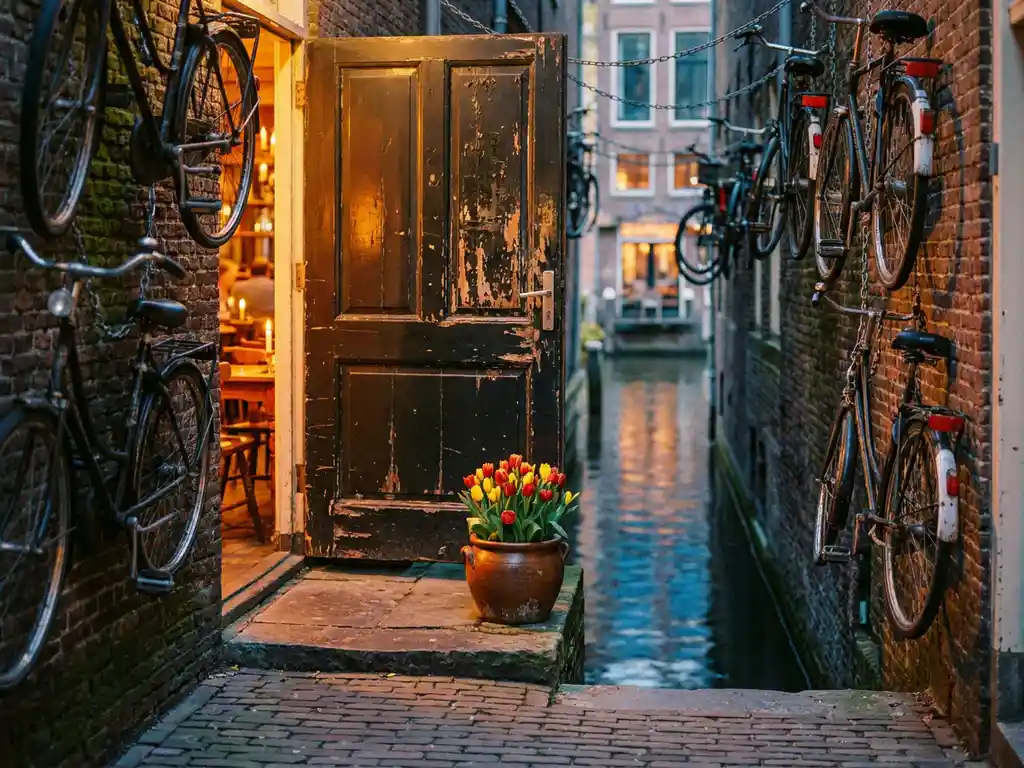
Amsterdam’s real hidden gems are the places, neighbourhoods, and experiences that locals return to again and again — not because they’re secret, but because they require curiosity, time, and a willingness to walk past the obvious. Most tourists never find them simply because the city’s famous highlights are so magnetic that few visitors look beyond them. This guide answers the questions that genuinely curious visitors and new expats ask once the postcard version of Amsterdam stops being enough.
Where do Amsterdam locals actually spend their time?
Amsterdam locals spend their time in the neighbourhoods just beyond the tourist belt: De Pijp, Oud-West, De Baarsjes, and Noord. These are the areas where you find neighbourhood cafes that have served the same regulars for decades, markets that sell food rather than souvenirs, and parks where people actually go to relax rather than take photos.
The Vondelpark gets the tourists, but locals tend to head to the Rembrandtpark or the Flevopark when they want space and quiet. The Albert Cuyp market is well known, but the Ten Katemarkt in Oud-West draws a genuinely local crowd without the same foot traffic. Noord, across the IJ waterway, has transformed over the past decade into one of the most interesting parts of the city — full of creative studios, independent restaurants, and a waterfront energy that feels nothing like the canal ring.
The honest answer is that locals avoid the centre on weekends. If you want to experience Amsterdam the way residents do, you need to get on a bike and follow the residential streets rather than the tourist maps.
What makes a spot a ‘hidden gem’ in a city this famous?
In Amsterdam, a hidden gem is not necessarily unknown — it is simply a place that has survived the pressure of mass tourism without changing what made it worth visiting in the first place. The city is small and densely covered by travel media, so true secrecy is rare. What matters is whether a place still serves its original purpose and its original community.
A brown cafe that has been on the same corner since 1920 and still draws neighbourhood regulars is a hidden gem, even if it appears in a few guidebooks. A canal-side restaurant that pivoted entirely to tourist menus and group bookings is not, even if it looks charming from the outside. The distinction is about authenticity and function, not obscurity.
For anyone looking for the best Amsterdam experiences rather than just the most photographed ones, the question to ask is simple: do locals still come here? If the answer is yes, you are probably in the right place.
Which Amsterdam museums do tourists almost never visit?
The museums tourists almost never visit in Amsterdam include the Tropenmuseum, the Electric Ladyland fluorescent art museum, the Museum Geelvinck, and the Amsterdam Museum (now in a transitional home while its original building is renovated). These offer genuinely distinctive experiences without the queues or the ticket prices of the Rijksmuseum or the Van Gogh Museum.
- Tropenmuseum: A world cultures museum housed in a stunning colonial-era building. The collection is vast, thoughtful, and almost always quiet.
- Electric Ladyland: A tiny, eccentric museum in the Jordaan dedicated entirely to fluorescent art and minerals. There is nothing else quite like it in the city.
- Museum Geelvinck: A 17th-century canal house preserved with period interiors. It gives you a far more intimate sense of Golden Age Amsterdam than the bigger institutions.
- Foam Photography Museum: Well regarded by photography enthusiasts but largely bypassed by general tourists, Foam consistently shows some of the best contemporary photography in Europe.
The Stedelijk Museum for modern and contemporary art also deserves a mention. It sits right next to the Van Gogh Museum on Museumplein, yet on any given weekday the queues outside are a fraction of its neighbour’s. The collection is world-class and the building is beautiful.
Are there parts of Amsterdam that tourism hasn’t changed?
Yes. The residential neighbourhoods beyond the canal ring have remained largely intact as genuine living communities. Areas like Bos en Lommer, the Indische Buurt, and the older parts of Noord are still shaped primarily by the people who live there rather than by visitor footfall. These are not tourist destinations — they are simply Amsterdam neighbourhoods doing what Amsterdam neighbourhoods do.
Even within the canal ring, pockets survive. The quieter streets of the Jordaan away from the main shopping routes, the eastern islands of Sporenburg and Borneo, and the stretch of canal along the Prinsengracht north of the Westerkerk all retain a residential quality that the busiest parts of the city have lost.
What tourism has changed most visibly is the commercial layer: the shops, the restaurants, the short-stay apartments. The architecture, the water, the cycling culture, and the social atmosphere of residential streets have proven more resilient. Amsterdam’s best neighbourhoods are still recognisably themselves — you just have to know which streets to turn down.
What do long-term expats discover about Amsterdam that tourists miss?
Long-term expats in Amsterdam discover that the city rewards consistency more than exploration. The best experiences come from having a regular cafe, a regular market stall, a regular bike route — and from the slow accumulation of familiarity that turns a city from a backdrop into a home.
Specifically, expats tend to discover a few things that tourists rarely encounter:
- The cycling infrastructure as a daily pleasure: Tourists cycle in Amsterdam, but they usually stick to the obvious routes. The best Amsterdam bike routes are the ones that take you through residential streets, along lesser-known waterways, and out into the Amsterdamse Bos — a forest park on the edge of the city that is enormous, beautiful, and almost entirely off the tourist radar.
- The neighbourhood food scene: The best cheap restaurants in Amsterdam are not in the centre. They are in De Pijp, in De Baarsjes, and increasingly in Noord — neighbourhood spots that rely on local regulars and price their food accordingly.
- The cultural calendar beyond the headline acts: Amsterdam has an extraordinary density of live music, comedy, theatre, and spoken word that most tourists never access. The best English shows in Amsterdam are not always in the biggest venues.
- The seasonal rhythm of the city: Amsterdam in winter is a completely different place to Amsterdam in July. Understanding the Amsterdam weather guide — the grey, the rain, the extraordinary light on a clear November morning — changes your relationship with the city entirely.
How do you actually find Amsterdam’s hidden gems yourself?
The most reliable way to find Amsterdam’s hidden gems is to follow local behaviour rather than curated lists. Walk the streets of residential neighbourhoods with no destination in mind. Eat where the menus are written on a chalkboard in Dutch. Ask the person behind the bar where they go on their day off. These approaches work because they bypass the commercial layer that most tourist content reflects.
A few practical starting points:
- Cross the IJ to Noord. Take the free ferry from behind Centraal Station. Noord is where a large part of Amsterdam’s creative and independent food scene has moved over the past decade.
- Explore the Amsterdam best neighbourhoods on a bike, not on foot. Walking keeps you on the main streets. Cycling lets you move through residential areas at the right pace to notice what is actually there.
- Use the Amsterdam locals guide principle: if the menu has photos and is available in six languages, keep walking.
- Time your visits differently. The same street at 8am on a Tuesday and 2pm on a Saturday are two completely different experiences. Amsterdam’s hidden character is most visible outside peak hours.
- Look for the things Amsterdam does that no other city does as well: the brown cafes, the canal tour best taken on a small private boat rather than a glass-topped barge, the comedy and improv scene, the independent cinema culture.
The Amsterdam weekend guide principle that works best for curious visitors is simple: pick one neighbourhood and spend a full day there rather than trying to cover the whole city. Depth beats breadth every time.
How Klagen Niet Klagen helps you find the real Amsterdam
Most Amsterdam content online is written for people who have never been here. Klagen Niet Klagen is written for people who want to understand the city the way a long-term resident does — honestly, critically, and with genuine affection for what makes it worth the frustration.
- Long-form essays on Amsterdam city life written from over three decades of lived experience in the city
- Commentary on Amsterdam best neighbourhoods, cultural life, and the tensions that mainstream media tends to smooth over
- An honest, English-language perspective free from tourism board influence or advertorial pressure
- Regular new pieces covering everything from Amsterdam immersive experiences to the social dynamics of Dutch city life
If you want to go deeper than the guidebook version of Amsterdam, the blog archive is a good place to start. Or head to the Klagen Niet Klagen homepage to get a sense of what this project is about.
And if you are looking for a genuinely Amsterdam experience that combines sharp comedy, improvisation, and a room full of people who actually live here — that is exactly what Boom Chicago has been delivering since 1993. Check the current shows and agenda and come and see what three decades of Amsterdam-rooted comedy looks like live. It is, without question, one of the best things to do in Amsterdam that tourists almost never put on their list — and locals almost always recommend.
Frequently Asked Questions
How long do I need to spend in Amsterdam to get beyond the tourist experience?
Most visitors start to scratch the surface of the real Amsterdam after three to four days — but only if they deliberately step away from the canal ring and Museumplein from day one. The key is to treat at least one full day as a neighbourhood day: pick somewhere like De Pijp or Noord, arrive in the morning, and don’t leave until evening. That single commitment will teach you more about the city than three days of landmark-hopping.
What's the best way to get to Amsterdam Noord, and is it worth the trip?
The free ferry from behind Centraal Station takes less than five minutes and runs around the clock — it’s one of the easiest journeys in the city. Noord is absolutely worth the trip: the NDSM wharf, the independent restaurants along the waterfront, and the creative studio culture make it feel like a different city entirely. Go on a weekday if you can, when it’s quieter and the neighbourhood energy is most authentic.
Are the lesser-known Amsterdam museums worth visiting even if you're short on time?
Yes — especially because the time investment is actually lower than at the major institutions. Skipping the Rijksmuseum queue alone can save you two hours; spending that time at Museum Geelvinck or Foam gives you an experience that’s just as rich and far more personal. If you only have one alternative museum slot, Electric Ladyland in the Jordaan is the most genuinely unique thing you can do in under an hour.