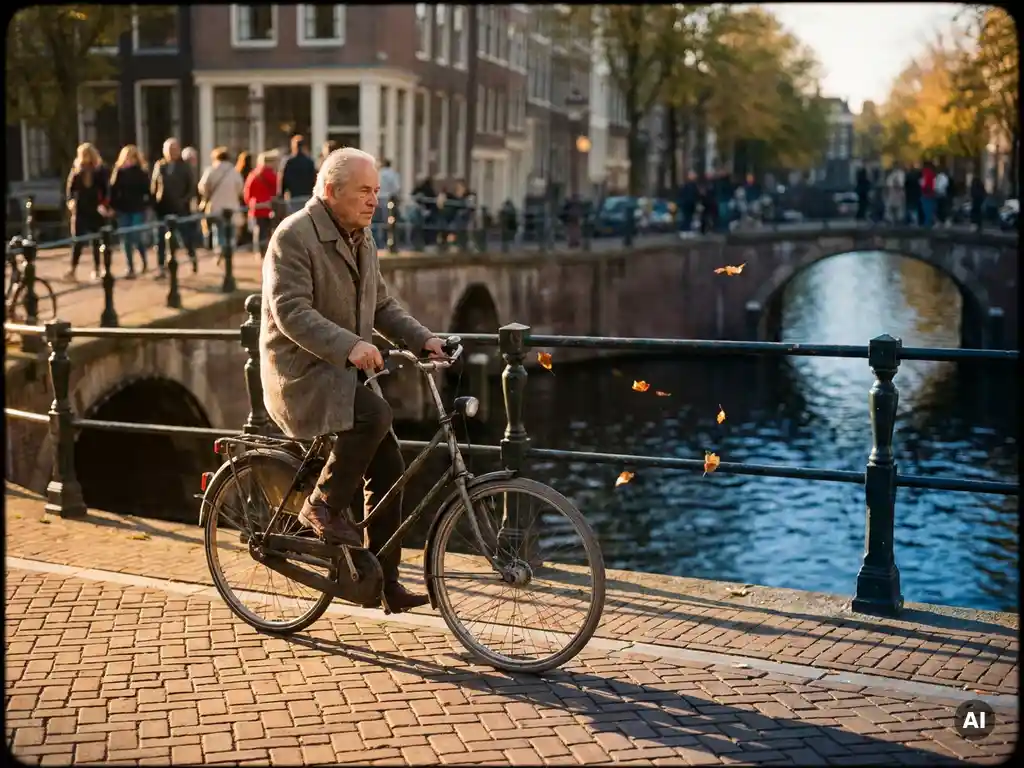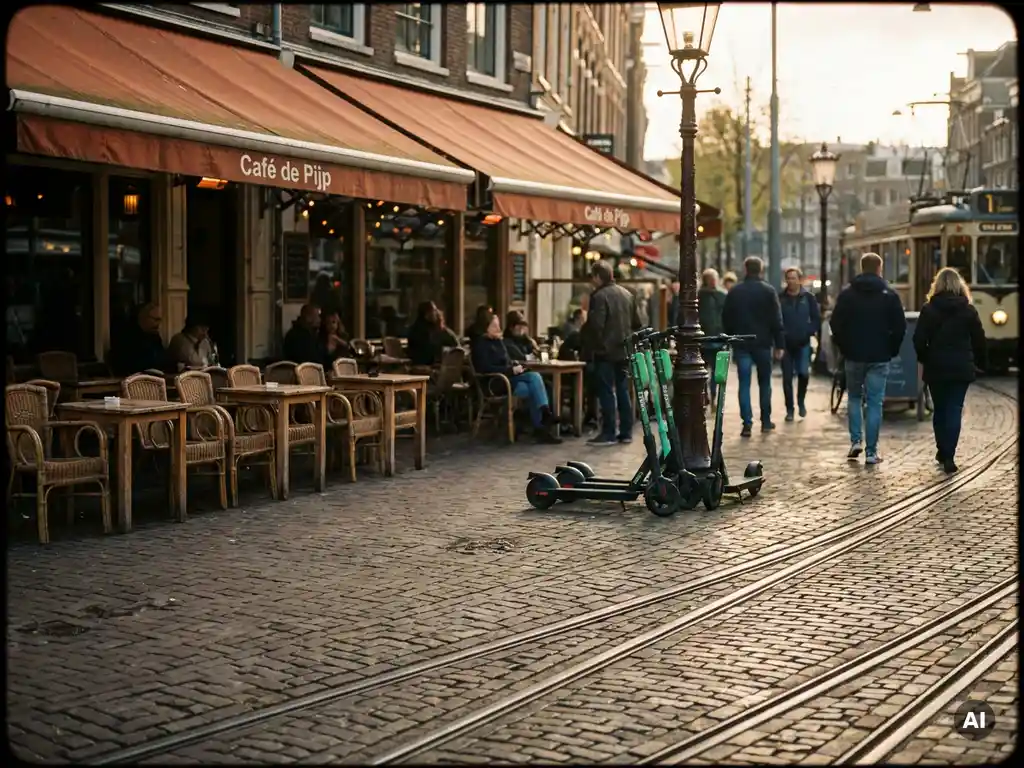
Author: Andrew

  • What is the Boom Chicago blog?

    What is the Boom Chicago blog?

    The Boom Chicago blog is KlagenNietKlagen.nl, an English-language Amsterdam city blog written by Andrew Moskos, co-founder of Boom Chicago. It covers Amsterdam life, culture, and city commentary through a witty, honest, insider lens — the kind of perspective you simply cannot get from a tourism website or a mainstream media outlet. Below, you will find answers to the most common questions about the blog, what it covers, and who it is for.

    Who writes the Boom Chicago blog?

    The Boom Chicago blog is written by Andrew Moskos, co-founder and co-owner of Boom Chicago, the legendary Amsterdam comedy theatre he launched with Pep Rosenfeld in 1993. Andrew introduced improvisation theatre to the Netherlands and has spent over three decades building one of the most influential and innovative theatre companies in Europe.

    Beyond the stage, Andrew is a sought-after host, speaker, and coach at international conferences. He has worked with some of the biggest names in Dutch public life, including coaching Prime Minister Mark Rutte and co-writing what has been called Rutte’s most successful speech ever. That mix of comedy, entrepreneurship, and cultural fluency is exactly what shapes the voice behind the blog: sharp, personal, and earned through genuine experience rather than a press pass.

    What topics does the Boom Chicago blog cover?

    The blog covers Amsterdam city life in all its contradictions: culture, neighbourhood politics, Dutch social norms, expat experiences, overtourism, things to do in Amsterdam, and the daily reality of living in one of the world’s most visited yet genuinely complex cities. The editorial backbone is a classic Dutch tension captured in the blog’s name: klagen (to complain) versus niet klagen (counting your blessings).

    That framework keeps the content honest. Amsterdam gets praised when it deserves it and criticised when it does not. You will find long-form essays on why Amsterdam works, opinion pieces on why it sometimes does not, and cultural commentary that goes well beyond the usual list of things to do in Amsterdam that every travel blog recycles endlessly. The blog treats the city as a living, breathing place full of contradictions — not a postcard.

    Who is the Boom Chicago blog written for?

    The blog is written for anyone who wants a genuine, intelligent, insider take on Amsterdam rather than a polished tourism pitch. That includes English-speaking expats who have moved past the honeymoon phase of living here, culturally curious international visitors who want to understand the city beneath the surface, Boom Chicago fans who already trust Andrew’s comedic and cultural instincts, and internationally minded Dutch people who are tired of sanitised city guides.

    What unites all these readers is a hunger for honest commentary. They are educated, opinionated, and perfectly capable of handling nuance. They do not need Amsterdam explained to them like a first-time tourist — they want someone with real skin in the game to tell them what is actually going on.

    How is the Boom Chicago blog different from other Amsterdam blogs?

    Most Amsterdam blogs fall into one of two traps: they either cater to tourists with generic “top 10 hidden gems” content, or they publish in Dutch and lock out an international audience entirely. The Boom Chicago blog does neither. It is English-language, long-form, opinion-driven, and written by someone who has genuinely built something in Amsterdam over more than thirty years.

    There is no advertorial pressure, no tourism board influence, and no attempt to keep everyone happy. The Klagen / Niet Klagen framework is not just a clever name — it is an editorial commitment to honesty. When something about Amsterdam is worth celebrating, the blog says so. When something is worth criticising, it says that too. That independence is rare, and it is exactly what makes the perspective impossible to replicate.

    Where can you find the Boom Chicago blog?

    The blog lives at KlagenNietKlagen.nl, where all articles are published and archived. It launched in 2026 and publishes regular long-form essays and cultural commentary in English. The full archive is available online and free to read.

    How Klagen Niet Klagen helps you get more out of Amsterdam

    Whether you are looking for things to do in Amsterdam, trying to make sense of Dutch culture, or simply want a smarter take on the city than any guidebook offers, Klagen Niet Klagen is the place to start. Here is what the blog brings to the table:

    • Honest, independent commentary free from tourism board influence or advertorial pressure
    • Long-form essays on Amsterdam life, culture, and city politics written from over three decades of lived experience
    • An English-language platform that fills a genuine gap in Amsterdam media
    • The Klagen / Niet Klagen framework — a clear editorial lens that keeps the content balanced, funny, and real
    • Insider perspective from someone who has built, performed, and lived in Amsterdam since 1993

    Explore the full blog archive and find the Amsterdam commentary you have been looking for.

    Of course, the best way to experience Andrew Moskos’s take on Amsterdam is live on stage. Boom Chicago has been making audiences laugh, think, and occasionally squirm since 1993 — and the shows are still running. Check the current shows and agenda and come see what thirty-plus years of Amsterdam comedy actually looks like in person. If you have questions or want to get in touch, the contact page is right there waiting for you.

    Frequently Asked Questions

    How often does the Klagen Niet Klagen blog publish new content?

    The blog publishes regular long-form essays and cultural commentary, though the focus is firmly on quality over quantity. Rather than churning out short-form posts to feed an algorithm, Andrew prioritises in-depth pieces that are worth your time — so when something new goes up, it is genuinely worth reading. The best way to stay up to date is to check the archive at KlagenNietKlagen.nl directly.

    Is the Klagen Niet Klagen blog useful if I am just visiting Amsterdam for a few days, not living there?

    Absolutely — in fact, it can completely change how you experience a short trip. Rather than following the same recycled tourist trail, the blog gives you the cultural context and honest local perspective that helps you understand what you are actually seeing. Even a single long-form essay can reframe a neighbourhood, a Dutch social habit, or a city debate in a way that no guidebook will.

    Can I read the Klagen Niet Klagen blog if I do not speak Dutch?

    Yes — that is precisely one of the things that makes it unique. The entire blog is written in English, which fills a real gap in Amsterdam media where most locally grounded, opinion-driven content is published in Dutch and effectively invisible to international readers. You get the insider perspective without the language barrier.

  • What’s a good day trip from Amsterdam?

    What’s a good day trip from Amsterdam?

    The best day trips from Amsterdam take you somewhere genuinely different within two hours by train, and the Netherlands delivers that in abundance. Delft, Utrecht, Haarlem, and Leiden are all under an hour away, while cities like Brussels and Bruges are reachable in two hours or less. Whether you want windmills, medieval architecture, world-class museums, or a completely different country, Amsterdam is one of the best-positioned cities in Europe for day-tripping. The questions below break down the options by type, budget, and how much you want to suffer in a crowd.

    How far can you realistically travel from Amsterdam in a day?

    From Amsterdam, you can realistically reach any destination within roughly a two-hour radius by train and still have four to five hours of meaningful time there before heading back. That puts you within range of most of the Netherlands, plus Brussels, Bruges, and even Antwerp in Belgium. Push it to two and a half hours and Paris becomes technically possible, though you will spend more time on the train than in the city.

    The Dutch rail network is genuinely excellent. Trains are frequent, punctual by European standards, and connect Amsterdam Centraal directly to most major destinations without transfers. For day trips, the practical sweet spot is sixty to ninety minutes each way. Beyond that, you start sacrificing the actual experience for the journey.

    One important caveat: Amsterdam Centraal is busy and can feel chaotic during peak hours. Give yourself extra time at the station, especially on weekends and during school holidays.

    What are the most popular day trips from Amsterdam?

    The most popular day trips from Amsterdam are Keukenhof and the tulip fields in spring, Delft for its pottery and Vermeer history, Utrecht for its canals and café culture, Haarlem for Frans Hals and a genuinely liveable Dutch city, and Bruges in Belgium for medieval architecture without the Amsterdam crowds. Zaanse Schans is also extremely popular, though it has become heavily commercialised.

    Here is a quick breakdown of the most visited destinations:

    • Keukenhof (seasonal, spring only): The flower garden is spectacular and genuinely worth it, but go on a weekday and arrive early. The crowds on weekends are extraordinary.
    • Delft: Beautiful, compact, and historically rich. The Vermeer Centre and the Royal Delft pottery factory are both worth your time.
    • Utrecht: Underrated by tourists but beloved by people who actually live in the Netherlands. Great food scene, the Dom Tower, and a canal system that predates Amsterdam’s.
    • Haarlem: Twenty minutes from Amsterdam Centraal. The Frans Hals Museum alone justifies the trip, and the city centre is far less crowded than Amsterdam.
    • Bruges: Two hours by train. Absurdly picturesque, especially outside peak tourist season.

    Which day trip from Amsterdam is best for first-timers?

    For first-time visitors to the Netherlands, Delft is the best day trip from Amsterdam. It is close (about an hour by train), compact enough to explore on foot in a day, and gives you a genuinely Dutch experience: canals, historic architecture, the famous blue-and-white pottery, and a market square that has barely changed in centuries. It is far less overwhelming than Amsterdam itself.

    Haarlem is an equally strong option if you prefer something even closer and slightly less touristy. It is twenty minutes by train, easy to navigate, and has a strong café and restaurant culture that makes it feel like a real city rather than a museum piece.

    Avoid Zaanse Schans as your first choice. It is technically impressive and the windmills are photogenic, but it has evolved into something closer to a theme park than an authentic Dutch village. There are better ways to see the real Netherlands.

    What’s the best day trip from Amsterdam without a car?

    The best day trip from Amsterdam without a car is any destination served directly by Dutch Railways (NS), which covers nearly all the worthwhile options. Utrecht, Haarlem, Leiden, Delft, and Den Haag are all direct train journeys from Amsterdam Centraal, making a car entirely unnecessary. The Dutch public transport system is among the best in Europe, and a car would actually slow you down in most historic city centres.

    A few practical tips for car-free day trips:

    • Buy an OV-chipkaart or use the NS app for seamless travel across trains and local buses.
    • For Keukenhof, there are direct shuttle buses from Leiden Centraal station during the spring season.
    • Bruges and Brussels are both reachable by direct Thalys or Intercity train from Amsterdam without any car involvement.
    • Renting a bicycle at your destination adds a layer of freedom in flat cities like Leiden and Haarlem.

    If anything, the absence of a car is an advantage. Dutch city centres are built for pedestrians and cyclists, and parking is expensive and stressful in most historic areas.

    Are there good day trips from Amsterdam that aren’t in the Netherlands?

    Yes, Belgium offers excellent day trips from Amsterdam that are genuinely worth the slightly longer journey. Bruges is two hours by train and is one of the most beautifully preserved medieval cities in Europe. Brussels is about two hours as well and offers world-class museums, architecture, and food. Antwerp is reachable in under two hours and has a strong fashion and design scene alongside its historic diamond district.

    The key difference with cross-border trips is that you need to be more disciplined about timing. Two hours each way means you need to leave Amsterdam early and accept that you will be back late. For Bruges especially, staying overnight transforms the experience, as the city empties of day-trippers after five in the afternoon and becomes genuinely magical.

    Paris is technically possible as a day trip via Thalys, but the journey is around three and a half hours each way from Amsterdam. You will spend more time travelling than exploring. Save Paris for at least two nights.

    When is the worst time to do a day trip from Amsterdam?

    The worst time to do a day trip from Amsterdam is during Dutch school holidays, particularly the summer holidays in July and August, the spring break coinciding with Keukenhof season, and the autumn break in October. During these periods, trains are packed, popular destinations are overrun, and the experience at places like Zaanse Schans or Keukenhof deteriorates sharply. Weekend mornings in summer are also significantly more crowded than weekday mornings.

    A few specific timing pitfalls worth knowing:

    • Keukenhof on a Saturday in April: The flower garden is extraordinary, but the crowds can make it genuinely unpleasant. Go on a Tuesday or Wednesday, and go early.
    • Bruges in August: The city is beautiful but absolutely heaving with tourists. Early September is a far better option.
    • King’s Day (27 April): Amsterdam itself is spectacular, but many Dutch people travel that day, making trains chaotic and other cities unexpectedly busy too.

    The general rule is that weekday mornings outside of Dutch school holidays give you the best version of almost any destination. If you can only travel on weekends, aim for the first train out and return by mid-afternoon before the crowds peak.

    How Klagen Niet Klagen helps you get more from Amsterdam and beyond

    Day trips are one thing, but understanding Amsterdam itself, its contradictions, its culture, and its unwritten rules is what turns a visit into something you actually remember. That is exactly what Klagen Niet Klagen is built for. Written by someone who has lived and worked in Amsterdam for over thirty years, the blog offers honest, insider commentary that no tourism guide provides.

    • Long-form essays on Amsterdam city life, culture, and the quirks of Dutch society
    • Opinion pieces that name the tensions and contradictions other sources diplomatically avoid
    • Practical perspective grounded in decades of actual experience, not a press trip
    • Content written in English for internationally minded readers who want depth, not a listicle

    If you want more of this kind of commentary, the full blog archive is the place to start. Pull up a chair, make a coffee, and read something that actually tells you what Amsterdam is like.

    And while you are planning what to do in and around the city, do not overlook what is right in front of you. Boom Chicago has been making Amsterdam audiences laugh since 1993, and a show there is one of the best evenings you can have in the city, full stop. It is funny, sharp, and entirely unlike anything else on offer. Check the current shows and book a seat before you head off on your day trip.

    Frequently Asked Questions

    How do I book train tickets for day trips from Amsterdam, and is it cheaper to book in advance?

    For domestic Dutch destinations like Delft, Utrecht, and Haarlem, you do not need to book in advance — NS trains run frequently and you can simply tap in with an OV-chipkaart or buy a ticket at the station or via the NS app. For international routes to Brussels or Bruges, booking in advance through Thalys or Eurostar can save you significantly, as flexible last-minute fares are considerably more expensive. A good rule of thumb: book cross-border trips at least a week ahead, and leave domestic trips flexible.

    What should I pack or prepare for a day trip from Amsterdam?

    Keep it light: a comfortable pair of walking shoes is non-negotiable, as most Dutch city centres are best explored on foot over cobblestones and canal bridges. Bring a reusable bag, a portable charger, and a light rain layer regardless of the forecast — Dutch weather changes quickly and being caught unprepared ruins the experience. If you are heading to Keukenhof or Zaanse Schans, pack snacks and water, as food options near tourist hotspots tend to be overpriced and underwhelming.

    Is it worth joining a guided day trip tour, or is it better to go independently?

    For the vast majority of destinations reachable from Amsterdam, going independently is better — it is cheaper, more flexible, and lets you linger where you actually want to rather than being herded through highlights on a schedule. Guided tours add the most value for Keukenhof during tulip season, where navigating the grounds and timing your visit well genuinely benefits from local knowledge. If you do book a tour, make sure it includes meaningful free time rather than just a series of photo stops.

  • What’s the weather like in Amsterdam?

    What’s the weather like in Amsterdam?

    Amsterdam’s weather is mild, wet, and famously unpredictable. The city sits in a temperate maritime climate, which means winters rarely freeze and summers rarely bake — but rain can show up at any time of year without much warning. If you’re planning a visit or simply trying to dress sensibly for daily life here, the short answer is: always carry a jacket.

    Below, the most common questions about Amsterdam weather get honest, direct answers — no sugarcoating, no tourism-board spin.

    Does Amsterdam get a lot of rain?

    Yes, Amsterdam gets a fair amount of rain — roughly 800 millimetres spread across the year. But the character of that rain matters more than the total. Amsterdam rarely gets dramatic downpours. Instead, it delivers a near-constant rotation of drizzle, grey skies, and sudden showers that last ten minutes and then disappear. The rain is annoying rather than catastrophic.

    What makes it feel like more rain than it actually is: the flatness of the city means there’s no shelter from the wind, and wet cobblestones reflect light in a way that makes everything look perpetually damp. Locals don’t tend to cancel plans because of rain. They just pull on a waterproof and keep moving — which is probably the most useful thing to know.

    What are the four seasons like in Amsterdam?

    Amsterdam has four distinct seasons, but they’re all relatively moderate. No season is extreme, and the transitions between them can be subtle — which is part of what makes the city’s weather feel so variable from week to week.

    Spring (March to May)

    Spring is genuinely lovely, with tulips in bloom and the city coming back to life after grey months. Temperatures climb from around 8°C in March to 17°C in May. Rain is still common, but the days get noticeably longer and the light turns golden in the late afternoon. This is when Amsterdam starts to feel like itself again.

    Summer (June to August)

    Summers are warm but not hot — average highs sit around 21°C to 23°C. The occasional heatwave pushes things higher, but those are the exception. Evenings are long and the terraces fill up fast. It’s also peak tourist season, so the things to do in Amsterdam get considerably more crowded.

    Autumn (September to November)

    Autumn brings cooler temperatures, more rain, and beautiful canal-side colour as the leaves turn. September can still feel like summer, but by November you’re firmly in coat territory. The city empties of tourists and regains some of its quieter, more local character.

    Winter (December to February)

    Winters are cold and damp rather than freezing. Temperatures hover between 2°C and 7°C. Snow is rare but not unheard of, and when the canals freeze over — which happens once every few years — the entire city turns into a kind of collective joy. Most of the time, though, winter is just grey and wet, with the occasional crisp, clear day that makes it all worth it.

    What’s the best time of year to visit Amsterdam?

    The best time to visit Amsterdam is late spring, specifically late April through early June. The weather is mild and pleasant, the tulip fields are at their peak, and the city hasn’t yet hit peak summer tourist density. You get the beauty of Amsterdam without the crowds that define July and August.

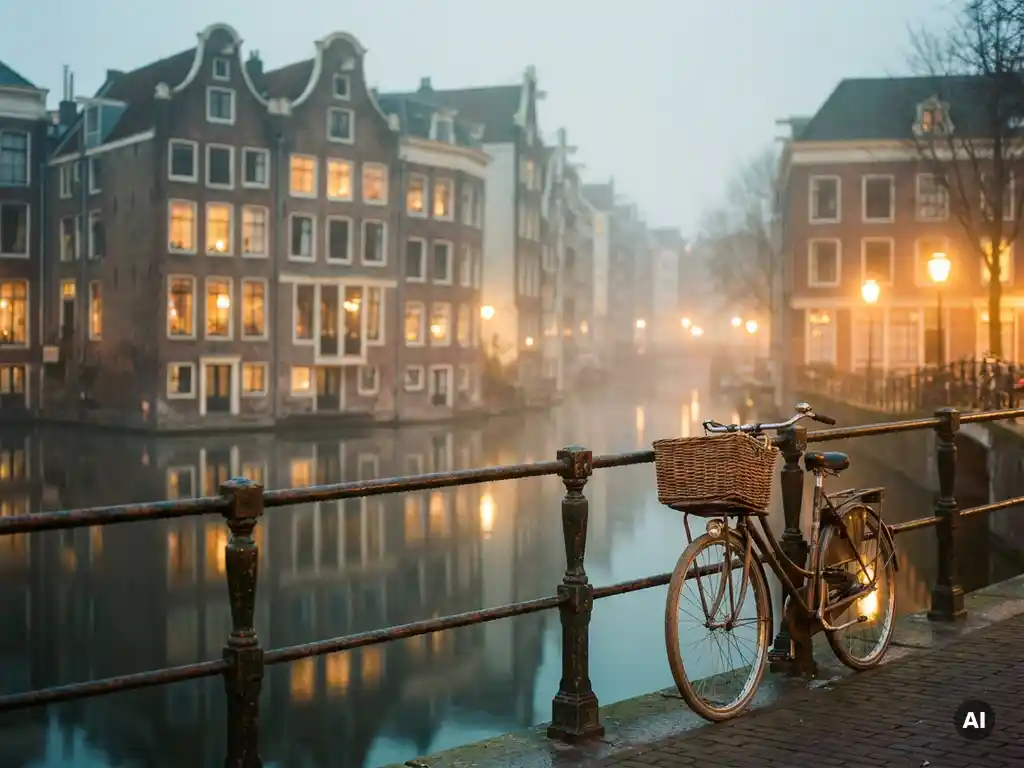
    Early September is a strong second choice. The summer heat has softened, the tourists have thinned out, and the city feels more like itself. If you want to experience Amsterdam as a place people actually live rather than a backdrop for selfies, the shoulder season is your friend. Winter visits have their own charm — fewer crowds, atmospheric canal fog, Christmas markets — but you need to genuinely enjoy grey weather to appreciate them.

    Why does Amsterdam weather feel colder than the thermometer says?

    Amsterdam feels colder than the temperature reading because of wind chill and humidity. The city is flat, open, and surrounded by water, which means wind moves through it with very little resistance. A 7°C day with a stiff westerly breeze feels significantly colder than 7°C in a sheltered city. The high humidity amplifies this — damp cold gets into your bones in a way that dry cold doesn’t.

    Cycling, which is how most people in Amsterdam get around, makes this worse. Even a gentle headwind at cycling speed adds meaningful wind chill. Locals learn quickly that the “feels like” temperature matters more than the actual one, and they dress accordingly — layering up even on days that look mild from indoors.

    What should you wear for Amsterdam’s weather year-round?

    The core principle for dressing in Amsterdam is layers plus waterproofing. A good waterproof jacket is the single most useful item you can own in this city — not a heavy winter coat, not a thin rain mac, but something genuinely windproof and water-resistant that you can wear nine months of the year.

    • Spring: Light layers, a waterproof outer layer, comfortable walking shoes that can handle wet cobblestones
    • Summer: Light clothing, but always keep a light jacket nearby — evenings cool down fast and afternoon showers are common
    • Autumn: A mid-weight jacket, scarf, and waterproof shoes; temperatures drop quickly after sunset
    • Winter: A proper warm coat, hat, gloves, and waterproof boots; the damp cold is persistent

    One practical note: umbrellas are less useful in Amsterdam than you’d expect. The wind makes them awkward and sometimes dangerous on a bike. A hood or a good waterproof hat tends to be more practical for day-to-day life here.

    How Klagen Niet Klagen helps you understand Amsterdam beyond the weather

    Weather is just the beginning. Amsterdam has layers of culture, contradiction, and character that no forecast can prepare you for. Klagen Niet Klagen exists to give you an honest, insider perspective on what Amsterdam is actually like — the kind of commentary that tourism boards don’t write and travel guides can’t provide.

    • Long-form essays on Amsterdam city life written from over three decades of real experience
    • Honest takes on Dutch culture, city policy, and what it’s actually like to live here
    • Practical and cultural insight for expats, visitors, and anyone who wants to understand the city beneath the surface
    • Witty, independent commentary free from advertorial pressure or sponsored content

    If you want to go deeper on Amsterdam — what to do, how it works, and why it is the way it is — browse the full blog archive for more.

    And if you find yourself in Amsterdam looking for something genuinely worth doing on a rainy evening (which, as you now know, is a fairly common situation), Boom Chicago has been making audiences laugh in this city since 1993. Live improv comedy in the heart of Amsterdam is exactly the kind of thing to do in Amsterdam that holds up regardless of what the weather is doing outside. Check the shows and agenda and come see what all the fuss is about.

    Frequently Asked Questions

    Is Amsterdam weather worse in some parts of the city than others?

    Not dramatically, but areas more exposed to open water — like the IJ waterfront or the newer western harbour districts — tend to feel windier and therefore colder than sheltered canal streets in the Jordaan or the historic centre. If you’re particularly sensitive to wind chill, sticking to the older, narrower streets offers a bit more natural shelter. It’s a small difference, but on a blustery November day, it’s noticeable.

    What's the most common mistake visitors make when packing for Amsterdam?

    Overpacking for one extreme while ignoring the other. Visitors in summer often leave their jacket behind because the forecast looks sunny — then get caught in a sharp evening chill or a sudden shower with nothing waterproof to hand. Equally, winter visitors sometimes pack a heavy ski-style coat that’s completely impractical for cycling or navigating crowded tram stops. The sweet spot is a versatile, windproof, water-resistant mid-layer jacket that works across multiple seasons rather than one heavy-duty item.

    Can you rely on weather apps to plan your day in Amsterdam?

    To a point — but Amsterdam’s weather changes fast enough that a morning forecast often doesn’t reflect what’s happening by early afternoon. Most locals check the weather shortly before heading out rather than the night before, and even then they treat it as a rough guide rather than a guarantee. Apps like Buienradar are particularly popular in the Netherlands because they show real-time rain radar for the next couple of hours, which is far more useful for Amsterdam’s short, unpredictable showers than a standard daily forecast.

  • What are the top 10 things to see in Amsterdam?

    What are the top 10 things to see in Amsterdam?

    Amsterdam’s top 10 sights include the Rijksmuseum, the Anne Frank House, the Van Gogh Museum, the Jordaan neighbourhood, the canal ring, Vondelpark, the Albert Cuyp Market, the Stedelijk Museum, the Jewish Historical Museum, and the NEMO Science Museum. That said, the honest answer is that the city rewards exploration far more than checklist tourism. The sections below break down which attractions genuinely earn their reputation, which ones disappoint, and what most visitors never find at all.

    Which Amsterdam sights are actually worth your time?

    The sights most worth your time in Amsterdam are the Rijksmuseum, the Anne Frank House, the canal ring, and at least one neighbourhood you explore entirely on foot without a plan. These four experiences deliver something genuinely irreplaceable. Everything else depends on your interests, your tolerance for crowds, and how much you care about ticking boxes versus actually feeling a place.

    Amsterdam is a city that punishes the itinerary tourist. The streets are narrow, the distances are short, and the real character of the place lives in the details: a brown café with steamed-up windows, a houseboat that has clearly been someone’s home for forty years, a bookshop where the owner is visibly annoyed that you interrupted his reading. None of that shows up on a top-ten list, and none of it costs an entry fee.

    The major museums are genuinely world-class, and skipping them entirely would be a mistake. But if you spend your entire visit moving from one ticketed attraction to the next, you will leave Amsterdam having seen its highlights and missed the city entirely. The best approach is to anchor your days around one or two significant cultural visits and leave the rest of your time genuinely unscheduled.

    What is the Rijksmuseum and why do visitors rate it so highly?

    The Rijksmuseum is the Netherlands’ national museum of art and history, housed in a monumental building on Museumplein in Amsterdam. Visitors rate it so highly because it contains some of the most important paintings in the world, including Rembrandt’s The Night Watch and Vermeer’s The Milkmaid, presented in a building that is itself a work of art. It is, straightforwardly, one of the great museums of Europe.

    What makes the Rijksmuseum exceptional is not just the collection but the curation. The Dutch Golden Age galleries feel genuinely alive rather than reverential and dusty. Rembrandt’s The Night Watch is enormous in a way that photographs never prepare you for, and the room it occupies was designed specifically around it. That kind of intentionality runs through the whole building.

    Practical note: book tickets in advance. The queues for walk-up visitors can be brutal, particularly in summer. The museum also has a free outdoor courtyard that cyclists and pedestrians pass through daily, which means you can experience the building without paying anything at all. That said, paying the entry fee and spending three to four hours inside is one of the better decisions you can make in Amsterdam.

    How does the Anne Frank House compare to other Amsterdam museums?

    The Anne Frank House is not really comparable to other Amsterdam museums because it is not primarily a museum in the conventional sense. It is a preserved hiding place, a site of profound historical weight, and an experience that is deliberately uncomfortable. Visitors consistently describe it as one of the most affecting places they have ever been, and that reaction is entirely appropriate.

    Where the Rijksmuseum offers beauty and the Van Gogh Museum offers biography, the Anne Frank House offers something harder to name: a direct, physical encounter with history that refuses to be aestheticised. The rooms are small. The windows were kept covered for years. The bookcase that concealed the entrance still stands. The experience is quiet in a way that feels earned rather than imposed.

    Tickets sell out weeks in advance, sometimes months during peak season. This is not hype or marketing. The capacity is genuinely limited to preserve the atmosphere inside, and the organisation that runs it takes that responsibility seriously. If visiting Amsterdam is on your horizon, booking the Anne Frank House should be one of the first things you do, not one of the last.

    What are the best Amsterdam neighbourhoods to explore on foot?

    The best Amsterdam neighbourhoods to explore on foot are the Jordaan, De Pijp, and the canal ring streets of the Grachtengordel. Each offers a completely different character, and all three are compact enough to explore thoroughly without a map or a plan. If you only have time for one, the Jordaan is the answer.

    The Jordaan

    The Jordaan is Amsterdam’s most beloved neighbourhood for good reason. Originally a working-class district built in the seventeenth century, it has evolved into a dense, human-scaled maze of independent shops, galleries, brown cafés, and some of the city’s most beautiful canal views. It rewards slow walking and spontaneous decisions. Turn down a street because it looks interesting. It probably is.

    De Pijp

    De Pijp sits just south of the city centre and has a more lived-in, multicultural energy than the Jordaan. The Albert Cuyp Market runs through its heart on weekday and Saturday mornings, and the surrounding streets are full of affordable restaurants, neighbourhood bars, and the kind of daily life that reminds you Amsterdam is a real city where real people live, not just a backdrop for tourism.

    When is the best time to visit Amsterdam’s top attractions?

    The best time to visit Amsterdam’s top attractions is early morning on weekdays, ideally when they open. The Rijksmuseum, the Van Gogh Museum, and the Anne Frank House are all significantly quieter in the first hour after opening than at any other point in the day. Arriving at opening time on a Tuesday or Wednesday will give you a fundamentally different experience than arriving at noon on a Saturday in July.

    Seasonally, spring and autumn offer the best balance of reasonable weather and manageable crowds. April brings tulip season and the famous canal blooms, but it also brings a significant spike in visitor numbers. Late September and October are genuinely underrated: the light is beautiful, the summer crowds have thinned, and the city feels more like itself.

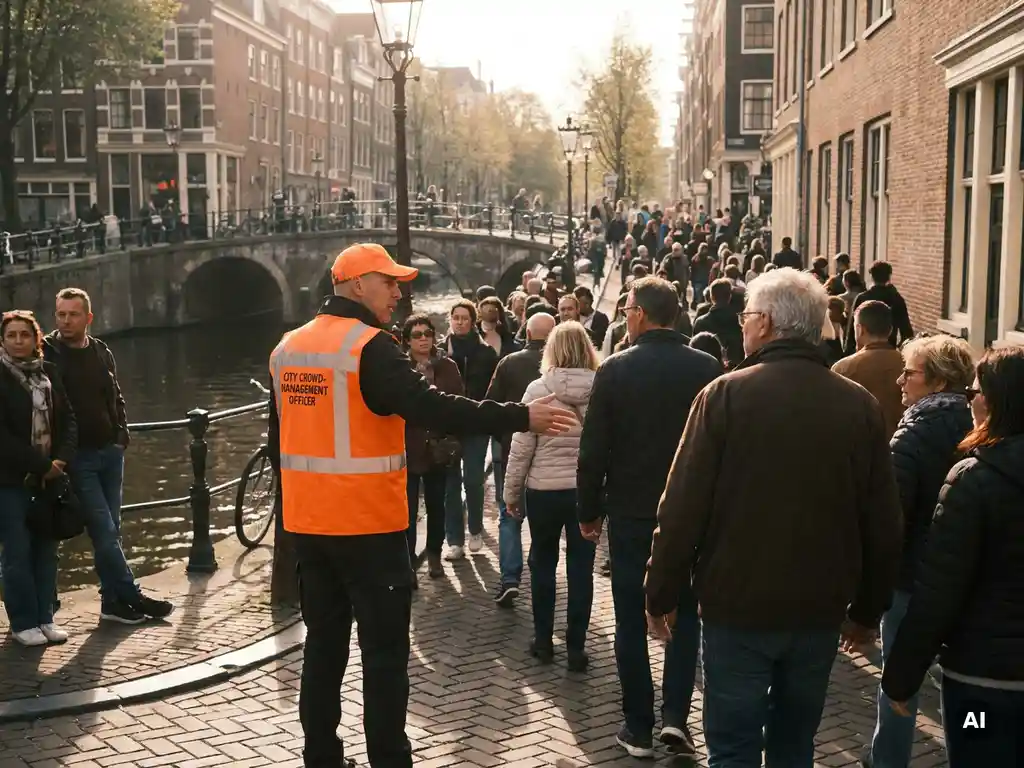
    Summer, particularly July and August, is when Amsterdam is at its most crowded and least comfortable for anyone trying to actually experience the city rather than survive it. The attractions are packed, the queues are long, and the canal ring becomes a slow-moving parade of tourists. This is not a reason to avoid Amsterdam in summer, but it is a reason to plan carefully and keep your expectations calibrated.

    What do most Amsterdam visitors miss that locals actually love?

    Most Amsterdam visitors miss the brown cafés, the smaller canal streets away from the main tourist routes, the Westerpark and Oosterpark neighbourhoods, the FOAM photography museum, and the simple pleasure of sitting somewhere with a beer and watching the city move. These are not hidden gems in the influencer sense. They are just the parts of Amsterdam that don’t advertise themselves.

    The brown cafés deserve particular mention. These are traditional Dutch pubs, named for their dark wood interiors and nicotine-stained walls, and they are among the most genuinely Amsterdam experiences available to anyone. They are not trendy. They are not Instagrammable. They serve beer, sometimes jenever, and occasionally bitterballen. They are full of locals having actual conversations, and they are exactly the kind of place that reminds you why Amsterdam became beloved in the first place.

    Beyond that, the thing most visitors miss is simply slowing down. Amsterdam is a city that reveals itself incrementally. The second canal you cross is more interesting than the first. The neighbourhood you wander into by accident is more memorable than the one you planned to visit. The best things to do in Amsterdam are often the things you couldn’t have scheduled.

    How Klagen Niet Klagen helps you actually see Amsterdam

    Most Amsterdam travel content is written by people who visited for a long weekend or by organisations with a financial interest in keeping the city looking its best. Klagen Niet Klagen is something different: an honest, English-language perspective on Amsterdam written by someone who has lived and worked here for over thirty years.

    • Unfiltered opinions on which attractions genuinely earn their reputation and which ones coast on it
    • Neighbourhood commentary written from actual lived experience, not a press trip itinerary
    • Cultural context that helps you understand what you are seeing, not just where to stand for a good photo
    • Long-form essays that treat Amsterdam as a complex, contradictory city rather than a curated highlight reel

    If you want to understand Amsterdam rather than just visit it, the blog archive is a good place to start. Read a few pieces before you arrive, and you will land with a significantly better map in your head than any guidebook will give you.

    And while you are planning your time in Amsterdam, it would be a genuine shame to leave without seeing a show at Boom Chicago. Thirty years of improvised comedy in the city, a stage that has launched careers and shaped Dutch entertainment culture, and an evening that will tell you more about Amsterdam’s sense of humour than a week of sightseeing. Check the shows and agenda before you go, or get in touch if you have a group or event in mind. It is, genuinely, one of the best things to do in Amsterdam.

    Frequently Asked Questions

    How far in advance should I book tickets for Amsterdam's major attractions?

    For the Anne Frank House, book as early as possible — ideally 6 to 8 weeks ahead during peak season (April through August), and at least 2 to 3 weeks ahead at quieter times of year. The Rijksmuseum and Van Gogh Museum are more forgiving, but booking 1 to 2 weeks in advance is still strongly recommended to avoid long walk-up queues. Leaving ticket purchases until the day before, or the day of, is one of the most common and avoidable mistakes visitors make.

    Is two days enough time to see Amsterdam's highlights, or should I plan for longer?

    Two full days is enough to visit the Rijksmuseum, the Anne Frank House, and explore one or two neighbourhoods properly — but it won’t leave much room for the unscheduled wandering that makes Amsterdam genuinely memorable. Three to four days is the sweet spot for most visitors: enough time to cover the major cultural sites without feeling rushed, and enough breathing room to stumble into the slower, less curated parts of the city. If you find yourself trying to fit more than two significant attractions into a single day, you’re probably moving too fast.

    What's the best way to get around Amsterdam — bikes, trams, or on foot?

    For the city centre and the main neighbourhoods covered in this post, walking is almost always the best option. The distances are short, the streets are interesting, and you will notice far more on foot than you ever would from a tram window. Cycling is the authentic Amsterdam experience, and rental bikes are widely available, but navigating city traffic as an unfamiliar cyclist can be stressful — Amsterdam’s cycling infrastructure is built for people who already know how to use it. Trams are useful for reaching areas further from the centre, but for the Jordaan, De Pijp, the canal ring, and Museumplein, your feet are your best transport.

  • What’s a good bike ride in Amsterdam?

    What’s a good bike ride in Amsterdam?

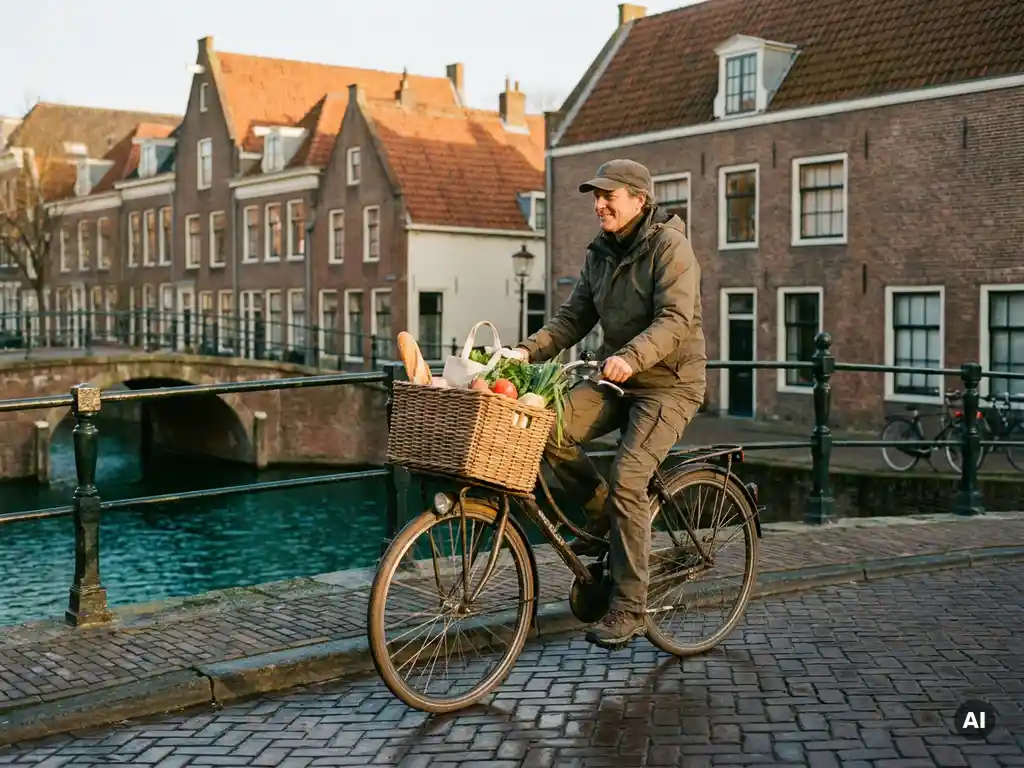
    The best bike rides in Amsterdam take you out of the tourist centre and into the city’s quieter neighbourhoods, waterways, and surrounding polder landscape. Most locals cycle daily without thinking of it as a “ride” at all, but for visitors and newer residents, the sweet spot is a loop through the Jordaan, along the IJ waterfront, or out through the Eastern Docklands. The questions below break down exactly where to go, how long to ride, and what to know before you clip in.

    Where do locals actually cycle in Amsterdam?

    Locals cycle everywhere, but the routes they genuinely enjoy rather than just tolerate tend to follow the water. The Amstel River south of the city, the IJ waterfront east of Centraal Station, and the quiet streets of the Jordaan and De Pijp neighbourhoods are where you will find Amsterdammers cycling at a human pace rather than dodging tour groups.

    The area around Westerpark and the Haarlemmerdijk is a favourite for weekend riding. Head east, and the Eastern Docklands, with their dramatic architecture and wide waterside paths, offer a genuinely photogenic and relatively uncrowded ride. The Amstelpark loop in the south is another local staple, especially on Sunday mornings when traffic is light and the city feels briefly like it belongs to its residents again.

    What all these routes share is a deliberate distance from the Leidseplein-to-Dam Square corridor, which is the cycling equivalent of a rush-hour motorway, except the hazards are confused pedestrians with selfie sticks.

    What’s the difference between cycling in Amsterdam and cycling out of it?

    Cycling inside Amsterdam means navigating dense urban traffic, tram rails, one-way streets, and a constant flow of other cyclists moving at very different speeds. Cycling out of Amsterdam, into the surrounding polder countryside, means flat open roads, almost no cars, and a completely different experience of the Netherlands that most visitors never see.

    The transition happens quickly. Within fifteen minutes of leaving the city centre, you can be on a dedicated cycle path through open farmland, passing windmills and grazing cattle. Routes north through the IJ tunnel towards Waterland, or south along the Amstel towards Ouderkerk aan de Amstel, are the most accessible escapes. Ouderkerk is particularly good: a pretty village with a strong cafe culture, reachable in under an hour, and entirely achievable on a standard city bike.

    The two experiences are genuinely different things. City cycling is practical and intense. Countryside cycling is meditative and flat in the best possible way.

    How long should a good Amsterdam bike ride be?

    A satisfying Amsterdam bike ride is typically between one and three hours, covering anywhere from ten to thirty kilometres depending on pace and destination. Shorter than an hour and you barely scratch the surface. Longer than three hours and the flat terrain, while forgiving on the legs, can become monotonous without a clear destination to break it up.

    For a city loop, ninety minutes is the sweet spot. You can cover the Jordaan, the IJ waterfront, the Eastern Docklands, and loop back through the Plantage neighbourhood without feeling rushed or exhausted. For a countryside excursion, two to three hours gives you enough time to reach Ouderkerk aan de Amstel or the Waterland villages north of the city, stop for coffee, and return at a relaxed pace.

    The honest answer is that Amsterdam rewards slow cycling far more than fast cycling. The city is dense with things worth stopping for.

    Which Amsterdam bike routes are best for first-timers?

    The best Amsterdam bike route for first-timers is the IJ waterfront east of Centraal Station, heading through the Eastern Docklands to the NEMO Science Museum and beyond. It is wide, well-marked, mostly flat, and far less chaotic than the city centre streets. You get dramatic views of the harbour and modern architecture without the stress of tram rails and dense pedestrian crossings.

    A second strong option for first-timers is the Amstel River route heading south from the city. You pick up the river near Carré Theatre and follow it out through Amstelpark towards Ouderkerk. The path is clear, the scenery is genuinely Dutch in the classic sense, and there is a very good chance you will see a windmill.

    What first-timers should avoid is the Leidseplein to Vondelpark corridor during peak hours. It is not dangerous if you stay alert, but it is overwhelming enough to put people off cycling entirely, which would be a shame.

    Should you rent a bike or bring your own for riding in Amsterdam?

    For most visitors, renting a bike in Amsterdam is the practical choice. Bringing your own adds significant travel complexity, and Amsterdam’s rental infrastructure is excellent. Quality varies between rental shops, but a decent three-speed city bike is available across the city for a reasonable daily rate, and it is the right tool for Amsterdam’s flat streets and casual cycling culture.

    If you are staying for more than a week, or you are a serious cyclist who wants to do longer countryside rides, bringing or buying your own bike makes more sense. Second-hand bikes are also widely available in Amsterdam at very low prices, which is either a sign of a healthy cycling economy or a reflection of the city’s extraordinary bike theft rate, depending on how you look at it.

    One practical note: whatever bike you ride, lock it properly. A thin cable lock is not a lock in Amsterdam, it is an optimistic suggestion. Use a heavy chain or a solid D-lock, and ideally both.

    What do Amsterdam cyclists wish tourists knew before riding here?

    Amsterdam cyclists wish tourists understood one thing above all others: the bike lane is not a pedestrian zone with wheels. It is a functional transport network used by tens of thousands of people daily, and stepping into it without looking, stopping suddenly, or cycling three abreast causes genuine disruption and occasional genuine danger.

    • Stay left when cycling slowly, pass on the right, and signal your intentions with hand gestures or a bell
    • Tram rails run parallel to many cycle paths and will catch your wheel if you cross them at a shallow angle
    • Red surfaces indicate dedicated cycle paths, but not all cycle paths are red, so look for the fietspad signs
    • Cycling through the Rijksmuseum passage is technically allowed but practically a nightmare during busy periods
    • A bell ring from behind you is not aggression, it is information
    • Do not stop in the middle of a cycle lane to check your phone, look at a map, or take a photograph

    Amsterdam is one of the most cycling-friendly cities in the world, but that infrastructure was built for people who know how to use it. A little awareness goes a long way, and the locals will warm to you noticeably faster if you cycle like someone who has thought about it.

    How Klagen Niet Klagen helps you get more out of Amsterdam

    Finding genuinely useful, honest information about Amsterdam as a place to live in or explore deeply is harder than it should be. Most English-language content about the city is either tourist-board gloss or fragmented blog posts written by people who visited for a long weekend. Klagen Niet Klagen is something different: long-form commentary on Amsterdam written by someone who has lived and worked here for over three decades, with no tourism-board agenda and no obligation to be diplomatic.

    • Honest, insider perspectives on Amsterdam city life that go well beyond what any travel guide will tell you
    • Cultural commentary that helps you understand the city’s contradictions, not just its highlights
    • Practical and opinionated takes on things to do in Amsterdam, written for curious people rather than passive tourists
    • A consistent editorial voice you can trust, grounded in real experience rather than sponsored content

    If you want more of this kind of writing, the full blog archive covers everything from Dutch cultural norms to neighbourhood guides to the ongoing comedy of Amsterdam city politics. Worth a read before your next ride.

    And if you find yourself in Amsterdam with an evening free after a long day in the saddle, consider spending it at Boom Chicago. It is the comedy theatre that Andrew Moskos co-founded here in 1993, and it has been making Amsterdam audiences laugh ever since. The shows are in English, the atmosphere is genuinely fun, and it is exactly the kind of thing that reminds you why Amsterdam is worth cycling around in the first place. Get in touch if you want to know more.

    Frequently Asked Questions

    What's the safest way to handle Amsterdam's tram rails on a bike?

    Always cross tram rails at a perpendicular angle — as close to 90 degrees as possible — rather than riding parallel or crossing at a shallow angle, which is when wheels get caught. If you need to cross rails in a tight space, slow right down and steer deliberately across them. It sounds simple, but it catches out even experienced cyclists who are momentarily distracted, so treat every rail crossing as something that deserves your full attention.

    Can I do a countryside ride from Amsterdam on a standard rental bike?

    Yes, and it is genuinely one of the best things you can do. Routes like the Amstel south to Ouderkerk aan de Amstel or north through the IJ tunnel into Waterland are entirely manageable on a standard three-speed city rental bike — the terrain is flat, the paths are well-maintained, and neither route requires any specialist equipment. Just make sure your saddle height is properly adjusted before you leave, because an hour on a poorly set-up rental bike will make itself known in your knees long before you reach the windmills.

    What's the best time of day to cycle in Amsterdam to avoid the crowds?

    Early morning — before 9am — is by far the best time to cycle in Amsterdam if you want the city largely to yourself. The tourist-heavy routes around the canal ring and Vondelpark are noticeably quieter, the light is often beautiful, and you get a much more honest sense of the city as it actually functions. Sunday mornings are the gold standard: traffic is minimal, locals are out in a relaxed mood, and the Amstelpark loop or a run along the IJ waterfront feels genuinely peaceful rather than like an obstacle course.