
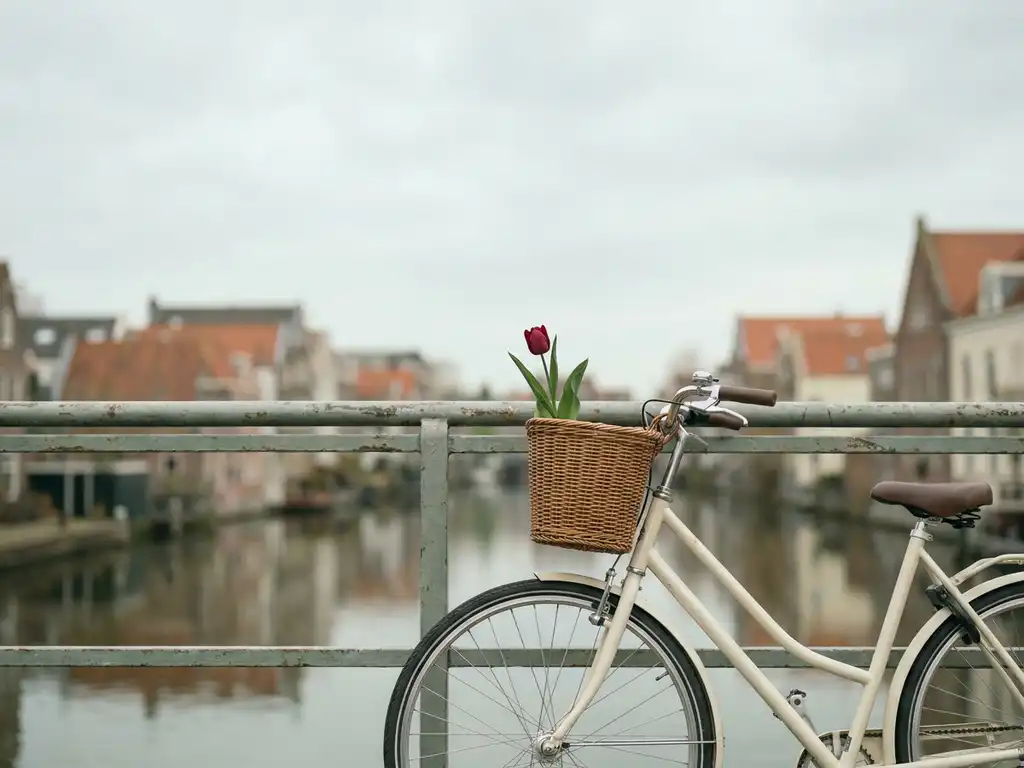
The best bike rides in Amsterdam take you out of the tourist centre and into the city’s quieter neighbourhoods, waterways, and surrounding polder landscape. Most locals cycle daily without thinking of it as a “ride” at all, but for visitors and newer residents, the sweet spot is a loop through the Jordaan, along the IJ waterfront, or out through the Eastern Docklands. The questions below break down exactly where to go, how long to ride, and what to know before you clip in.
Where do locals actually cycle in Amsterdam?
Locals cycle everywhere, but the routes they genuinely enjoy rather than just tolerate tend to follow the water. The Amstel River south of the city, the IJ waterfront east of Centraal Station, and the quiet streets of the Jordaan and De Pijp neighbourhoods are where you will find Amsterdammers cycling at a human pace rather than dodging tour groups.
The area around Westerpark and the Haarlemmerdijk is a favourite for weekend riding. Head east, and the Eastern Docklands, with their dramatic architecture and wide waterside paths, offer a genuinely photogenic and relatively uncrowded ride. The Amstelpark loop in the south is another local staple, especially on Sunday mornings when traffic is light and the city feels briefly like it belongs to its residents again.
What all these routes share is a deliberate distance from the Leidseplein-to-Dam Square corridor, which is the cycling equivalent of a rush-hour motorway, except the hazards are confused pedestrians with selfie sticks.
What’s the difference between cycling in Amsterdam and cycling out of it?
Cycling inside Amsterdam means navigating dense urban traffic, tram rails, one-way streets, and a constant flow of other cyclists moving at very different speeds. Cycling out of Amsterdam, into the surrounding polder countryside, means flat open roads, almost no cars, and a completely different experience of the Netherlands that most visitors never see.
The transition happens quickly. Within fifteen minutes of leaving the city centre, you can be on a dedicated cycle path through open farmland, passing windmills and grazing cattle. Routes north through the IJ tunnel towards Waterland, or south along the Amstel towards Ouderkerk aan de Amstel, are the most accessible escapes. Ouderkerk is particularly good: a pretty village with a strong cafe culture, reachable in under an hour, and entirely achievable on a standard city bike.
The two experiences are genuinely different things. City cycling is practical and intense. Countryside cycling is meditative and flat in the best possible way.
How long should a good Amsterdam bike ride be?
A satisfying Amsterdam bike ride is typically between one and three hours, covering anywhere from ten to thirty kilometres depending on pace and destination. Shorter than an hour and you barely scratch the surface. Longer than three hours and the flat terrain, while forgiving on the legs, can become monotonous without a clear destination to break it up.
For a city loop, ninety minutes is the sweet spot. You can cover the Jordaan, the IJ waterfront, the Eastern Docklands, and loop back through the Plantage neighbourhood without feeling rushed or exhausted. For a countryside excursion, two to three hours gives you enough time to reach Ouderkerk aan de Amstel or the Waterland villages north of the city, stop for coffee, and return at a relaxed pace.
The honest answer is that Amsterdam rewards slow cycling far more than fast cycling. The city is dense with things worth stopping for.
Which Amsterdam bike routes are best for first-timers?
The best Amsterdam bike route for first-timers is the IJ waterfront east of Centraal Station, heading through the Eastern Docklands to the NEMO Science Museum and beyond. It is wide, well-marked, mostly flat, and far less chaotic than the city centre streets. You get dramatic views of the harbour and modern architecture without the stress of tram rails and dense pedestrian crossings.
A second strong option for first-timers is the Amstel River route heading south from the city. You pick up the river near Carré Theatre and follow it out through Amstelpark towards Ouderkerk. The path is clear, the scenery is genuinely Dutch in the classic sense, and there is a very good chance you will see a windmill.
What first-timers should avoid is the Leidseplein to Vondelpark corridor during peak hours. It is not dangerous if you stay alert, but it is overwhelming enough to put people off cycling entirely, which would be a shame.
Should you rent a bike or bring your own for riding in Amsterdam?
For most visitors, renting a bike in Amsterdam is the practical choice. Bringing your own adds significant travel complexity, and Amsterdam’s rental infrastructure is excellent. Quality varies between rental shops, but a decent three-speed city bike is available across the city for a reasonable daily rate, and it is the right tool for Amsterdam’s flat streets and casual cycling culture.
If you are staying for more than a week, or you are a serious cyclist who wants to do longer countryside rides, bringing or buying your own bike makes more sense. Second-hand bikes are also widely available in Amsterdam at very low prices, which is either a sign of a healthy cycling economy or a reflection of the city’s extraordinary bike theft rate, depending on how you look at it.
One practical note: whatever bike you ride, lock it properly. A thin cable lock is not a lock in Amsterdam, it is an optimistic suggestion. Use a heavy chain or a solid D-lock, and ideally both.
What do Amsterdam cyclists wish tourists knew before riding here?
Amsterdam cyclists wish tourists understood one thing above all others: the bike lane is not a pedestrian zone with wheels. It is a functional transport network used by tens of thousands of people daily, and stepping into it without looking, stopping suddenly, or cycling three abreast causes genuine disruption and occasional genuine danger.
- Stay left when cycling slowly, pass on the right, and signal your intentions with hand gestures or a bell
- Tram rails run parallel to many cycle paths and will catch your wheel if you cross them at a shallow angle
- Red surfaces indicate dedicated cycle paths, but not all cycle paths are red, so look for the fietspad signs
- Cycling through the Rijksmuseum passage is technically allowed but practically a nightmare during busy periods
- A bell ring from behind you is not aggression, it is information
- Do not stop in the middle of a cycle lane to check your phone, look at a map, or take a photograph
Amsterdam is one of the most cycling-friendly cities in the world, but that infrastructure was built for people who know how to use it. A little awareness goes a long way, and the locals will warm to you noticeably faster if you cycle like someone who has thought about it.
How Klagen Niet Klagen helps you get more out of Amsterdam
Finding genuinely useful, honest information about Amsterdam as a place to live in or explore deeply is harder than it should be. Most English-language content about the city is either tourist-board gloss or fragmented blog posts written by people who visited for a long weekend. Klagen Niet Klagen is something different: long-form commentary on Amsterdam written by someone who has lived and worked here for over three decades, with no tourism-board agenda and no obligation to be diplomatic.
- Honest, insider perspectives on Amsterdam city life that go well beyond what any travel guide will tell you
- Cultural commentary that helps you understand the city’s contradictions, not just its highlights
- Practical and opinionated takes on things to do in Amsterdam, written for curious people rather than passive tourists
- A consistent editorial voice you can trust, grounded in real experience rather than sponsored content
If you want more of this kind of writing, the full blog archive covers everything from Dutch cultural norms to neighbourhood guides to the ongoing comedy of Amsterdam city politics. Worth a read before your next ride.
And if you find yourself in Amsterdam with an evening free after a long day in the saddle, consider spending it at Boom Chicago. It is the comedy theatre that Andrew Moskos co-founded here in 1993, and it has been making Amsterdam audiences laugh ever since. The shows are in English, the atmosphere is genuinely fun, and it is exactly the kind of thing that reminds you why Amsterdam is worth cycling around in the first place. Get in touch if you want to know more.
Frequently Asked Questions
What's the safest way to handle Amsterdam's tram rails on a bike?
Always cross tram rails at a perpendicular angle — as close to 90 degrees as possible — rather than riding parallel or crossing at a shallow angle, which is when wheels get caught. If you need to cross rails in a tight space, slow right down and steer deliberately across them. It sounds simple, but it catches out even experienced cyclists who are momentarily distracted, so treat every rail crossing as something that deserves your full attention.
Can I do a countryside ride from Amsterdam on a standard rental bike?
Yes, and it is genuinely one of the best things you can do. Routes like the Amstel south to Ouderkerk aan de Amstel or north through the IJ tunnel into Waterland are entirely manageable on a standard three-speed city rental bike — the terrain is flat, the paths are well-maintained, and neither route requires any specialist equipment. Just make sure your saddle height is properly adjusted before you leave, because an hour on a poorly set-up rental bike will make itself known in your knees long before you reach the windmills.
What's the best time of day to cycle in Amsterdam to avoid the crowds?
Early morning — before 9am — is by far the best time to cycle in Amsterdam if you want the city largely to yourself. The tourist-heavy routes around the canal ring and Vondelpark are noticeably quieter, the light is often beautiful, and you get a much more honest sense of the city as it actually functions. Sunday mornings are the gold standard: traffic is minimal, locals are out in a relaxed mood, and the Amstelpark loop or a run along the IJ waterfront feels genuinely peaceful rather than like an obstacle course.