
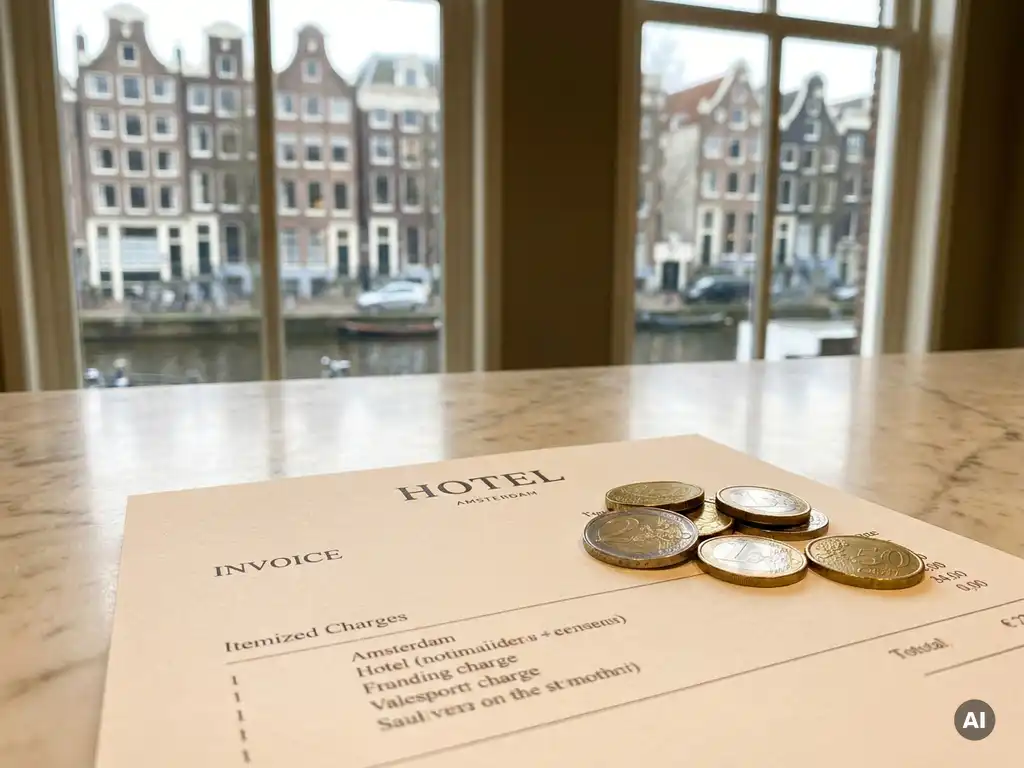
Yes, hotels in Amsterdam almost always pass the tourist tax cost directly onto guests; it appears as a separate line item on your bill, on top of the quoted room price. This is standard practice across the city’s accommodation sector, from budget hostels to five-star canal-side hotels. Below, this article unpacks exactly how much that tax is, why the amount differs between properties, and whether the same rules apply to Airbnb and short-stay rentals.
How much is Amsterdam’s tourist tax in 2025?
Amsterdam’s tourist tax in 2025 is set at 12.5% of the accommodation price per night. This percentage applies to the room rate and is charged per booking, not per person. Amsterdam’s tourist tax rate is now one of the highest of any European capital, a deliberate policy choice by the city to manage visitor numbers and generate revenue from tourism.
To put that in concrete terms: if your hotel room costs €200 per night, you will pay an additional €25 in tourist tax on top of that. Over a four-night stay, that adds up to €100, a meaningful extra cost that many visitors only notice when they check out.
The rate has climbed significantly over the past decade. Amsterdam has consistently raised it as part of a broader effort to reduce the effects of tourist pressure on city infrastructure and housing. Whether that strategy is working is a debate for another day, but the direction of travel is clear: the tax is not going down.
Do hotels add tourist tax on top of the room price?
Yes, hotels add tourist tax on top of the advertised room price. The rate you see when booking online, whether on a hotel’s own website or through a platform like Booking.com or Expedia, typically does not include tourist tax. It is added at checkout, either when you pay online or when you settle your bill at the hotel.
Reputable booking platforms are now generally required to display the total price including taxes before you confirm a reservation, but the presentation varies. Some show the full amount upfront; others reveal the tourist tax only at the final payment step. Always check the price breakdown before confirming, particularly for longer stays where the cumulative tax can be substantial.
The tourist tax is not a hotel surcharge or a discretionary fee; it is a municipal levy collected by the hotel on behalf of the City of Amsterdam. Hotels are legally obligated to charge it and pass it on to the municipality. They have no option to waive it, and guests have no option to avoid it by paying in cash or negotiating at the front desk.
Why does the tourist tax amount vary between hotels?
The tourist tax amount varies between hotels because it is calculated as a percentage of the room rate, not a flat fee per night. Since the tax is 12.5% of whatever the accommodation costs, a more expensive hotel will generate a higher tax amount than a budget property, even though both apply exactly the same rate.
This percentage-based structure means the absolute cost of tourist tax scales directly with the price of your accommodation. Staying at a luxury boutique hotel on the Herengracht will cost you considerably more in tourist tax than a night in a hostel dormitory near Centraal Station, even though both properties are charging the same legal rate.
There is also a secondary source of variation: seasonal pricing. Because room rates fluctuate throughout the year, the tourist tax amount fluctuates with them. A room that costs €150 in January and €280 in July will generate different tax amounts in each month, even though the percentage applied is identical. This is one of the less visible effects of tourist tax in Amsterdam: the levy is effectively higher during peak travel periods, compounding the cost of visiting at busy times.
Does tourist tax apply to Airbnb and short-stay rentals too?
Yes, tourist tax applies to Airbnb and short-stay rentals in Amsterdam, not just hotels. The City of Amsterdam requires all short-stay accommodation providers, including private hosts on platforms like Airbnb and Booking.com, to collect and remit the same 12.5% tourist tax that hotels pay. There is no exemption for private rentals or peer-to-peer platforms.
In practice, Airbnb collects the tourist tax automatically on behalf of hosts and remits it directly to the municipality. Guests see the tax listed as a separate line item during the booking process. For hosts operating outside major platforms, renting directly through their own website or informal channels, the obligation to collect and pay the tax still exists, even if enforcement is less automatic.
Amsterdam has also imposed strict limits on short-stay rentals beyond the tax. Hosts are permitted to rent their primary residence for a maximum of 30 nights per year, and the property must be registered with the city. These restrictions, combined with the tourist tax obligation, reflect the broader effort to manage the effects of tourist pressure on Amsterdam’s housing stock and residential neighbourhoods. The tax is just one piece of a much larger regulatory picture governing who can rent, what they can charge, and for how long.
How Klagen Niet Klagen helps you understand Amsterdam’s tourist economy
Klagen Niet Klagen is an English-language Amsterdam city blog written by Andrew Moskos, co-founder of Boom Chicago and someone who has lived, worked, and argued about this city for over three decades. When it comes to topics like tourist tax, overtourism, and the real effects of Amsterdam’s visitor economy on daily life, this blog offers something most sources do not: a genuine inside perspective, free from tourism-board spin or advertorial softening.
- Honest, long-form commentary on Amsterdam city policy and how it affects residents and visitors alike
- Written in English, for an internationally minded audience that wants more than a surface-level take
- Grounded in over 30 years of lived Amsterdam experience, not journalism on a deadline or a press trip
- Covers the cultural, political, and social tensions that shape the city, including the ongoing debate around tourism and its costs
If you want to understand Amsterdam beyond the tourist brochure, read more about the blog and what drives it, or dive straight into the archive for more honest takes on city life.
And if you are visiting Amsterdam and want to make the most of your time here, there is no better evening than a night at Boom Chicago. Sharp, funny, and rooted in the same Amsterdam energy that runs through this blog, it is the kind of show that makes you feel like you have actually seen the real city. Check the Boom Chicago website for what is on and grab a seat before they sell out.
Frequently Asked Questions
Can I get a refund on the tourist tax if my stay is cut short or I cancel?
If you cancel a booking before your stay, tourist tax is typically refunded along with your room rate, provided the cancellation falls within the hotel’s refund policy. However, if you check out early mid-stay, most hotels will only refund the tourist tax for the unused nights if their policy explicitly allows it — so it’s worth checking the cancellation terms before booking, especially for longer stays where the cumulative tax is significant.
Is tourist tax already included when I see 'taxes and fees' on booking platforms like Booking.com or Expedia?
Not always, and the presentation varies by platform and property. Some listings fold Amsterdam’s tourist tax into the ‘taxes and fees’ total shown upfront, while others only reveal it at the final checkout step. The safest habit is to click through to the full price breakdown before confirming any reservation — look specifically for a line item labelled ‘city tax,’ ‘tourist tax,’ or ‘toeristenbelasting’ to confirm it’s been included.
Are there any types of travellers or stays that are exempt from Amsterdam's tourist tax?
Very few exemptions exist. Amsterdam’s tourist tax applies broadly to all paying overnight guests, regardless of nationality, age, or purpose of travel. Business travellers, for example, are not exempt, nor are guests on long stays of several weeks. The only practical scenario where tourist tax may not apply is if you are staying with friends or family in a private home where no money changes hands — but the moment accommodation is paid for, the tax obligation follows.