
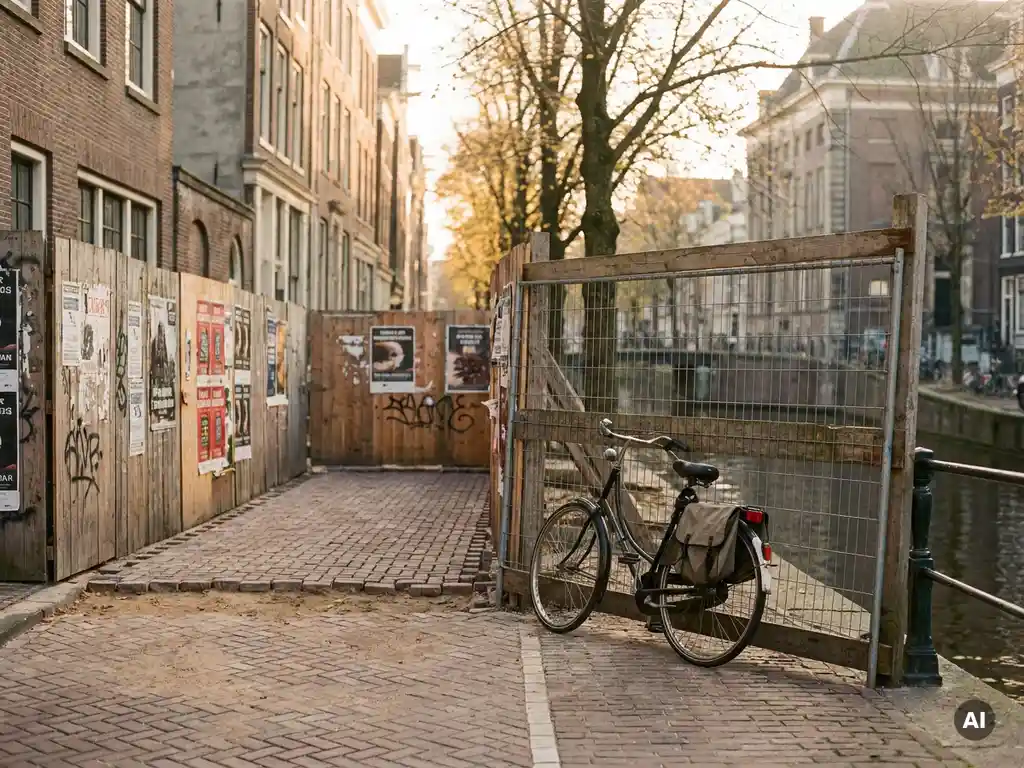
Several Amsterdam squares and streets are currently being redesigned or have recently undergone major public space overhauls. Projects range from the complete transformation of major squares like Rembrandtplein and Leidseplein to quieter neighbourhood street renewals across areas including the Jordaan, De Pijp, and Amsterdam-Noord. The city has been running an ambitious multi-year programme of public space redesign, and in 2026 that work is still very much in progress across multiple districts.
Which Amsterdam neighbourhoods are seeing the biggest street changes?
The biggest public space redesign projects in Amsterdam are concentrated in the city centre and in rapidly developing outer districts. The historic core, particularly around Rembrandtplein, Leidseplein, and the area around Centraal Station, has seen sustained investment in pedestrian-friendly redesign, while neighbourhoods like Amsterdam-Noord, Sloterdijk, and the Zuidas corridor are being restructured to accommodate population growth and new mobility patterns.
In the older parts of the city, the focus tends to be on reclaiming street space from cars and parking, widening pavements, improving cycling infrastructure, and replanting trees. The Jordaan and De Pijp have both seen stretches of road quietly reworked over the past decade, with the pace picking up as the municipality pushes forward its broader ambition to make Amsterdam a greener, more walkable city.
Further out, the redesigns are often more dramatic in scale. In Noord and Nieuw-West, entirely new public squares and green corridors are being created from scratch as these areas grow into fully fledged urban neighbourhoods rather than peripheral outskirts. These are not cosmetic touch-ups, they represent a fundamental rethinking of how public space should function in a dense, international city.
What does a typical Amsterdam street redesign actually involve?
A typical public space redesign in Amsterdam involves far more than repaving. Projects generally combine new cycling infrastructure, reduced car access, tree planting, improved drainage systems, updated lighting, and the installation of street furniture designed to encourage people to actually sit and spend time outdoors. The goal is to shift street space from a transit corridor into a genuine place.
Underneath the surface, most major redesigns also include an overhaul of underground infrastructure: sewage pipes, gas lines, electricity cables, and water mains. This is one reason why Amsterdam street renovations tend to be so disruptive and so expensive: the city is essentially rebuilding itself from the ground up, not just giving the surface a new coat of paint.
On the design side, the municipality works with urban planners and landscape architects to meet specific environmental targets, including reducing surface heat, managing rainwater runoff, and increasing biodiversity. What looks like a simple new square often represents years of planning, consultation, and engineering work hidden beneath the cobblestones.
How long do Amsterdam public space renovations usually take?
Most Amsterdam public space renovations take between one and three years from the start of physical construction to completion, though the planning and approval process before a single shovel hits the ground can add several more years to the overall timeline. Large-scale projects involving major squares or arterial streets tend to run longer, particularly when underground infrastructure renewal is part of the scope.
Delays are common and almost expected. Amsterdam’s soil conditions, the city is built on a foundation of wooden piles sunk into soft peat, make underground work unpredictable. Unexpected discoveries, whether archaeological finds, unstable foundations, or deteriorated infrastructure, routinely extend timelines. Add in the Dutch planning process, which involves extensive public consultation, and it becomes clear why a square that looks like it should take six months to fix can still be a building site two years later.
For residents and business owners in the affected area, this is not an abstract inconvenience. It is a prolonged reality of noise, dust, restricted access, and lost footfall, which is why the city’s communication around these projects matters almost as much as the construction itself.
How do Amsterdam’s redesigns affect daily life for residents and visitors?
Amsterdam’s public space redesigns affect daily life in two very different phases. During construction, the impact is almost entirely negative: streets are closed or narrowed, cycling routes are diverted, noise starts early and ends late, and local businesses lose passing trade. For residents living directly alongside a project, this can mean months of genuine disruption to their daily routine.
After completion, however, the picture usually reverses. Streets that were previously dominated by parked cars and through traffic often become genuinely pleasant places to walk, cycle, and linger. Research into completed projects across Amsterdam consistently shows that well-designed public space increases the appeal of surrounding streets, benefits local shops and cafes, and improves residents’ sense of connection to their neighbourhood.
For visitors, the experience depends entirely on timing. Arriving during a major renovation can mean that a neighbourhood feels inaccessible or unattractive. Arriving after completion often means discovering a square or street that feels noticeably better than it did before: more trees, better seating, less noise, and a stronger sense that this is a city that actually invests in the places where people spend their time.
The honest truth is that Amsterdam is a city that has been under construction in some form for most of its existence. Learning to live with that, and occasionally to appreciate what it produces, is part of what it means to actually live here rather than just visit.
How Klagen Niet Klagen helps you make sense of Amsterdam city life
If you have ever stood at the edge of a fenced-off square wondering what on earth is happening and when it will be over, you are not alone. Amsterdam’s urban transformation is constant, opinionated, and rarely explained in plain English. That is exactly the gap that Klagen Niet Klagen exists to fill.
- Long-form essays and commentary on Amsterdam city life, written from genuine insider experience, not a tourism board script
- Honest takes on what the city is getting right and what it is getting spectacularly wrong
- Content written for expats, international visitors, and internationally minded locals who want more than a surface-level read
- A consistent editorial voice built on over three decades of living, working, and building something real in Amsterdam
If you want to understand Amsterdam rather than just navigate it, find out more about the blog and what drives it, then dive into the archive and form your own opinions.
And if you want to experience Amsterdam’s sharpest comedic voice in person rather than on a screen, Boom Chicago has been making audiences laugh, and think, since 1993. There is something fitting about watching live comedy in a city that takes its public squares this seriously. Check the shows and agenda and come see what all the fuss is about.
Frequently Asked Questions
How can I find out whether a specific Amsterdam street or square is currently under renovation before I visit?
The City of Amsterdam publishes an online map and project tracker at amsterdam.nl where you can search by neighbourhood or street name to see active and upcoming construction projects. For more granular, street-level updates, local neighbourhood websites and district council pages often carry more detailed timelines and diversion information. If you are planning a visit around a specific area, it is worth checking both sources a week or two before you arrive, as project phases and access restrictions can change quickly.
Do Amsterdam's street redesigns actually reduce car traffic, or do displaced cars just move to neighbouring streets?
This is one of the most debated questions in Amsterdam urban planning circles, and the honest answer is: it depends on the project. Research on completed redesigns in the city centre suggests that removing parking and narrowing roads does lead to a genuine reduction in car use in the immediate area, partly because drivers adapt their behaviour when driving becomes less convenient. However, critics argue that in outer districts with fewer public transport alternatives, traffic displacement to parallel streets is a real and documented problem that the municipality does not always address adequately in its planning.
What should local businesses expect during a major street renovation nearby, and is there any support available?
Local businesses should realistically expect a significant drop in footfall during construction, particularly if their street loses parking, has restricted pedestrian access, or becomes visually unappealing due to hoarding and machinery. The City of Amsterdam does offer a support programme for affected businesses, including signage schemes to direct customers to open shops and, in some cases, financial compensation mechanisms, though eligibility criteria are strict and the process is not always straightforward. The most practical advice is to proactively communicate with your customers through social media and signage well before construction begins, and to connect with your local district office early to understand what support you may be entitled to.