
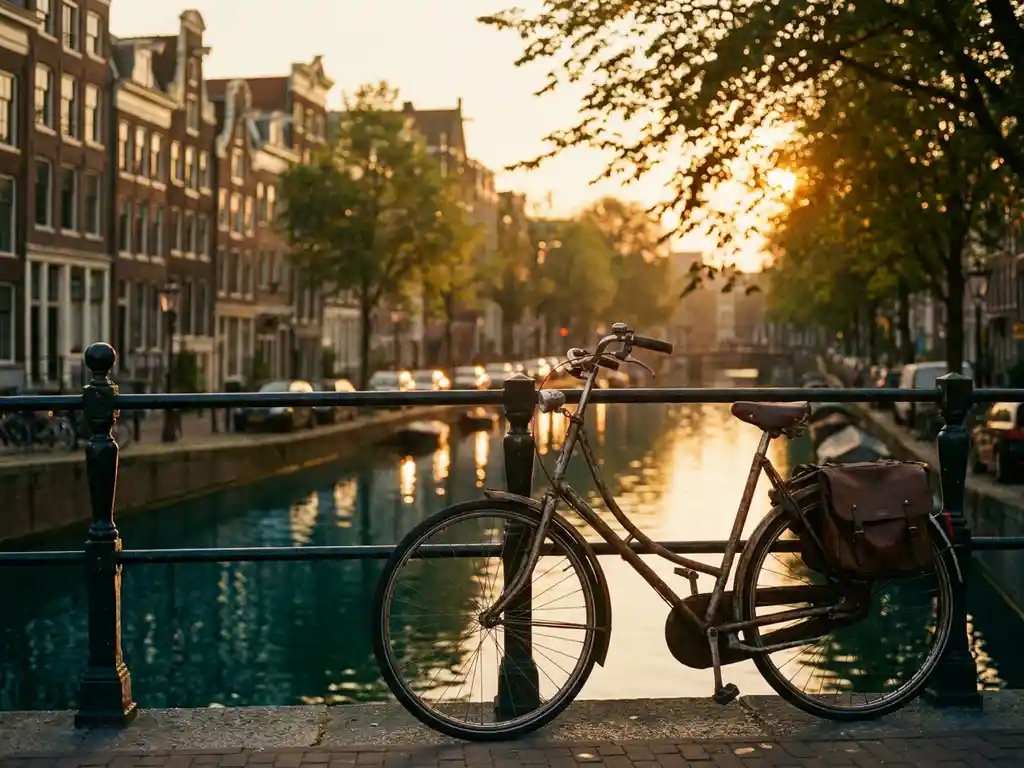
The number one attraction in Amsterdam, by official visitor numbers, is the Rijksmuseum. But if you ask someone who actually lives here, the honest answer is more complicated — and far more interesting. Amsterdam’s real draw is not any single building or museum; it is the city itself, the accumulated texture of 700 years of mercantile ambition, artistic obsession, and quietly radical thinking. The questions below unpack what “number one” really means in a city this layered.
Why do so many visitors leave Amsterdam feeling like they missed the point?
Most visitors leave Amsterdam feeling like they missed the point because they spent their time on the tourist circuit rather than in the city. The Anne Frank House, the Heineken Experience, a canal boat tour — these are fine, but they are a curated version of Amsterdam, not the actual place. The city’s real character lives in its neighbourhoods, its social dynamics, and its contradictions, none of which appear on a highlights reel.
Amsterdam is a city that rewards curiosity and punishes passivity. If you follow the crowd, you end up in a queue. If you wander slightly off the obvious route, you find a city that is genuinely strange, genuinely beautiful, and genuinely unlike anywhere else in the world. The tourists who leave satisfied are almost always the ones who gave themselves permission to get a little lost — not geographically, but culturally. They talked to people. They went somewhere because it looked interesting, not because it appeared on a list. They sat in a brown café and stayed longer than they planned.
The ones who leave disappointed followed a script written for someone who has never been here before and will never come back. Amsterdam deserves better than that, and so do its visitors.
What does ‘number one attraction’ actually mean in Amsterdam?
In Amsterdam, “number one attraction” typically refers to the single site that draws the most paid visitors in a given year. By that metric, it is a straightforward ranking exercise. But the phrase is misleading, because Amsterdam’s most meaningful experiences are rarely ticketed, rarely queued for, and rarely the subject of a TripAdvisor review. The city’s canals are free. The Jordaan neighbourhood costs nothing to walk through. A conversation with a local is priceless and utterly unranked.
The official rankings measure footfall and revenue. They do not measure the thing that makes Amsterdam worth visiting, which is the feeling — hard to name but immediately recognisable — of being somewhere that has been doing things its own way for a very long time and has no particular interest in your approval. That feeling is the number one attraction. It just does not have a gift shop.
Which Amsterdam attraction consistently tops the official rankings?
The Rijksmuseum consistently tops the official visitor rankings in Amsterdam, drawing well over two million visitors in a typical year. Its collection of Dutch Golden Age masterworks, including Rembrandt’s Night Watch and Vermeer’s The Milkmaid, makes it the most globally recognised cultural institution in the Netherlands. The Anne Frank House and the Van Gogh Museum regularly compete for second and third place.
The Rijksmuseum earns its top ranking. It is genuinely world-class, thoughtfully curated, and housed in a building that is itself worth the visit. If you have never been, go. But book well in advance, because the queue without a reservation is a commitment that will take up a significant portion of your day. Amsterdam’s top attractions have become victims of their own success in ways that would have been unimaginable a generation ago.
What do long-term Amsterdam residents say is the real number one?
Long-term Amsterdam residents almost universally say the real number one attraction is the city’s street life and canal culture — the experience of moving through Amsterdam by bike or on foot, without a plan, and letting the city reveal itself. This is not a romanticised answer; it reflects something genuinely true about how the city is designed and how it functions. Amsterdam was built for human scale, and it rewards human-scale exploration.
Ask a resident what they love most about Amsterdam and they will rarely mention a museum. They will mention a specific café, a particular stretch of canal at a particular time of year, the way the light hits the gabled houses on a winter afternoon, the fact that you can cycle from one side of the city to the other in twenty minutes and pass something beautiful the entire way. They will mention the gezelligheid — the Dutch concept of convivial warmth — that still exists in the city’s best corners, even as the tourist pressure pushes it further from the centre.
For English-speaking visitors who want a genuine cultural experience, the best English shows in Amsterdam also rank high on the resident recommendation list. Live performance in English is rare in most European cities, but Amsterdam has a genuine tradition of it, rooted in the city’s internationalism and its long history of welcoming outsiders. It is one of the few places in continental Europe where you can see world-class comedy and theatre in English without compromise.
How has overtourism changed Amsterdam’s top attractions?
Overtourism has fundamentally altered the experience of Amsterdam’s top attractions by turning them from cultural destinations into crowd-management exercises. The areas around the Anne Frank House, the Rijksmuseum, and the Van Gogh Museum now generate pedestrian congestion that can make a simple visit feel exhausting. The city has responded with timed entry systems, visitor caps, and aggressive anti-tourism campaigns — none of which have fully solved the problem.
Beyond the logistics, overtourism has changed the social fabric around these sites. The neighbourhoods that once surrounded them organically — with local shops, cafés, and residents going about their lives — have been progressively hollowed out by short-term rental pressure and the economic logic of serving tourists rather than locals. The Jordaan, once a working-class neighbourhood full of character, now has streets where every other business caters exclusively to visitors.
This is not a uniquely Amsterdam problem, but Amsterdam feels it acutely because the city is physically small and its most famous assets are densely concentrated. The pressure is not evenly distributed across the city; it is piled onto a handful of postcodes, and those postcodes are struggling.
Should you skip Amsterdam’s most famous attractions altogether?
No, you should not skip Amsterdam’s most famous attractions altogether — but you should visit them with realistic expectations and supplement them with experiences that the official tourist circuit ignores. The Rijksmuseum is genuinely extraordinary. The Anne Frank House is genuinely moving. These are not tourist traps; they are famous because they are worth visiting. The mistake is treating them as the whole story rather than the introduction.
A more honest approach is to use the official top attractions as anchors and build outward from there. Visit the Rijksmuseum, then spend the afternoon in the Oud-Zuid neighbourhood without an agenda. Go to the Anne Frank House, then walk north into the Jordaan and find somewhere to sit that is not on any list. The contrast between the curated experience and the lived city is itself one of Amsterdam’s most interesting features.
For visitors who want to go deeper into Amsterdam’s cultural life, seeking out the best English shows in Amsterdam is one of the most underrated moves you can make. Live performance gives you something no museum can: a room full of people responding to something in real time, in a city that has been producing that kind of shared experience for decades.
How Klagen Niet Klagen helps you find the real Amsterdam
Amsterdam has no shortage of “top 10” lists and tourist guides. What it lacks is honest, insider commentary that tells you what the city is actually like — the contradictions, the frustrations, the genuine pleasures, and the things that make it worth caring about. That is exactly what this blog exists to do.
- Long-form essays on Amsterdam city life written from over three decades of lived experience — not a press trip
- Honest takes on what is worth your time and what is worth skipping, without advertorial pressure or tourism-board influence
- Cultural commentary that explains the Dutch mindset, the city’s social dynamics, and the unspoken rules that most visitors never crack
- A consistent editorial voice you can trust, grounded in the klagen / niet klagen framework — honest about the bad, genuine about the good
If you want to understand Amsterdam rather than just visit it, start with the blog archive — or come back to the Klagen Niet Klagen homepage whenever you need a straight answer about this city.
And if you want a live Amsterdam experience that is genuinely worth your evening, come to Boom Chicago. For over thirty years, Boom Chicago has been making Amsterdam audiences laugh — in English, with real wit, and with the kind of sharp cultural observation that this city has always deserved. It is not the number one attraction in Amsterdam by official metrics. But ask the right locals, and it is very close to the top of the list. Check the shows and agenda and see what is on when you are in town.
Frequently Asked Questions
How far in advance should I book tickets for Amsterdam's top museums?
For the Rijksmuseum, Anne Frank House, and Van Gogh Museum, booking at least two to four weeks in advance is strongly recommended during peak season (spring and summer), and even further ahead for the Anne Frank House, which sells out fastest. Walking up without a reservation at any of these venues risks losing several hours of your day to a queue — time far better spent exploring the city itself. Most venues offer timed-entry slots online, so booking early also lets you choose a morning slot, when crowds are thinnest and the experience is noticeably better.
What are the best neighbourhoods to explore if I want to see the 'real' Amsterdam beyond the tourist trail?
De Pijp, Noord, and Oud-West consistently deliver the kind of lived-in, unscripted Amsterdam that residents describe when asked what they love about the city. De Pijp has the Albert Cuyp Market and a genuine mix of local cafés and international culture; Noord is where Amsterdam’s creative and industrial edge lives, easily reached by a free ferry from Central Station; Oud-West offers quiet streets, independent shops, and the kind of brown cafés where an afternoon can disappear pleasantly. None of these require a plan — just a willingness to wander and sit somewhere that looks interesting.
Is it worth going to live English-language shows in Amsterdam, even if I'm only visiting for a few days?
Absolutely — and arguably more so when your time is limited, because live performance gives you something compressed and immediate that a week of museum visits cannot. A good English-language show at a venue like Boom Chicago puts you in a room with Amsterdam residents and fellow visitors responding to the same material in real time, which is one of the fastest ways to feel the city’s social texture rather than just observe it. Amsterdam’s tradition of English-language performance is genuinely rare in continental Europe, and spending one evening at a show is a far better use of limited time than a second visit to a site you have already seen.