
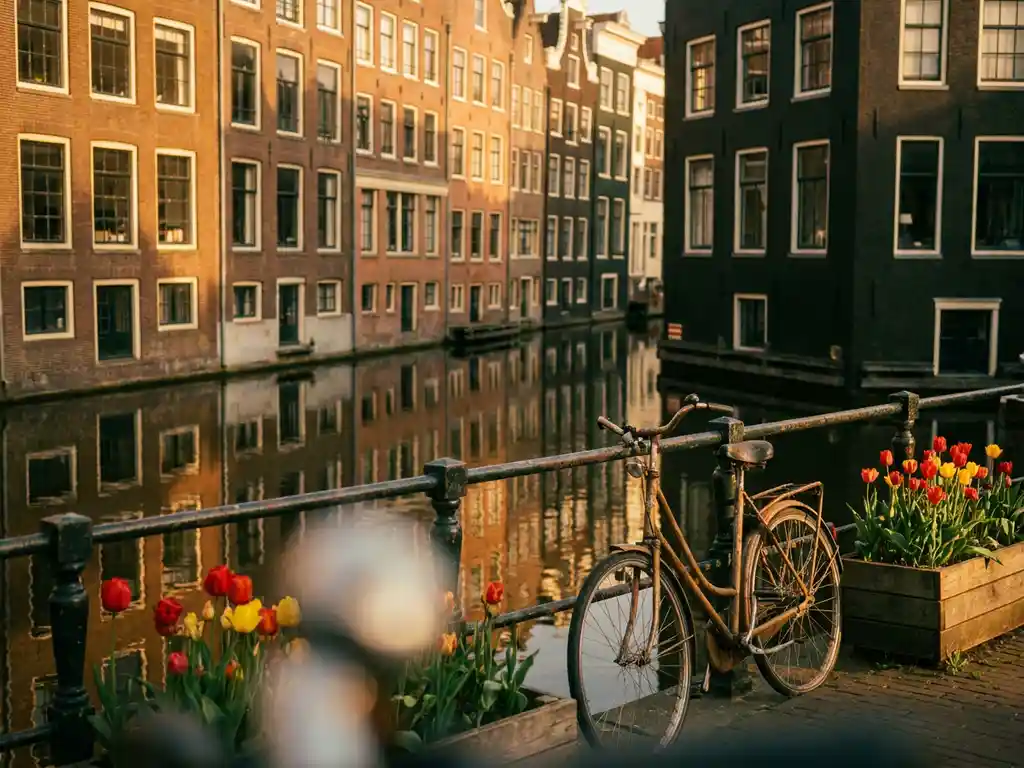
The best month to visit Amsterdam is May. The tulips are still blooming, the weather is genuinely pleasant without the crushing summer crowds, and the city feels alive in a way that rewards curious visitors rather than punishing them. That said, the right month depends on what you are actually looking for – cheap flights, good weather, cultural depth, or elbow room on the canal bridges.
Amsterdam is a city that changes personality with the seasons. Summer is loud and photogenic. Autumn is moody and local. Winter is underrated and honest. Spring is, frankly, magic. Each has its case to make, and each has its trade-offs. The questions below break it all down so you can decide what kind of Amsterdam trip you actually want.
Which months are the most crowded in Amsterdam?
Amsterdam is at its most crowded from June through August, with July being the peak of peak season. The summer months bring enormous numbers of tourists to the city centre, turning the Rijksmuseum queue into an endurance sport and the Jordaan into a slow-moving river of selfie sticks. August is particularly intense, with school holidays across Europe pushing visitor numbers to their highest point of the year.
Beyond the summer months, the weeks around King’s Day in late April and the Christmas and New Year period also see significant spikes. These are event-driven crowds rather than sustained tourism pressure, but they can make central Amsterdam feel genuinely overwhelming for anyone not prepared for them.
The quietest months are January and February. The city empties out after the holidays, the light is grey and flat, and most tourists are sensibly somewhere warmer. If you want Amsterdam without the crowds, this is when you get it – though you pay for the peace in cold, short days and the occasional drizzle that feels less romantic than it looks in photographs.
What is Amsterdam’s weather like throughout the year?
Amsterdam has a temperate maritime climate, which is a polite way of saying it is mild, changeable, and frequently damp. Summers are warm rather than hot, winters are cold but rarely severe, and rain is a year-round companion that arrives without much warning. Packing a light waterproof jacket is not optional – it is the single most important packing decision you will make.
Spring and summer
March through May brings gradually warming temperatures, longer days, and the spectacular tulip season. May is widely considered the sweet spot: temperatures typically sit between 14 and 18 degrees Celsius, the parks are green, and the light on the canals is genuinely beautiful. June and July are warmer and sunnier, often reaching the low-to-mid twenties, but the weather can shift quickly. August can feel heavy and humid on warmer days.
Autumn and winter
September and October offer a second window of good conditions – cooling temperatures, fewer tourists, and the city settling back into its working rhythm. November marks the real turn: the days shorten sharply, temperatures drop, and the grey sets in. December through February is cold, often below five degrees, with occasional frost. Snow is possible but not reliable. What you do get in winter is a city that belongs to the people who actually live in it.
When is Amsterdam cheapest to visit?
Amsterdam is cheapest to visit in January and February, followed by November and early December before the holiday period kicks in. Flights, hotels, and even many attractions are noticeably less expensive during these shoulder and off-peak months. If budget is your primary concern, a winter visit offers real savings – sometimes dramatically so compared to a July trip.
The trade-off is obvious: you are visiting in the coldest, darkest part of the year. But Amsterdam in winter has its own quiet appeal. The museums are uncrowded, the brown cafes are warm and welcoming, and you get a much more honest sense of what the city is actually like when it is not performing for tourists. For the right kind of traveller, that is worth more than sunshine.
March and October represent a middle ground – prices are lower than peak summer, the weather is more cooperative than deep winter, and the city still has energy. These months offer genuine value without requiring you to sacrifice comfort entirely.
What’s special about visiting Amsterdam in spring?
Spring in Amsterdam, particularly April and May, is genuinely special because the city transforms in ways that are hard to overstate. The tulip fields around Amsterdam burst into colour, Keukenhof opens its gates to one of the most remarkable floral displays in the world, and the canal-side trees come into full leaf. The light in May is extraordinary – long, golden evenings that make the canal reflections look like something from a Dutch Golden Age painting.
King’s Day on 27 April adds a layer of spectacle. The entire city turns orange, the canals fill with boats, and the streets become one enormous outdoor market and party. It is chaotic, loud, and genuinely fun – but it also brings very large crowds, so it requires a certain appetite for organised chaos.
May is the month that most consistently delivers on Amsterdam’s visual promise without the worst of the summer crowds. It is warm enough to sit outside, the days are long, and the city is in full bloom without being overwhelmed. If you can only visit once and you want the full Amsterdam experience, May makes the strongest case.
Why do locals prefer Amsterdam in autumn and winter?
Locals prefer autumn and winter because the city gives itself back to them. From September onwards, the tourist tide recedes, the queues shorten, and Amsterdam starts feeling like a place where people actually live rather than a backdrop for other people’s holiday photographs. There is a palpable shift in atmosphere that anyone who has experienced it will recognise immediately.
Autumn – September through November – brings some of the best conditions for actually experiencing the city. The leaves turn along the canals, the light becomes rich and low, and the cultural season kicks into gear. Theatres, concert halls, and comedy venues fill up with local audiences. Restaurants feel like restaurants again rather than tourist processing facilities.
Winter has its own appeal that is easy to underestimate. The Amsterdam Light Festival, which runs from late November through January, transforms the canals into an outdoor art installation of lit sculptures and projections. The brown cafes – those dark, warm, wood-panelled Dutch pubs – are at their best when it is cold outside. And the Rijksmuseum without a two-hour queue is a genuinely different experience from the summer version. Locals know this. Visitors who discover it tend to come back.
Should you visit Amsterdam during King’s Day?
Yes, if you enjoy large, energetic street festivals and can plan well in advance. King’s Day on 27 April is one of the most distinctive events in the Dutch calendar – a city-wide celebration of the monarch’s birthday that turns Amsterdam into an enormous orange-clad street party. The canals fill with decorated boats, outdoor markets spring up across every neighbourhood, and the atmosphere is genuinely festive and welcoming.
That said, it comes with real trade-offs. Accommodation prices spike significantly in the weeks around King’s Day, and booking late means either paying a premium or settling for somewhere far from the centre. The city is extremely crowded – not just tourist-crowded but festival-crowded, which is a different and more intense experience. Getting around takes patience, and the quieter, more reflective Amsterdam you might have been hoping for is simply not available on this date.
The honest advice: if King’s Day is the reason you are going, commit to it fully and book early. If you were planning a spring trip anyway and King’s Day happens to fall during your dates, embrace it. But if you are hoping for a relaxed, exploratory visit with room to breathe, shifting your dates by a week in either direction will serve you better.
How Klagen Niet Klagen helps you plan your Amsterdam visit
Choosing the right time to visit Amsterdam is really a question of knowing what the city is actually like – not the version in the tourism brochures, but the real one, with its contradictions, its rhythms, and its genuinely great moments. That is exactly what Klagen Niet Klagen is built to give you.
- Honest, insider commentary on Amsterdam city life written by someone who has lived and worked here for over three decades
- No tourism-board spin, no advertorial pressure – just a genuine point of view on what makes Amsterdam worth visiting and what to watch out for
- Long-form essays and opinion pieces that go well beyond “top ten tips” to give you real cultural context
- Practical insight on Amsterdam’s seasons, neighbourhoods, and cultural life written for curious, intelligent visitors and expats
Explore the full blog archive for more articles on things to do in Amsterdam, how the city works, and what it actually feels like to spend time here.
And if you are visiting Amsterdam, do yourself a favour and add a Boom Chicago show to your itinerary. Whether you are here in May for the tulips or in January for the quiet, a live comedy night at Boom Chicago is one of those Amsterdam experiences that locals and visitors both love – sharp, funny, and rooted in the city’s spirit in a way that no museum can replicate. Check the current shows and agenda and book before you arrive. It fills up faster than you’d expect.
Frequently Asked Questions
Is Amsterdam worth visiting in winter even if the weather is bad?
Absolutely – winter Amsterdam rewards visitors who are willing to trade sunshine for authenticity. The museums are uncrowded, the Amsterdam Light Festival turns the canals into an open-air gallery from late November through January, and the city’s famous brown cafes are at their most atmospheric when it is cold outside. If you go in with the right expectations and a good waterproof jacket, winter can be one of the most genuinely memorable ways to experience the city.
How far in advance should I book accommodation for a May visit?
For May, booking two to three months in advance is a sensible minimum, and earlier is always better if your dates are fixed. May is consistently one of Amsterdam’s busiest months, and good centrally located accommodation fills up quickly – especially around King’s Day on the 27th. Waiting until a few weeks before arrival in peak spring season typically means either paying significantly inflated prices or settling for properties well outside the centre.
What are the biggest mistakes first-time visitors make when choosing when to go?
The most common mistake is defaulting to July or August simply because it is summer, without accounting for just how crowded and expensive the city becomes during those months. Many first-timers are genuinely surprised by the scale of the crowds at major attractions in peak season. A close second is overlooking September and October, which offer near-ideal conditions – decent weather, lower prices, and a city that has shed its tourist-season intensity – simply because they fall outside the traditional holiday window.
Related Articles
- Can a city ever fully balance tourism and residential life?
- Why did Amsterdam increase the tourist tax on hotels?
- What outdoor recreation spots are underrated in Amsterdam?
- How do you find a cheap hotel in Amsterdam without sacrificing location?
- What are Amsterdam's real hidden gems tourists never find?