
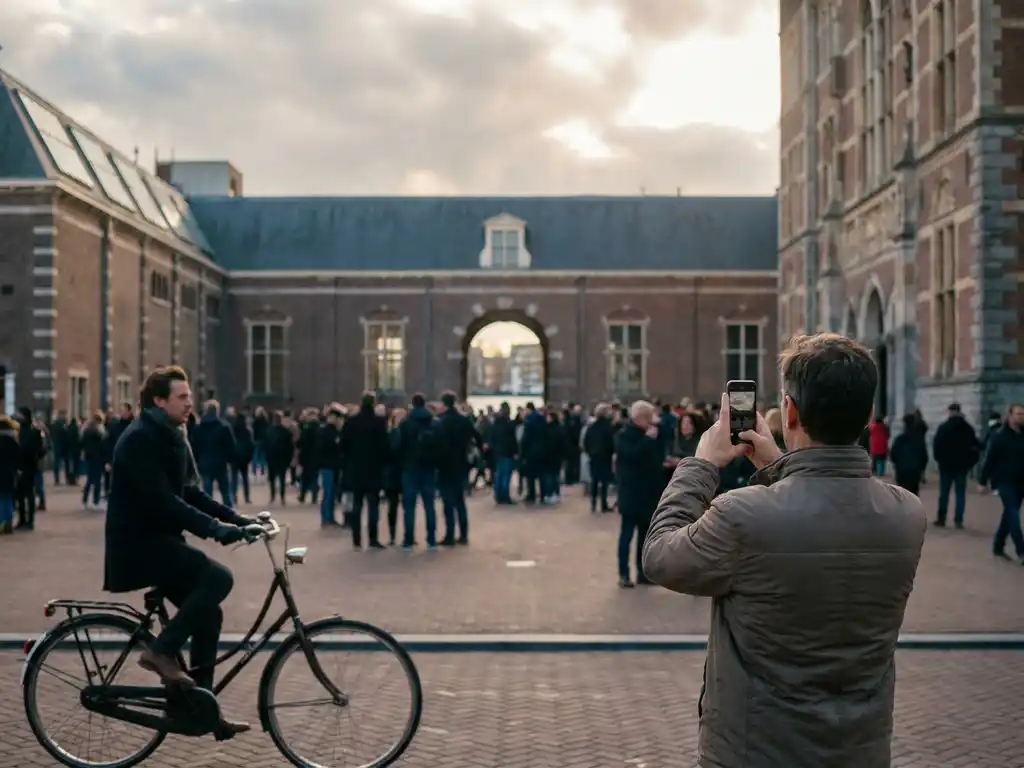
Most tourists get Amsterdam wrong in the same way: they mistake the surface for the substance. They see the canals, the bikes, the coffee shops, and the easy-going vibe and assume they understand the city. They don’t. Amsterdam rewards the curious and quietly resists the complacent. The questions below cut through the most common misconceptions and give you the honest picture that no tourism brochure will.
Why do so many visitors leave Amsterdam feeling like they missed something?
Most visitors leave Amsterdam feeling like they missed something because they spent their time in a thin tourist layer that sits on top of the real city. The canals are beautiful, the museums are world-class, but the Amsterdam that locals actually inhabit – its neighbourhoods, its humour, its social codes, its contradictions – is largely invisible to anyone who sticks to the obvious route.
The city is geographically compact, which creates a false sense of mastery. You can walk from Centraal Station to the Rijksmuseum in under thirty minutes, tick off the Anne Frank House, eat a stroopwafel, and feel like you’ve done it. But Amsterdam is dense in a different sense. Its culture, its people, and its genuine character take time and attention to access. The best Amsterdam experiences don’t announce themselves. They reveal themselves slowly, to people paying attention.
The other problem is that the most-visited parts of the city are, frankly, the least representative. The area around Leidseplein and Rembrandtplein is built almost entirely around tourist demand. It tells you more about what visitors expect from Amsterdam than about what Amsterdam actually is.
Is Amsterdam really as liberal and laid-back as its reputation suggests?
Amsterdam is genuinely liberal in its politics and its history, but it is not laid-back. That distinction matters. The Dutch concept of gedoogbeleid – tolerance as a formal policy – is real and important, but it is not the same as a relaxed, anything-goes culture. Amsterdam is a city of rules, structures, and strong social expectations. The liberalism is principled, not casual.
Visitors who arrive expecting a permissive free-for-all often misread Dutch social behaviour entirely. People here are direct, punctual, and quietly demanding of social norms. The tolerance that Amsterdam is famous for comes with an implicit contract: you are free to do your thing, as long as you don’t impose it on others. The moment you start disturbing the peace – literally or socially – that tolerance evaporates fast.
The coffee shop culture is the most obvious example of this misreading. What looks like a symbol of carefree hedonism is actually a tightly regulated system that has been carefully managed for decades. It exists within a framework, not outside one. Amsterdam’s liberalism is serious business.
What do tourists misunderstand about Dutch directness?
Tourists frequently misread Dutch directness as rudeness. It is not. Dutch directness is a deeply cultural value rooted in egalitarianism and a genuine belief that honesty is more respectful than social performance. When a Dutch person tells you something is wrong, or gives you an opinion you didn’t ask for, they are treating you as an equal – not being aggressive.
The confusion runs in both directions. Visitors from more indirect cultures experience Dutch communication as blunt or cold. Meanwhile, Dutch people often find the social pleasantries of other cultures – particularly Anglo-American ones – confusing or even dishonest. “How are you?” as a greeting with no expectation of a real answer is genuinely puzzling to many Dutch people.
Understanding this unlocks a lot about Amsterdam. The city’s locals are not unfriendly. They are just operating on a different social register. Once you adjust to it, you’ll find that Dutch directness is actually refreshing – and that the people behind it are warm, funny, and genuinely engaged. The Amsterdam locals guide that tourists never get is simply this: take people at their word, say what you mean, and drop the performance.
Are the famous Amsterdam neighbourhoods actually worth visiting?
The famous Amsterdam neighbourhoods are worth visiting, but not in the way most tourists approach them. The Jordaan, De Pijp, and the Canal Ring are genuinely special – but their value lies in the texture of daily life, not in any single landmark or attraction. Walking through them with a checklist is the wrong approach entirely.
The Jordaan
The Jordaan is probably Amsterdam’s most beloved neighbourhood and one of the best Amsterdam neighbourhoods for getting a feel for how the city actually lives. It is full of independent shops, brown cafes, and narrow streets that reward slow walking. It is also increasingly expensive and gentrified, which is worth knowing – the Jordaan of twenty years ago was rougher and more interesting in some ways. What remains is still worth your time, but go on a weekday morning rather than a weekend afternoon.
De Pijp
De Pijp is where you’ll find the Albert Cuyp market, some of the best cheap restaurants Amsterdam has to offer, and a genuinely diverse, lived-in feel. It is more neighbourhood than attraction, which is exactly why it’s worth visiting. Skip the tourist-facing restaurants on the main drag and walk one street over in any direction.
Why is cycling in Amsterdam not as easy as it looks?
Cycling in Amsterdam is not easy for visitors because the cycling infrastructure is built entirely for experienced, confident riders who know the unwritten rules. Amsterdam bike routes are fast, busy, and shared with locals who have been cycling since childhood. The city is not hostile to cycling tourists, but it is not particularly patient with hesitant ones either.
The most common mistakes visitors make include stopping suddenly on bike paths, cycling the wrong direction, ignoring tram tracks (which will catch your wheel and throw you off), and not understanding right-of-way at intersections. Amsterdam cyclists do not slow down for uncertainty. They expect other road users to know what they are doing.
If you want to cycle in Amsterdam, do it – it is genuinely one of the best ways to experience the city. But rent a solid, upright Dutch bike rather than a flashy tourist model, stay to the right, use hand signals, and pay attention to the tram tracks at all times. And if you’re nervous, start in the quieter streets of the Jordaan or Westerpark before attempting the main arteries.
What does Amsterdam actually look like beyond the tourist season?
Beyond the tourist season – roughly October through March – Amsterdam transforms into something closer to its actual self. The crowds thin out, the light turns extraordinary, the locals reclaim the streets, and the city operates at a pace that allows you to actually experience it. If you want to understand Amsterdam, this is when to come.
The Amsterdam weather guide that most travel sites publish focuses heavily on summer, but autumn and winter in Amsterdam have their own character. The canals reflect low grey skies and the glow of street lamps. The brown cafes fill up with regulars. The markets continue. The museums are quieter. The city is cold and sometimes wet, but it is honest – which is more than you can say for the peak-season version.
Spring is when Amsterdam becomes genuinely beautiful, and the tulip season draws enormous numbers of visitors. But even then, the difference between a Monday morning in April and a Saturday afternoon is enormous. Amsterdam rewards timing and patience. Come off-season, or come early in the morning, and you will see a different city entirely.
How Klagen Niet Klagen helps you understand the real Amsterdam
If you’ve read this far, you already know that Amsterdam is more layered, more contradictory, and more interesting than most visitors realise. That gap between the tourist version and the real thing is exactly what this blog exists to close. Here is what you’ll find at Klagen Niet Klagen:
- Long-form essays and opinion pieces on Amsterdam city life, written from the inside – not from a press trip
- Honest takes on Dutch culture, social norms, and the contradictions that make Amsterdam both maddening and magnificent
- Commentary on the city’s best neighbourhoods, its hidden character, and the things that don’t make it into the guidebooks
- A perspective shaped by over three decades of living, working, and building something real in Amsterdam
- Content written in English, for an internationally minded audience that wants depth rather than a top-ten list
If you want to understand Amsterdam rather than just visit it, start with the blog archive and keep reading.
And if you want to experience Amsterdam’s sharpest, funniest, most culturally switched-on live entertainment, come to Boom Chicago. The comedy institution that Andrew Moskos co-founded in 1993 has been making audiences laugh – and think – for over thirty years. It is, without question, the best comedy Amsterdam has to offer, and one of those rare Amsterdam experiences that locals and visitors both genuinely love. Check the shows and agenda and book a seat before someone else does.
Frequently Asked Questions
Which Amsterdam neighbourhoods should I avoid as a first-time visitor, and why?
The areas immediately around Centraal Station, Leidseplein, and the Red Light District are worth seeing briefly, but they are the least representative of Amsterdam and the most likely to leave you feeling underwhelmed or overcharged. For a more authentic experience, spend the bulk of your time in De Pijp, the Jordaan, Oud-West, or Noord — neighbourhoods where the city’s real character is still visible and locals actually outnumber tourists.
What are the biggest mistakes tourists make when visiting Amsterdam's museums?
The biggest mistake is showing up without pre-booked tickets, especially for the Rijksmuseum and the Anne Frank House — both regularly sell out days or even weeks in advance during peak season. A close second is trying to cram too many museums into a single day; Amsterdam’s major collections are dense and deserve time, so pick one or two and give them your full attention rather than rushing through five.
Is it worth learning a few Dutch words before visiting Amsterdam?
Yes, even a handful of Dutch words — dank je wel (thank you), alsjeblieft (please/here you go), and goede morgen (good morning) — will land well with locals and immediately signal that you’re making an effort. Amsterdam is one of the most English-fluent cities in the world, so you’ll never struggle to communicate, but a small gesture of linguistic respect goes a long way in a culture that values directness and sincerity over performance.