
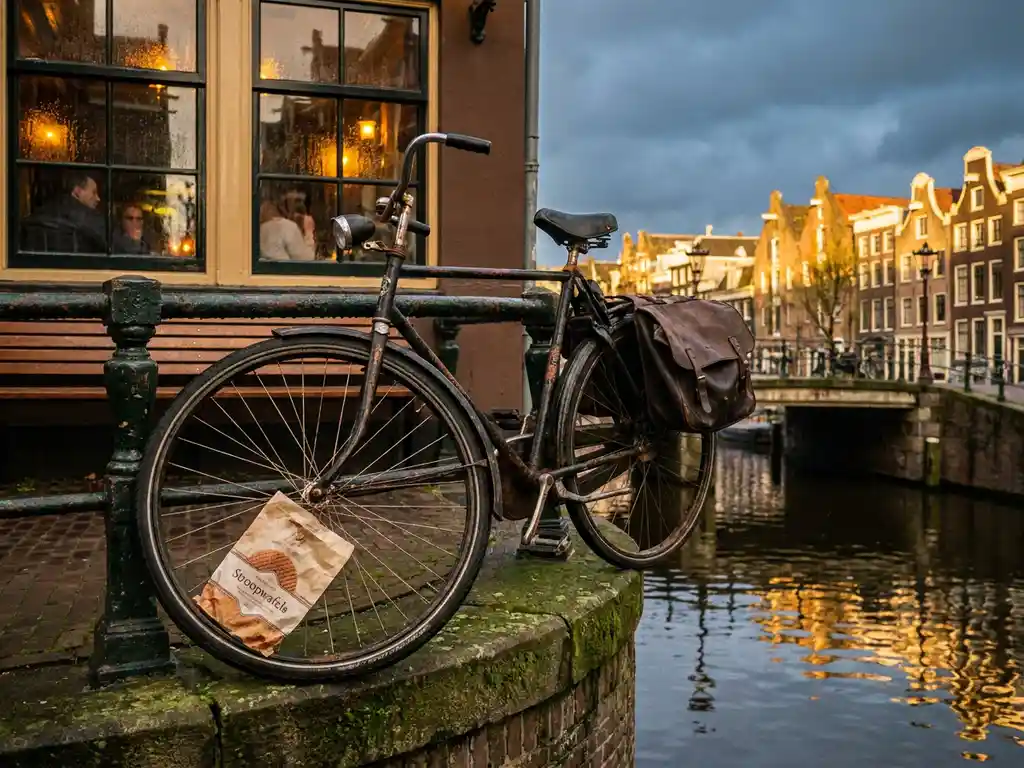
What does ‘authentic Amsterdam’ actually mean in 2026?
Authentic Amsterdam in 2026 means experiencing the city as a place where people actually live, rather than as a backdrop for a holiday itinerary. It means eating where locals eat, cycling where locals cycle, and engaging with the cultural life of the city rather than the curated version of it sold at the airport and on every canal tour brochure.
The honest answer is that “authentic” has become a loaded word. Tourism marketing loves it precisely because it sounds like the opposite of tourism. A canal boat company can call itself authentic. A pancake restaurant on Damrak can call itself authentic. So the word alone means nothing. What matters is the behaviour behind it: are you moving at the city’s pace, or are you being moved through a pre-packaged version of it?
Amsterdam is a real, functioning city with over 900,000 residents who commute, argue about parking, complain about housing costs, and have strong opinions about where to get a decent kroket. The authentic version of Amsterdam is the one those people inhabit. The good news is that it is not hidden. You just have to stop following the signs.
Which Amsterdam neighbourhoods still feel genuinely local?
The Amsterdam neighbourhoods that still feel genuinely local in 2026 are primarily De Pijp (south of the centre), Oud-West, Noord across the IJ, and the eastern neighbourhoods of Indische Buurt and Dapperbuurt. These areas have active street life, independent shops, and a residential character that the historic centre has largely lost to short-term rentals and souvenir shops.
De Pijp remains one of the most liveable and culturally mixed parts of the city. The Albert Cuyp market is the longest outdoor market in the Netherlands and functions as a genuine neighbourhood institution rather than a tourist attraction, even if visitors have started to discover it. The side streets around Ferdinand Bolstraat and the quieter parts of the neighbourhood still feel like a real city.
Amsterdam Noord has undergone significant change over the past decade but retains a distinct identity that the canal belt never quite managed. The ferry crossing from Centraal Station is free, takes three minutes, and immediately drops you in a part of the city that feels like it belongs to its residents. The creative and cultural scene there grew organically and still has rough edges in the best possible sense.
Indische Buurt and Dapperbuurt in the east are less discussed in travel content, which is partly why they still feel real. The Dappermarkt, in particular, is one of the most honest slices of daily Amsterdam life you can find. It is not picturesque. It is a working market where people buy vegetables and cheap household goods. That is exactly the point.
How do you tell a real local spot from a tourist trap in disguise?
The clearest sign that a venue is a tourist trap in disguise is the menu outside the door translated into six languages, the staff positioned at the entrance to pull you in, and the pricing that makes no reference to what Amsterdam residents would reasonably pay. Real local spots in Amsterdam are usually slightly harder to find, slightly less polished, and almost never need to advertise themselves to passersby.
A few practical filters that actually work:
- Look at who is eating or drinking there. If the clientele is entirely made up of people with rolling suitcases and lanyards from a nearby hotel, you have your answer.
- Check whether it is on the main tourist route. Any restaurant or bar within 200 metres of Leidseplein, Rembrandtplein, or the Damrak that prominently displays tourist menus should be treated with scepticism.
- Notice whether the staff speak Dutch to each other. This is not a guarantee of quality, but it is a reasonable signal of a business that serves a local clientele.
- Avoid places with photographs of every dish on the menu. This is a near-universal indicator of a venue that has optimised for people who do not know what they are ordering.
- Trust places that are closed on Mondays or have odd hours. Businesses that keep inconvenient hours are usually doing so because they can afford to, which means they have a loyal local base.
The best cheap restaurants Amsterdam has to offer are almost never the ones that come up first in a Google search. They are the Indonesian places in De Pijp, the Turkish lunch spots in Oud-West, and the Surinamese snack bars scattered across the city that have been feeding the same neighbourhood for decades.
What cultural events and rituals do Amsterdam locals actually attend?
Amsterdam locals attend Koningsdag, the Amsterdam Marathon, Open Monumentendag, neighbourhood film screenings, and a circuit of recurring cultural events that have nothing to do with the Heineken Experience or the Anne Frank House. The city has a genuinely active cultural calendar that runs parallel to the tourist one and rarely overlaps with it.
Koningsdag on 27 April is the most obvious example of a city-wide event that belongs to the residents. Yes, it draws visitors, but the street markets, the orange-clad cycling, and the canal parties are genuinely Dutch in character and spirit. It is one of the few days when the city’s social fabric becomes completely visible.
Beyond the obvious, locals follow a rhythm of smaller rituals: Sunday morning at the market, a Sunday afternoon film at a neighbourhood cinema, the occasional visit to the Stedelijk or the EYE Filmmuseum in Noord. Comedy and live performance are also a genuine part of Amsterdam’s cultural life. The best English shows Amsterdam offers are not always the ones with the biggest marketing budgets. Word of mouth still drives audiences to the most interesting nights.
Open Monumentendag in September opens hundreds of buildings that are normally closed to the public. It is free, it is popular with locals, and it offers a version of Amsterdam’s architectural history that no canal tour can match. If you are in the city that weekend, it is one of the best Amsterdam experiences available regardless of budget.
Why is finding authentic Amsterdam harder now than it was ten years ago?
Finding authentic Amsterdam is harder now than it was ten years ago because the city has absorbed an enormous volume of tourism, short-term rental pressure, and commercial development that has physically displaced the local character of several neighbourhoods. The historic centre has changed more in the past decade than in the previous thirty years, and not in ways that benefit residents or culturally curious visitors.
The numbers tell part of the story without needing to be precise: Amsterdam receives many millions of visitors per year for a city of under a million residents. The ratio is unsustainable, and the city government has been actively trying to manage it through a combination of short-term rental restrictions, hotel moratoria, and policies that discourage the very lowest-quality tourism. The results are mixed.
What has changed most visibly is the commercial character of the streets closest to the main attractions. Shops that once served residents have been replaced by cannabis dispensaries, waffle shops, and merchandise outlets. This is not a moral complaint. It is simply a description of what happens when a neighbourhood’s primary economic relationship shifts from serving people who live there to serving people who are passing through.
The deeper issue is that authenticity requires time and repetition. A neighbourhood feels local when the same people use it regularly, know each other, and have a stake in it. Mass tourism, by definition, replaces that with constant turnover. The Amsterdam best neighbourhoods guide that was accurate in 2015 needs significant revision in 2026.
Where should you actually go if you want to experience Amsterdam like a resident?
If you want to experience Amsterdam like a resident, go to the Dappermarkt on a weekday morning, rent a bike and follow the Amsterdam bike routes east toward the Amstel or north across the IJ, eat lunch at an Indonesian or Surinamese spot in De Pijp, and spend an evening at a neighbourhood brown café or a live performance that is not specifically designed for tourists.
More specifically, here is a practical list of where locals actually spend their time:
- Markets: Dappermarkt, Noordermarkt on Saturday (for organic produce and antiques), and Albert Cuyp on weekday mornings before the crowds arrive.
- Parks: Vondelpark is unavoidable and still enjoyable, but Westerpark, Flevopark, and the Amstelpark are where residents go when they want space without the performance of it.
- Cycling: The Amsterdam bike routes that follow the Amstel south toward Ouderkerk aan de Amstel are a genuine Amsterdam day trip that requires no planning, no booking, and no money beyond a bike rental.
- Eating: The best cheap restaurants Amsterdam residents frequent are concentrated in De Pijp, Oud-West, and the eastern neighbourhoods. Look for places with handwritten menus, no hostess stand, and a lunch crowd of people who are clearly on a work break.
- Culture and comedy: Amsterdam has a lively live performance scene that extends well beyond the major venues. The best comedy Amsterdam offers includes both Dutch-language and English-language nights, and the English-language comedy scene in particular has grown into something genuinely world-class.
The Amsterdam weekend guide that actually serves you well is not a list of attractions. It is a set of habits: wake up without a plan, get on a bike, follow your curiosity, and eat somewhere that has no reason to impress you. The city rewards that approach far more than it rewards a pre-booked itinerary.
How Klagen Niet Klagen helps you find the real Amsterdam
Most Amsterdam content online is written either for tourists who have never been here or for an algorithm that rewards lists of “hidden gems” that stopped being hidden the moment they appeared in a travel blog. Klagen Niet Klagen is something different: honest, long-form commentary on Amsterdam city life written by someone who has lived and worked here for over three decades.
- Essays and opinion pieces that go beyond surface-level recommendations to explain why Amsterdam works the way it does.
- A clear editorial voice that is not sponsored by the tourism board or influenced by advertorial pressure.
- Practical cultural insight drawn from genuine long-term experience in the city’s creative and entrepreneurial scene.
- Content written in English for an internationally minded audience that is tired of being talked down to.
If you want to understand Amsterdam rather than just visit it, the blog archive is a good place to start. Read a few pieces and see whether the perspective matches your own relationship with the city.
And if you are looking for a genuinely Amsterdam cultural experience that delivers on everything this article has been arguing for, consider spending an evening at Boom Chicago. It has been part of the city’s creative fabric since 1993, it performs in English, and it is the kind of show that residents recommend to each other rather than something they stumble across on a tourist map. That, in the end, is a reasonable definition of authentic.
Frequently Asked Questions
How do I avoid accidentally staying in a neighbourhood that has lost its local character?
When booking accommodation, avoid the canal belt and anywhere within walking distance of Damrak, Leidseplein, or Rembrandtplein. Instead, look for places in De Pijp, Oud-West, or Amsterdam Noord, where you will wake up in a functioning residential neighbourhood rather than a street optimised for foot traffic. Staying local is not just about atmosphere — it also means your daily routines (buying coffee, grabbing lunch, finding a supermarket) will naturally put you in contact with the city residents actually use.
What is the single biggest mistake visitors make when trying to experience Amsterdam authentically?
The biggest mistake is over-planning. Booking every meal, every museum slot, and every experience in advance locks you into the tourist industry’s version of the city before you have even arrived. Authentic Amsterdam rewards flexibility — the ability to follow a street because it looks interesting, to sit in a café because it is full of locals, or to stay somewhere longer than expected because it is actually good. Leave at least half of each day unscheduled and treat that as the itinerary, not the gap between itinerary items.
Are there any practical apps or tools that Amsterdam residents actually use to find out what is happening in the city?
Residents tend to rely on a combination of local media and word of mouth rather than international travel platforms. Het Parool, Amsterdam’s daily newspaper, has a strong events and culture section that reflects what the city is actually doing rather than what it is selling to visitors. The Uitkrant, a free monthly listings magazine, covers the full cultural calendar and is available in libraries, cultural venues, and some cafés. For live performance and comedy specifically, going directly to venue websites — rather than aggregator platforms — often surfaces events that never make it into mainstream travel recommendations.