
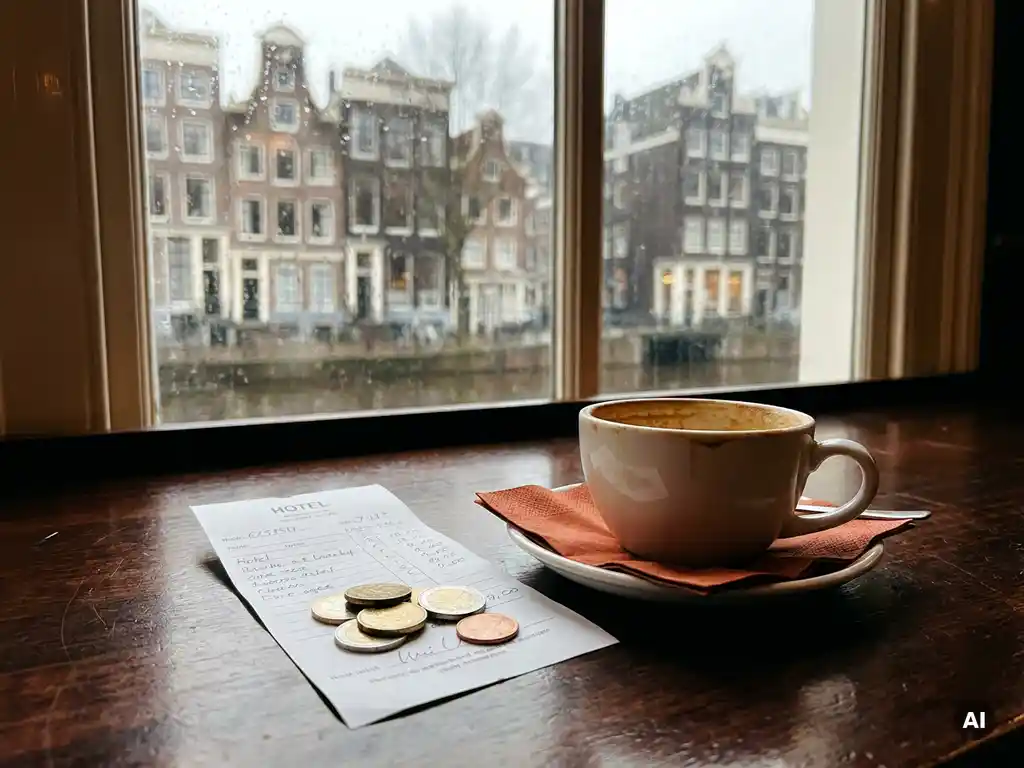
Amsterdam’s hotel tax currently sits at 12.5% of the room rate, making it one of the highest tourist taxes in Europe. That percentage applies on top of your nightly rate before any other fees, so the final bill can look noticeably different from the price you saw when you booked. If you are planning a trip or trying to make sense of a recent invoice, the sections below break down exactly how the tax works, why it is so steep, and whether it applies to Airbnb stays too.
How much is the hotel tax in Amsterdam?
Amsterdam charges a tourist tax of 12.5% of the room rate per night. This applies to every paid overnight stay in the city, regardless of the type of accommodation. There is no flat per-person, per-night alternative for hotels; the percentage model replaced the older fixed-rate system precisely because it scales with what guests actually pay.
To put that in concrete terms: if your room costs €200 per night, you are paying an additional €25 in tourist tax on top of that. For a four-night stay, that adds up to €100 in tax alone, a meaningful sum that many visitors only notice when they see the itemised bill at checkout. Budget travellers staying in cheaper rooms pay proportionally less, while guests at luxury properties pay significantly more. The tax is collected by the accommodation provider and passed on to the municipality of Amsterdam.
It is worth noting that Amsterdam has steadily increased this rate over the years. The city has been deliberate about using the tourist tax as both a revenue tool and a demand-management lever, the idea being that higher costs might subtly discourage the kind of high-volume, low-spend tourism that has strained the city’s liveability. Whether it actually works that way is a separate debate, but the direction of travel has been consistently upward.
How is Amsterdam’s tourist tax calculated on your bill?
Amsterdam’s tourist tax is calculated as a percentage of the net room rate, the price of the room itself, before VAT and other charges. The accommodation provider applies the 12.5% rate to that base figure and adds it as a separate line item on your invoice. You will typically see it labelled as toeristenbelasting (tourist tax) on a Dutch receipt.
What this means in practice is that the tourist tax is not calculated on the total bill including breakfast, spa access, or parking; it applies specifically to the accommodation charge. However, if breakfast is bundled into the room rate rather than listed separately, it may be included in the taxable base depending on how the hotel structures its pricing. This is one reason why itemised billing matters: a hotel that bundles everything into one nightly rate may effectively be charging you tourist tax on services beyond the room itself.
VAT (BTW in Dutch) is applied separately on top of the room rate and is currently set at 9% for accommodation services. So your final bill layers VAT and tourist tax independently: they are not calculated on top of each other, but both are calculated on the base room rate. Always check the breakdown on your invoice rather than assuming the advertised price is what you will pay.
Why is Amsterdam’s hotel tax so high compared to other cities?
Amsterdam’s tourist tax is high by European standards because the city has made a deliberate policy choice to use it as a tool for managing overtourism, not just raising revenue. At 12.5%, it sits well above cities like Paris, Berlin, or London, where tourist taxes are either flat-rate, percentage-based at lower rates, or structured as optional levies. Amsterdam’s rate reflects a city that has decided visitors should contribute meaningfully to the cost of hosting them.
The reasoning behind this is straightforward: Amsterdam receives millions of visitors per year in a relatively compact city. The pressure on infrastructure, housing, public space, and quality of life for residents is significant and well documented. The tourist tax generates substantial income that the municipality directs toward city maintenance, cultural institutions, and liveability projects. It is also, at least in theory, a price signal, making Amsterdam a slightly less automatic choice for the cheapest possible city break.
There is also a political dimension worth understanding. Amsterdam residents have grown increasingly vocal about the impact of mass tourism on their neighbourhoods. The hotel tax increase reflects a broader policy shift toward what the city calls “quality tourism”, attracting visitors who stay longer, spend more thoughtfully, and engage with the city beyond the tourist circuit. Whether a higher hotel tax meaningfully achieves that goal is debatable, but it is clearly the intent behind the rate.
Does the tourist tax apply to Airbnb and short-stay rentals too?
Yes, Amsterdam’s tourist tax applies to Airbnb listings and all other short-stay rental platforms, not just traditional hotels. Platforms like Airbnb collect the tourist tax automatically on behalf of hosts and remit it directly to the municipality of Amsterdam. Guests staying in a private apartment through a short-stay platform pay the same 12.5% rate on their nightly accommodation cost.
This was not always the case. For years, short-term rental platforms operated in a grey zone where tax collection was inconsistent. Amsterdam has since formalised the arrangement with major platforms, making automatic collection the default. If you book through Airbnb, VRBO, or a similar service, the tourist tax should appear as a separate line item in your booking summary, just as it would on a hotel bill.
It is also worth knowing that short-stay rentals in Amsterdam face additional restrictions beyond the tourist tax. Hosts are subject to strict rules around the number of nights they can rent per year, registration requirements, and neighbourhood-level restrictions. The tourist tax is just one layer of a broader regulatory framework that the city has built around short-term accommodation. If you are a host rather than a guest, staying compliant with all of these rules, not just the tax, is essential.
How Klagen Niet Klagen cuts through the Amsterdam noise
Tourist taxes, housing rules, overtourism debates: Amsterdam generates a lot of policy and a lot of opinions. Klagen Niet Klagen exists to make sense of it all, written from the inside by someone who has lived and worked in this city for over three decades. Here is what you get:
- Honest, independent commentary on Amsterdam city life, no tourism board spin, no advertorial pressure
- Long-form essays and opinion pieces that go beyond the surface of issues like tourist tax, housing, and cultural policy
- An English-language platform written for expats, international visitors, and globally minded Dutch readers who want more than a listicle
- A consistent editorial voice grounded in real Amsterdam experience, not a rotating cast of anonymous contributors
If you want to understand Amsterdam rather than just visit it, find out more about the blog and what drives it, or browse the archive for more takes on the city’s contradictions, charms, and occasional absurdities. And if you have a question or a topic you want covered, get in touch directly.
And while you are in Amsterdam, or planning your trip, it would be a shame not to mention Boom Chicago. The comedy theatre I co-founded has been making audiences laugh since 1993, and a live show is genuinely one of the best things you can do in this city. Sharp, fast, funny, and completely unlike anything else on offer. Check the shows and agenda and grab a seat, the tourist tax you just paid more than justifies a night out.
Frequently Asked Questions
Can I get a refund on Amsterdam's tourist tax if my stay is cancelled or shortened?
If your booking is cancelled before check-in, the tourist tax should be refunded along with your room rate, since the tax is only due on stays that actually take place. If your stay is cut short after check-in, you are generally entitled to a refund for the unused nights, including the tourist tax portion — but this depends on the hotel’s cancellation policy and how the refund is processed. Always request an itemised refund confirmation so you can verify the tax has been returned correctly.
Is Amsterdam's tourist tax already included in the price shown on booking platforms like Booking.com or Expedia?
Not always — and this is one of the most common sources of bill-shock for visitors. Some booking platforms display the total price including taxes, while others show the base room rate and add taxes at the checkout stage. Always look for a ‘taxes and fees’ breakdown before confirming your reservation, and specifically check whether toeristenbelasting (tourist tax) is listed separately. If you are unsure, it is safer to assume the advertised price excludes the 12.5% tourist tax and budget accordingly.
Are children exempt from Amsterdam's tourist tax?
Amsterdam’s tourist tax is calculated as a percentage of the room rate rather than per person, so there is no separate child exemption in the way some flat-rate tourist taxes operate. Because the tax applies to the accommodation charge itself — not to each individual guest — the question of whether children are ‘included’ is largely irrelevant to the calculation. What you pay is simply 12.5% of whatever nightly rate your room is booked at, regardless of how many people are sleeping in it.