
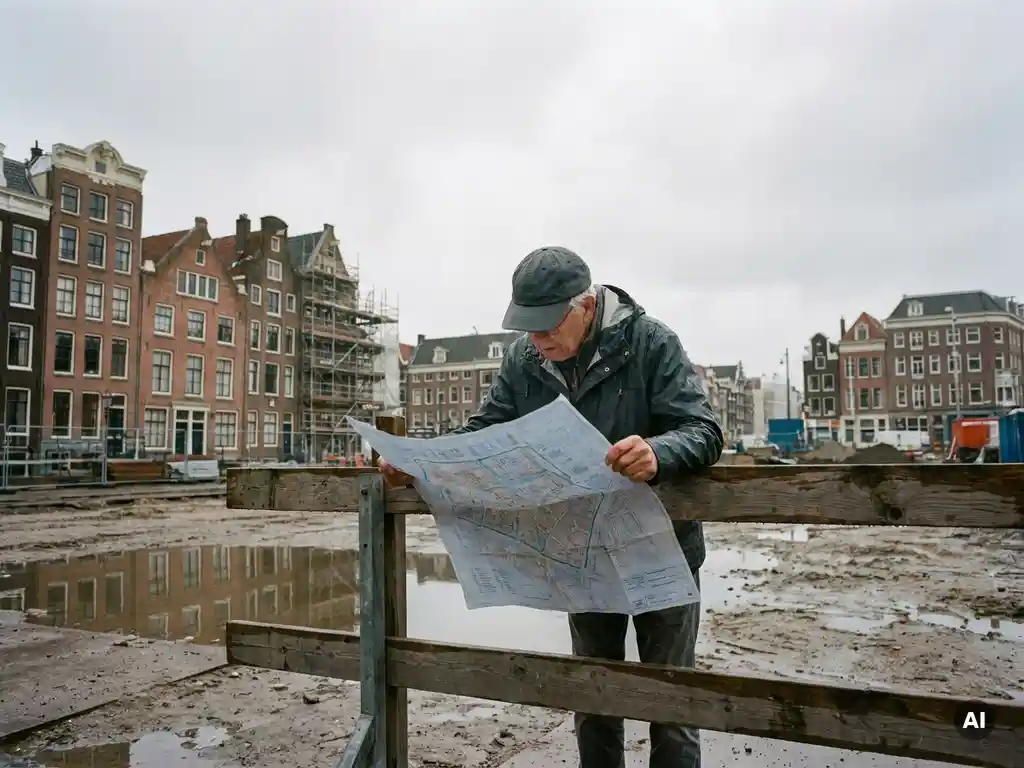
Amsterdam residents are formally involved in public space redesign decisions, but the depth of that involvement varies enormously depending on the project, the district, and how much political will exists to actually listen. The city has legal consultation mechanisms in place, yet the gap between being consulted and being heard is wide enough to cycle a cargo bike through. Below, this article unpacks how the process works, what rights residents actually have, why it so often feels hollow, and where it has genuinely worked.
How does Amsterdam actually involve residents in public space decisions?
Amsterdam involves residents in public space redesign through a combination of mandatory public consultations, neighbourhood participation sessions, and district-level advisory processes. In practice, this means information evenings, online surveys, and sometimes co-design workshops where residents can respond to plans before they are finalised. The city’s seven district councils (stadsdelen) are the primary point of contact for most street-level redesign projects.
The process typically unfolds in stages. A plan is drafted by the municipality or a project developer, then shared with the relevant stadsdeel. That district body is responsible for organising inspraak, the formal right to respond. Residents are notified via local announcements, the city’s official website, and sometimes physical notices in the neighbourhood. They can then submit written responses, attend public meetings, or join working groups.
More ambitious projects, particularly those involving major squares or waterfront areas, sometimes include participatory design phases where residents help shape the brief rather than simply react to a finished proposal. These are genuinely more collaborative, though they are also more resource-intensive and therefore less common. For everyday street redesigns, such as removing parking spaces or adding cycle infrastructure, the process tends to be shorter and more top-down.
What rights do Amsterdam residents have to challenge a redesign plan?
Amsterdam residents have the right to submit a formal objection (bezwaar) against approved redesign decisions that affect their immediate living environment. If that objection is rejected, they can escalate to an independent administrative court. These rights apply to decisions that qualify as official permits or formal decrees, not to every planning consultation.
The key distinction is between inspraak, which is the informal right to be heard during the design phase, and bezwaar, which is the legal right to challenge a decision after it has been made. Inspraak carries no binding weight. The municipality can listen, thank residents for their input, and proceed exactly as planned. Bezwaar, by contrast, is a legal instrument with procedural obligations attached.
Residents can also approach their district council directly, raise issues through elected councillors, or escalate to the city ombudsman if they believe the consultation process was conducted unfairly. In practice, legal challenges are relatively rare for smaller public space projects, partly because the threshold for standing is high and partly because the costs and complexity deter most individuals from pursuing them.
Why do residents often feel ignored even when consultations happen?
Residents frequently feel ignored during public space consultations because the process is often designed to inform rather than to genuinely influence. Plans arrive at consultation meetings already largely decided, feedback is collected without any obligation to act on it, and the outcomes of consultation rounds are rarely communicated back to participants in a transparent way.
Several structural factors reinforce this frustration. First, the timeline is often compressed. By the time residents are invited to respond, budgets have been allocated, contractors are in conversation, and reversing course would be expensive. Second, the feedback itself is hard to process fairly. A consultation that attracts three hundred responses, ranging from detailed urban design arguments to complaints about losing a parking spot, cannot realistically reshape a project. Third, professional urban planners and political priorities carry far more institutional weight than neighbourhood opinion, even when that opinion is well organised and clearly expressed.
There is also a language barrier worth naming honestly. Most official consultation documents, meeting minutes, and objection procedures are conducted in Dutch. For the large proportion of Amsterdam residents who are not native Dutch speakers, meaningful participation is genuinely harder to access, even when the will to participate is there. This is not a trivial footnote given that a substantial share of the city’s population navigates daily life in English or other languages.
Which Amsterdam neighbourhoods have successfully shaped their own public spaces?
Several Amsterdam neighbourhoods have managed to meaningfully influence public space redesign, most notably in cases where residents organised early, maintained pressure over time, and found allies within the district council. De Pijp, Oud-West, and parts of Noord have examples where sustained community involvement shifted project outcomes in measurable ways.
The most successful cases share a few common characteristics. Residents formed organised groups rather than responding as individuals. They engaged with the process at the earliest possible stage, before plans were consolidated. They framed their input in planning language rather than pure emotional objection, which made it easier for officials to incorporate. And they followed up consistently rather than treating a single public meeting as the end of their involvement.
The Nieuwmarkt area offers a historically significant example of resident resistance to large-scale urban intervention, though that story belongs to an earlier era of Amsterdam planning. More recently, participatory budgeting experiments in several districts have given residents direct control over smaller-scale improvements, from new benches and tree planting to playground upgrades. These initiatives tend to generate genuine satisfaction precisely because the scope is defined, the budget is real, and the outcome is directly traceable to resident input.
The honest conclusion is that resident influence on public space redesign in Amsterdam is possible but not automatic. It requires organisation, persistence, and a working knowledge of how the system actually operates, which is exactly the kind of insider knowledge that most consultation processes do not hand you at the door.
How Klagen Niet Klagen helps you navigate Amsterdam city life
Public space redesign is one of those Amsterdam topics that generates enormous frustration precisely because it sits at the intersection of bureaucracy, community identity, and daily life. Klagen Niet Klagen exists to make sense of exactly these kinds of tensions, written from the inside by someone who has spent over thirty years watching this city make decisions, absorb pushback, and occasionally actually listen.
- Honest, experience-based commentary on Amsterdam city policy and neighbourhood life, without the tourism-board filter
- Long-form essays that go beyond the headline and explain the structural reasons behind recurring frustrations
- An English-language perspective that takes expat and international resident experience seriously
- A consistent editorial voice you can trust, grounded in real Amsterdam history and genuine skin in the game
If this kind of commentary is what you have been looking for, the blog archive has more. And if you want to know more about who is behind it, the about page tells the full story.
Speaking of stories told well: if you have never been to Boom Chicago, Amsterdam’s legendary comedy theatre, the connection between sharp observation and genuine laughter is exactly what every show delivers. Three decades of making Amsterdam audiences think and laugh at the same time. Check the shows and agenda and come see what honest, funny, city-rooted performance actually looks like live.
Frequently Asked Questions
How do I find out early enough that a public space redesign is being planned in my Amsterdam neighbourhood?
The most reliable approach is to monitor your district council’s (stadsdeel) official agenda and newsletter, as projects are typically listed there before public consultation begins. You can also sign up for alerts on the Amsterdam city website (amsterdam.nl) and follow your local neighbourhood platform or WhatsApp groups, where residents often flag upcoming plans before official notices go out. Getting in early — before the design is consolidated — is the single biggest factor in whether your input actually changes anything.
What is the most common mistake residents make during Amsterdam public space consultations?
The most common mistake is treating a single public information evening as the full extent of the process and then disengaging. Consultations are rarely one-shot events, and sustained, organised follow-up carries far more weight than a one-time objection. A second frequent error is framing feedback purely in emotional or personal terms — planners respond better to input that engages with design, safety, or accessibility arguments, because those map onto the criteria they are already working with.
Can Amsterdam residents propose a public space change themselves, rather than just reacting to municipal plans?
Yes, and participatory budgeting (buurtbudget) schemes are the most accessible route for this. Several Amsterdam districts allocate a portion of their budget to resident-initiated neighbourhood improvements, covering things like new greenery, seating, or play equipment. Residents can submit proposals, which are then voted on by the wider neighbourhood — meaning a well-supported idea has a realistic path to actually being implemented, with no need to fight an existing plan.
Is there any point in submitting a formal bezwaar objection against a public space decision, or is it mostly symbolic?
It is not purely symbolic, but it is also not a reliable reversal mechanism for most street-level projects. Bezwaar is most effective when there is a clear procedural flaw in how the decision was made — for example, if the required consultation steps were skipped or the notification process was inadequate. If your objection is based purely on disagreeing with the outcome, the bar for success is significantly higher. Consulting a legal aid organisation (rechtsbijstand) or the city ombudsman before filing can help you assess whether your specific case has genuine grounds.
How can non-Dutch-speaking residents meaningfully participate in Amsterdam public space consultations?
Start by reaching out directly to your district council office and asking whether translation support or English-language materials are available — some districts provide this, particularly for larger projects. Connecting with bilingual neighbours or local expat community groups who can help interpret documents and meeting discussions is also a practical shortcut. For formal objections, professional translation of your written submission is worth the investment, as procedurally correct Dutch-language filings carry more institutional weight.