
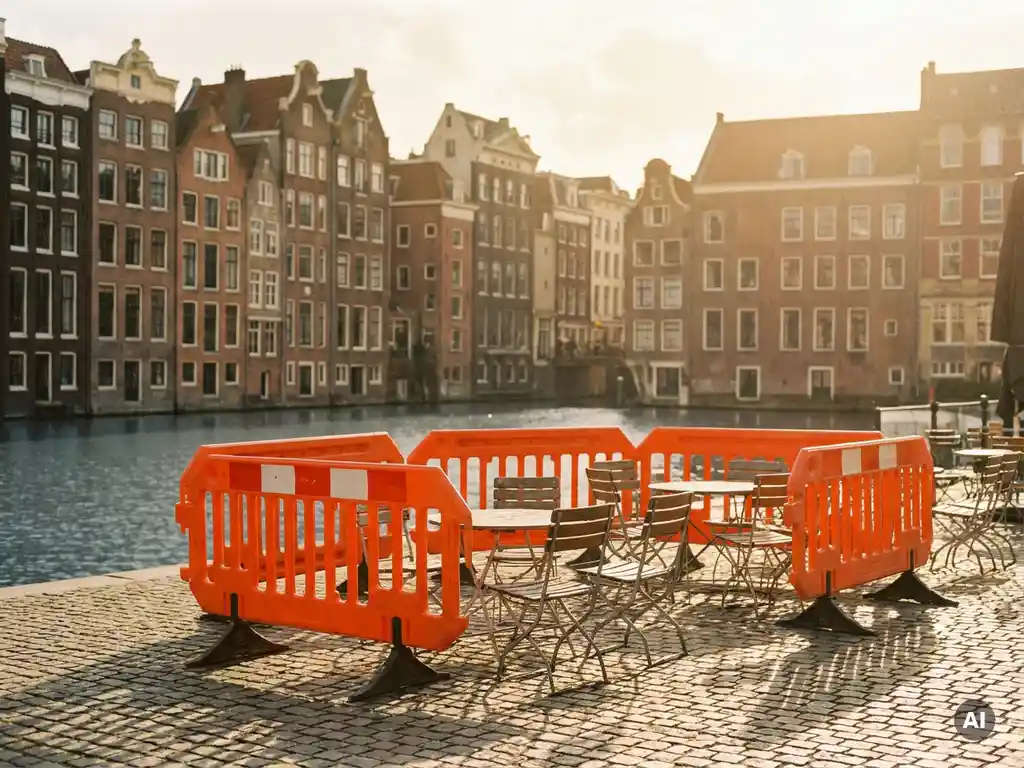
Yes, terrace permit rejections in Amsterdam are often justified, and sometimes they are not. The city has a genuine interest in managing public space, noise, and neighbourhood character, but the process can feel opaque and inconsistent to anyone who has tried to navigate it. Below are the questions most applicants end up asking, answered as plainly as possible.
What are the most common reasons Amsterdam rejects terrace permits?
Amsterdam rejects terrace permit applications most often because the proposed terrace obstructs pedestrian flow, conflicts with existing street furniture rules, or falls within a protected zone where outdoor hospitality is restricted. Safety, accessibility, and the visual character of the street are the three pillars the municipality leans on hardest when saying no.
In practice, the most frequently cited grounds for rejection include:
- Insufficient pavement width, Amsterdam requires a minimum clear walking path after the terrace footprint. On narrower streets, there simply is not room.
- Proximity to a listed monument or protected cityscape, the municipality is protective of UNESCO-listed canal ring areas and will reject anything that visually clutters the streetscape.
- Noise and nuisance concerns, especially in residential streets, where neighbours can formally object and carry real weight in the decision.
- Non-compliant design or materials, heaters, parasols, and barriers must meet aesthetic guidelines. An application that specifies the wrong materials gets sent back.
- Outstanding violations or unpaid fees, if the applicant has an existing terrace with open enforcement cases, a new application stalls immediately.
The honest reality is that many rejections are preventable. Applicants who read the technical specifications carefully and consult the district office before submitting tend to have a much smoother experience.
How does Amsterdam decide whether a terrace fits the street?
Amsterdam uses a combination of fixed technical criteria and discretionary assessment to evaluate whether a terrace fits a given street. The municipality measures available pavement width, checks the street’s designation in the relevant bestemmingsplan (zoning plan), and weighs the cumulative effect of all existing terraces in the immediate area.
Beyond the numbers, there is a qualitative layer. The city considers whether the terrace aligns with the character of the street, a sleek modern terrace on a seventeenth-century canal street may technically fit the measurements but still face resistance on aesthetic grounds. Each of Amsterdam’s seven districts has its own terrace policy document that translates the city-wide framework into local specifics, so the same application can land differently depending on which district office handles it.
Inspectors also look at how the terrace will function across seasons. Year-round terraces with enclosed heating structures face more scrutiny than simple summer setups, because they create a more permanent change to the public space.
Are some Amsterdam neighbourhoods harder to get terrace permits in?
Yes, some Amsterdam neighbourhoods are significantly harder to obtain terrace permits in than others. The canal ring (Grachtengordel), the Jordaan, and parts of De Pijp face the strictest controls, while areas further from the historic centre tend to apply a more pragmatic standard.
The UNESCO World Heritage designation of the historic canal ring adds a layer of heritage protection that other parts of the city do not have. Applications in this zone go through additional review, and the bar for what counts as visually acceptable is higher. The Jordaan, with its narrow streets and dense residential population, combines those heritage concerns with strong neighbourhood pressure from residents who are organized and vocal about quality of life.
In contrast, newer commercial districts and regeneration areas, think parts of Noord or the Zuidas corridor, have been designed with outdoor hospitality in mind, and the permitting culture reflects that. If you are opening a venue and have flexibility on location, the district’s terrace policy is genuinely worth reading before you sign a lease.
Can a rejected terrace permit be appealed in Amsterdam?
Yes, a rejected terrace permit in Amsterdam can be appealed. The standard Dutch administrative law procedure applies: you first submit a bezwaar (formal objection) to the same municipal body that issued the rejection, and if that fails, you can escalate to the administrative court (bestuursrechter).
The bezwaar must be filed within six weeks of the rejection decision. It is not a second application, it is a legal challenge to the reasoning behind the refusal. This distinction matters: you need to identify a specific flaw in the municipality’s decision-making, not simply restate your case. Common successful grounds include procedural errors, inconsistent application of policy compared to similar nearby terraces, or failure to properly weigh submitted evidence.
Appeals take time, the bezwaar process alone can run several months, so factor this into your planning if you are working toward a seasonal opening. Legal support from a specialist in Dutch administrative law is not strictly required, but it meaningfully improves your chances if the rejection involved discretionary judgment rather than a clear technical shortfall.
How Klagen Niet Klagen helps you understand Amsterdam’s rules
Navigating Amsterdam’s permit culture is exactly the kind of thing that sounds simple until you are actually in it. Klagen Niet Klagen exists to cut through the official language and give you a straight read on how the city actually works, not the brochure version, but the lived reality.
- Honest, experience-based commentary on Amsterdam city life and policy
- Long-form essays that explain the logic (and occasional absurdity) behind how Amsterdam manages public space
- A perspective built on over three decades of running a business in this city
- No tourism-board spin, no advertorial softening, just a genuine point of view
If this kind of writing is useful to you, the blog archive has more where it came from. And if you have a question or want to get in touch, the contact page is right there.
One more thing: if you have ever wondered what happens when you put a room full of Amsterdam insiders, a sharp comedian, and a live audience together, that is Boom Chicago. The same instinct that drives this blog (say the honest thing, make it funny, do not waste anyone’s time) has been running shows in Amsterdam since 1993. Check what is on, it is a good night out, and it will tell you more about this city than any terrace permit ever could.
Frequently Asked Questions
How long does the Amsterdam terrace permit application process typically take?
The standard processing time for a terrace permit application in Amsterdam is around eight weeks, though this can stretch significantly if your application is incomplete, triggers a public objection period, or falls within a heritage zone requiring additional review. District offices vary in their workload and responsiveness, so it is worth contacting your local district office early to get a realistic timeline. If you are planning around a seasonal opening, submit well in advance and confirm receipt of your application in writing.
What can I do to improve my chances of approval before submitting my application?
The single most effective step is to request a pre-application consultation with your district office before you submit anything. Bring a draft layout, your proposed materials, and any measurements you have taken, and ask specifically whether there are known objections or local policy constraints that would affect your case. Applicants who do this catch most preventable rejection grounds early and submit stronger applications the first time around.
Can neighbours actually block a terrace permit application in Amsterdam?
Neighbours cannot unilaterally block an application, but their formal objections carry real procedural weight and can meaningfully influence the outcome. If a neighbour submits a zienswijze (a formal view) during the public comment period, the municipality is legally required to consider and respond to it in the decision. In residential streets, particularly in the Jordaan or De Pijp, organised neighbourhood opposition has historically been a deciding factor in borderline cases, so it is worth considering whether early, proactive communication with adjacent residents might reduce friction.