
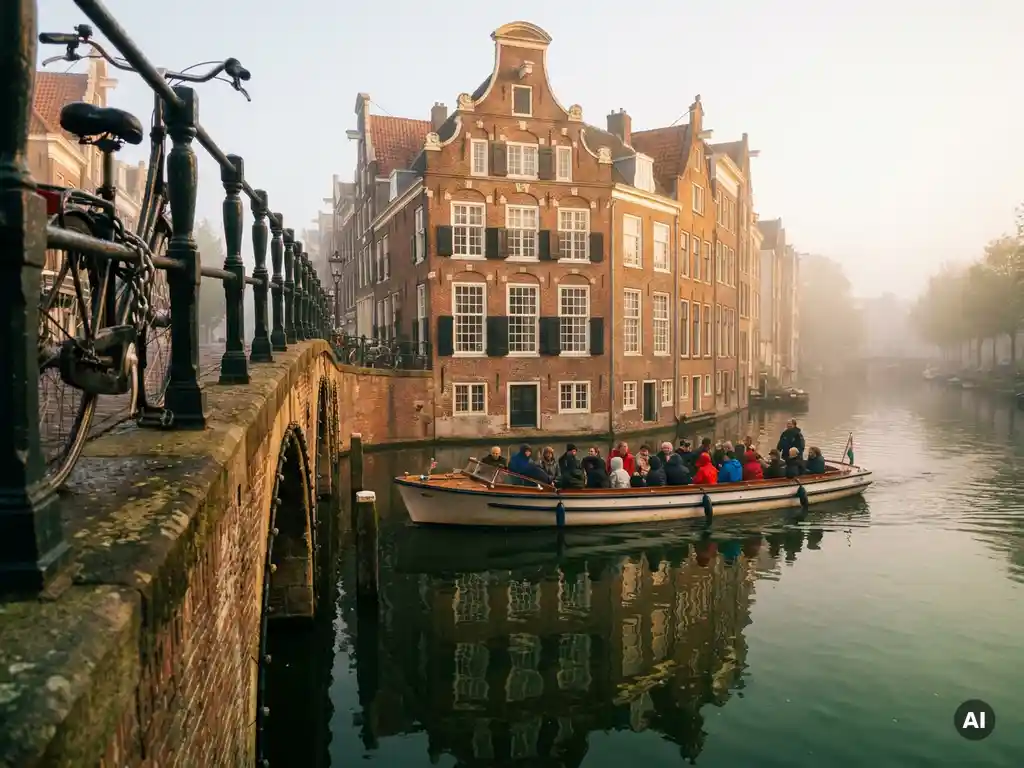
Amsterdam is trying several solutions to overtourism, including a raised tourist tax, cruise ship restrictions, a ban on new hotels in the city centre, and limits on short-term rentals like Airbnb. These measures have had mixed results. The city faces a structural tension: Amsterdam’s economy depends heavily on tourism, which makes aggressive action politically and financially difficult. Below, each of the main questions around overtourism solutions in Amsterdam gets a direct answer.
Which overtourism measures has Amsterdam actually implemented?
Amsterdam has implemented a range of concrete overtourism measures, including one of the highest tourist taxes in Europe, a moratorium on new hotels in the city centre, stricter limits on short-term holiday rentals, and the relocation of cruise ship terminals away from the historic core. These are real, enacted policies, not proposals.
The short-term rental rules are among the most visible changes. Platforms like Airbnb are now restricted to a maximum of 30 nights per year per property in most parts of the city, down from 60. Enforcement remains patchy, but the intent is clear: keep housing stock available for residents rather than tourists.
The cruise ship situation has also shifted. The main cruise terminal near Centraal Station has been closed to large ships, redirecting vessels to a terminal further from the historic centre. The city has also actively discouraged the stag party and budget tourism market through targeted campaigns, at one point running ads in the UK explicitly telling certain types of visitors they were not welcome.
On top of this, Amsterdam has banned new tourist shops, souvenir stores, and certain categories of hospitality businesses from opening in already saturated neighbourhoods. The goal is to prevent the centre from hollowing out further into a theme park of stroopwafels and cannabis cafés.
How does Amsterdam’s tourist tax compare to other European cities?
Amsterdam has one of the highest tourist taxes in Europe. As of 2026, visitors pay a city tax of 12.5% on their accommodation costs, plus an additional fee per night. This places Amsterdam significantly above cities like Paris, Berlin, and Barcelona, which generally charge flat fees of a few euros per night rather than a percentage of the room rate.
The percentage-based model means that a guest staying in a luxury hotel pays substantially more than someone in a budget hostel, which is a more progressive approach than a flat fee. In theory, this discourages high-spend, low-contribution tourism less than it discourages budget visitors, though critics point out that it does not reduce visitor numbers in any meaningful way. People who want to come to Amsterdam still come. They just pay a bit more when they arrive.
The revenue generated goes into the city’s general budget, not into a dedicated fund for managing tourism’s impact on infrastructure or neighbourhoods. That gap between income and investment is one of the recurring frustrations for residents who live with the consequences of overtourism every day.
Why is it so hard to reduce tourist numbers in Amsterdam?
Reducing tourist numbers in Amsterdam is structurally difficult because tourism is deeply embedded in the city’s economy, its international identity, and its transport infrastructure. Amsterdam Schiphol is one of Europe’s major aviation hubs, which means the city is almost unavoidably on the itinerary for millions of travellers passing through Europe.
The economic dependency is real. Hotels, restaurants, museums, bike rental shops, and a significant portion of the retail sector all rely on tourist spending. Any serious reduction in visitor numbers would hit jobs and tax revenues immediately. Politicians face a genuine dilemma: the people most harmed by overtourism (residents) are not the same people who benefit most financially from it (businesses and property owners), and the latter group tends to have more political leverage.
There is also a coordination problem. Amsterdam cannot control how many flights land at Schiphol, how aggressively Dutch tourism boards market the country internationally, or what other European cities do with their own visitor policies. If Amsterdam becomes noticeably harder or more expensive to visit, some tourists simply go to Rotterdam or Utrecht for a day instead, which helps Amsterdam residents very little.
Finally, the city’s compactness works against it. The historic centre is small, walkable, and visually iconic. That concentration of beauty and history in a tight geographic area means that even a modest number of tourists can feel overwhelming in specific streets and squares.
What could Amsterdam realistically do differently?
Realistically, Amsterdam could do more to redistribute tourists across time and space, invest tourist tax revenue directly into affected neighbourhoods, and set harder caps on accommodation capacity. None of these are radical ideas, but all of them face political or practical resistance that has so far prevented serious implementation.
Spreading tourists across the city rather than concentrating them in the Jordaan and the Red Light District is a goal Amsterdam has talked about for years. The tools exist: better promotion of outer neighbourhoods, incentives for cultural institutions to open satellite locations further from the centre, and smarter transport design that makes it easier to reach areas like Noord or Oost. Progress has been slow.
A stricter cap on total accommodation capacity would be a more direct lever. Amsterdam has frozen new hotel development in the centre, but the existing stock is still enormous. Reducing it would require buying out or converting hotels, which is expensive and politically contentious.
Perhaps the most underused tool is honest communication about what Amsterdam actually is. The city has occasionally run campaigns telling certain tourists they are not welcome, but the overall marketing message from national and regional tourism bodies still presents Amsterdam as an endlessly available, endlessly charming destination. Until that changes at a systemic level, individual city measures will always be fighting upstream.
How Klagen Niet Klagen covers Amsterdam’s toughest questions
Overtourism is exactly the kind of topic that mainstream Amsterdam media either avoids or sanitises. Klagen Niet Klagen exists to do the opposite: to take the city’s real contradictions seriously and write about them honestly, with humour and without a tourism board looking over its shoulder.
- Long-form essays on Amsterdam city life written from genuine insider experience, not a journalistic brief or a sponsored agenda
- Commentary that names the tensions between residents and tourists, between economic interest and liveability, without pretending there are easy answers
- A perspective built on over three decades of living and working in Amsterdam, across comedy, entrepreneurship, and public life
- Content written in English for expats, internationally minded Dutch readers, and curious visitors who want something more than a listicle
If you want Amsterdam commentary that actually reflects what it feels like to live here, read more about the blog and explore the archive. There is plenty more where this came from.
And if you want to experience Amsterdam at its sharpest and funniest in person, Boom Chicago has been doing exactly that since 1993. The same instinct that drives this blog, honest, irreverent, deeply Amsterdam, is what fills that stage every week. It is well worth an evening.
Frequently Asked Questions
If Amsterdam's measures aren't reducing tourist numbers, what does success actually look like?
Success for Amsterdam is probably better defined as managing the impact of tourism rather than eliminating it. That means metrics like resident satisfaction, housing availability, and neighbourhood liveability becoming as central to policy evaluation as visitor numbers or tourism revenue. A city can host millions of tourists and still function well for the people who live there — the question is whether the infrastructure, regulation, and investment are designed with residents as the primary stakeholder, not an afterthought.
Are there European cities that have handled overtourism more effectively than Amsterdam, and what can Amsterdam learn from them?
Dubrovnik and Venice are often cited as cautionary tales rather than models, but smaller interventions in cities like Ghent and Bruges offer more transferable lessons — both have invested heavily in promoting their wider regions rather than funnelling visitors into a single historic core. Ghent in particular has built a strong local cultural identity that attracts visitors without overwhelming a single neighbourhood. The common thread in more successful cases is early, proactive spatial planning rather than reactive damage control, which is exactly where Amsterdam has historically struggled.
What can visitors who actually want to be respectful tourists in Amsterdam do differently?
The most practical steps are also the least glamorous: stay in accommodation outside the historic centre, visit on weekdays rather than weekends, and spend money in neighbourhoods like De Pijp, Noord, or Oost rather than defaulting to the Jordaan and the canal ring. Avoiding the obvious tourist traps isn’t just better for the city — it usually makes for a more interesting trip. Treating Amsterdam as a place where people live rather than a theme park to pass through is a mindset shift that costs nothing and changes everything.