
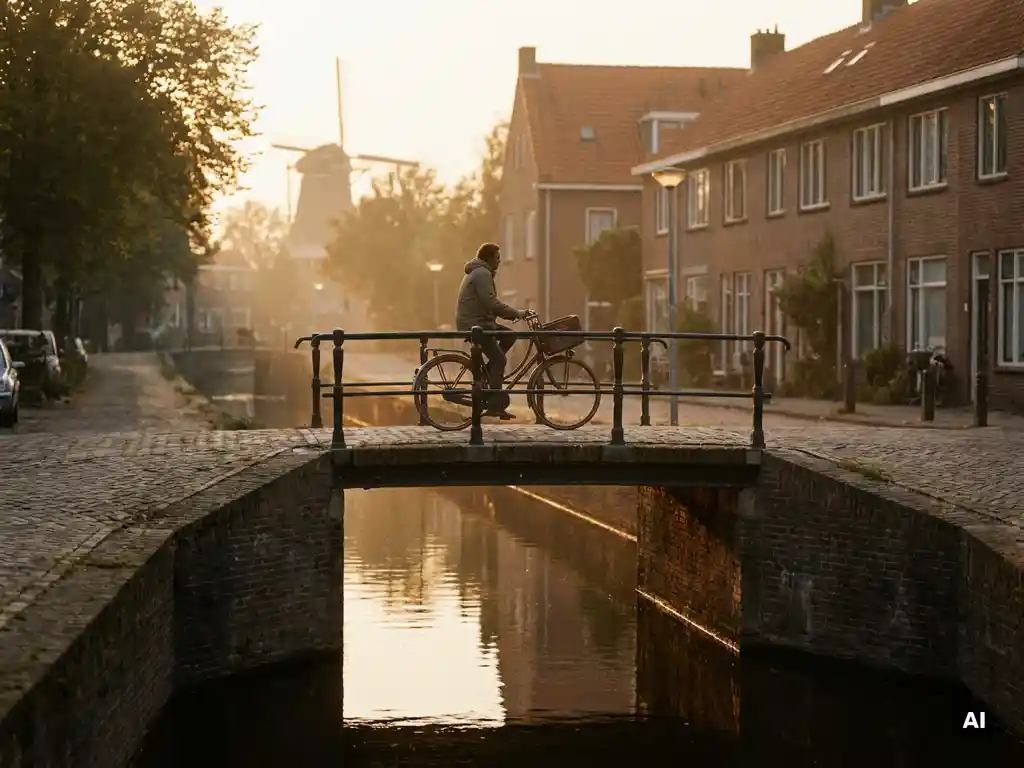
Amsterdam is actively spreading tourists beyond the city center by promoting neighborhoods like the Jordaan, De Pijp, Amsterdam Noord, and the eastern docklands as destinations in their own right. The city uses a combination of marketing campaigns, event programming, and infrastructure nudges to redirect foot traffic. Below, we dig into what is actually working, what is not, and what residents think about all of it.
Which Amsterdam neighborhoods are being promoted to tourists?
The neighborhoods receiving the most active promotion as alternatives to the overcrowded center include Amsterdam Noord, De Pijp, the eastern harbor islands, Westerpark, and parts of the Jordaan and Oud-West that sit just beyond the tourist bull’s-eye. These areas offer genuine culture, independent food scenes, and local character without the selfie-stick density of Damrak.
Amsterdam Noord has been the star pupil of this strategy. The free ferry ride across the IJ is already a minor adventure, and the area around the NDSM wharf and the EYE Film Institute gives visitors something genuinely interesting to do. De Pijp, long beloved by expats and locals alike, has also been positioned as a livelier, more authentic alternative to the museum quarter crowds. The Albert Cuyp market is a real market, not a tourist performance.
The eastern docklands, including Borneo-Sporenburg and the Java Island area, offer striking modern architecture that most visitors never see. The city has quietly invested in wayfinding and cycling infrastructure to make these areas easier to reach without a guide. The pitch is simple: the center is Amsterdam’s past, but these neighborhoods are its present.
What tools is Amsterdam using to redirect tourist flows?
Amsterdam uses a combination of targeted marketing campaigns, event programming outside the center, hotel licensing restrictions, and physical infrastructure to push tourist flows toward less-visited areas. The city has also leaned on digital tools, including its official tourism platform, to highlight neighborhoods and experiences that do not appear in the standard tourist itinerary.
One of the most direct tools has been the restriction of new hotel licenses in the historic center. If visitors cannot sleep in the center, they explore where they stay. The city has also used large-scale events, festivals, and cultural programming in peripheral neighborhoods to draw crowds outward naturally rather than through instruction.
The Enjoy and Respect campaign and its successors have attempted a softer approach, framing dispersal as an invitation rather than a crowd-control measure. Whether tourists respond to a friendly nudge or simply follow the path of least resistance is a fair question. The evidence suggests the latter. When a neighborhood has a great coffee shop, an interesting museum, and easy cycling access, people go there. When it just has a brochure, they stay on Leidseplein.
Does spreading tourists actually reduce pressure on the city center?
Spreading tourists to other neighborhoods reduces visible crowding in specific spots, but it does not meaningfully reduce the total number of visitors or the overall pressure on Amsterdam as a city. The center remains the center. Dispersal strategies work at the margins, not at the core of the overtourism problem.
The honest answer is that dispersal is a management tool, not a solution. If ten million people visit Amsterdam in a year, redirecting two million of them toward Noord or De Pijp makes those neighborhoods busier without making the Rijksmuseum queue shorter. The pressure simply moves. Locals in previously quiet neighborhoods start to notice the change, and the cycle begins again.
There is also a self-defeating quality to promotion-based dispersal. The moment a neighborhood is successfully marketed as “the real Amsterdam,” it attracts the same tourist infrastructure it was supposed to escape: Airbnb listings, souvenir shops, and crowds. De Pijp is already well into this process. Noord is watching it happen in real time.
Genuine relief for the city center would require either reducing the total volume of visitors or making the center less hospitable to mass tourism, which is a far more politically difficult conversation to have.
What do Amsterdam residents think about tourist dispersal plans?
Amsterdam residents are largely skeptical of dispersal strategies, not because they dislike the idea of spreading visitors around, but because they have seen the pattern repeat: a quiet neighborhood gets promoted, becomes popular, and then loses the qualities that made it worth promoting in the first place. Many residents feel the city is managing tourism rather than confronting it.
Expats and long-term internationals, who often live in the neighborhoods being promoted, have a particularly sharp view of this. They moved to De Pijp or Noord precisely because those areas felt less like a theme park. Watching the tourist apparatus follow them is frustrating. The sentiment is not anti-visitor. It is pro-city.
Dutch residents, meanwhile, tend to frame the debate around housing, noise, and the erosion of neighborhood character. The tension between welcoming visitors and protecting livability is not new, but it has sharpened as the city has grown more expensive and more crowded simultaneously. Dispersal plans are seen by many as a way of appearing to act without making the harder choices about cruise ship limits, Airbnb caps, or visitor taxes that would actually change the numbers.
There is genuine appreciation for efforts that invest in peripheral neighborhoods, improve infrastructure, and make Noord or the eastern harbor islands more accessible. But residents are quick to distinguish between improving the city for everyone and simply routing tourist congestion through their front door.
How Klagen Niet Klagen helps you understand Amsterdam beyond the brochure
If you have made it this far, you already know that the real Amsterdam conversation is more complicated than any tourism campaign will tell you. That is exactly what Klagen Niet Klagen is here for. Written from inside the city’s creative and entrepreneurial scene, the blog offers the kind of honest, long-form commentary on Amsterdam life that tourist guides and PR agencies cannot produce.
- Insider perspective on city policy, neighborhood change, and the tensions that shape daily life in Amsterdam
- English-language commentary written for people who actually live here or want to understand the city at a deeper level
- No tourism board influence, no advertorial softening, just a genuine point of view built on over three decades of Amsterdam experience
- A consistent editorial voice that cuts through the noise of listicles and polished travel content
If you want more of this, explore the full blog archive and find essays on everything from Dutch cultural norms to the politics of the city’s transformation. The conversation about overtourism in Amsterdam is far from over, and Klagen Niet Klagen will keep having it honestly.
And if you want to experience Amsterdam’s creative energy in person, Boom Chicago has been doing exactly that since 1993. Sharp comedy, improvisation, and a stage that has launched careers and made thousands of Amsterdammers and visitors laugh at the city they love. Check out the current shows and agenda and come see what happens when you stop managing the crowd and just perform for it.
Frequently Asked Questions
Which Amsterdam neighborhood should I visit first if I want to avoid the tourist crowds?
Amsterdam Noord is the strongest starting point — the free ferry from Centraal Station takes under five minutes and immediately puts you somewhere that feels genuinely different. The NDSM wharf and EYE Film Institute give you real cultural substance, not just a quieter version of the same canal photos. If you prefer staying on the south side of the IJ, De Pijp around the Albert Cuyp market on a weekday morning comes closest to the lived-in Amsterdam experience without requiring any planning effort.
Is it true that once a neighborhood gets promoted as 'the real Amsterdam,' it stops being that?
Yes, and it happens faster than most people expect. De Pijp is the clearest current example — it was marketed as an authentic alternative to the museum quarter, and it now has the Airbnb density, souvenir-adjacent shops, and weekend crowd levels to prove the strategy worked too well. Noord is at an earlier stage of the same process, and residents there are watching the tourist infrastructure arrive in real time. The pattern is consistent enough that ‘authentic neighborhood’ in a tourism campaign is almost a leading indicator of what that neighborhood is about to lose.
What would actually reduce overtourism in Amsterdam, if dispersal strategies only move the problem around?
The measures most likely to reduce total visitor pressure are also the most politically difficult: meaningful caps on cruise ship arrivals, stricter and better-enforced Airbnb limits, higher visitor taxes applied at scale, and restrictions on the cheapest short-haul flights into Schiphol. Dispersal strategies are appealing to city governments precisely because they do not require any of those fights — they reframe crowd management as a marketing opportunity. Real reduction in pressure means reducing the total number of visitors, which means turning some of them away or making the trip less frictionless, and no tourism-dependent economy finds that easy to commit to.
Related Articles
- Is getting a hospitality license in Amsterdam harder than it should be?
- What would a better tourism-living balance look like in Amsterdam?
- Why is Amsterdam restricting cars in the city center?
- What is Amsterdam's new traffic policy for the city center?
- What public space projects are planned for Amsterdam?