
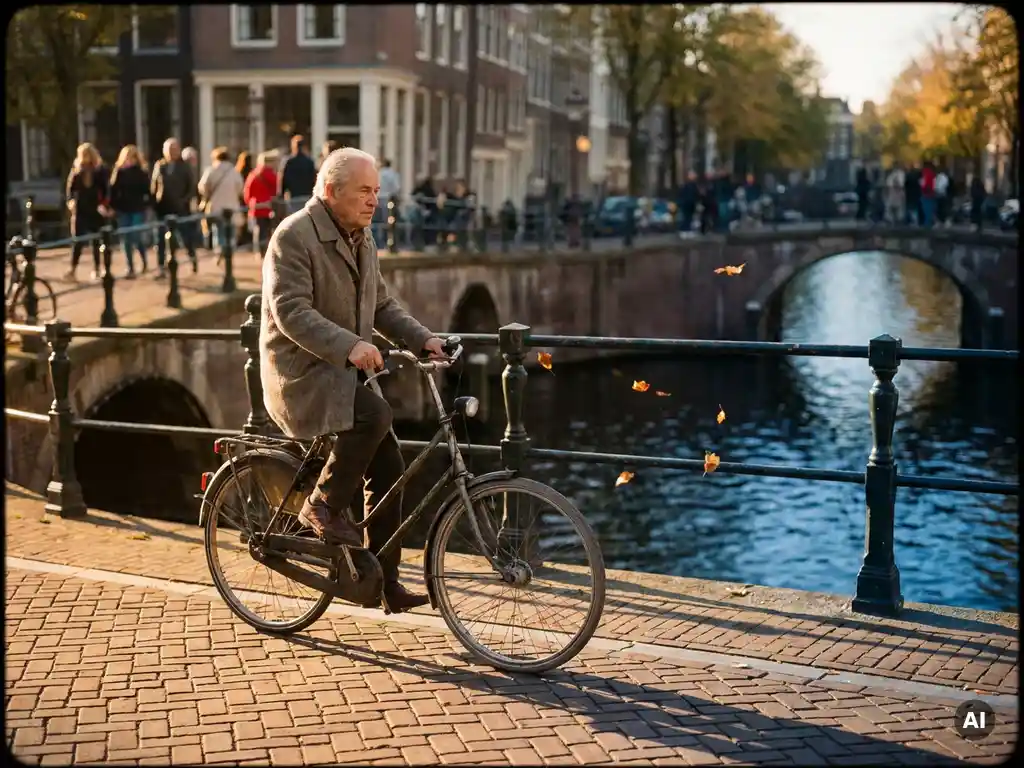
A better balance between tourism and living in Amsterdam means giving residents genuine priority in housing, public space, and policy decisions, while still welcoming visitors who contribute meaningfully to the city’s economy and culture. Right now, that balance is badly tilted. Amsterdam attracts millions of tourists each year, and the pressure on neighbourhoods, infrastructure, and everyday life has become impossible to ignore. The questions below dig into what a rebalanced Amsterdam could actually look like, and why getting there is harder than it sounds.
How do other cities manage the tourism-living balance?
Cities that manage the balance between tourism and living well tend to share one thing: they treat residents as the primary stakeholders, not an afterthought. Barcelona, Venice, and Dubrovnik have all experimented with visitor caps, zoning restrictions, and tourist taxes that fund local infrastructure rather than just marketing budgets. The results are mixed, but the intent is instructive.
Barcelona’s approach has been among the boldest. The city froze new hotel licences in the city centre, cracked down on illegal short-term rentals, and invested heavily in affordable housing for locals. It is not a perfect system, but it signals a political will to say: this city belongs to the people who live here first.
Venice went further with day-tripper fees and entry controls at peak times, though critics argue these measures manage symptoms rather than causes. Dubrovnik capped cruise ship arrivals after years of streets so packed that residents could barely leave their own homes.
What these cities share is a willingness to make tourism slightly less convenient in order to make living there significantly more bearable. Amsterdam has the tools to do the same. Whether it has the political courage is a different question entirely.
What do Amsterdam residents actually want from tourism policy?
Amsterdam residents broadly want the same things: quieter streets, affordable housing, and a city that functions for people who actually live there rather than people passing through for a weekend. The balance between tourism and living is not an abstract policy debate for most locals. It shows up in the cost of their rent, the noise outside their window, and the queue at their local supermarket.
Residents are not anti-tourism. Most people who have built a life in Amsterdam understand that visitors are part of what makes the city economically viable and culturally alive. What they object to is unmanaged tourism, the kind that overwhelms neighbourhoods, drives up prices, and turns local institutions into souvenir shops.
Specifically, residents tend to want:
- Stricter enforcement of short-term rental rules that hollow out residential buildings
- Tourist taxes that genuinely fund neighbourhood improvements, not just city marketing
- Better distribution of visitors across the city, rather than funnelling everyone into the same four postcodes
- Meaningful consultation before new hotels, hostels, or tourist attractions are approved
- A clear signal from the city that liveability is a policy priority, not just a talking point
These are reasonable demands. They do not require Amsterdam to close its doors. They require Amsterdam to take its own residents seriously.
What would a better-balanced Amsterdam actually look like?
A better-balanced Amsterdam would look much like it did before mass tourism reshaped it: a city where neighbourhoods have their own character, where locals and visitors share space without one group overwhelming the other, and where the tourism economy serves the city rather than consuming it.
In practical terms, a rebalanced Amsterdam might mean:
- Residential streets in the Jordaan and De Pijp that feel like neighbourhoods again, not open-air theme parks
- Short-term rental platforms operating under genuinely enforced limits, so apartment buildings remain homes
- A hospitality sector that attracts visitors who stay longer, spend more thoughtfully, and engage with the city beyond the obvious
- Cultural institutions that serve both local audiences and curious visitors, without pricing out the former
- Public spaces that are designed for daily life, not just optimised for Instagram
This is not nostalgia for a city that never existed. It is a description of what Amsterdam could be if it made deliberate choices about what kind of city it wants to be. The infrastructure exists. The culture exists. What is missing is consistent political will and enforcement that actually sticks.
Why is fixing Amsterdam’s tourism balance so difficult?
Fixing the balance between tourism and living in Amsterdam is difficult because the economic incentives point in exactly the wrong direction. Tourism generates enormous revenue for the city, for businesses, and for property owners. The people who benefit most from high visitor numbers are often the same people with the most influence over policy. The people who pay the highest price, residents, have less leverage than they should.
There is also a structural problem. Amsterdam is a genuinely small city. Its historic centre is compact, its canal streets are narrow, and its housing stock is finite. There is no easy way to absorb millions of visitors without those visitors colliding with the lives of the people who live there. Other cities have room to spread the load. Amsterdam does not.
Short-term rental platforms have made the problem significantly worse by converting residential housing into de facto hotels at a scale the city struggled to regulate quickly enough. By the time meaningful rules were in place, entire streets had already changed character.
And then there is the political complexity. Tourism policy in Amsterdam touches housing, transport, culture, and economic development simultaneously. Every decision involves competing interests, and the loudest voices in those debates are rarely the residents most affected. Progress happens, but slowly, and enforcement often lags well behind the rules themselves.
None of this means the problem is unsolvable. It means the solution requires sustained political commitment and a willingness to accept short-term economic discomfort for long-term liveability. That is a harder sell than it should be.
How Klagen Niet Klagen covers Amsterdam’s tourism debate
Klagen Niet Klagen exists precisely for questions like this one. It is an English-language Amsterdam blog written by someone who has lived and worked here for over thirty years, with no tourism board to answer to and no advertorial agenda to protect. When it comes to the balance between tourism and living, the blog offers:
- Honest, long-form commentary on Amsterdam’s city life that does not pretend the hard questions have easy answers
- An insider perspective that goes well beyond what travel guides or mainstream media cover
- A point of view with genuine skin in the game, from someone who has watched Amsterdam change across three decades
- Content written for expats, engaged locals, and curious international visitors who want more than a polished city narrative
If you want to keep reading honest takes on Amsterdam, explore the full blog archive for more essays on the city’s contradictions, charms, and ongoing arguments with itself.
And if you want to experience Amsterdam’s sharpest comedic commentary live, Boom Chicago has been doing exactly that since 1993. It is the kind of show that makes you laugh at the city you love, and somehow love it more for it. Worth a night out, whatever your feelings about the tourist crowds outside.
Frequently Asked Questions
How can Amsterdam residents get involved in shaping local tourism policy?
Residents can engage through Amsterdam’s district committees (stadsdeelcommissies), which hold regular public meetings where tourism and housing policies are discussed and debated. Signing up for neighbourhood platforms, joining local residents’ associations, and responding to municipal consultation rounds are all concrete ways to make your voice heard. The city does have formal channels for resident input — the challenge is that they require time and persistence to navigate effectively.
What are the most common mistakes cities make when trying to regulate tourism?
The most frequent mistake is focusing on visibility over enforcement — passing rules that look decisive on paper but are chronically under-resourced when it comes to implementation. Amsterdam itself has experienced this with short-term rental regulations that took years to meaningfully bite. Another common error is treating tourism as a single issue rather than addressing its knock-on effects on housing, transport, and public space as an interconnected system.
Is there a realistic risk that stricter tourism policies could hurt Amsterdam's economy?
In the short term, yes — stricter caps and enforcement will reduce some revenue streams, particularly from budget tourism and short-term rental income. However, research from cities like Barcelona suggests that quality tourism (visitors who stay longer and spend more thoughtfully) can offset volume losses over time. The more significant economic risk may actually be doing nothing: cities that become unliveable for residents eventually lose the authentic character that made them attractive to visitors in the first place.