
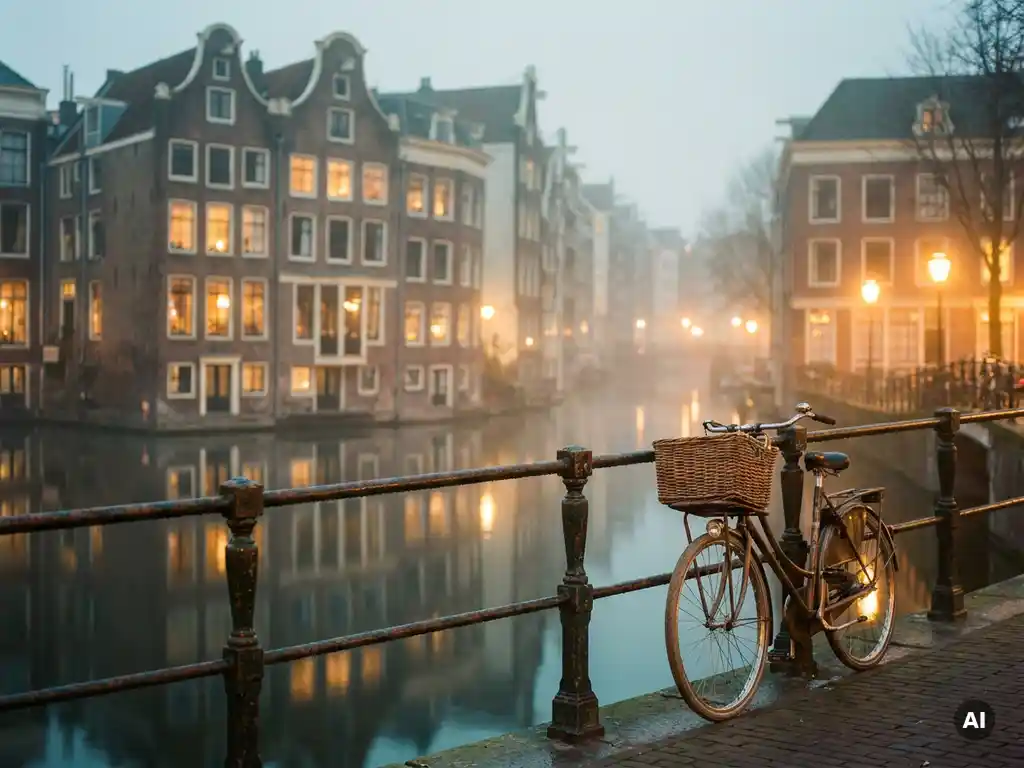
Living in Amsterdam’s city center is still enjoyable, but only if you go in with realistic expectations. The experience has shifted significantly over the past decade, and what you gain in location and atmosphere you increasingly pay for in noise, crowds, and cost. Whether it suits you depends almost entirely on your lifestyle, your tolerance for tourism, and how much you value proximity over peace.
The honest answer is that central Amsterdam rewards a specific kind of resident: one who is deeply embedded in the city’s cultural and social life and genuinely uses the neighborhood rather than just sleeping in it. For everyone else, the trade-offs are getting harder to justify. Here is what you actually need to know.
What has changed about living in Amsterdam’s city center?
Living in Amsterdam’s city center has changed dramatically as mass tourism has reshaped the neighborhood’s character. Streets that were once genuinely mixed, locals shopping, kids cycling to school, neighborhood cafes serving regulars, have been progressively colonized by short-stay rentals, souvenir shops, and tourist infrastructure. The residential fabric has thinned considerably.
The crowds in Amsterdam’s city center are no longer a seasonal phenomenon. What used to peak in summer now runs almost year-round, with weekends feeling like a permanent festival that nobody who lives there actually signed up for. The city has taken steps to manage this, restricting short-term rentals, banning cruise ships from the historic harbor, and limiting certain kinds of commercial activity in residential streets, but the effects have been gradual and uneven.
Supermarkets have been replaced by gelato stands. Pharmacies have become cannabis dispensaries. The everyday infrastructure that makes a neighborhood livable has quietly migrated outward, forcing residents to travel further for basic errands. If you moved to the Jordaan or the Grachtengordel twenty years ago expecting a functioning urban village, what you have now is something closer to a living museum with a residential annex.
What are the biggest downsides of living in central Amsterdam today?
The biggest downsides of living in central Amsterdam today are noise, crowds, cost, and the gradual erosion of genuine neighborhood life. These are not minor inconveniences, for many residents, they have become daily sources of frustration that no amount of canal views can fully offset.
- Noise: Bachelorette parties, boat tours with amplified commentary, and tourist groups navigating narrow streets at midnight are a near-constant presence on weekends. Soundproofing in historic canal houses was not designed for 2026 tourism volumes.
- Crowds: The sheer density of people in Amsterdam’s city center makes simple tasks, cycling to the market, walking to a friend’s house, finding a table at a local cafe, significantly more effortful than they would be in any other part of the city.
- Cost: Rents in the center are among the highest in the Netherlands, and the gap between what you pay and what you get in terms of livable space has never been wider.
- Loss of local services: Dry cleaners, hardware stores, neighborhood bakeries, and GP practices have been steadily displaced by tourist-facing businesses. Running a normal life requires leaving the center regularly.
- Short-term rental neighbors: Even with stricter regulations, the churn of temporary occupants in surrounding apartments creates a transient atmosphere that undermines any sense of stable community.
Are there still real benefits to living in the city center?
Yes, there are still genuine benefits to living in central Amsterdam, and for the right person, they remain compelling. The center offers unmatched access to cultural institutions, walkability, architectural beauty, and a density of social and professional life that no other part of the city replicates. The question is whether those benefits outweigh the costs for your specific lifestyle.
The canal belt is genuinely one of the most beautiful urban environments in the world. Living inside it, rather than visiting it, means that beauty becomes the backdrop of your daily life rather than a destination. That is not nothing. Cycling to dinner along the Herengracht at dusk, or walking to the Stedelijk on a quiet Tuesday morning, are experiences that do not lose their value just because the Damrak is crowded.
Professionally and socially, the center still functions as Amsterdam’s connective tissue. If your work, your network, and your cultural life are concentrated there, the convenience is real. You are never far from anything that matters. For people who genuinely use the city rather than simply inhabiting it, that proximity has tangible daily value.
The center also tends to attract residents who are engaged, curious, and internationally minded, which means the social environment, when you find it beneath the tourist surface, can be genuinely stimulating. The city’s creative and entrepreneurial communities still have a strong presence in the historic center, even if they are increasingly squeezed toward its edges.
Who actually still enjoys living in central Amsterdam?
People who genuinely enjoy living in central Amsterdam tend to share a few key traits: they are deeply embedded in the city’s cultural life, they have high tolerance for urban density, and they have found ways to build a local routine that insulates them from the tourist flow. It is not for everyone, but for some people it remains the only place in the city worth living.
Long-term residents who have cultivated real neighborhood relationships, who know the baker who survived gentrification, who have a regular table at a cafe that does not appear on any travel blog, often report that life in the center is still rich and rewarding. The key is that they have invested the time to find the city beneath the surface layer of tourism.
Creative professionals, artists, and entrepreneurs who use the center as their professional and social base also tend to find the trade-offs worthwhile. When your work brings you into daily contact with the city’s cultural institutions, its visiting talent, and its international networks, the location pays dividends that are harder to quantify but genuinely real.
Younger residents and recent arrivals often find the energy of the center exciting rather than exhausting, at least initially. The density, the variety, and the constant stimulation suit a particular phase of life. Whether that enthusiasm survives a few years of tourist-season weekends is a different question.
What almost everyone agrees on is that enjoying central Amsterdam in 2026 requires active effort. You have to seek out the quieter streets, the earlier mornings, the less obvious corners. The city rewards that effort, but it no longer delivers the experience passively.
How Klagen Niet Klagen helps you make sense of living in Amsterdam
If you are wrestling with whether central Amsterdam still works for you, or trying to understand the city’s contradictions from the inside, Klagen Niet Klagen exists precisely for that conversation. Written by Andrew Moskos, co-founder of Boom Chicago and a resident of Amsterdam for over three decades, the blog offers honest, long-form commentary on city life that no tourism guide or mainstream outlet provides.
- Unfiltered takes on Amsterdam’s livability, politics, and cultural shifts, written by someone with real skin in the game
- Essays that go beyond surface-level expat content and engage seriously with what it means to build a life in this city
- A perspective shaped by decades of creative entrepreneurship in Amsterdam, not by advertorial pressure or tourism-board talking points
- Content written in English for globally minded readers who want depth, not a listicle
If this kind of honest Amsterdam commentary is what you have been looking for, explore the full blog archive or find out more about the voice behind it. There is plenty more where this came from.
And if you want to experience Amsterdam’s creative energy in person rather than just reading about it, Boom Chicago has been doing exactly that since 1993, sharp, funny, and unapologetically Amsterdam. A night at Boom Chicago is the kind of evening that reminds you why you moved here in the first place. Worth it every time.
Frequently Asked Questions
Which neighborhoods close to Amsterdam's city center offer a better quality of life without sacrificing too much convenience?
Areas like De Pijp, Oud-West, and Westerpark sit just outside the historic center and offer a noticeably better balance between livability and proximity. You still get excellent cycling access to the canal belt, a denser mix of local services, and a more stable residential community, but without the constant tourist traffic on your doorstep. For many former center residents, the move a few streets or tram stops outward turns out to be the best decision they made.
What are the biggest mistakes people make when deciding to move into central Amsterdam?
The most common mistake is visiting the center during a quiet weekday, falling in love with the atmosphere, and signing a lease without experiencing it on a summer Saturday night or during King’s Day. Another frequent error is underestimating how much the lack of everyday services, no nearby GP, no proper supermarket, no hardware store, will affect daily life over time. Go in with eyes open: visit at different times of day and week before committing, and map out where you would actually do your grocery shopping, see a doctor, and run basic errands.
Is Amsterdam's city center still a good place to live if you work from home full-time?
Working from home in central Amsterdam amplifies both the best and worst of the location. On quiet mornings, the environment can feel genuinely inspiring, beautiful surroundings, walkable coffee spots, and a stimulating urban backdrop. But noise levels during weekends and tourist-heavy periods can make focused work difficult without serious soundproofing or the discipline to step out. If your home is also your primary workspace, factor in the acoustic reality of a canal house on a busy tourist route, and consider whether a slightly less central address might actually support your productivity better.