
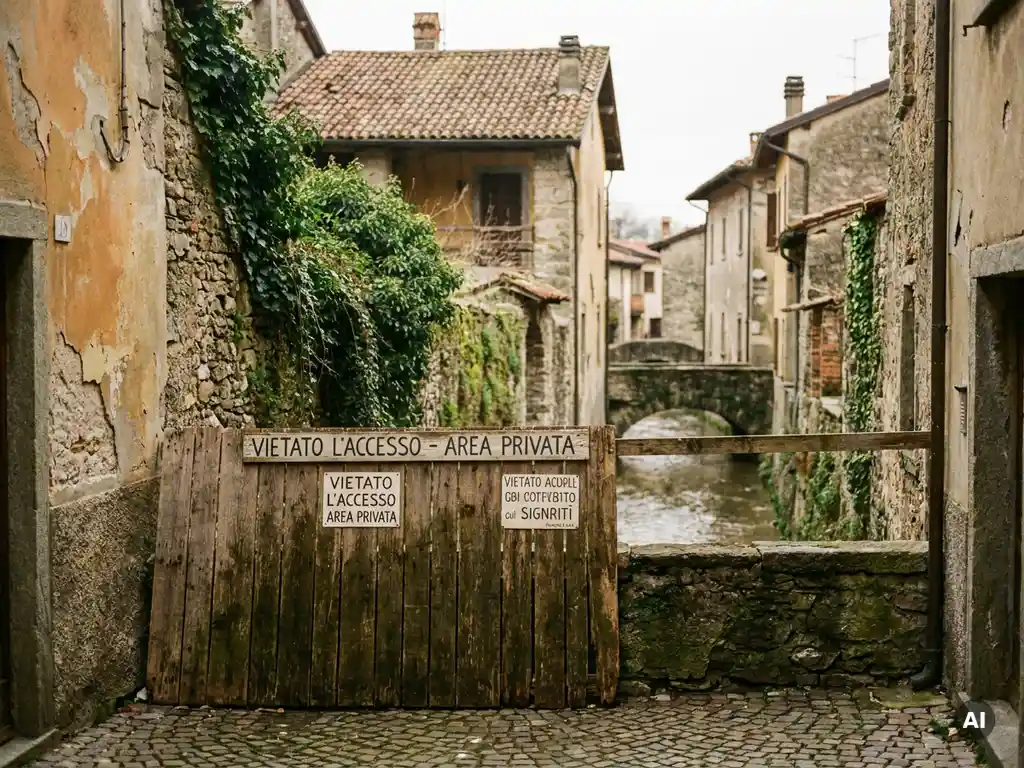
Several areas have successfully pushed back against tourism by combining strict access controls, resident-led advocacy, and targeted policy changes. The cities and neighbourhoods that have seen real results share one thing in common: they treated overtourism as a structural problem requiring structural solutions, not a PR issue requiring better messaging. Below, this article unpacks which tactics work, which cities lead the way, how residents organise effectively, and why so many well-intentioned measures collapse under pressure.
What tactics have actually worked to reduce tourist numbers?
The tactics that have genuinely reduced tourist numbers include visitor caps, entry fees, accommodation bans, and cruise ship restrictions. These measures work best when they are legally enforceable, consistently applied, and backed by political will. Voluntary schemes and awareness campaigns, by contrast, have an almost universal track record of failure.
Venice introduced a day-tripper entry fee and a booking requirement for peak periods, targeting the category of visitor that consumes the most public space while contributing the least economically. Amsterdam banned new hotel construction in the city centre years ago and has progressively tightened Airbnb rental rules, capping short-stay nights and requiring permits. Barcelona used zoning laws to halt the issuing of new tourist apartment licences in saturated neighbourhoods.
What unites these successful tactics is specificity. Rather than trying to make a destination less appealing in general, effective policies identify the precise mechanism driving overcrowding and cut it off at the source. Cruise ship caps work because they address volume at the point of entry. Short-term rental bans work because they directly return housing stock to residents. Broad marketing campaigns telling tourists to “be respectful” do not work because they address nothing structural.
Which European cities have most successfully limited overtourism?
Among European cities, Venice, Dubrovnik, and Amsterdam stand out as the most serious cases where measurable policy action has been taken to limit tourist pressure. Each city has used different tools, and each has achieved partial rather than complete success, which is itself an honest benchmark for what is realistically achievable.
Dubrovnik imposed a hard cap on the number of cruise ships permitted to dock simultaneously and restricted visitor numbers inside the old city walls. The results were visible: crowds thinned noticeably during peak periods, and residents reported a modest improvement in daily life. Venice went further with its entry fee system, though critics argue it targets the symptom rather than the cause, since day-trippers still arrive in enormous numbers despite paying a modest charge.
Amsterdam has arguably taken the most comprehensive legislative approach, combining hotel bans, short-stay rental restrictions, a ban on new tourist shops in certain streets, and a formal policy of not promoting the city to certain categories of visitor. The city even ran a campaign explicitly telling some tourists not to come. Whether that constitutes success depends on your definition: tourist numbers remain high, but the policy direction has shifted from growth to management, which is itself a significant reversal.
How do local residents actually push back against tourism?
Local residents push back against tourism most effectively through organised neighbourhood associations, direct political lobbying, and sustained media pressure. Individual complaints rarely move the needle. Collective, documented, politically coordinated action does.
In Barcelona, the neighbourhood of Barceloneta became a reference point for resident-led resistance. Locals organised protests, documented the impact of short-term rentals on housing costs, and lobbied city hall directly. Their pressure contributed to the city-wide moratorium on new tourist apartment licences. In Amsterdam, resident groups in the Jordaan and De Wallen have pushed back against noise, waste, and commercial monoculture through similar channels.
The tools available to residents include:
- Formal complaints to local councils, backed by documented evidence of nuisance
- Neighbourhood associations that aggregate individual grievances into political demands
- Petitions and referendums where local law permits direct democratic input
- Media engagement, particularly with journalists covering housing and urban policy
- Legal challenges to planning decisions that favour tourist infrastructure over residential needs
What residents consistently discover is that emotional appeals about quality of life, while legitimate, carry less weight than economic arguments. Demonstrating that overtourism depresses residential property use, raises rents, and hollows out local retail tends to move politicians faster than complaints about noise on a Friday night.
Why do so many anti-tourism measures fail or backfire?
Anti-tourism measures fail most often because they are cosmetic, inconsistently enforced, or introduced without addressing the economic incentives that drive overtourism in the first place. A city that bans one type of tourist accommodation while doing nothing about the revenue it loses will almost always find a workaround emerging within months.
Several patterns repeat across failed interventions. Awareness campaigns that ask tourists to behave differently have no enforcement mechanism and no consequence for non-compliance. Seasonal restrictions that apply only during peak months push the problem into shoulder seasons without reducing annual totals. Fee systems set too low to deter anyone function as little more than a tax on a behaviour that continues unchanged.
The deeper problem is political. Tourism generates tax revenue, employment, and hospitality industry lobbying power. Politicians who depend on that revenue face structural pressure to water down restrictions even after announcing them. The result is policy that looks bold in a press release and delivers little in practice.
There is also a displacement effect that undermines localised success. When one neighbourhood successfully reduces tourist pressure, visitors simply move to adjacent areas. Without city-wide or region-wide coordination, pushing tourists out of one street can simply mean pushing them into the next one.
How Klagen Niet Klagen covers the fight to reclaim Amsterdam for residents
This is exactly the kind of debate that Klagen Niet Klagen was built for. Not the sanitised tourism-board version, not the diplomatic municipal press release, but the honest, sometimes uncomfortable conversation about what Amsterdam is for and who it actually belongs to. The blog, written by Andrew Moskos after more than three decades of living and building in this city, covers these tensions with the insider authority that most commentary simply cannot match.
- Long-form essays on Amsterdam city policy, housing, and the politics of overtourism
- Opinion pieces written from genuine lived experience, not journalistic distance
- A Klagen / Niet Klagen framework that holds both the frustrations and the reasons to stay in the same honest frame
- Commentary that speaks to expats, engaged locals, and international visitors who want more than a surface reading of the city
If you want commentary on Amsterdam that treats you as an adult, explore the full blog archive and find out what the city looks like when someone tells you the truth about it. You can also read more about Andrew Moskos and the thinking behind the blog.
And if the whole conversation about Amsterdam’s identity, its contradictions, and what makes it genuinely worth defending makes you want to laugh as much as it makes you want to argue, that is precisely what Boom Chicago has been doing since 1993. Sharp, honest, Amsterdam-rooted comedy performed live in the city. Check the shows and agenda and come and see what happens when the city’s tensions become material.
Frequently Asked Questions
How can a neighbourhood just starting to organise against overtourism build enough political leverage to actually influence city policy?
Start by documenting everything — noise complaints, rent increases, business closures, housing displacement — and aggregating that evidence into a clear, data-backed case rather than a collection of individual grievances. Forming or joining a formal neighbourhood association gives that evidence institutional weight and creates a single point of contact that politicians and journalists can engage with. Economic arguments consistently outperform quality-of-life appeals in council chambers, so framing the impact in terms of housing stock loss and retail monoculture will typically get further, faster.
What is the single biggest mistake cities make when designing anti-overtourism policies?
The most common and damaging mistake is introducing policies that are visually bold but structurally weak — entry fees set too low to change behaviour, rental caps with no enforcement budget, or awareness campaigns with no compliance mechanism. These measures allow politicians to claim action while leaving the underlying economic incentives completely intact. Effective policy has to be paired with consistent enforcement and, crucially, a plan for managing the revenue or employment gap that restrictions create.
Is there any evidence that tourism caps actually improve daily life for residents, or do the economic trade-offs cancel out the benefits?
The evidence from Dubrovnik is the clearest available: after cruise ship caps were introduced, residents reported measurable improvements in crowding and noise during peak periods, and the city demonstrated that reducing visitor volume did not collapse the local economy when the remaining tourism was higher-spending and better-managed. The trade-off is real but often overstated by hospitality lobbies — the economic loss from capping low-value, high-volume tourism is frequently offset by gains in residential liveability, housing availability, and the retention of local businesses that serve residents rather than tourists. The net outcome depends heavily on whether the cap is designed to redirect tourism or simply reduce it.