
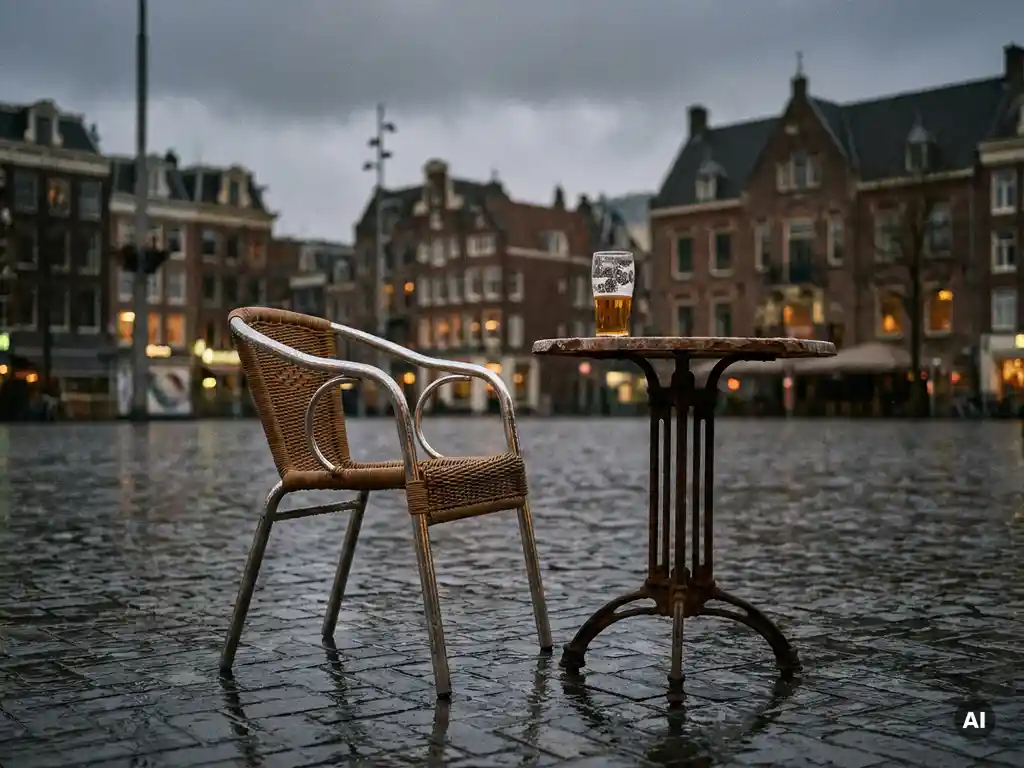
Leidseplein is considered less attractive than before because it has gradually transformed from a vibrant, locally rooted cultural hub into a heavily commercialized tourist zone. The square still has its grand architecture and lively energy, but the mix of people, venues, and atmosphere has shifted dramatically. What follows unpacks exactly how that happened, and whether anything can be done about it.
What has changed about Leidseplein over the past decades?
Over the past few decades, Leidseplein has shifted from a square where Amsterdammers genuinely gathered to one that increasingly serves visitors passing through. The physical space is the same, but the social fabric around it has been replaced. Locals who once spent evenings there have largely moved on to other neighbourhoods, leaving a square that looks busy but feels hollow to anyone who knew it before.
The change is visible in the venues themselves. Bars and restaurants that once catered to a mixed, local crowd have been replaced by chains, tourist-oriented pubs, and establishments optimized for high turnover rather than atmosphere. The Paradiso and the Melkweg still anchor the square with genuine cultural credibility, but they feel like survivors of a different era rather than the beating heart of an active scene.
The streetscape has also changed. Souvenir shops, cannabis dispensaries aimed at day-trippers, and fast food outlets now occupy a significant portion of the surrounding streets. The result is a square that serves a function, but not the function it once had. It processes visitors rather than generating culture.
Why did Leidseplein become so dominated by mass tourism?
Leidseplein became dominated by mass tourism because of its central location, its transport connections, and the compounding logic of commercial real estate. Once a critical mass of tourist-facing businesses established themselves, the economics made it nearly impossible for locally oriented venues to compete on rent. Tourism followed the infrastructure, and the infrastructure followed tourism, in a cycle that proved very difficult to reverse.
Amsterdam as a whole has experienced one of the most intense surges of mass tourism of any European city over the past two decades. Leidseplein, sitting at a major tram hub and within easy walking distance of the main museums, was always going to absorb a disproportionate share of that pressure. What made it particularly vulnerable was the absence of any strong policy intervention during the years when the transformation was still reversible.
The short-term rental market accelerated the problem further. As residential apartments in the surrounding streets converted to tourist accommodation, the neighbourhood lost the local population that had historically kept the square grounded. Without residents nearby who treated Leidseplein as their local square, the social character of the area evaporated surprisingly quickly.
How does Leidseplein compare to other Amsterdam squares today?
Compared to other major Amsterdam squares, Leidseplein today sits at the more commercialized and tourist-facing end of the spectrum. Rembrandtplein has a similar profile, though it leans even harder into nightlife and visiting stag parties. Nieuwmarkt and Spui, by contrast, have retained considerably more local character, partly because of their different transport profiles and partly because the commercial pressure there developed differently.
Museumplein is a special case: it was never really a neighbourhood square in the traditional sense, so its tourist-heavy character feels more appropriate to what it is. Leidseplein, by contrast, was genuinely a place where Amsterdammers gathered, which makes the loss of that quality feel more acute to anyone with a longer memory of the city.
The squares that have held up best tend to share a few characteristics: a stronger residential population nearby, fewer large-format tourist attractions within immediate walking distance, and a commercial mix that never fully tipped toward high-turnover visitor trade. Leidseplein had the misfortune of being highly accessible, highly visible, and surrounded by the city’s most famous cultural institutions, which made it a natural magnet for the kind of tourism that ultimately crowds out the things that made it interesting in the first place.
Can Leidseplein recover its cultural identity?
Leidseplein can recover some of its cultural identity, but a full return to what it once was is unlikely without deliberate policy choices that prioritize local character over tourist throughput. The tools exist: stricter licensing for new businesses, limits on certain commercial categories, and active support for culturally significant venues. Whether Amsterdam’s city government has the political will to apply them consistently is a different question.
The venues that remain genuinely cultural, particularly Paradiso and the Melkweg, provide a foundation to build from. If the city were to actively protect and expand that kind of programming, and if surrounding streets were to attract a more diverse commercial mix, Leidseplein could gradually become more interesting again. It would not happen overnight, and it would require resisting the short-term revenue logic that has driven most of the decisions that led here.
There is also a generational dimension to this. Younger Amsterdammers have largely written off Leidseplein and built their social lives around other parts of the city. Rebuilding the square’s reputation as somewhere worth going requires giving those people a reason to return, which means offering something they cannot find in the neighbourhoods they already prefer. That is a harder problem than zoning policy alone can solve.
How Klagen Niet Klagen covers Amsterdam’s changing squares
If you find yourself frustrated by what Amsterdam is becoming, or genuinely curious about how the city got here and where it might be going, Klagen Niet Klagen is the platform that takes those questions seriously. Written by Andrew Moskos, who has lived and built things in Amsterdam since 1993, the blog offers the kind of honest, long-form commentary that neither tourist guides nor mainstream media tend to provide.
- Insider perspective from someone with over three decades of genuine Amsterdam experience
- Honest analysis of how the city changes, without the diplomatic softening of official sources
- A consistent editorial voice that combines humour with real cultural and urban insight
- Commentary written in English, for an international audience that actually lives in or cares deeply about Amsterdam
If this piece resonated with you, there is plenty more where it came from. Explore the full blog archive and find your next read, or learn more about the voice behind the blog. And if you want to get in touch directly, the contact page is always open.
Of course, the best way to experience Amsterdam’s cultural energy is not online at all. Boom Chicago has been making audiences laugh, think, and see the city differently since 1993. If you want a live evening that feels genuinely Amsterdam rather than a polished tourist production, check out the current shows and agenda and come see what the fuss is about.
Frequently Asked Questions
Are there any specific streets or pockets near Leidseplein that have managed to retain a more local, authentic feel?
A few streets immediately adjacent to Leidseplein still offer a more grounded experience if you know where to look. The smaller side streets running toward the Jordaan, for example, tend to have independent cafés and brown bars that attract a more mixed crowd. The key is stepping away from the square itself and the main tram routes, where commercial pressure is highest, and exploring on foot rather than following the obvious tourist paths.
What role have short-term rental platforms like Airbnb played in accelerating Leidseplein's decline as a local space?
Short-term rental platforms have had an outsized effect on the neighbourhood surrounding Leidseplein by systematically replacing long-term residents with rotating visitors. When apartments become tourist accommodation, the local population that would otherwise use nearby shops, cafés, and public spaces disappears, and the commercial mix quickly adjusts to serve whoever is actually there. Amsterdam has introduced restrictions on short-term rentals in recent years, but the damage to residential density in the most affected areas has been difficult to reverse.
If I want to experience Amsterdam's genuine cultural scene today, where should I actually go instead of Leidseplein?
The neighbourhoods that consistently come up when locals talk about where the city’s cultural energy has moved include De Pijp, Noord, and parts of Oost, particularly around the Javastraat and Dappermarkt area. These are places where independent venues, community-run spaces, and a genuinely mixed local crowd still define the character. For live culture specifically, venues like Paradiso and Melkweg are still worth your time even from Leidseplein — the problem is the square around them, not the institutions themselves.