
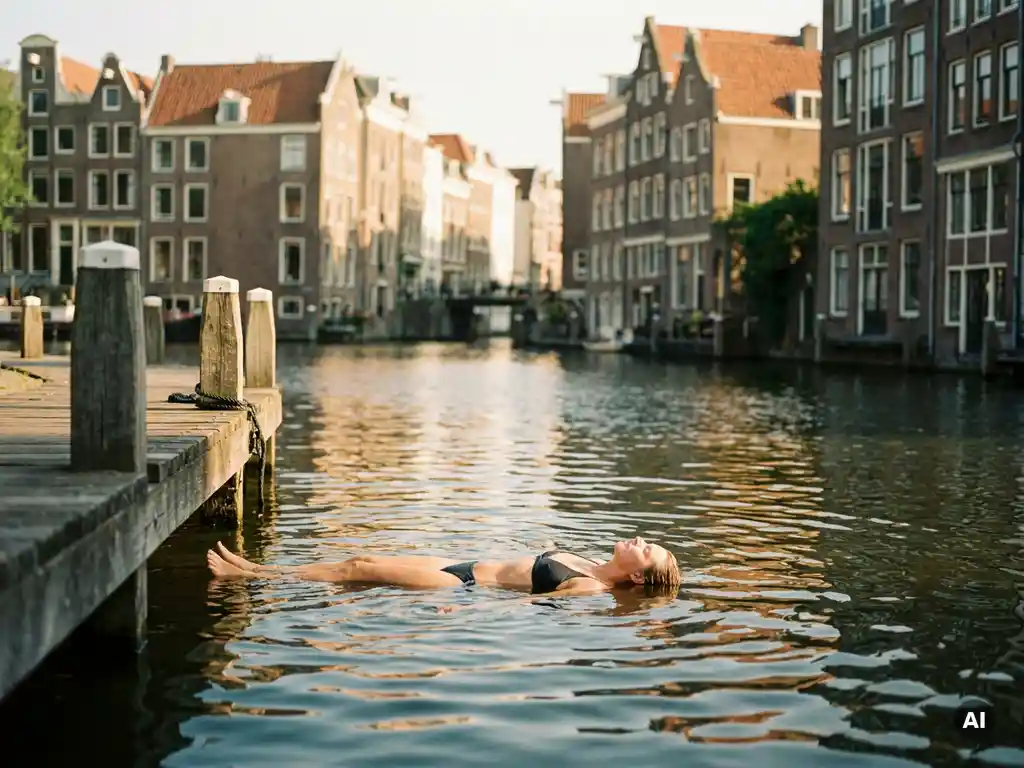
You can legally swim in Amsterdam’s canals, but only at a handful of officially designated spots. Most of the city’s waterways are off-limits for swimming, and the rules around where you can and cannot take a dip are stricter than many visitors or even long-time residents realise. Here is what you need to know before you jump in.
Are Amsterdam canals safe to swim in?
Amsterdam’s canals are significantly cleaner than they were a few decades ago, but they are not uniformly safe to swim in. Water quality varies considerably depending on location, season, and recent rainfall. At the officially designated swimming spots, the city monitors water quality regularly and posts updates when conditions fall below safe standards.
The main concerns are bacterial contamination, particularly after heavy rain when the city’s older sewer infrastructure can overflow into the water, and boat traffic in the busier central canals. The historic grachtengordel, those iconic narrow canals in the centre, sees constant tourist boat activity, which stirs up sediment and creates real physical hazards for swimmers. Visibility in the water is also low, which adds risk regardless of bacterial levels.
Away from the city centre, in broader waterways like the Amstel and the IJ, conditions are different but come with their own challenges, primarily strong currents and commercial shipping. The short answer is: swim only where the city tells you it is safe to swim, and check the water quality reports before you go.
Where are the official legal swimming spots in Amsterdam’s canals?
Amsterdam has a small but growing number of officially designated swimming locations where swimming is both legal and monitored for safety. These are not technically the narrow historic canals most people picture, but broader waterways and open-water areas within or directly connected to the city.
The key official swimming spots in and around Amsterdam include:
- Sloterplas – A large recreational lake in the west of the city with multiple swimming areas, lifeguards in summer, and consistently monitored water quality. This is the most popular and well-equipped option.
- Gaasperplas – In the southeast, this lake offers sandy beaches and is well suited to families. It forms part of a larger recreational park.
- Nieuwe Meer – A lake on the western edge of Amsterdam, popular with locals and accessible by public transport.
- Amstelpark area and the Amstel river – Certain stretches of the Amstel are usable for swimming, though conditions vary and you should always check current advisories.
- Het Twiske – Technically just north of the city in the Zaanstreek, but easily reachable and a genuinely beautiful open-water swimming spot.
The city of Amsterdam publishes an updated list of official swimming locations and real-time water quality data on its municipal website. Before heading out, it is worth checking whether your chosen spot has a green, yellow, or red status for that day.
What are the rules and fines for swimming in non-designated canals?
Swimming in Amsterdam’s non-designated canals is illegal and can result in a fine. The city prohibits swimming in the central canal ring and most inner waterways primarily on safety grounds, not as a bureaucratic formality. The fines are real, and enforcement does happen, particularly during hot summers when the temptation to jump in spikes sharply.
The fine for illegal canal swimming in Amsterdam has historically been in the range of several hundred euros, though the exact amount can be updated by municipal authorities. Police and waterway enforcement officers do patrol popular spots along the Prinsengracht, Keizersgracht, and similar central canals, especially during heatwaves when crowds gather near the water.
Beyond the legal risk, the practical dangers are significant. Boat traffic in the central canals is constant, and boat captains often cannot see swimmers in the water until it is too late. The canal walls are steep and slippery, making it genuinely difficult to get out once you are in. Every summer brings incidents, and the city’s prohibition exists for good reason.
When is the best time of year to swim in Amsterdam’s waterways?
The official swimming season in Amsterdam typically runs from June through August, when water temperatures are warm enough to be comfortable and the city’s designated swimming locations are staffed and actively monitored. Outside of these months, most official spots are unmonitored, and water temperatures make swimming unappealing for most people.
July and early August tend to offer the best combination of warm water, longer daylight hours, and reliable weather, though Amsterdam’s climate means you should always be prepared for a grey day regardless of the calendar. Water temperatures in the city’s lakes and broader waterways typically peak somewhere between 18 and 22 degrees Celsius during a good summer, which is refreshing rather than tropical.
One practical consideration is rainfall. A heavy downpour can temporarily push water quality down across the city due to urban runoff, so even at designated spots it is worth waiting a day or two after significant rain before swimming. The municipal water quality monitoring system reflects this, and checking it before you go takes about thirty seconds and could save you a very unpleasant experience.
How Klagen Niet Klagen helps you navigate Amsterdam life
Knowing where you can legally swim is the kind of thing Amsterdam residents figure out through trial, error, and the occasional fine. Klagen Niet Klagen exists to shortcut that process, offering honest, experience-based commentary on city life that no tourist guide or municipal website will give you.
- Practical, insider knowledge about Amsterdam’s rules, quirks, and unwritten codes
- Opinion and commentary written from over three decades of living and working in the city
- An English-language perspective that takes expats, visitors, and internationally minded locals seriously
- No tourism board agenda, no advertorial softening, just honest takes on what Amsterdam is actually like
If you want more articles like this one, the blog archive is the place to start. And if you have a question about Amsterdam life that you have never found a straight answer to, the contact page is always open.
While you are planning your Amsterdam summer, one more thing worth putting in your calendar: a show at Boom Chicago. After thirty-plus years, it remains one of the most genuinely fun evenings you can have in this city, whether you are a first-time visitor or a long-time local who has somehow never made it through the door. Check the shows and agenda and pick a night that works for you.
Frequently Asked Questions
Can tourists swim at Amsterdam's official spots, or are they reserved for residents?
The official swimming locations in Amsterdam are open to everyone — tourists and residents alike. There are no permits, memberships, or local ID requirements to access places like Sloterplas or Gaasperplas. Simply check the city’s water quality status for your chosen spot before heading out, pack your swimwear, and go.
What should I do if I accidentally fall into one of Amsterdam's canals?
Get out as quickly as possible and seek medical attention if you swallowed any water or have open cuts, as canal water — particularly in the central ring — can carry bacteria. Canal walls are notoriously steep and slippery, so look for a ladder, moored boat, or low landing point rather than trying to haul yourself up a bare wall. Once out, shower thoroughly and monitor for any signs of infection or illness over the following days.
Are there any water quality apps or tools that make it easy to check swimming conditions in Amsterdam?
The City of Amsterdam publishes real-time water quality data on its official municipal website (amsterdam.nl), where each designated swimming spot is given a clear green, yellow, or red status. The Zwemwater app, maintained by Dutch authorities, is also a reliable and user-friendly tool that covers official swimming locations across the Netherlands, including Amsterdam’s. Both are free, updated regularly, and take less than a minute to check before you head out.