
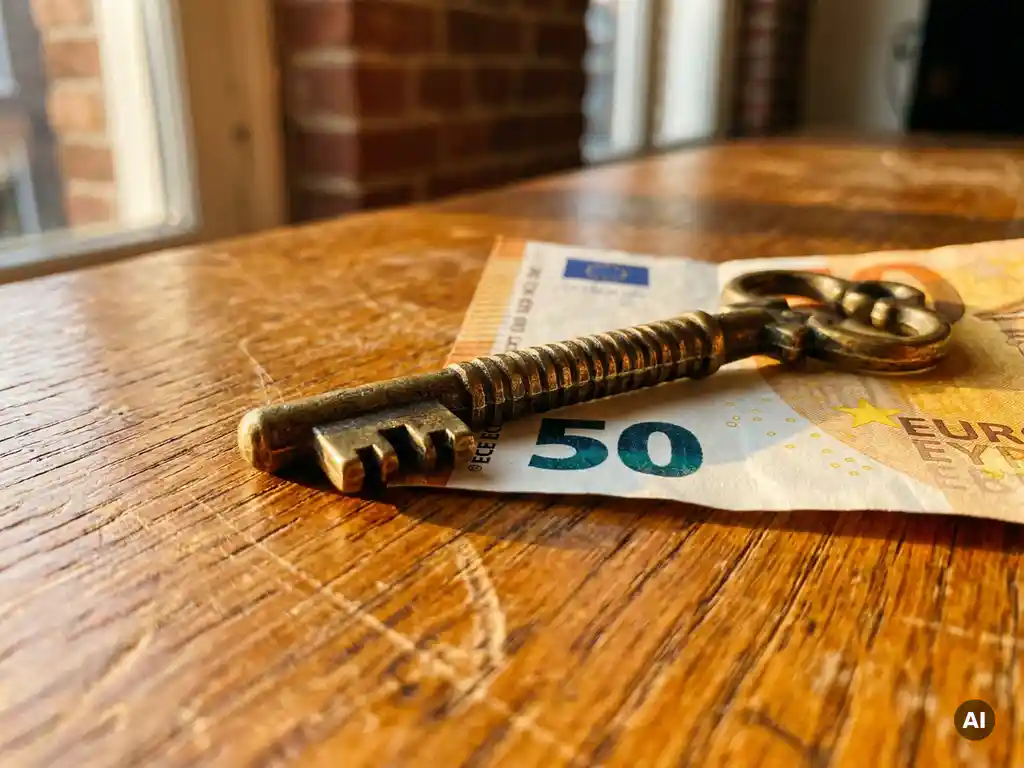
In 2026, Amsterdam’s hotel tax stands at 12.5% of the room rate per night, making it one of the highest tourist taxes in Europe. This rate applies to all paid overnight stays in the city, including hotels, hostels, Airbnb rentals, and other short-stay accommodations. The sections below break down exactly how the tax is calculated, who pays it, and who is exempt.
How is the Amsterdam hotel tax calculated?
The Amsterdam hotel tax is calculated as a percentage of the total room rate, excluding VAT. You multiply the nightly room price by the applicable percentage, and that amount is added on top of your accommodation bill. The tax is collected by the accommodation provider and passed on to the City of Amsterdam.
For example, if your hotel room costs €150 per night, the tourist tax adds €18.75 on top of that, bringing the total nightly cost to €168.75. Multiply that across a week-long stay and the hotel tax alone adds over €130 to your bill. This is worth factoring in when comparing accommodation prices, since many booking platforms show the base rate before taxes are applied.
The tax applies per room, per night, for every night of the stay. It is not a flat fee per person or per trip. This means that longer stays and more expensive rooms result in proportionally higher tax contributions to the city.
What is the current Amsterdam hotel tax rate?
The current Amsterdam hotel tax rate in 2026 is 12.5% of the room rate. This follows a series of significant increases over recent years, as Amsterdam has deliberately used the tourist tax as a tool to manage visitor numbers and generate revenue for the city. The hotel tax increase in Amsterdam has been one of the steepest among major European cities.
To put this in perspective, Amsterdam’s rate is considerably higher than that of cities like Paris or Berlin, which charge flat per-night fees or lower percentage rates. The Dutch capital made a conscious policy decision to raise the toeristenbelasting (tourist tax) incrementally, and the 12.5% figure reflects that ongoing trajectory.
It is worth noting that the rate can change. Amsterdam’s city council has the authority to adjust the tourist tax, and given the city’s continued efforts to balance tourism with livability, further increases in future years are not out of the question. Always verify the current rate with your accommodation provider or the City of Amsterdam’s official website before your stay.
Does the Amsterdam hotel tax apply to Airbnb and short-stay rentals?
Yes, the Amsterdam hotel tax applies to Airbnb listings, holiday rentals, and all other forms of paid short-stay accommodation, not just traditional hotels. Any accommodation where guests pay to stay for a short period is subject to the toeristenbelasting, regardless of the platform or business model used.
Airbnb collects the tourist tax automatically on behalf of hosts registered in Amsterdam and remits it directly to the municipality. This means guests booking through Airbnb will see the 12.5% tourist tax added to their total at checkout, just as they would when booking a hotel directly.
Private hosts who rent out their homes outside of major platforms are legally required to collect and declare the tourist tax themselves. Amsterdam has tightened enforcement in this area significantly, and non-compliance carries financial penalties. The city has also imposed strict limits on how many nights per year a private property can be rented out, so short-stay hosting in Amsterdam operates within a tightly regulated framework.
Who is exempt from paying the Amsterdam hotel tax?
A small number of categories are exempt from the Amsterdam hotel tax. The most clearly defined exemption applies to permanent residents of the Netherlands who are registered at the accommodation address. In practice, this means the tourist tax is directed squarely at visitors rather than people who genuinely live in the city.
Other recognized exemptions include:
- Guests staying in care facilities or nursing homes where accommodation is part of medical or social care
- People accommodated in emergency or crisis housing arranged by the municipality
- Stays that are not commercial in nature, such as certain non-profit or social housing arrangements
Business travelers, conference attendees, and tourists are all subject to the full rate, regardless of the purpose of their stay. There is no reduced rate for longer stays, group bookings, or repeat visitors. If you are paying for a place to sleep in Amsterdam and you are not a registered resident, the tourist tax applies.
How Klagen Niet Klagen helps you navigate Amsterdam
A 12.5% hotel tax is not exactly a warm welcome, and it raises fair questions about what Amsterdam is doing with all that tourist revenue. If you want honest, informed commentary on Amsterdam, rather than the sanitized version you find in travel guides, Klagen Niet Klagen is the place to start.
- Long-form essays and opinion pieces on Amsterdam city life, written from the inside
- Honest takes on tourism policy, city decisions, and the real cost of visiting (and living in) Amsterdam
- Cultural commentary that helps visitors and expats understand the city beneath the surface
- Written by Andrew Moskos, co-founder of Boom Chicago, with over 30 years of Amsterdam experience
If you want to understand Amsterdam rather than just visit it, read more about the blog and what drives it. And if you have thoughts, questions, or your own Amsterdam grievances to share, get in touch.
Speaking of experiencing Amsterdam properly, there is no better way to feel the city’s humor and energy than a night at Boom Chicago. Andrew Moskos co-founded the company back in 1993, and it has been making Amsterdam audiences laugh ever since. If you are visiting the city and want an evening that is genuinely, unmistakably Amsterdam, a Boom Chicago show belongs on your itinerary alongside the Rijksmuseum and the inevitable canal walk.
Frequently Asked Questions
Will I see the Amsterdam hotel tax listed separately on my booking confirmation?
It depends on the platform and accommodation provider. Some booking sites, such as Booking.com or Airbnb, display the tourist tax as a separate line item at checkout, while others bundle it into a total ‘taxes and fees’ figure. It is always worth checking the itemized breakdown before confirming your reservation, and if in doubt, contact the property directly to confirm exactly how much tourist tax will be added to your bill.
What happens if an accommodation provider doesn't charge me the tourist tax — am I still liable?
No, the legal obligation to collect and remit the tourist tax sits with the accommodation provider, not the guest. If a host or hotel fails to charge you, that is their compliance problem, not yours. However, if you are renting from a private individual outside of a major platform, it is worth being aware that under-the-table arrangements do not protect either party from the city’s enforcement measures, which have become considerably stricter in recent years.
Is there any way to reduce the impact of the Amsterdam hotel tax when planning a trip?
The tax rate itself is non-negotiable, but you can soften its impact through smart planning. Choosing a lower room rate naturally reduces the absolute amount of tax you pay, since the 12.5% is applied to the base room price. Staying just outside the Amsterdam city boundary in municipalities like Amstelveen or Zaandam, which have lower tourist tax rates, is another option if your itinerary allows for it — though factor in transport costs and travel time before making that call.