
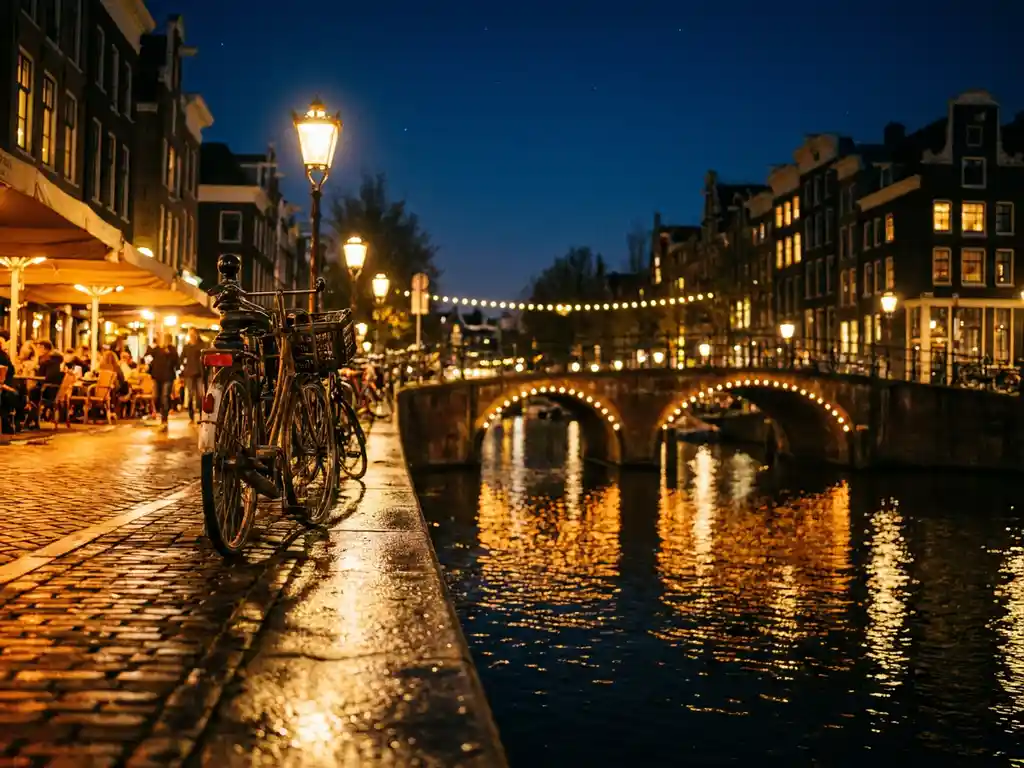
The best area to stay in Amsterdam for nightlife is around Leidseplein or Rembrandtplein — the two squares that anchor the city’s after-dark scene. Both are centrally located, walkable from each other, and surrounded by bars, clubs, and live music venues. Your choice between them comes down to the kind of night you want. The sections below break down every neighbourhood worth considering, along with practical advice on safety and booking.
Which Amsterdam neighborhoods have the most active nightlife scenes?
Amsterdam’s most active nightlife neighbourhoods are Leidseplein, Rembrandtplein, and De Pijp. Leidseplein and Rembrandtplein sit at the heart of the city’s late-night energy, while De Pijp offers a more local, neighbourhood-bar feel. Amsterdam Noord has emerged as a serious destination for electronic music and alternative culture. These four areas cover the full spectrum of what Amsterdam nightlife has to offer.
Here is a quick breakdown of each area’s character:
- Leidseplein: Large square surrounded by clubs, live music venues, and bars. Draws a mixed crowd of tourists and locals. Loud, buzzy, and reliably busy on weekends.
- Rembrandtplein: More compact but equally lively. Lots of terrace bars, a strong gay nightlife scene, and clubs ranging from commercial to underground.
- De Pijp: Neighbourhood bars and brown cafes rather than clubs. Better for an evening that starts with dinner and ends with a few drinks among locals.
- Amsterdam Noord: Industrial club venues, creative spaces, and a younger, more alternative crowd. Requires crossing the IJ by ferry, which adds a layer of adventure.
If you are staying in Amsterdam specifically for the nightlife, the Leidseplein and Rembrandtplein area gives you the most options within the shortest walking distance. That said, the blog archive covers plenty of angles on Amsterdam’s neighbourhoods that go well beyond what any tourist map will tell you.
Is it better to stay near Leidseplein or Rembrandtplein for nightlife?
For most visitors, Leidseplein is the better base for nightlife because it offers more variety — live music venues, large clubs, and casual bars all within a short walk. Rembrandtplein is the stronger choice if you want a more concentrated, terrace-heavy atmosphere or if LGBTQ+ venues are a priority. The two squares are about a ten-minute walk apart, so staying near either one keeps the other within easy reach.
The practical differences come down to noise, crowd composition, and venue type. Leidseplein tends to attract a slightly younger, more international crowd and stays loud until well past midnight. Rembrandtplein has a broader age range and a more mixed local-tourist split on weekday evenings. Both squares have the same problem that comes with being Amsterdam’s nightlife hubs: accommodation directly on or around them can be noisy. If you are a light sleeper, look for hotels one or two streets back rather than on the square itself.
One honest note: staying in either area means accepting that you are in the tourist centre of Amsterdam. That is not necessarily a bad thing for a short visit focused on nightlife, but it is not where you will find the most authentic side of the city. For that, De Pijp or the streets around the Jordaan offer a different kind of evening.
What’s the nightlife like in Amsterdam Noord?
Amsterdam Noord has become one of the most interesting nightlife destinations in the city, particularly for electronic music, alternative culture, and large-scale events. Venues like NDSM Wharf host festivals and club nights in genuinely spectacular industrial spaces. The area attracts a creative, younger crowd and has a distinctly non-tourist feel — which is part of its appeal.
Getting there requires a free ferry crossing from Amsterdam Centraal, which runs through the night on weekends. That short crossing across the IJ is part of the experience. Noord is not the place to go for a casual drink — it rewards planning and works best as a destination for a specific event rather than a spontaneous wander.
Staying in Amsterdam Noord for nightlife is a less obvious choice, and accommodation options are more limited than in the city centre. Most people who go out in Noord stay elsewhere and ferry across for the night. If you do want to base yourself there, it suits travellers who are specifically interested in the creative and underground scene and are less concerned about easy access to the canal belt and central attractions.
How far in advance should you book accommodation near Amsterdam’s nightlife areas?
For Leidseplein and Rembrandtplein, booking at least two to three months in advance is advisable for weekend stays, and further ahead for major events, festivals, or peak summer months. Amsterdam is a small city with high hotel demand, and accommodation near the main nightlife squares sells out quickly. Last-minute availability exists, but prices spike sharply.
A few practical considerations:
- King’s Day (late April): Book four to six months ahead. The entire city centre fills up and prices double or triple.
- Amsterdam Dance Event (October): Noord and central venues draw enormous crowds. Book early if ADE is the reason you are coming.
- Summer weekends (June to August): Two to three months minimum for anything reasonably priced near Leidseplein or Rembrandtplein.
- Off-season weekdays: Booking two to four weeks ahead is usually fine, and you will find better rates.
One underrated strategy is to stay slightly outside the immediate nightlife zone and use Amsterdam’s excellent tram network to get around. Areas like Oud-West or the Jordaan are quieter at night, often cheaper, and still within fifteen minutes of Leidseplein on foot or by tram.
Are Amsterdam’s nightlife areas safe to stay in?
Yes, Amsterdam’s main nightlife areas are generally safe to stay in, including Leidseplein and Rembrandtplein. Amsterdam has a low violent crime rate by European capital standards. The risks that do exist are typical of any busy tourist district: pickpocketing, bicycle theft, and the occasional street hassle near the Red Light District. Staying alert in crowded areas at night is common sense, not cause for alarm.
A few things worth knowing:
- The Red Light District (De Wallen) is a separate area from the main nightlife squares. It is safe to walk through but has a different atmosphere and more aggressive street-level hustling.
- Rembrandtplein and Leidseplein can feel chaotic at 2am on a Saturday, but chaotic and unsafe are not the same thing. The police presence in these areas is visible on busy nights.
- Amsterdam Noord, for all its appeal, is quieter and more spread out. Walking alone between venues late at night requires more awareness than the compact city centre does.
Families or solo travellers who are noise-sensitive or prefer a calmer environment should note that “safe” does not mean “quiet.” The immediate surroundings of both squares are loud on weekend nights. That is the trade-off for being close to the action.
How Klagen Niet Klagen helps you navigate Amsterdam’s nightlife
Finding honest, insider guidance on Amsterdam nightlife is harder than it should be. Most travel content is either sponsored, outdated, or written by someone who spent three days in the city and called it research. Klagen Niet Klagen is different — it is written from over thirty years of living, working, and going out in Amsterdam, with no tourism board influence and no agenda beyond telling the truth.
- Honest neighbourhood assessments that tell you what an area is actually like to stay in, not just how it photographs
- Cultural context that helps you understand Amsterdam beyond the nightlife checklist
- Opinion on where the city is getting it right and where it is getting it badly wrong
- Long-form essays that give you the kind of depth that a listicle never can
Explore the full blog archive for more Amsterdam guides, cultural commentary, and the kind of insider perspective that actually earns the word insider.
And if you want to experience Amsterdam’s best English-language live entertainment while you are here, Boom Chicago has been making audiences laugh since 1993. It is sharp, it is funny, and it is one of the few things in Amsterdam that genuinely lives up to the hype. Check the shows and agenda before you book your trip — a Boom Chicago night fits perfectly into any Amsterdam weekend, whether you are staying near Leidseplein or anywhere else in the city.
Frequently Asked Questions
What's the best way to get around Amsterdam's nightlife areas late at night?
Amsterdam’s tram network runs late on weekends and covers all the main nightlife zones, making it easy to move between Leidseplein, Rembrandtplein, and De Pijp without needing a taxi. The free ferry to Amsterdam Noord runs through the night on weekends, so that is never a barrier to getting home. Walking is genuinely viable between most central spots — Leidseplein to Rembrandtplein is about ten minutes on foot, and the canal belt is compact enough that you rarely need transport for short hops.
Are there any common mistakes first-time visitors make when planning a nightlife trip to Amsterdam?
The biggest mistake is underestimating how early Amsterdam’s better clubs and venues fill up — showing up at midnight expecting to walk straight in is a reliable way to spend the night queuing or turned away. Booking accommodation directly on the main squares without checking noise levels is another common regret; one or two streets back makes a significant difference for sleep quality. It is also worth knowing that Amsterdam’s nightlife scene skews toward smaller, character-driven venues rather than massive superclubs, so adjusting expectations away from Ibiza-scale experiences will serve you well.
Is De Pijp a good base if I want nightlife but also a more local Amsterdam experience?
De Pijp is an excellent choice if you want evenings that feel like Amsterdam rather than a tourist circuit — the neighbourhood is full of independent bars, brown cafes, and restaurants where locals actually go. It is not a clubbing base, but for a trip that blends good food, relaxed drinking, and a genuine neighbourhood atmosphere, it is hard to beat. Leidseplein is reachable in about fifteen minutes on foot or a single tram stop, so you are not locked out of the bigger nightlife options when you want them.
Related Articles
- What is the city doing to manage crowds downtown?
- Is Amsterdam's terrace permit process fair to small business owners?
- Are Amsterdam's city beaches good alternatives to the canals?
- What are the best immersive art experiences in Amsterdam in 2026?
- What is the best neighborhood in Amsterdam for expats to live in?