
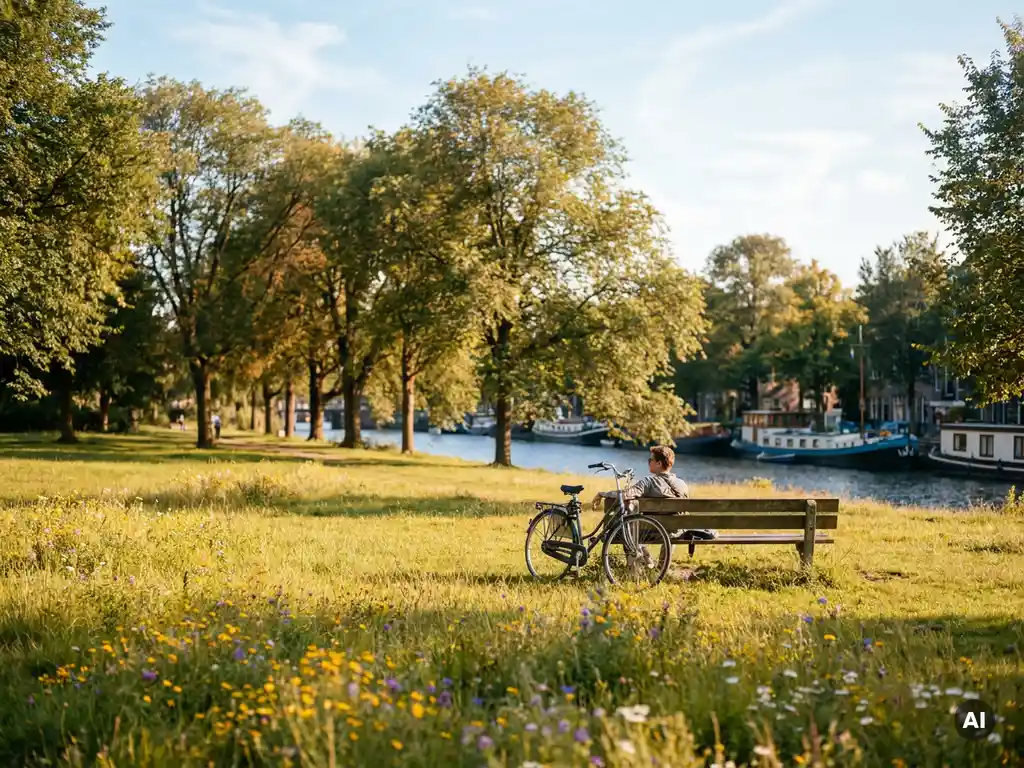
Amsterdam has plenty of green spaces that locals genuinely use and enjoy, from sprawling city parks to tucked-away community gardens and forested edges that most visitors never find. The city is greener than its dense canal-house streetscapes suggest, and once you know where to look, outdoor recreation options in Amsterdam extend well beyond the obvious tourist spots. Here is a closer look at the parks, nature spots, and urban green projects worth knowing about as a resident.
Which Amsterdam parks are actually worth visiting as a local?
The parks most worth visiting as a local are Vondelpark, Amsterdamse Bos, Flevopark, and Westerpark. Each serves a different mood and pace. Vondelpark is the city’s living room, always busy but genuinely pleasant for a run or a coffee on the grass. Amsterdamse Bos is in a different league entirely for serious outdoor recreation in Amsterdam.
Vondelpark gets the tourists, yes, but it also gets the locals. On a warm afternoon, half the Oud-Zuid neighbourhood is sprawled across it. The trick is to treat it like a local does: skip the main paths, find a corner near the rose garden, and ignore the selfie sticks.
Amsterdamse Bos, on the southern edge of the city, is where locals go when they actually want nature. It covers roughly 1,000 hectares of forest, meadows, and waterways. You can rent a rowing boat, swim in the open-air pool, run proper trail routes, or just disappear into the trees for an hour and forget you are in one of Europe’s most densely populated cities. It is the single best outdoor recreation option Amsterdam has to offer, and it remains genuinely underused by visitors.
Flevopark in Oost is a quieter, more neighbourhood-level gem. It draws a local crowd, has a small beach on the Flevokanaal, and feels nothing like a tourist destination. Westerpark, next to the Westergasfabriek cultural complex, has reinvented itself as a creative-meets-green space that locals use for everything from picnics to film screenings.
Where can you find nature in Amsterdam beyond the main parks?
Beyond the main parks, Amsterdam’s best nature can be found in the Diemer- and Watergraafsmeer polders, along the IJ waterfront, in the Hortus Botanicus, and at the city’s various nature reserves on its eastern and northern edges. These spots offer genuine outdoor recreation in Amsterdam without the crowds of the central parks.
The Hortus Botanicus is one of the oldest botanical gardens in the world and sits right in the city centre, yet it remains calm and contemplative even on busy days. It is a paid attraction, but locals with a Museumkaart get in free, which changes the calculus entirely.
The Diemerbos and Diemerpolder, just east of the city boundary, are almost entirely local territory. The landscape is flat, open, and distinctly Dutch: big skies, reed beds, and cycling paths that go on for kilometres. Water birds are everywhere. It is exactly the kind of place that does not appear in any travel guide but that residents cycle to on a Sunday morning without thinking twice.
The northern banks of the IJ, accessible by free ferry from Centraal Station, open up into a surprisingly wild fringe of water, grass, and post-industrial landscape around the NDSM wharf. It is not manicured parkland, but it is genuinely atmospheric and used heavily by locals for cycling, skating, and just sitting by the water.
Do Amsterdam locals actually use green spaces differently than tourists?
Yes, Amsterdam locals use green spaces very differently from tourists. Locals treat parks and nature areas as functional extensions of daily life: places to exercise, decompress, socialise, and let children run around. Tourists tend to visit parks as destinations in themselves, often briefly. The difference is not about access but about habit and intention.
A local cycling through Vondelpark at 7 am on the way to work is not experiencing it as a leisure destination. It is simply the route. That same person might return on a Saturday afternoon with friends, a blanket, and a bag of groceries to spend three hours doing nothing in particular. This dual use, functional and recreational, is how residents relate to green space in a dense city where private outdoor space is rare and expensive.
Locals also know which green spaces are genuinely peaceful at which times. They know that Vondelpark on a Tuesday morning is a completely different experience from a Sunday afternoon in summer. They know that Amsterdamse Bos is quietest on weekday mornings and that Flevopark beach fills up fast on hot days. This temporal knowledge is what separates a resident from a visitor, and it is the real outdoor recreation advantage Amsterdam locals hold.
What community gardens and urban green projects exist in Amsterdam?
Amsterdam has a well-developed network of community gardens, urban farms, and green initiatives spread across the city. Notable examples include the Stadstuinen (city gardens) programme, rooftop gardens in the Zuidas and Noord districts, and neighbourhood-level moestuinen (allotment gardens) found in almost every borough. These projects reflect a genuine civic commitment to urban greening.
The moestuin culture in Amsterdam is serious. Waiting lists for an allotment plot in some districts run for years, which tells you everything about how much locals value having a small patch of earth to grow things in. These are not hobby gardens for the retired. Young families, working professionals, and long-term expats all compete for them.
Urban farming projects like those connected to Buiksloterham in Noord have turned post-industrial land into productive green space. The area has become something of a laboratory for sustainable city living, with edible gardens, circular economy experiments, and community growing spaces sitting alongside new housing developments.
Smaller-scale initiatives appear throughout the city: guerrilla gardens planted in neglected corners, schoolyard greening projects, and resident-led street garden schemes where neighbours convert paved strips in front of their homes into planted beds. The city government has actively supported many of these through subsidy programmes, recognising that distributed green space matters as much as large parks for the quality of daily life in a dense urban environment.
How Klagen Niet Klagen helps you navigate Amsterdam like a local
Klagen Niet Klagen exists precisely for readers who want to go beyond the surface of Amsterdam, whether that means finding the right park on the right morning or understanding why the moestuin waiting list is three years long. Written from over three decades of lived experience in the city, the blog offers the kind of honest, insider perspective that no tourism board will ever publish.
- Long-form essays on Amsterdam city life written for residents and curious visitors alike
- Honest takes on what actually works in the city, from green spaces to cultural quirks
- A perspective grounded in real experience, not PR copy or sponsored content
- Content organised around the Klagen / Niet Klagen framework: what frustrates, what delights, and why both matter
If this kind of commentary resonates, find out more about the blog and explore what else is waiting to be read. Amsterdam is a city that rewards curiosity, and so does the writing about it.
And if you want to experience Amsterdam’s sharpest, funniest, most honest voice live and in person, Boom Chicago has been doing exactly that since 1993. The same sensibility that runs through this blog runs through every show: intelligent, irreverent, and deeply rooted in this city. It is the kind of night out that reminds you why Amsterdam is worth staying for.
Frequently Asked Questions
How do I get on the waiting list for an Amsterdam moestuin (allotment garden), and is it actually worth it?
Each borough (stadsdeel) manages its own allotment waiting list, so your first step is to contact your local stadsdeel office or check the municipality’s website to register. Waiting times vary significantly by district — some run two to three years, others longer — so registering early, even before you are certain you want a plot, is the smartest move. Given how much locals value their moestuinen, most who eventually get a plot consider the wait entirely worth it.
What is the best way to reach Amsterdamse Bos without a car?
Amsterdamse Bos is very accessible by bike, which is also the most enjoyable way to arrive — the cycling routes through Oud-Zuid and Buitenveldert that lead to the forest are pleasant in themselves. Alternatively, GVB bus line 166 runs from Amsterdam Centraal to the main entrance near the Bosbaan rowing course. Once inside, the forest is large enough that having your own bike or renting one at the entrance makes exploring the full 1,000 hectares far more practical than walking.
Are Amsterdam's green spaces and parks safe to use at night or early in the morning?
Most of Amsterdam’s main parks, including Vondelpark and Westerpark, are generally safe during early morning hours and are actively used by runners, cyclists, and dog walkers well before sunrise. Late at night, Vondelpark in particular can attract a livelier crowd, so solo visitors should use their judgment as they would in any busy urban park. Amsterdamse Bos and the more remote nature areas are better suited to daylight visits, simply because lighting is minimal and the terrain is less familiar in the dark.