
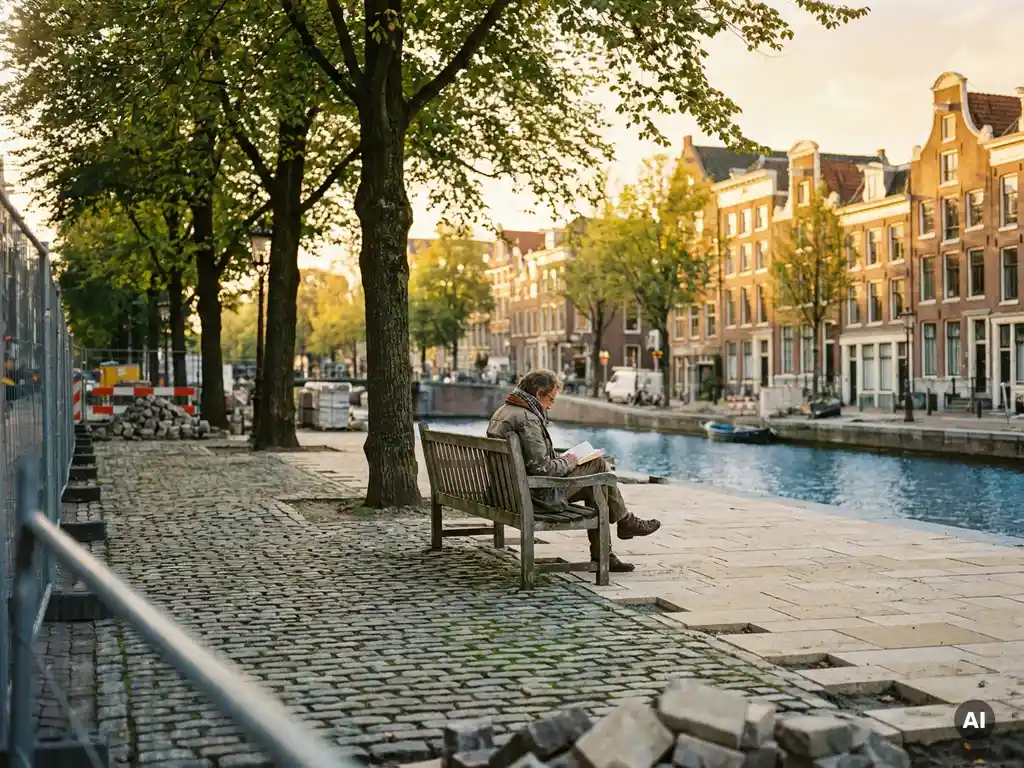
Public space redesign matters for residents because it directly shapes how people move through, rest in, and connect with the city they live in every day. A redesigned square, street, or park is not just an aesthetic update; it changes noise levels, walking routes, social dynamics, and even property values. The questions below dig into how these changes play out in practice, who drives them, and what actually makes them succeed.
How does public space redesign actually affect daily life?
Public space redesign in Amsterdam affects daily life by altering the physical environment residents interact with constantly, from the pavement outside their front door to the park where they walk the dog. When a street loses parking to gain a wider cycle path, or a square gets benches and trees instead of car lanes, those changes ripple through routines in ways that are immediate and hard to ignore.
The effects are rarely neutral. A well-designed intervention can reduce traffic noise, make a neighbourhood feel safer after dark, and create natural gathering spots that build community. A poorly designed one can push through-traffic onto residential streets, eliminate informal play areas, or simply replace one kind of concrete with another without improving anything.
For long-term residents, the cumulative impact of multiple redesign projects across a neighbourhood can shift its entire character. Amsterdam has seen this repeatedly: areas that were once quiet and local-feeling have become busier and more tourist-oriented, partly because public space changes made them more accessible and photogenic. That is not always a bad thing, but it is always a significant thing.
Who gets to decide how public space is redesigned?
In Amsterdam, decisions about public space redesign are made primarily by the municipality, the Gemeente Amsterdam, working through district councils called stadsdelen. Urban planners, landscape architects, and policy advisors shape proposals, which then go through formal approval processes before construction begins. Elected local politicians have the final say, though the path from proposal to decision involves many layers.
In practice, this means that residents are rarely the primary decision-makers. Professional planners bring technical expertise, and politicians bring democratic accountability, but neither automatically brings the lived knowledge of someone who has used a particular square or street for fifteen years. Developers and businesses with interests in an area also carry influence, particularly on larger projects tied to commercial development.
There are formal participation mechanisms, public consultations, neighbourhood meetings, online feedback platforms, but these vary significantly in how much weight they actually carry. Some districts in Amsterdam treat resident input as genuinely formative. Others treat it as a box to tick before proceeding with a plan that was largely fixed from the start.
Why do residents often feel left out of redesign decisions?
Residents feel left out of public space redesign decisions because the process is typically designed around professional and administrative timelines rather than community engagement rhythms. By the time most people hear about a planned redesign, the core concept is already set and the real choices have already been made. Consultation becomes commentary rather than co-creation.
There is also a language and access problem. In Amsterdam, official planning documents are in Dutch, meetings are held during working hours, and participation platforms assume a level of bureaucratic literacy that many residents, especially expats and newer arrivals, simply do not have. The people most likely to engage are often those with the most time and the most established networks, which skews feedback toward a narrow slice of the community.
Beyond logistics, there is a trust gap. Many residents have participated in consultations before, offered genuine input, and then watched a project proceed exactly as originally planned. That experience breeds cynicism, which reduces future participation, which makes it easier for planners to proceed without meaningful community input. It becomes a self-reinforcing cycle.
What makes a public space redesign actually work for the people who live there?
A public space redesign works for residents when it is built around observed behaviour rather than assumed needs. The most successful redesigns in Amsterdam and elsewhere start by watching how people actually use a space before changing it, where they linger, where they cut through, where they avoid, and then designing with that reality as the foundation rather than an afterthought.
Several factors consistently separate redesigns that residents embrace from those they resent:
- Early and genuine participation: Involving residents before the concept is fixed, not after. This means co-design workshops, not just feedback sessions on a finished plan.
- Mixed use that reflects the actual community: Spaces that serve children, older adults, cyclists, and people who just want to sit quietly tend to feel owned by the neighbourhood rather than imposed on it.
- Maintenance commitments: A beautifully redesigned park that is not maintained within two years looks worse than what it replaced. Residents know this from experience.
- Incremental testing: Temporary interventions, pop-up benches, trial cycle lanes, seasonal programming, allow communities to experience a change before it becomes permanent, reducing resistance and improving outcomes.
- Honest trade-off communication: Residents are more accepting of difficult changes when they understand the reasoning clearly. Parking removed to create a playground is easier to accept when the logic is explained directly, not buried in planning jargon.
The underlying principle is respect. Residents who feel that their knowledge of a place is treated as valuable, not just as a political obstacle to manage, are far more likely to support and even champion a redesign once it is complete.
How Klagen Niet Klagen covers public space in Amsterdam
If you have ever stood in a newly redesigned Amsterdam square and thought “who on earth decided this?” you are not alone, and you are exactly the kind of reader Klagen Niet Klagen exists for. This blog offers something that official planning documents and tourism websites never will: an honest, insider perspective on what Amsterdam’s public spaces actually feel like to live with.
- Long-form essays on how city planning decisions affect real Amsterdam residents, written without PR spin or tourism-board polish
- Commentary on the tension between Amsterdam’s livability and its growing pressures, told by someone who has been here for over three decades
- A clear Klagen / Niet Klagen framework that acknowledges both what the city gets right and what it stubbornly gets wrong
- An English-language platform for a conversation that usually happens only in Dutch
If this kind of honest, grounded Amsterdam commentary is what you have been looking for, read more about the blog or get in touch directly. The city deserves better than polished nonsense, and so do you.
And if you want to experience Amsterdam’s creative spirit in person rather than just reading about it, Boom Chicago has been making people laugh, and think, since 1993. Comedy and urban life have more in common than you might expect: both depend on sharp observation, honest reaction, and the courage to say what everyone else is quietly thinking. Come see a show.
Frequently Asked Questions
How can I find out about upcoming public space redesign projects in my Amsterdam neighbourhood before decisions are made?
The best starting point is your local stadsdeel (district council) website, where proposed projects are listed before they enter formal approval. You can also sign up for newsletters from Gemeente Amsterdam and follow neighbourhood platforms like Nextdoor or local Facebook groups, where residents often flag consultations earlier than official channels do. Attending district council meetings, even as an observer, gives you a clearer sense of what is in the pipeline and who the key decision-makers are.
What can I actually do if I disagree with a planned redesign in my street or square?
Start by submitting a formal zienswijze (written objection) during the official consultation period, which creates a legal record that planners must respond to. Organising collectively with neighbours carries significantly more weight than individual complaints, so connecting with your local bewonersorganisatie (residents’ association) or forming one if none exists is a practical next step. If you believe proper procedures were not followed, you can escalate to the Nationale ombudsman or seek advice from a local legal aid organisation.
Are there examples of Amsterdam public space redesigns that residents ended up genuinely supporting after initial resistance?
Yes. The transformation of Mercatorplein in West Amsterdam is often cited as a case where sustained community involvement, including input from the diverse local population, produced a space that residents came to feel genuine ownership over. The key factor in cases like this is usually that the design team returned to the space repeatedly during and after construction, adjusting details based on how people actually used it rather than treating completion as the finish line. Resistance tends to soften when residents see that their feedback visibly changed something.