
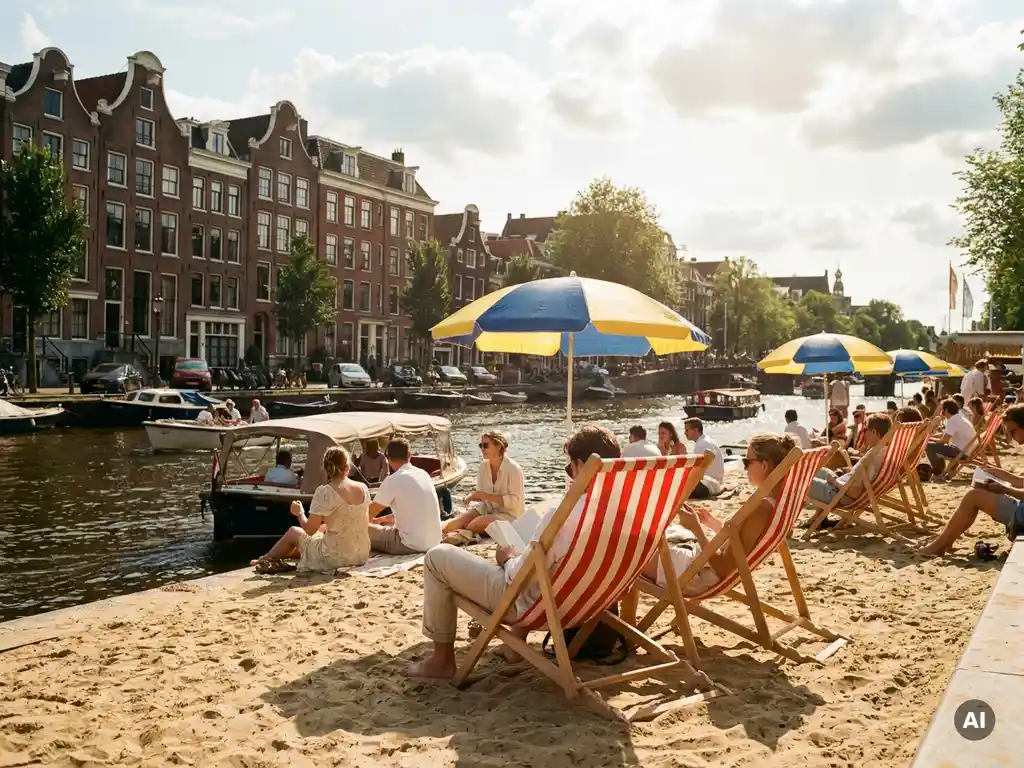
Amsterdam has several city beaches open each summer, scattered along the IJ waterfront, the Amsterdam-Rhine Canal, and the city’s recreational lakes. The most popular spots include Strand Zandvoort aan het IJ, Blijburg aan Zee on IJburg, and Sloterplas beach in the west. Each has its own vibe, crowd, and level of polish. This article walks through where to go, what to expect, how to get there, and whether any of it is worth your time compared to a real beach day out of town.
Which Amsterdam city beaches are open in summer?
Amsterdam’s main city beaches are open roughly from late May through early September, depending on the weather and the individual venue’s schedule. The key spots that reliably open each summer are Blijburg aan Zee on IJburg, Sloterplas beach in Nieuw-West, and various pop-up beach bars along the IJ waterfront in the city centre. Each location has a distinct character and draws a different kind of crowd.
Blijburg aan Zee
Blijburg is the most beloved and most Amsterdam of the city beaches. Built on artificial land on the IJburg islands, it has a genuinely laid-back, slightly ramshackle charm that Amsterdammers tend to love. It is a proper beach with sand, sun loungers, a beach bar, music events, and a crowd that skews creative and local. It is not polished or corporate, which is exactly the point. Blijburg typically opens in late May and runs through August, with special events extending the season slightly at both ends.
Sloterplas
Sloterplas is the city’s largest recreational lake and has a proper sandy beach on its southern shore. It is more family-oriented than Blijburg, with swimming areas, a playground, and a calmer atmosphere. The water quality is regularly monitored by the municipality, and on hot days it genuinely functions as a neighbourhood beach for the people of Nieuw-West. It is less sceney than Blijburg but arguably more functional as an actual place to swim and relax.
IJ waterfront beach bars
Along the northern IJ waterfront, several temporary beach setups appear each summer near Amsterdam Noord and around the NDSM Wharf. These are more bar than beach, with sand imported purely for atmosphere, but they attract a lively crowd and offer great views of the water. They tend to open and close based on the venue’s events calendar rather than a fixed seasonal schedule, so check ahead before making a special trip.
What can you actually do at an Amsterdam city beach?
At Amsterdam’s city beaches you can swim (at Sloterplas and Blijburg), sunbathe, eat and drink at beach bars, attend outdoor music events, play beach volleyball, and simply sit by the water. The experience is more about atmosphere and socialising than serious beach sport or deep relaxation. Think of it as a summer living room for the city rather than a coastal escape.
Blijburg in particular has built a reputation for its music programming, with live DJs and occasional concerts running through the summer. The food and drink options at most spots are decent without being exceptional. You will find cold beers, simple snacks, and the occasional food truck. Nobody is pretending this is the Côte d’Azur, and that honesty is part of the appeal.
Swimming is possible at both Sloterplas and Blijburg, though the water quality varies. Sloterplas has designated swimming zones and is generally considered the safer bet for families with children. At Blijburg, swimming is possible but the IJ waterway is close enough that the water can feel less inviting depending on conditions. Always check the municipality’s water quality reports before getting in.
How do you get to Amsterdam’s city beaches by public transport?
All of Amsterdam’s main city beaches are reachable by public transport without much difficulty. Blijburg on IJburg is served directly by tram line 26 from Centraal Station, which takes roughly 20 minutes. Sloterplas is accessible via metro line 50 or several bus lines to Nieuw-West. The IJ waterfront beach bars near NDSM are reached by the free ferry from behind Centraal Station.
Cycling is also a perfectly reasonable option for all of these locations, which will surprise nobody familiar with Amsterdam. Blijburg is about a 30-minute ride from the city centre via the IJburg cycling bridge. Sloterplas is around 20 to 25 minutes by bike from Leidseplein. For the NDSM area, the ferry is genuinely the most practical and enjoyable approach, and it is free.
Parking near any of these spots on a hot summer day is a reliable source of frustration. If you are coming from outside the city, park at a P+R facility and take public transport in. Driving to a city beach in Amsterdam in July is the kind of decision that seems reasonable at home and regrettable by the time you arrive.
Are Amsterdam city beaches worth it compared to Zandvoort?
Amsterdam’s city beaches are worth visiting for a spontaneous afternoon or an evening out, but they are not a substitute for Zandvoort if you want a genuine beach day with real sea, waves, and an open horizon. The city beaches trade on convenience and atmosphere rather than natural beauty. Zandvoort offers the North Sea, proper sand dunes, and a completely different sense of space.
That said, the comparison is slightly unfair because they serve different purposes. Zandvoort requires planning: you need to factor in the train journey from Centraal Station (around 30 minutes), crowds on hot days, and the full-day commitment. A city beach, by contrast, is something you can decide to do at 4pm on a Tuesday after work. Blijburg especially has a charm that Zandvoort’s more commercial seafront simply does not replicate.
The honest verdict: go to Zandvoort when you want a proper beach experience and the weather justifies the trip. Go to Blijburg when you want that Amsterdam summer feeling, a cold drink in the sun, and a crowd that feels like the city at its most relaxed. They are not in competition. They just scratch different itches.
How Klagen Niet Klagen helps you navigate Amsterdam summer
Finding genuinely useful, honest information about Amsterdam life, whether it is where to swim, what is worth the effort, or how the city actually works, is harder than it should be. Most English-language content about Amsterdam is either tourist-facing fluff or outdated. Klagen Niet Klagen exists to fill that gap.
- Honest, insider takes on Amsterdam neighbourhoods, beaches, and seasonal life, written by someone who has lived and worked here for over three decades
- No tourism-board spin, no advertorial softening, and no pretending Amsterdam is without its frustrations
- Long-form essays and practical guides that treat readers as intelligent adults who want real information
- A consistent editorial voice grounded in the story behind the blog and the city it covers
- Content written for expats, frequent visitors, and curious locals who want more than a top-ten list
If you want more of this kind of Amsterdam commentary, explore the full blog archive and bookmark it for the next time you need a straight answer about city life.
And while you are planning your Amsterdam summer, do not overlook one of the city’s genuinely great institutions: Boom Chicago. An evening of sharp, funny, live comedy in Amsterdam is the kind of thing that turns a good summer into a memorable one. Check the shows and agenda and grab tickets before the good ones sell out.
Frequently Asked Questions
Is swimming actually safe at Amsterdam's city beaches, and how do I check water quality before going?
Water quality at Amsterdam’s city beaches is monitored by the municipality throughout the swimming season, and results are published on the Amsterdam.nl website and through the Zwemwater app. Sloterplas is generally the most reliable spot for safe swimming, with designated zones and consistent monitoring. Blijburg is swimmable but sits closer to IJ waterway traffic, so conditions can vary — always check the latest report on the day you plan to go rather than assuming last week’s result still applies.
What should I bring to make the most of a day at Blijburg or Sloterplas?
Both beaches have food and drink options on-site, so you do not need to pack a full cooler, but bringing your own snacks is perfectly acceptable and saves money. A towel, sunscreen, and cash or a Dutch bank card are the practical essentials — card acceptance at beach bars can be inconsistent, especially at smaller pop-up setups. If you are heading to Blijburg for an evening music event, a light layer for after sunset is worth throwing in your bag, as temperatures drop quickly once the sun goes down.
Are Amsterdam's city beaches dog-friendly?
Rules vary by location and can change season to season. Sloterplas has designated areas where dogs are permitted and sections where they are not, particularly around the main swimming zones. Blijburg has historically been more relaxed about dogs outside of peak hours, but it is worth checking their website or social media before arriving with a pet. The IJ waterfront beach bars are generally more permissive, though common sense about busy weekend crowds applies.