
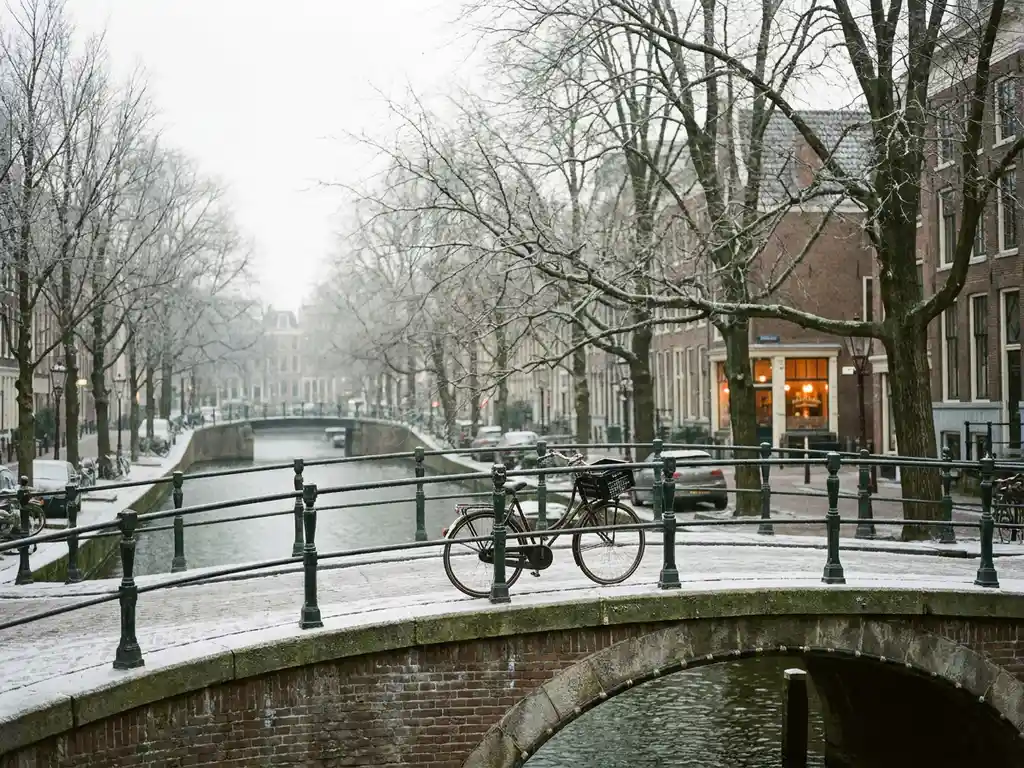
January and February are the cheapest months to visit Amsterdam. Hotel prices drop significantly, flights cost less, and the city’s main attractions remain open and far less crowded. The savings are real, and the trade-off is weather you need to dress for, not fear. The questions below break down exactly what to expect and whether the off-peak deal is genuinely worth it.
Which months have the lowest hotel prices in Amsterdam?
January and February consistently offer the lowest hotel prices in Amsterdam, with rates often running well below peak summer levels. November and early December also see softer pricing, though the Christmas market period pushes costs back up. If budget is your primary driver, the first six weeks of the year are your window.
Amsterdam’s hotel market is heavily shaped by tourism volume, and volume is driven by weather and events. Summer, particularly July and August, is the most expensive period by a wide margin. King’s Day in late April and the tulip season in March and April also spike demand and prices. The window between New Year and mid-February sits in the valley between those peaks, which is where the real savings are.
Weekends in any month will cost more than weekdays. If you can travel mid-week in January or February, you are stacking two separate discounts on top of each other. A central hotel that costs a significant amount per night in July can look very different in the first weeks of the year.
What’s the weather like in Amsterdam’s cheapest months?
Amsterdam in January and February is cold, grey, and frequently wet. Temperatures typically sit between 2 and 7 degrees Celsius. Rain is common, and wind coming off the flat Dutch landscape makes it feel colder than the thermometer suggests. Snow is possible but not guaranteed, and it rarely sticks for long.
This is not the kind of cold that makes a trip impossible. It is the kind that requires a proper coat, waterproof shoes, and realistic expectations. Amsterdam is a walking and cycling city, and both remain entirely viable in winter if you dress for it. The canals in winter light have a particular quality that the summer crowds never get to see.
The upside of the grey skies is that the city’s indoor culture comes into its own. Museums, brown cafes, the markets, and Amsterdam’s extraordinary restaurant scene are all at their best when you are not fighting through tourist crowds to reach them. Off-peak Amsterdam is, in many ways, the version locals actually prefer.
Are Amsterdam’s main attractions open in the off-peak season?
Yes, Amsterdam’s major attractions remain open throughout the winter months. The Rijksmuseum, the Van Gogh Museum, the Anne Frank House, the Royal Palace on Dam Square, and the major canal boat operators all operate year-round. Off-peak season is one of the best times to visit them, because queues are shorter and the experience is less frantic.
The Anne Frank House in particular is worth noting. In summer, the wait can stretch to several hours even with a timed ticket. In January, the same visit is a quieter, more reflective experience that actually suits the subject matter. Advance booking is still recommended for the most popular venues, but the pressure is considerably lower.
Outdoor markets like the Albert Cuyp and the Noordermarkt continue to operate in winter, though they may run reduced hours or fewer stalls in the coldest weeks. The Keukenhof tulip gardens, one of the country’s most visited attractions, are closed in winter and only open from late March to mid-May. If that is your primary reason for visiting, January is not your month.
How much cheaper are flights to Amsterdam in winter?
Flights to Amsterdam in January and February are typically among the cheapest of the year. The difference compared to peak summer travel can be substantial depending on your departure city, airline, and how far in advance you book. Budget carriers serving Schiphol often drop prices significantly to fill seats in the low-demand months.
Amsterdam Schiphol is one of Europe’s major hub airports, which means competition on most routes is strong year-round. That competition, combined with low passenger demand in January, creates genuine fare pressure. Travellers coming from within Europe often find the best deals by being flexible about which days they fly rather than hunting for a specific date.
Transatlantic fares from North America also tend to dip in January and February, though the savings are proportionally less dramatic than on short-haul routes. The combination of cheaper flights and cheaper hotels in the same period is what makes winter travel to Amsterdam the strongest value proposition the city offers.
What are the hidden costs that offset cheap Amsterdam travel?
The main hidden cost is the tourist tax, which Amsterdam charges per person per night and applies year-round regardless of season. It is not absorbed into the cheaper winter rates. Beyond that, Amsterdam is an expensive city by any measure, and the costs of eating, drinking, and getting around do not drop in January the way hotel and flight prices do.
A few costs worth factoring in before you book:
- Tourist tax: Applied per person per night at all registered accommodation. Check the current rate when booking, as Amsterdam has adjusted it upward in recent years.
- Dining: Amsterdam restaurants are not cheap, and the city’s best spots have no reason to discount in winter. Budget accordingly.
- Museum entry: The Rijksmuseum and Van Gogh Museum charge significant entry fees. A museum card (Museumkaart) can pay for itself quickly if you plan to visit several venues.
- Warm clothing: If you are travelling from a warmer climate and do not own a proper winter coat, factor in the cost of acquiring one.
- Heating and comfort: Budget accommodation in Amsterdam’s older buildings can be cold. Check reviews specifically for winter stays before booking the cheapest option.
None of these costs make winter travel a bad deal. They are simply worth knowing before you assume the cheap hotel rate tells the whole financial story.
Should you visit Amsterdam in January or wait for spring?
Visit in January if budget is your priority and you are comfortable with cold, grey weather. Wait for spring if you want pleasant outdoor conditions, the tulip season, and a more energetic city atmosphere. Spring in Amsterdam is genuinely beautiful, but it comes with higher prices and significantly more tourists. The choice depends on what you value more.
January offers something spring cannot: the city without the performance. There is no tulip-backdrop Instagram queue, no canal boat traffic jam, no hostel groups blocking the pavements outside the Rijksmuseum. The Amsterdam you encounter in January is the one people who actually live here navigate every day. For a certain kind of traveller, that is exactly the point.
Spring, particularly April, is objectively more comfortable and more photogenic. King’s Day on 27 April is one of the world’s genuinely great street parties and worth planning a trip around on its own merits. But April hotel prices reflect exactly how desirable the city is at that time of year. You will pay for it.
If you are torn, consider late February or early March as a middle ground. Prices are still well below peak levels, the worst of winter is fading, and you avoid the full crowds that arrive with the tulip season. It is not a period that gets much attention in travel writing, which is precisely why it can work so well.
How Klagen Niet Klagen helps you plan a smarter Amsterdam trip
Travel content about Amsterdam tends to fall into two categories: glossy tourism board material that tells you nothing useful, and anonymous review aggregators that tell you everything except what it actually feels like to be there. Klagen Niet Klagen exists in neither of those camps.
- Honest, insider commentary on Amsterdam city life written by someone who has lived and built here for over thirty years
- No tourism board influence, no advertorial pressure, no incentive to make the city sound better than it is
- Practical cultural context that helps you understand what you are actually looking at when you visit
- Long-form essays and opinion pieces that go well beyond the surface of what Amsterdam is and how it works
- A full archive of articles covering the city’s contradictions, charms, and frustrations in equal measure
If you want to arrive in Amsterdam knowing more than your fellow travellers, start here.
And while you are planning what to do with your evenings in Amsterdam, put Boom Chicago on the list. Founded in 1993, it is one of Amsterdam’s most enduring and genuinely funny institutions, and a live show there is exactly the kind of thing that makes a winter trip worth the cold. If you have questions about what is on or want to reach out directly, the contact page has everything you need.
Frequently Asked Questions
Is it worth booking accommodation in advance for a January or February trip to Amsterdam?
Yes, even in the off-peak season it is worth booking ahead, particularly if you want a central location at the best available rate. While last-minute deals do exist in winter, the most well-reviewed mid-range hotels in central Amsterdam still fill up, especially over weekends. Booking two to four weeks out gives you enough lead time to secure a good room without paying the premium that comes with peak-season advance booking pressure.
What should I actually pack for Amsterdam in January or February?
Prioritise a waterproof outer layer over pure warmth, since Amsterdam’s winter is more wet and windy than deeply frozen. A good base layer, a mid-layer fleece or wool jumper, a windproof and waterproof coat, and genuinely waterproof shoes or boots will cover most conditions you will encounter. Avoid packing light trainers or fashion footwear — wet cobblestones and canal-side paths will make you regret it within the first hour.
Are there any winter-specific events or reasons to visit Amsterdam in January or February beyond the savings?
Amsterdam Light Festival runs from late November through late January and is one of the more compelling winter-specific reasons to visit, turning the city’s canals into an illuminated outdoor exhibition that is genuinely worth seeing after dark. Beyond that, January and February are when Amsterdam’s cultural calendar focuses inward — theatre, music, and the museum circuit are all active without the distraction of outdoor tourism. It is not a dead season; it is a different season.