
What are Amsterdam’s four seasons actually like?
Amsterdam’s four seasons are real but rarely extreme. Summers are mild and pleasant rather than hot, winters are grey and damp rather than brutal, and the transitions between seasons are where the city often looks its most beautiful. Think moderate temperatures year-round, with significant cloud cover and occasional rain in every single month.
Spring (March to May)
Spring is when Amsterdam shakes off the winter gloom and becomes genuinely magical. April and May bring tulip season, longer days, and temperatures that climb comfortably into the mid-teens Celsius. The canals look stunning in the low spring light, and the city has an energy that is hard to replicate at other times of year. March can still be cold and unpredictable, so manage your expectations for early spring arrivals.
Summer (June to August)
Amsterdam summers are mild by most standards, with average highs hovering around 20 to 22 degrees Celsius. Heatwaves do happen, but they are the exception rather than the rule. What summer reliably delivers is long daylight hours, packed terraces, and a city that feels fully alive. The downside is crowds, especially in July and August when tourism peaks hard.
Autumn (September to November)
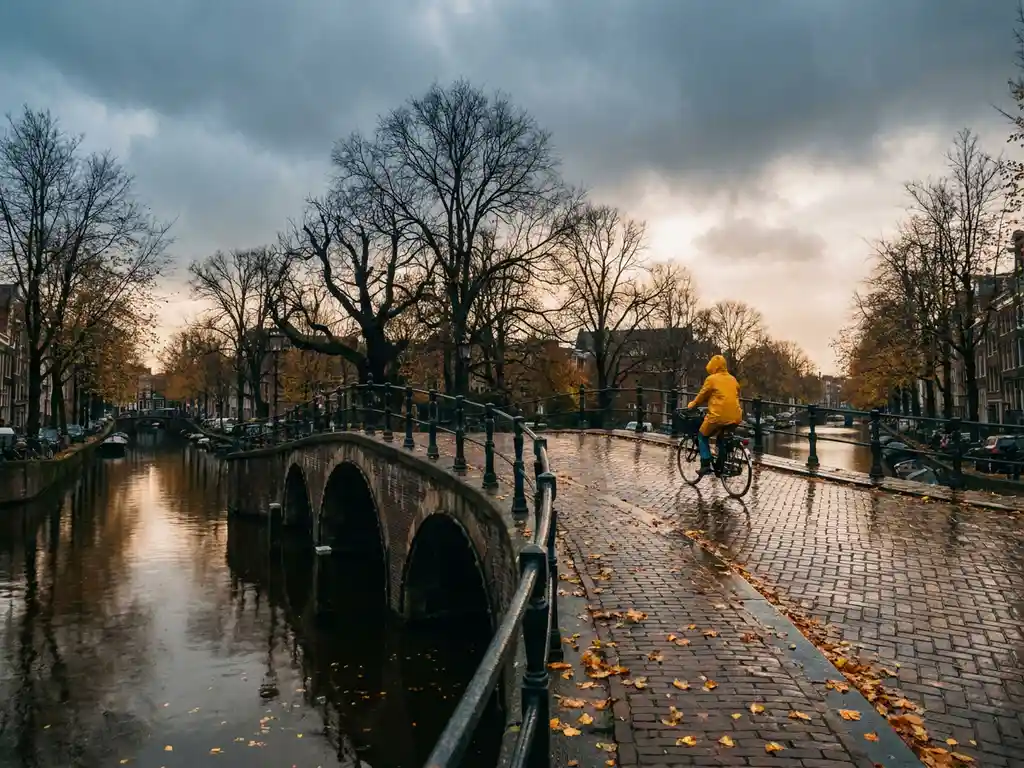
Early autumn is arguably the most underrated time to visit Amsterdam. September still carries summer warmth, the tourist crowds thin out noticeably, and the canal-side trees turn extraordinary shades of gold and orange through October. By November, the city becomes noticeably darker and wetter, though the Christmas markets and cosy brown cafes offer real compensation.
Winter (December to February)
Amsterdam winters are grey, damp, and short on daylight. Temperatures rarely drop below freezing for extended periods, so snow is a treat rather than a given. What winter does offer is a quieter, more local version of the city, with fewer tourists and a genuinely atmospheric quality on foggy canal mornings. The occasional frozen canal is one of the most beautiful sights Amsterdam has to offer.
When is the best time to visit Amsterdam?
The best time to visit Amsterdam is late April through May or September through early October. These shoulder seasons combine comfortable weather, beautiful scenery, and significantly fewer crowds than peak summer. If seeing the tulip fields at Keukenhof is on your list, late April is non-negotiable.
Late April specifically hits a sweet spot: the tulips are blooming, King’s Day (April 27) turns the entire city into one enormous orange street party, and the weather is warm enough to enjoy the canals without a heavy coat. It is genuinely one of the best urban experiences in Europe, and the kind of thing that makes people fall in love with Amsterdam instantly.
September earns its reputation for good reason. The summer crowds have thinned, prices drop slightly, the light turns golden and cinematic, and locals reclaim their city. For anyone who wants to experience Amsterdam as a place people actually live rather than a theme park, September is the answer.
What months should you avoid visiting Amsterdam?
July and August are the months most worth avoiding if you dislike crowds. Amsterdam’s tourism infrastructure is genuinely strained in peak summer, with the most popular canals, museums, and neighbourhoods becoming uncomfortably busy. Prices for accommodation spike, queues lengthen, and the city can feel more like a tourist attraction than a real place.
November through February brings the opposite problem: limited daylight, persistent grey skies, and a higher chance of rain. These months are not without charm, but they require a specific mindset. If you are sensitive to grey weather or need outdoor activities to anchor your trip, mid-winter is a hard sell.
That said, no month is truly bad for Amsterdam. Even in the depths of February, the city has world-class museums, excellent restaurants, and a cultural scene that never really stops. The question is always about what you are willing to trade off.
How much rain does Amsterdam actually get?
Amsterdam receives rain throughout the year, averaging around 800 millimetres annually. There is no genuinely dry season. Rain in Amsterdam tends to arrive as frequent, short showers rather than prolonged downpours, which means it rarely ruins an entire day but does require constant readiness.
Autumn and winter see the highest rainfall, with October and November being particularly wet months. Summer is not rain-free either, despite what the tourist brochures imply. The honest answer is that you should pack for rain regardless of when you visit, because a dry week in Amsterdam is a pleasant surprise rather than a reliable expectation.
The silver lining is that Amsterdam’s rain is rarely heavy or dramatic. A compact umbrella or a good waterproof layer handles most of what the city throws at you. The Dutch approach to rain is instructive: they cycle through it, walk through it, and refuse to let it rearrange their plans. Adopting that attitude makes Amsterdam weather significantly less annoying.
What should you pack for Amsterdam’s weather?
For Amsterdam, pack layers, a waterproof jacket, and comfortable walking or cycling shoes regardless of the season. The city’s weather changes quickly, and a morning that starts sunny can turn grey and wet by afternoon with no warning whatsoever.
- Waterproof outer layer: A packable rain jacket is the single most important item in your bag, year-round.
- Layers: Even in summer, evenings on canal-side terraces can feel cool. A light jumper or fleece adds real comfort.
- Comfortable shoes: Amsterdam’s cobblestones are charming and brutal in equal measure. Prioritise grip and comfort over style.
- Compact umbrella: Useful as a backup, though locals tend to favour hoods and just push through the rain.
- Warm coat for winter visits: December through February calls for a proper coat, scarf, and gloves. The damp cold cuts through light layers surprisingly fast.
One specific note: if you plan to cycle, and you absolutely should, avoid anything too long or loose that can catch in a bike chain. Amsterdam cycling is casual and practical, and your clothing choices should match that energy.
Does Amsterdam weather affect what you can do there?
Amsterdam weather absolutely shapes the experience, but the city is remarkably well-equipped to be enjoyed in almost any conditions. The world-class indoor offerings, from the Rijksmuseum and Van Gogh Museum to the many excellent restaurants and the live comedy scene, mean a rainy day is never a wasted day in Amsterdam.
Outdoor activities are naturally more weather-dependent. Canal boat tours are at their best in spring and early autumn, when the light is soft and the crowds are manageable. Cycling the city’s famous bike routes is genuinely enjoyable from April through October, and cycling in light rain is a rite of passage that most visitors end up finding oddly satisfying. Amsterdam day trips to the tulip fields or the windmills at Zaanse Schans are most rewarding in dry, bright conditions.
Winter and grey autumn days push the experience indoors, which is not a punishment. The brown cafes, the museum quarter, and the city’s vibrant performing arts scene all thrive in colder months. Amsterdam has a long tradition of making winter feel cosy and worthwhile rather than something to endure.
How Klagen Niet Klagen helps you get more from Amsterdam
Knowing what the weather is like is just the starting point. Getting the most out of Amsterdam means knowing where locals actually go, what experiences are worth your time, and which parts of the city reward deeper exploration. That is exactly what Klagen Niet Klagen is built for.
- Honest, insider takes on the best Amsterdam experiences across every season and budget
- Practical guides to Amsterdam hidden gems that no tourism board would ever recommend
- Opinionated commentary on Amsterdam neighbourhoods, from the ones everyone knows to the ones worth discovering
- Tips on everything from the best cheap restaurants in Amsterdam to how to navigate the city like someone who actually lives here
Whether you are planning a first visit or your fifteenth, the blog archive is the honest, experienced voice that Amsterdam’s tourist industry consistently fails to provide. Read it before you pack.
And while you are planning your trip, put one thing firmly on the agenda: a show at Boom Chicago. Whatever the weather is doing outside, the best English-language comedy in Amsterdam is always worth an evening. Boom Chicago has been making audiences laugh since 1993, and a night there is the kind of Amsterdam experience that stays with you long after you have dried off from the rain. Check the shows and agenda and book something you will genuinely remember.
Frequently Asked Questions
Is late April really worth the extra crowds compared to early May?
Late April earns its reputation specifically because of King’s Day on April 27, which transforms Amsterdam into a city-wide street party unlike anything else in Europe. Yes, it is busier than early May, but the energy, the tulip peak at Keukenhof, and the sheer spectacle make the trade-off worthwhile for most visitors. If crowds genuinely stress you out, the first two weeks of May offer nearly identical scenery with noticeably fewer people and prices that have not yet spiked.
What are the biggest mistakes visitors make when planning around Amsterdam's weather?
The most common mistake is over-trusting a single forecast and under-packing for rain, especially in summer when visitors assume warmth means dryness. A close second is booking outdoor-heavy itineraries without indoor backup plans, which leaves people stranded and frustrated on grey days. The fix is simple: always have one or two excellent indoor options lined up regardless of the forecast, and treat any dry, sunny day as a bonus rather than a guarantee.
Can I still enjoy Amsterdam in November or February on a tight budget?
Absolutely, and the financial case for visiting in the off-season is genuinely compelling. Accommodation prices drop significantly from November through February, popular museums have shorter queues, and restaurants are easier to book without weeks of advance planning. The trade-off is fewer daylight hours and more rain, but for budget-conscious travellers willing to embrace the city’s cosy indoor culture, winter Amsterdam offers exceptional value.