
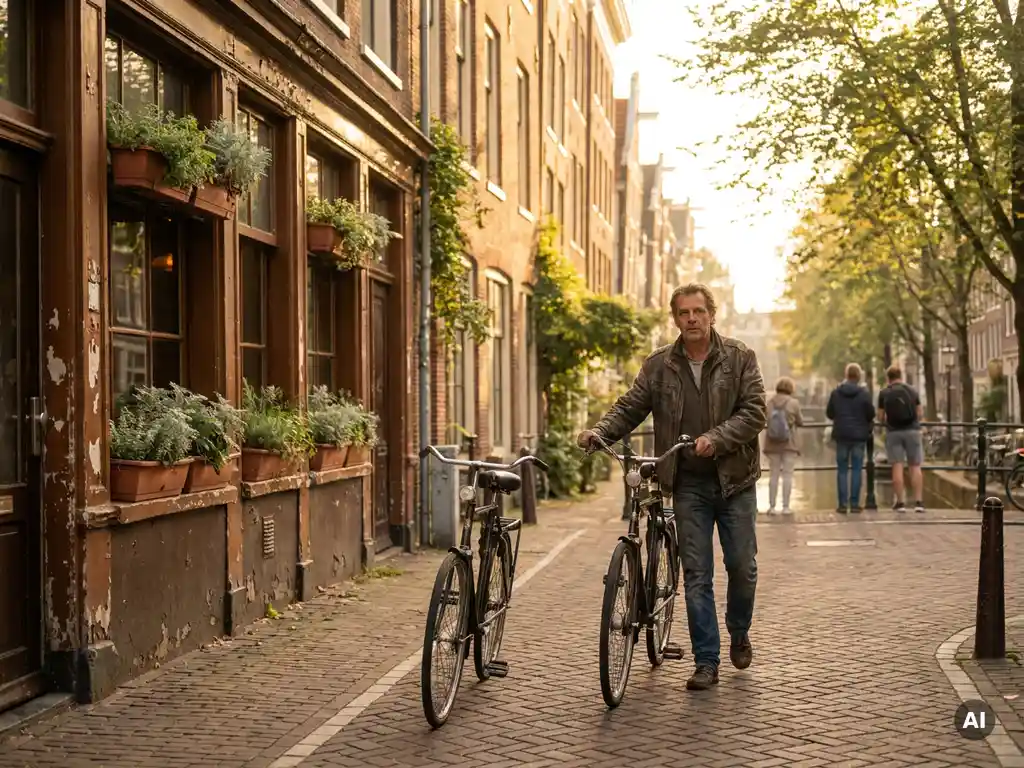
Yes, Amsterdam locals absolutely avoid certain tourist hotspots, not out of snobbery, but out of self-preservation. The city centre, particularly the Red Light District, Leidseplein, and the streets around the Rijksmuseum, has become so saturated with visitors that many Amsterdammers simply stopped going. The tension between tourists and residents is real, and it shapes how the city is actually lived in day to day. Below, we unpack where locals actually live, where they go out, and what they quietly hope visitors never discover.
Which Amsterdam neighborhoods do locals actually live in?
Most Amsterdam locals live well outside the historic canal ring. The neighborhoods that define everyday Amsterdam life for residents include De Pijp, Oud-West, Bos en Lommer, De Baarsjes, Noord, and the eastern districts like Indische Buurt and Watergraafsmeer. These are places where people raise families, run errands, and eat dinner without a selfie stick in sight.
De Pijp used to be a working-class neighborhood and is now a mixed, lively area popular with young professionals and families. It still has real butchers, local cafes, and the Albert Cuyp market, which functions as an actual food market rather than a tourist attraction. Noord, just across the IJ, has grown into a creative hub over the past decade, with studios, independent restaurants, and a genuine community feel that the centre lost long ago.
Bos en Lommer and De Baarsjes, to the west, are increasingly popular with young Amsterdammers who have been priced out of De Pijp. These neighborhoods are diverse, unpretentious, and largely ignored by travel guides, which is precisely why locals love them.
Are there parts of Amsterdam tourists rarely visit?
Yes. Large parts of Amsterdam remain effectively invisible to tourists. Amsterdam Noord is the most obvious example, despite being a ten-minute ferry ride from Centraal Station, it draws a fraction of the visitor numbers that crowd the canal ring. The same goes for the Nieuw-West district, the Bijlmer in Zuidoost, and much of the eastern harbor area.
These are not hidden gems in the Instagram sense. They are simply normal parts of a large city where people live, work, and go about their lives. The Bijlmer, for instance, has a rich Surinamese and Antillean cultural heritage, excellent food, and a community identity that is entirely its own. You will not find it in most travel itineraries, which is both a shame and, frankly, a relief for the people who live there.
The Westerpark area and the streets around Erasmus Park are also worth mentioning. Locals cycle there on weekends, sit by the water, and enjoy the city at a pace that feels nothing like the chaos of the Jordaan on a Saturday afternoon.
Do Amsterdam locals actually avoid tourist hotspots?
Most locals do avoid the major tourist hotspots, especially during peak season. The tension between tourists and residents in Amsterdam is not abstract, it is felt in daily life. The Jordaan, once a genuinely local neighborhood, now feels like a theme park version of itself on weekends. Leidseplein and Rembrandtplein are considered no-go zones by most Amsterdammers after dark.
That said, avoidance is not absolute. Locals still visit the Rijksmuseum, still walk through the canal ring, and still occasionally eat in the centre. But they tend to do it on weekday mornings, in winter, or with the resigned air of someone running an unavoidable errand. The phrase “I never go there anymore” is something you hear constantly in Amsterdam social circles when the centre comes up.
The underlying frustration is not with tourists as people, most Amsterdammers are genuinely welcoming. It is with the sheer volume and the way it has transformed public space. Streets that were once part of everyday life now feel like they belong to someone else.
Where do Amsterdam locals actually go out?
Amsterdam locals go out in neighborhoods that rarely appear in travel guides. For dinner, De Pijp remains a favourite, with a dense concentration of independent restaurants along Ferdinand Bolstraat and the streets branching off it. Oud-West, particularly around Kinkerstraat and the Ten Katemarkt area, has a strong local dining scene. Noord has developed a cluster of excellent restaurants and bars around the NDSM wharf and Buiksloterweg.
For drinks and nightlife, locals tend to gravitate toward neighborhood brown cafes, the classic Dutch pub format, in areas like Oud-Zuid, De Baarsjes, and Oost. These are not secret, but they are not marketed either. You find them by living in a neighborhood, not by searching a travel app.
Cultural life for locals also extends well beyond the big museums. Venues like Bimhuis for jazz, Paradiso and Melkweg for music, and smaller theater spaces scattered across the city draw a predominantly local crowd. The Boom Chicago theater, based in Amsterdam for over three decades, is another institution that locals genuinely love and return to, not because it is on a tourist map, but because the comedy is sharp, the atmosphere is real, and it has earned its place in the city’s cultural fabric.
How Klagen Niet Klagen helps you understand the real Amsterdam
If you are trying to get past the surface of Amsterdam, whether you live here, visit regularly, or are just curious about how the city actually works, Klagen Niet Klagen exists precisely for that. Written by Andrew Moskos, co-founder of Boom Chicago and a resident of Amsterdam for over three decades, the blog offers honest, opinionated, and often funny commentary on what it is really like to live in this city.
- Long-form essays on Amsterdam city life, written without a tourism board agenda
- Honest takes on the tension between tourists and residents, housing, culture, and Dutch social dynamics
- A perspective built on genuine insider knowledge, not a press trip or a listicle brief
- Content for expats, curious visitors, and internationally minded Dutch readers who want more than a top-ten list
If this article gave you something to think about, there is plenty more where it came from. Explore the full blog archive and find commentary that treats Amsterdam, and its readers, with the intelligence they deserve. And if you want to get in touch, the contact page is always open.
One more thing: if you want to experience Amsterdam from the inside rather than the outside, an evening at Boom Chicago is one of the best ways to do it. The comedy is live, the crowd is mixed, the drinks are cold, and the perspective is genuinely local. Check the current shows and agenda and book yourself a seat. It is the kind of night out that locals actually recommend to each other.
Frequently Asked Questions
What's the best way to explore local Amsterdam neighborhoods without feeling like an intruder?
The key is to move slowly and spend time in one neighborhood rather than ticking off a list. Pick an area like De Pijp or Oud-West, find a local brown cafe or market, and let the neighborhood reveal itself at its own pace. Avoid arriving in large groups, keep your voice down on residential streets, and spend your money at independent shops and restaurants rather than chain outlets. Locals notice and appreciate visitors who are genuinely curious about the city rather than just passing through it.
Are there any practical tips for visiting Amsterdam's tourist hotspots while avoiding the worst of the crowds?
Timing makes an enormous difference. The Rijksmuseum, the Anne Frank House, and the canal ring are all significantly more manageable on weekday mornings, particularly in the off-season between November and March. Booking museum tickets well in advance is essential, as walk-up entry is increasingly difficult during peak periods. Arriving early, cycling rather than walking, and avoiding Leidseplein and Rembrandtplein after 9pm on weekends will spare you the worst of the tourist saturation.
How easy is it to get to Amsterdam Noord, and is it worth the trip for a short visit?
Amsterdam Noord is remarkably easy to reach. Free ferries run around the clock from the piers directly behind Centraal Station, and the crossing takes under ten minutes. For a short visit, it is absolutely worth the trip. The NDSM wharf area has independent restaurants, creative studios, and a waterfront atmosphere that feels nothing like the canal ring. Even a two-hour visit gives you a genuine sense of a different side of the city.