
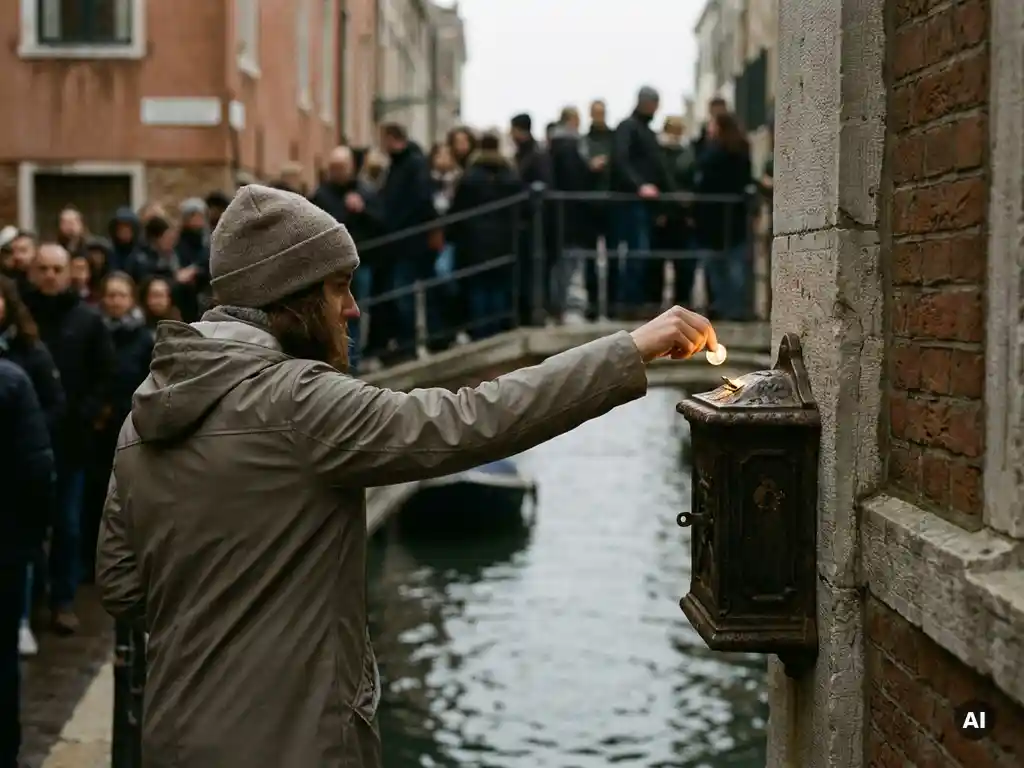
Amsterdam’s tourist tax does not solve overtourism in any meaningful way. The tax raises the cost of a visit slightly, but the evidence that it deters tourists at scale is thin. What it does do is generate significant revenue for the city, though how that money is spent, and whether it addresses the root causes of overtourism, is a different question entirely.
Below, we work through the key questions: what Amsterdam actually charges, what the money goes toward, and what would genuinely make a difference.
How much does Amsterdam actually charge in tourist tax?
Amsterdam charges one of the highest tourist tax rates in Europe. As of 2026, visitors pay 12.5% of the room rate per night on top of their accommodation costs. For a hotel room at €150 per night, that is an extra €18.75 per person, per night. On top of that, cruise ship passengers pay a flat fee per port visit.
The 12.5% rate is not trivial. Amsterdam raised it deliberately and incrementally over several years, making it a conscious policy choice rather than an administrative afterthought. The city has been open about its ambition: to use the tax as both a revenue tool and, in theory, a demand-management mechanism. Whether the second part actually works is where things get more complicated.
Does tourist tax actually reduce the number of visitors?
No, not in any significant or measurable way. Amsterdam still attracts millions of visitors each year, and the tourist tax has not reversed that trend. Price sensitivity among leisure tourists is lower than policymakers often assume, particularly for short city breaks where accommodation is already a large line item in the budget.
The tourists most likely to be deterred by a 12.5% surcharge are budget travellers staying in hostels or cheaper hotels. The visitors who put the most strain on Amsterdam’s most crowded neighbourhoods, the Jordaan, the Red Light District, the canal belt, tend to be short-stay, high-spend visitors for whom an extra €20 per night barely registers. In other words, the tax may be filtering out the wrong group while leaving the core problem intact.
This is not unique to Amsterdam. Cities across Europe have experimented with tourist levies, and the academic consensus is fairly consistent: modest financial disincentives rarely change travel behaviour at the aggregate level. They do generate income. They do not generate quiet streets.
Where does Amsterdam’s tourist tax money actually go?
Amsterdam’s tourist tax revenue flows into the city’s general budget, which means it is not ring-fenced exclusively for tourism-related spending. The city has stated intentions to invest in liveability, public space, and managing visitor flows, but the direct link between tourist tax income and specific overtourism interventions is not always transparent or easy to trace.
Some of the revenue does support things like maintenance of public spaces, cultural institutions, and crowd management infrastructure. But a significant portion simply helps fund general municipal services, which is entirely legitimate but somewhat disconnects the tax from its stated purpose of addressing overtourism specifically. Visitors paying the levy could reasonably ask whether their contribution is going toward solving the problem it is supposed to address, or simply filling a broader budget gap.
What would actually fix Amsterdam’s overtourism problem?
Fixing overtourism in Amsterdam requires structural interventions, not financial nudges. The tourist tax is a revenue tool dressed up as a policy solution. The measures that would genuinely redistribute visitor pressure are harder to implement and more politically contentious.
A few approaches that urban planners and city researchers point to consistently include:
- Spatial redistribution: Actively directing visitors toward neighbourhoods and attractions outside the historic core, rather than concentrating everything in a few square kilometres.
- Accommodation caps: Limiting the total number of hotel beds and short-term rental properties in the most congested areas, rather than simply taxing what already exists.
- Seasonal and time-based pricing: Making popular attractions significantly more expensive during peak hours and peak seasons, while keeping them accessible at other times.
- Reducing the appeal of the worst behaviour: Cracking down on the stag-party economy, not through moral disapproval but through concrete zoning and licensing restrictions that change what the city actually offers to that segment.
- Long-term resident protection: Policies that keep housing affordable and neighbourhoods liveable for the people who actually live there, so the city retains its character rather than becoming a theme park that happens to have residents.
None of these are simple, and none of them generate revenue the way a tourist tax does. That is precisely why the tourist tax is politically popular and structurally insufficient. It lets the city say it is doing something about overtourism while continuing to welcome as many visitors as possible. The honest version of Amsterdam’s tourism policy would acknowledge that tension more openly.
How Klagen Niet Klagen helps you make sense of Amsterdam
If you have ever felt that the official story about Amsterdam does not quite match the city you actually experience, you are not alone. Klagen Niet Klagen exists precisely for that gap: honest, independent commentary on Amsterdam life, written from the inside, without a tourism board looking over anyone’s shoulder.
- Long-form essays on Amsterdam’s real contradictions, including housing, tourism policy, and city identity
- An English-language perspective grounded in over three decades of living and building here
- No advertorial pressure, no polished spin, just genuine opinion from someone with skin in the game
- A full archive of articles covering the city’s culture, politics, and everyday absurdities
If the tourist tax question got you thinking, there is plenty more where that came from. Come for the opinion, stay for the debate. And if you want to get in touch directly, the about page is a good place to start.
And while you are thinking about Amsterdam, consider spending an evening at Boom Chicago. After thirty years of performing in this city, the shows reflect Amsterdam the way it actually is: sharp, surprising, and impossible to fake. It is one of those experiences that reminds you why the city is worth caring about in the first place, tourist tax and all.
Frequently Asked Questions
If the tourist tax doesn't reduce visitor numbers, why do cities keep raising it?
Because it works extremely well as a revenue mechanism, even if it fails as a demand-management tool. Cities like Amsterdam face real fiscal pressure from tourism — worn infrastructure, crowded public spaces, increased municipal service costs — and the tax is a politically straightforward way to make visitors contribute to those costs. The problem is that the revenue justification and the overtourism justification get conflated in public messaging, which obscures the fact that the city is essentially choosing income over genuine crowd control.
Are there cities that have actually succeeded in reducing overtourism, and what did they do differently?
A handful of cities have made measurable progress, and the common thread is structural intervention rather than financial nudges. Dubrovnik capped daily visitor numbers to the old city and enforced them with physical access controls. Venice has experimented with entry fees tied to peak-day access rather than overnight stays, targeting the day-tripper segment that generates the most congestion with the least economic return. The pattern is consistent: what works is limiting access or changing the physical offer of the city, not adding a line item to the hotel bill.
As a visitor, is there anything I can actually do to avoid contributing to the overtourism problem in Amsterdam?
Yes, and it is more practical than it might sound. Staying in neighbourhoods outside the historic core — De Pijp, Oud-West, Noord, or the eastern docklands — distributes your spending and your footprint away from the most congested areas. Visiting popular sites early in the morning or on weekdays, booking timed-entry tickets in advance, and eating and drinking in places that locals actually use rather than tourist-facing venues on the main canals all make a genuine difference at the individual level. None of this solves the structural problem, but it does mean your visit adds less pressure to the places that are already at breaking point.