
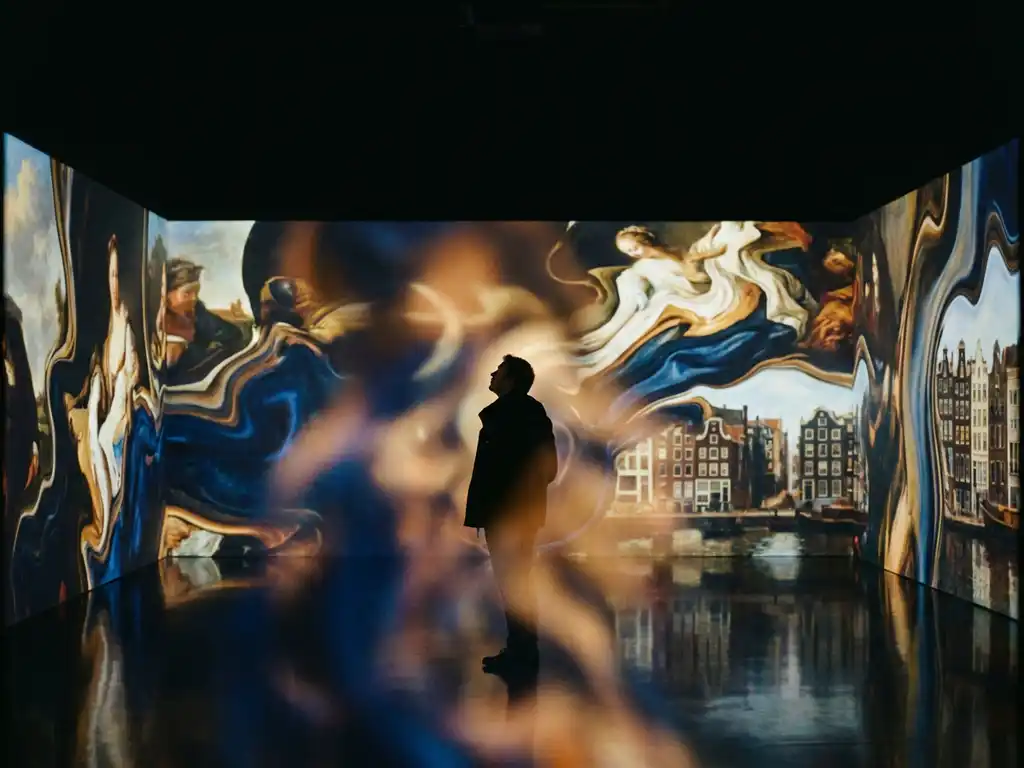
Which types of immersive experiences are actually worth your time in Amsterdam?
The immersive experiences worth your time in Amsterdam fall into three broad categories: large-scale digital art installations, immersive theatre productions, and guided sensory experiences like sound baths or scent-led tours. Of these, the digital art installations tend to offer the most consistent quality and the best value for the time invested.
The word “immersive” has become something of a marketing catch-all, which means you need to be selective. Some experiences genuinely transport you into another world. Others are essentially a dark room with a projector and a Spotify playlist. The difference is usually in the production quality, the conceptual depth, and whether the experience was designed around the visitor or around a press release.
As a general rule: if the experience has been running for more than a year and is still selling out, that is a good signal. Amsterdam audiences are not easily impressed, and word of mouth here is brutally honest.
What are the best immersive art installations in Amsterdam right now?
The strongest immersive art installations in Amsterdam in 2026 tend to cluster around large digital projection environments, interactive light works, and multi-room sensory exhibitions. ARTIS, the Stedelijk Museum, and several independent venues in Noord and Oost regularly host this kind of work at a high level.
Rather than listing specific exhibitions that will have closed by the time you read this, it is more useful to know where to look. The Stedelijk consistently programs work that sits at the intersection of art and technology. EYE Filmmuseum occasionally presents immersive audiovisual work that is well above average. And Amsterdam Noord has become a reliable home for large-format experimental installations, partly because the former industrial spaces there can actually accommodate them.
The NEMO Science Museum also runs immersive experiences that are technically aimed at younger visitors but are genuinely impressive for adults too. Do not dismiss it on those grounds.
Are immersive theatre experiences in Amsterdam any good?
Yes, immersive theatre in Amsterdam is genuinely good, though the scene is smaller than in London or New York. The best productions here tend to be bilingual or English-language, site-specific, and rooted in the city’s strong tradition of physical and devised theatre rather than imported formats.
Amsterdam has a long history of experimental theatre, and that DNA shows up in the better immersive productions. Companies working in this space tend to prioritize performer skill and spatial storytelling over gimmicks, which makes the experiences more satisfying and more replayable.
If you are specifically looking for English-language shows in Amsterdam, the options narrow quickly but the quality remains high. Boom Chicago, for instance, has been doing live, audience-interactive comedy performance since 1993, and while it does not market itself as “immersive theatre” in the trendy sense, the experience of being genuinely included in a live show is about as immersive as entertainment gets. The audience is never just watching.
How much do immersive experiences in Amsterdam typically cost?
Immersive experiences in Amsterdam typically cost between €15 and €45 per person, depending on the format, venue, and duration. Large digital art installations usually sit at the lower end of that range. Full immersive theatre productions with actors, custom environments, and extended run times tend to push toward the higher end.
A few things to factor in beyond the ticket price:
- Booking fees: Most venues use third-party ticketing platforms that add a service charge. Budget an extra €2 to €4 per ticket.
- Time slots: Evening and weekend slots are usually priced slightly higher. If you have flexibility, a weekday afternoon slot often saves money and means smaller crowds.
- Duration: Some experiences are 45 minutes. Others are three hours. The price does not always reflect the time commitment, so check before you book.
- Group discounts: Many venues offer reductions for groups of six or more. Worth asking even if it is not advertised.
By Amsterdam standards, most immersive experiences represent reasonable value compared to a restaurant dinner or a canal boat tour.
Where in Amsterdam are most immersive experiences located?
Most immersive experiences in Amsterdam are concentrated in three areas: the city centre and canal ring, Amsterdam Noord, and the eastern docklands. The centre has the highest density of venues but also the highest tourist traffic. Noord and the eastern docklands offer larger spaces and a more local, creative atmosphere.
Noord in particular has transformed significantly over the past decade. The former NDSM shipyard area hosts large-scale events and installations that simply would not fit anywhere in the old city. It is a 15-minute free ferry ride from Centraal Station, which puts off some visitors, but that short journey is usually worth it.
The canal ring itself has a handful of smaller, boutique immersive venues tucked into converted warehouses and historic buildings. These tend to offer more intimate experiences and lean into Amsterdam’s architectural history as part of the design.
What should you know before booking an immersive experience in Amsterdam?
Before booking an immersive experience in Amsterdam, the most important things to check are the language of the experience, the physical requirements, the cancellation policy, and whether the experience is actually still running. Amsterdam has a high turnover of pop-up and temporary installations, and listings on booking platforms are not always updated promptly.
A few practical notes that will save you frustration:
- Language: Many experiences are Dutch-only or offer Dutch and English on different nights. Confirm this before buying, especially if you are booking for non-Dutch speakers.
- Mobility: Some immersive environments involve stairs, uneven surfaces, low light, or physical participation. Check the venue’s accessibility information if this matters for your group.
- Age restrictions: Certain experiences are not suitable for children, and some are specifically designed for families. The listings are not always clear on this.
- Arrival time: Most immersive experiences have strict entry windows. Arriving late often means missing the beginning entirely, and venues are not sympathetic about this.
- Photography: Policies vary enormously. Some experiences ban phones entirely. Others encourage sharing. Find out in advance if this matters to you.
One more thing worth saying: read recent reviews from local visitors rather than tourists. Locals will tell you honestly if something has declined in quality since it opened. Tourists are more likely to be delighted simply by novelty.
How Klagen Niet Klagen helps you find the best Amsterdam experiences
Finding genuinely good things to do in Amsterdam is harder than it should be. Most recommendation platforms are either tourist-facing, commercially influenced, or just out of date. KlagenNietKlagen.nl exists to cut through that noise with honest, insider commentary written by someone who has lived and worked in Amsterdam’s creative scene for over thirty years.
- Honest takes on what is actually worth your time, not what has a good PR budget
- Recommendations written from lived experience, not press trips or sponsored content
- Long-form essays and opinion pieces that give you real cultural context, not just a list of venues
- Coverage of Amsterdam experiences across art, theatre, food, neighbourhoods, and city life
- An English-language perspective written for people who actually know Amsterdam, not first-time visitors with a checklist
If you want to understand Amsterdam rather than just visit it, KlagenNietKlagen.nl is the place to start.
And if immersive experiences are your thing, there is one that has been running in Amsterdam since 1993 and has never once needed a projector or a dark room to pull it off. Boom Chicago does live, unscripted, audience-driven comedy that puts you inside the show from the moment you sit down. It is interactive, it is in English, and it is genuinely funny, which is rarer than it sounds. Check the current shows and agenda and see what is on when you are in town.
Frequently Asked Questions
How far in advance should I book immersive experiences in Amsterdam?
For popular installations and theatre productions, booking at least one to two weeks in advance is advisable, especially for weekend slots or evening performances. Some high-demand experiences, particularly those with limited capacity or short runs, sell out within days of tickets going live. Signing up to venue newsletters or following them on social media is the most reliable way to catch new releases before they sell out.
What is the best time of year to visit Amsterdam for immersive experiences?
Autumn and winter (October through February) tend to be the strongest seasons for indoor immersive experiences in Amsterdam, as venues programme their most ambitious work when outdoor competition is lower and audiences are actively seeking indoor events. Summer brings a higher volume of pop-up and festival-format experiences, but quality is more variable. If you are visiting specifically for this kind of thing, late October or November offers a good combination of strong programming and manageable tourist numbers.
Are there immersive experiences in Amsterdam suitable for non-Dutch speakers who are not typical tourists?
Yes, and this is more of a strength of Amsterdam’s scene than it might initially appear. Many of the city’s best immersive art installations are non-verbal by design, meaning language is irrelevant entirely. For theatre and narrative-driven experiences, English-language options do exist and tend to attract a mixed international-local crowd rather than a purely tourist one. Boom Chicago, for instance, has been performing in English since 1993 and draws a heavily local, expat, and internationally minded audience rather than a day-tripper crowd.