
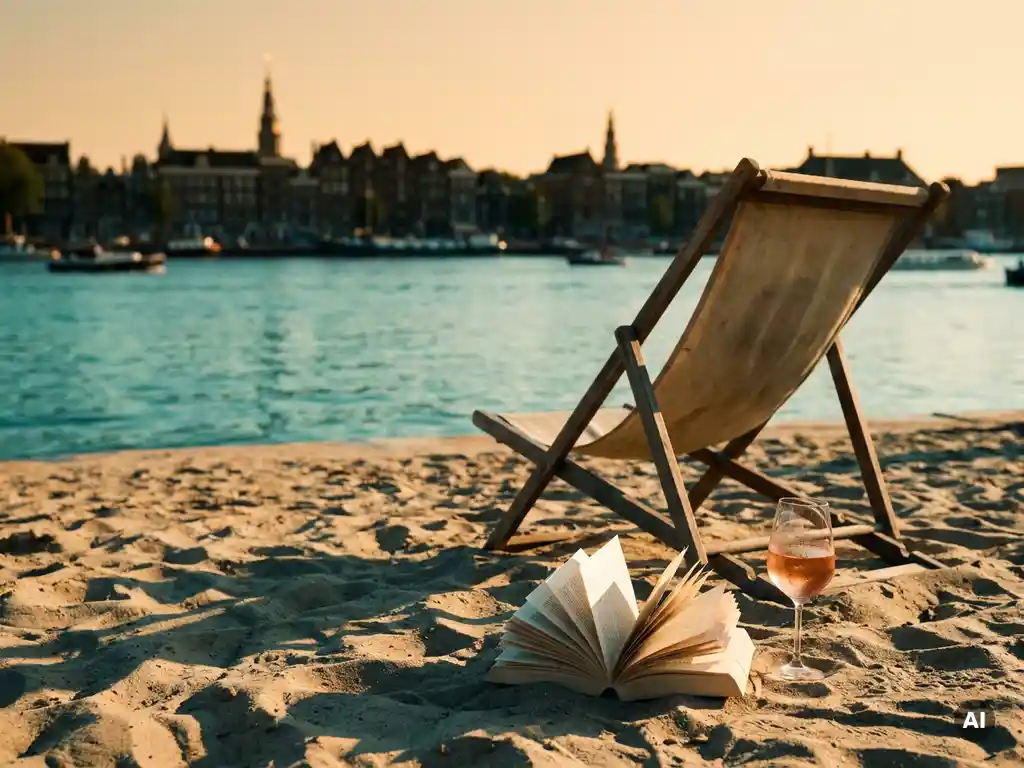
Amsterdam’s city beaches are genuinely good alternatives to the canals for a summer day out, particularly if you want to swim, sunbathe, or sit somewhere that doesn’t smell like a canal on a hot August afternoon. The city has several sandy beach spots along the IJ and surrounding lakes that offer real waterfront relaxation without leaving Amsterdam. Below, the key questions about city beaches in Amsterdam get answered properly.
Where are Amsterdam’s city beaches actually located?
Amsterdam’s city beaches are spread across several waterfront locations, primarily along the IJ and the lakes on the city’s western and southeastern edges. The most well-known spots include Strand West on the western IJ bank, Blijburg aan Zee on the artificial island of IJburg in the east, and Sloterplas beach in the Sloterpark area in the west. Each has its own character, distance from the centre, and crowd profile.
Blijburg is probably the most famous of the bunch. Built on the reclaimed land of IJburg, it has a festival-ish, alternative energy that fits Amsterdam’s self-image well. It draws a mix of locals, families, and people who discovered it on Instagram and arrived slightly surprised that it’s not, in fact, on the North Sea. Strand West sits closer to the city centre and is accessible by ferry from Centraal Station, making it a realistic option even on a spontaneous weekday afternoon. Sloterplas is more of a neighbourhood beach, popular with families and people who live in the western boroughs and want water without a commute.
Can you actually swim at Amsterdam’s city beaches?
Yes, you can swim at several of Amsterdam’s city beaches, though not all of them. Sloterplas and Blijburg both have designated swimming areas where water quality is monitored and generally deemed safe during summer. The IJ itself is a different story: swimming directly in the IJ is officially discouraged due to shipping traffic and water quality concerns, so beaches like Strand West are more about lounging than swimming.
Water quality at the approved swimming spots is tested regularly by the municipality, and results are posted publicly. On most summer days the verdict is fine, but after heavy rainfall the advice can shift quickly due to runoff. If swimming is your priority rather than just sitting near water with a beer, Sloterplas is the most reliably swimmable option. It’s a lake rather than a river, which removes the shipping traffic issue entirely and keeps the water calmer and cleaner.
How do Amsterdam’s city beaches compare to the canals for a summer day out?
For a proper summer day out, the city beaches win over the canals in almost every practical category. The canals are beautiful to walk alongside and photograph, but they are not places to sit, swim, or spread out a towel. The water is not clean enough to swim in safely, the banks are narrow and often crowded with tourist foot traffic, and the smell on a hot day is, diplomatically put, distinctive.
The city beaches offer actual sand, open sky, space to lie down, and in some cases the ability to get into the water. Blijburg in particular has food stalls, a relaxed bar, and a social atmosphere that the canals simply cannot replicate. That said, the canals have something the beaches lack entirely: the feeling of being in the actual Amsterdam that everyone pictures. A canal-side terrace on a warm evening is still one of the city’s great pleasures. The honest answer is that they serve different moods. If you want to swim or sunbathe, go to a beach. If you want to feel like you’re inside a Vermeer painting while drinking a Heineken, go to the canals.
What’s the best Amsterdam city beach for different types of visitors?
The best Amsterdam city beach depends entirely on what you’re looking for. There is no single answer, but the options divide fairly cleanly by visitor type.
- For families with children: Sloterplas is the strongest choice. The lake is safe for swimming, the beach has shallow entry points suitable for kids, and the surrounding park gives everyone room to move. It’s a proper neighbourhood beach without the festival crowds.
- For the creative, alternative crowd: Blijburg aan Zee on IJburg is the obvious pick. It has a laid-back, community-built feel, good food and drink options, and the kind of Amsterdam energy that feels genuinely local rather than performed for tourists.
- For visitors who want convenience: Strand West is the most accessible from the city centre, reachable by a short ferry ride from behind Centraal Station. It’s ideal for people who want a taste of waterfront Amsterdam without committing to a long journey.
- For those who want to actually swim: Sloterplas again. The water is cleaner, calmer, and the swimming conditions are more consistent than anywhere on the IJ.
None of Amsterdam’s city beaches are going to replace a weekend on the North Sea coast at Zandvoort or Bergen aan Zee. But they don’t need to. They are genuinely good urban escapes that most visitors, and even many long-term residents, overlook entirely. That’s part of what makes them worth knowing about.
How Klagen Niet Klagen helps you navigate Amsterdam like a local
Finding the city beaches is easy once you know they exist. The harder part is knowing which ones are actually worth the trip, what the atmosphere is really like, and how they fit into the broader picture of spending a summer in Amsterdam. That’s exactly the kind of honest, insider knowledge that Klagen Niet Klagen exists to provide.
- Long-form essays and opinion pieces on Amsterdam city life written from over three decades of lived experience
- An honest, humorous perspective that tourist guides and tourism boards will never give you
- Coverage of the real Amsterdam, its contradictions, its hidden spots, and the things that actually make it worth living in
- Written in English, for a globally minded audience that has moved well beyond the surface level
If you want to understand Amsterdam rather than just visit it, read more about the blog and explore the full archive. There is a lot more where this came from.
And if you find yourself in Amsterdam on a summer evening after a day at Blijburg, consider making one more stop. Boom Chicago has been making Amsterdam audiences laugh since 1993, and a live improv comedy show is one of those experiences that genuinely belongs on any honest Amsterdam itinerary. Check the shows and agenda to see what’s on.
Frequently Asked Questions
Is there an entrance fee for Amsterdam's city beaches?
Most of Amsterdam’s city beaches are free to access, including Sloterplas and Strand West. Blijburg aan Zee is also free to enter, though you’ll naturally spend money if you use the food stalls or bar on site. Some beaches may charge for sun lounger or umbrella rentals during peak summer, but bringing your own towel and picnic means you can enjoy a full day out at no cost.
What's the best way to get to Blijburg aan Zee by public transport?
Blijburg aan Zee on IJburg is straightforward to reach by tram — take tram 26 from Amsterdam Centraal directly to the IJburg stop, then follow the signs to the beach, which is roughly a 10-minute walk from the tram stop. The journey from Centraal takes around 20–25 minutes in total, making it very manageable even without a car. Cycling is also a popular option for locals, and the route along the IJ is a pleasant ride on a summer day.
Are Amsterdam's city beaches crowded on weekends?
Yes, expect significant crowds at all three main beaches on sunny summer weekends, particularly at Blijburg, which has a strong social media profile and draws large numbers on warm Saturdays and Sundays. Sloterplas tends to be slightly less packed because it’s more of a neighbourhood destination, but it still fills up quickly when the weather is good. If you want space, arriving before noon or visiting on a weekday afternoon makes a noticeable difference.