
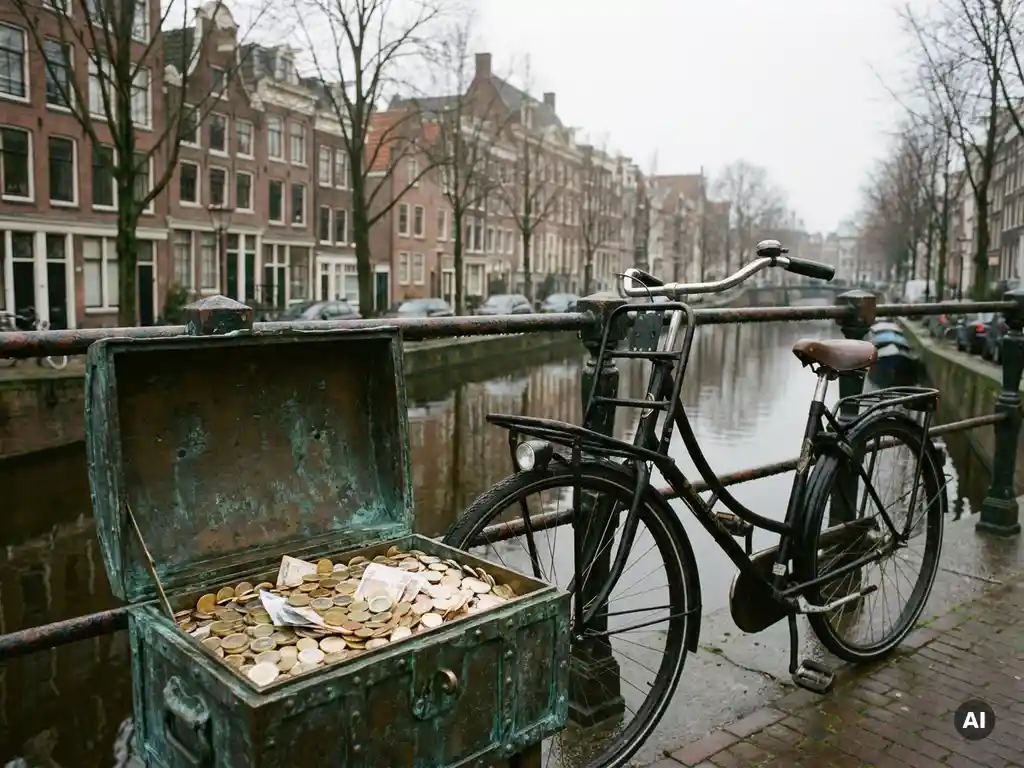
Amsterdam spends its tourist tax revenue on a mix of city maintenance, cultural institutions, and public infrastructure, though the exact allocation shifts with each municipal budget cycle. The city frames the tax as a way to manage the costs that mass tourism creates for residents and public services. Whether that framing holds up to scrutiny is a fair question, and one worth unpacking in detail.
Where does Amsterdam’s tourist tax money actually go?
Amsterdam’s tourist tax revenue flows into the city’s general municipal budget rather than a ring-fenced tourism fund. In practice, this means the money is distributed across a broad range of city expenses, from street cleaning and waste management to cultural subsidies and infrastructure projects. There is no single dedicated account that tourism euros flow into and out of transparently.
The city does point to specific spending categories that benefit from tourist-related income. These include maintenance of the historic canal ring, crowd management in high-pressure neighbourhoods like the Jordaan and the Red Light District, and support for museums and cultural venues. The Amsterdam City Council periodically publishes budget documents that break down revenue streams, but connecting specific tourist tax euros to specific outcomes requires some forensic reading of municipal finances.
The honest answer is that tourist tax money blends into a larger pot. Whether that is good governance or a convenient way to avoid accountability depends on your level of optimism about city hall.
How much tourist tax does Amsterdam collect each year?
Amsterdam collects hundreds of millions of euros annually from tourist taxes, making it one of the highest-earning cities in Europe from this revenue source. The city charges a percentage-based overnight tax on hotel stays, plus a flat fee per person per night for other accommodation types, including short-stay rentals. Cruise ship passengers also pay a per-person levy when docking in Amsterdam.
The exact figure fluctuates with visitor numbers, accommodation pricing, and policy changes. In recent years Amsterdam has progressively raised its tourist tax rate, partly to generate more revenue and partly to signal to the market that the city is not cheap to visit. The rate increases have been deliberate and politically driven, reflecting growing resident frustration with overtourism.
What is striking is how large the total sum is relative to what residents visibly see in return. When the numbers run into the hundreds of millions and the canals still flood with day-trippers and the Leidseplein is still a chaos of hen parties, the question of where all that money actually goes becomes impossible to ignore.
Does the tourist tax actually reduce overtourism in Amsterdam?
No, not meaningfully. The tourist tax in Amsterdam functions primarily as a revenue tool, not a demand management instrument. Raising the overnight tax by a few euros does not deter the kind of tourist Amsterdam most wants to discourage. Budget travellers on stag weekends are not price-sensitive enough to stay home because a hotel room costs slightly more.
Effective overtourism reduction requires a different toolkit entirely. Amsterdam has experimented with other measures alongside the tax, including banning new hotels in the city centre, restricting short-stay rental platforms, and actively discouraging certain types of visitor marketing. These structural interventions have more direct impact on visitor behaviour and volume than any overnight levy.
The tourist tax is better understood as compensation for the costs of tourism rather than a cure for them. It does not cap visitor numbers, redirect tourist flows to quieter neighbourhoods, or change the fundamental economics of a weekend trip to Amsterdam. For that, the city needs harder policy tools and the political will to use them.
Should Amsterdam residents see more benefit from tourist tax revenue?
Yes, and many residents would argue they already should. The case for directing more tourist tax revenue toward resident-facing benefits is straightforward: it is residents who absorb the daily costs of mass tourism, from noise and congestion to housing pressure and the loss of neighbourhood character. If tourism generates significant public revenue, a visible portion of that revenue should demonstrably improve the lives of the people who live with its consequences year-round.
Some cities have experimented with more transparent models, earmarking tourist tax funds for specific resident priorities such as affordable housing, local cultural programmes, or neighbourhood improvement schemes. Amsterdam has not gone this far in any systematic way, though individual budget decisions do occasionally direct funds toward resident-relevant projects.
The deeper issue is one of democratic accountability. When tourist tax revenue disappears into a general fund with limited public reporting on outcomes, residents have no meaningful way to assess whether the city is managing tourism in their interest. A more transparent, resident-focused allocation model would not only be fairer, it would also give the tax political legitimacy that it currently lacks among the people who need it most.
How Klagen Niet Klagen covers Amsterdam’s tourist tax debate
If you have ever wondered whether Amsterdam’s city policies actually serve the people who live here, you are not alone. Klagen Niet Klagen exists precisely for that kind of question. Written by Andrew Moskos, co-founder of Boom Chicago and a resident of Amsterdam for over three decades, the blog takes an honest, informed, and often irreverent look at the city’s contradictions, including the gap between what Amsterdam says it does with tourism revenue and what residents actually experience.
- Long-form commentary on Amsterdam city policy written from genuine insider experience
- No tourism board influence, no advertorial pressure, no diplomatic softening of inconvenient truths
- A consistent editorial voice that connects the dots between policy decisions and everyday Amsterdam life
- Content written in English for globally minded readers who want more than a surface-level take
If this kind of honest Amsterdam commentary is what you are looking for, find out more about the blog and explore the archive. There is plenty more where this came from.
And if you want to experience Amsterdam’s sharpest comedy alongside its sharpest opinions, Boom Chicago has been doing exactly that since 1993. The same instinct that drives this blog, the refusal to be polite when honest is better, has always been at the heart of what happens on that stage. Worth a visit.
Frequently Asked Questions
How does Amsterdam's tourist tax rate compare to other major European cities?
Amsterdam consistently ranks among the most expensive cities in Europe for overnight tourist taxes, particularly after its recent rate increases. Cities like Paris, Barcelona, and Rome charge tourist taxes too, but Amsterdam’s combination of a percentage-based hotel levy and flat-rate fees for other accommodation types often results in a higher total charge per stay. If you are benchmarking European tourist tax policy, Amsterdam is a useful high-water mark for understanding how aggressively a city can price its hospitality sector without significantly denting visitor demand.
What is the difference between Amsterdam's tourist tax and its cruise ship levy, and which raises more money?
Amsterdam’s overnight tourist tax applies to people staying in hotels, short-stay rentals, and similar accommodation, while the cruise ship levy is a flat per-person charge paid when passengers dock in the city. The overnight tax almost certainly raises more total revenue given the volume of hotel and short-stay nights booked annually, but the cruise levy has attracted more political attention because cruise passengers generate significant foot traffic and environmental impact while contributing very little to the local economy. Targeting cruise tourism more aggressively through higher levies is a policy debate that Amsterdam has not fully resolved.
Could Amsterdam realistically earmark tourist tax revenue for a dedicated housing or affordability fund for residents?
Legally and administratively, yes — there is nothing stopping Amsterdam from ring-fencing a portion of tourist tax revenue for a dedicated resident benefit fund, such as affordable housing subsidies or neighbourhood improvement programmes. The barrier is political rather than structural: municipal governments tend to resist hypothecated taxes because they reduce budget flexibility. However, several cities globally have moved in this direction under sustained resident pressure, and Amsterdam’s growing overtourism backlash creates exactly the kind of political conditions where a more transparent, resident-first allocation model becomes viable. It would require genuine political will and a willingness to trade budget flexibility for public trust.