
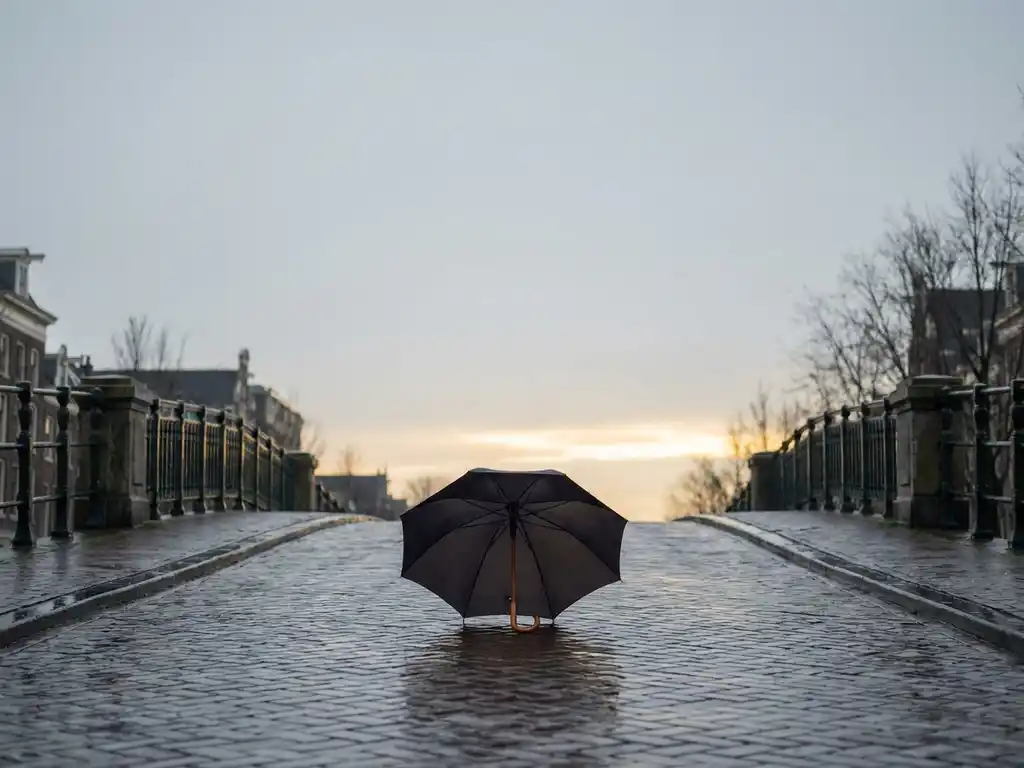
Amsterdam’s weather is mild, wet, and famously unpredictable. The city sits in a temperate maritime climate, which means winters rarely freeze and summers rarely bake — but rain can show up at any time of year without much warning. If you’re planning a visit or simply trying to dress sensibly for daily life here, the short answer is: always carry a jacket.
Below, the most common questions about Amsterdam weather get honest, direct answers — no sugarcoating, no tourism-board spin.
Does Amsterdam get a lot of rain?
Yes, Amsterdam gets a fair amount of rain — roughly 800 millimetres spread across the year. But the character of that rain matters more than the total. Amsterdam rarely gets dramatic downpours. Instead, it delivers a near-constant rotation of drizzle, grey skies, and sudden showers that last ten minutes and then disappear. The rain is annoying rather than catastrophic.
What makes it feel like more rain than it actually is: the flatness of the city means there’s no shelter from the wind, and wet cobblestones reflect light in a way that makes everything look perpetually damp. Locals don’t tend to cancel plans because of rain. They just pull on a waterproof and keep moving — which is probably the most useful thing to know.
What are the four seasons like in Amsterdam?
Amsterdam has four distinct seasons, but they’re all relatively moderate. No season is extreme, and the transitions between them can be subtle — which is part of what makes the city’s weather feel so variable from week to week.
Spring (March to May)
Spring is genuinely lovely, with tulips in bloom and the city coming back to life after grey months. Temperatures climb from around 8°C in March to 17°C in May. Rain is still common, but the days get noticeably longer and the light turns golden in the late afternoon. This is when Amsterdam starts to feel like itself again.
Summer (June to August)
Summers are warm but not hot — average highs sit around 21°C to 23°C. The occasional heatwave pushes things higher, but those are the exception. Evenings are long and the terraces fill up fast. It’s also peak tourist season, so the things to do in Amsterdam get considerably more crowded.
Autumn (September to November)
Autumn brings cooler temperatures, more rain, and beautiful canal-side colour as the leaves turn. September can still feel like summer, but by November you’re firmly in coat territory. The city empties of tourists and regains some of its quieter, more local character.
Winter (December to February)
Winters are cold and damp rather than freezing. Temperatures hover between 2°C and 7°C. Snow is rare but not unheard of, and when the canals freeze over — which happens once every few years — the entire city turns into a kind of collective joy. Most of the time, though, winter is just grey and wet, with the occasional crisp, clear day that makes it all worth it.
What’s the best time of year to visit Amsterdam?
The best time to visit Amsterdam is late spring, specifically late April through early June. The weather is mild and pleasant, the tulip fields are at their peak, and the city hasn’t yet hit peak summer tourist density. You get the beauty of Amsterdam without the crowds that define July and August.
Early September is a strong second choice. The summer heat has softened, the tourists have thinned out, and the city feels more like itself. If you want to experience Amsterdam as a place people actually live rather than a backdrop for selfies, the shoulder season is your friend. Winter visits have their own charm — fewer crowds, atmospheric canal fog, Christmas markets — but you need to genuinely enjoy grey weather to appreciate them.
Why does Amsterdam weather feel colder than the thermometer says?
Amsterdam feels colder than the temperature reading because of wind chill and humidity. The city is flat, open, and surrounded by water, which means wind moves through it with very little resistance. A 7°C day with a stiff westerly breeze feels significantly colder than 7°C in a sheltered city. The high humidity amplifies this — damp cold gets into your bones in a way that dry cold doesn’t.
Cycling, which is how most people in Amsterdam get around, makes this worse. Even a gentle headwind at cycling speed adds meaningful wind chill. Locals learn quickly that the “feels like” temperature matters more than the actual one, and they dress accordingly — layering up even on days that look mild from indoors.
What should you wear for Amsterdam’s weather year-round?
The core principle for dressing in Amsterdam is layers plus waterproofing. A good waterproof jacket is the single most useful item you can own in this city — not a heavy winter coat, not a thin rain mac, but something genuinely windproof and water-resistant that you can wear nine months of the year.
- Spring: Light layers, a waterproof outer layer, comfortable walking shoes that can handle wet cobblestones
- Summer: Light clothing, but always keep a light jacket nearby — evenings cool down fast and afternoon showers are common
- Autumn: A mid-weight jacket, scarf, and waterproof shoes; temperatures drop quickly after sunset
- Winter: A proper warm coat, hat, gloves, and waterproof boots; the damp cold is persistent
One practical note: umbrellas are less useful in Amsterdam than you’d expect. The wind makes them awkward and sometimes dangerous on a bike. A hood or a good waterproof hat tends to be more practical for day-to-day life here.
How Klagen Niet Klagen helps you understand Amsterdam beyond the weather
Weather is just the beginning. Amsterdam has layers of culture, contradiction, and character that no forecast can prepare you for. Klagen Niet Klagen exists to give you an honest, insider perspective on what Amsterdam is actually like — the kind of commentary that tourism boards don’t write and travel guides can’t provide.
- Long-form essays on Amsterdam city life written from over three decades of real experience
- Honest takes on Dutch culture, city policy, and what it’s actually like to live here
- Practical and cultural insight for expats, visitors, and anyone who wants to understand the city beneath the surface
- Witty, independent commentary free from advertorial pressure or sponsored content
If you want to go deeper on Amsterdam — what to do, how it works, and why it is the way it is — browse the full blog archive for more.
And if you find yourself in Amsterdam looking for something genuinely worth doing on a rainy evening (which, as you now know, is a fairly common situation), Boom Chicago has been making audiences laugh in this city since 1993. Live improv comedy in the heart of Amsterdam is exactly the kind of thing to do in Amsterdam that holds up regardless of what the weather is doing outside. Check the shows and agenda and come see what all the fuss is about.
Frequently Asked Questions
Is Amsterdam weather worse in some parts of the city than others?
Not dramatically, but areas more exposed to open water — like the IJ waterfront or the newer western harbour districts — tend to feel windier and therefore colder than sheltered canal streets in the Jordaan or the historic centre. If you’re particularly sensitive to wind chill, sticking to the older, narrower streets offers a bit more natural shelter. It’s a small difference, but on a blustery November day, it’s noticeable.
What's the most common mistake visitors make when packing for Amsterdam?
Overpacking for one extreme while ignoring the other. Visitors in summer often leave their jacket behind because the forecast looks sunny — then get caught in a sharp evening chill or a sudden shower with nothing waterproof to hand. Equally, winter visitors sometimes pack a heavy ski-style coat that’s completely impractical for cycling or navigating crowded tram stops. The sweet spot is a versatile, windproof, water-resistant mid-layer jacket that works across multiple seasons rather than one heavy-duty item.
Can you rely on weather apps to plan your day in Amsterdam?
To a point — but Amsterdam’s weather changes fast enough that a morning forecast often doesn’t reflect what’s happening by early afternoon. Most locals check the weather shortly before heading out rather than the night before, and even then they treat it as a rough guide rather than a guarantee. Apps like Buienradar are particularly popular in the Netherlands because they show real-time rain radar for the next couple of hours, which is far more useful for Amsterdam’s short, unpredictable showers than a standard daily forecast.