
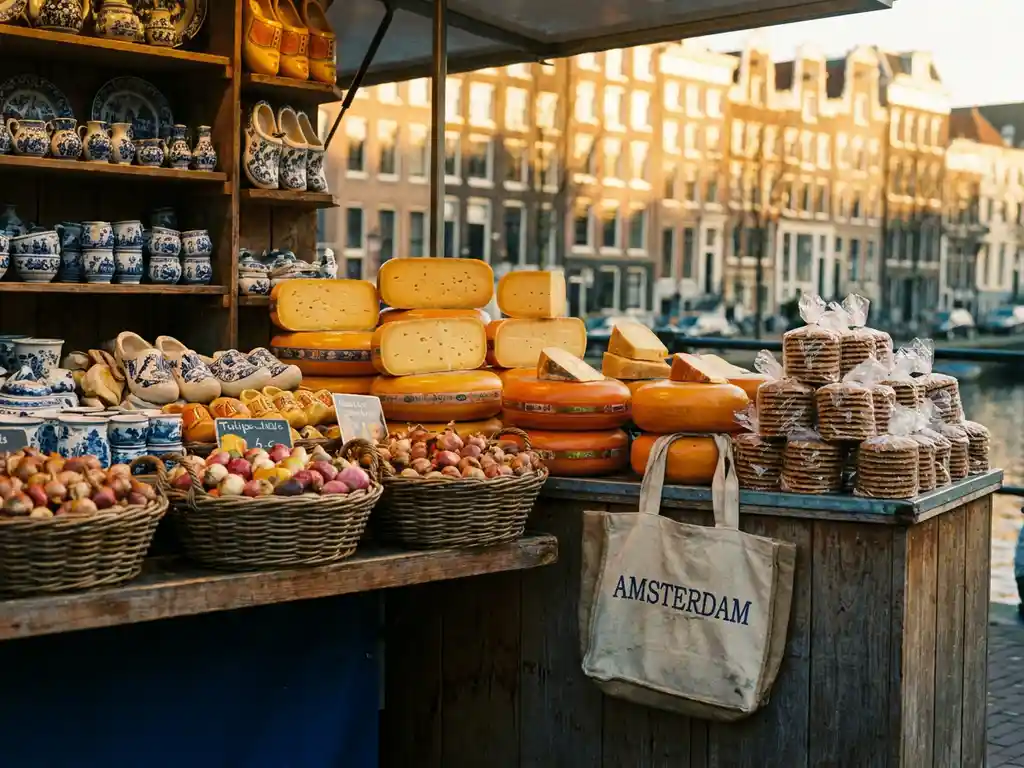
The most famous things to buy in Amsterdam are Dutch cheese, stroopwafels, Delft blue pottery, jenever (Dutch gin), and tulip bulbs. These are the items locals actually give as gifts, not just what the souvenir shops push hardest. The quality range is enormous, so knowing what is worth your money and what is a tourist trap makes all the difference. Here is an honest breakdown of Amsterdam’s best buys, section by section.
What makes Amsterdam souvenirs worth buying?
A souvenir worth buying from Amsterdam is one that is genuinely Dutch, available at a fair price, and either consumable or beautiful enough to display. The best Amsterdam purchases share one quality: they connect directly to Dutch culture, craft, or agriculture rather than being generic European trinkets with a windmill stamped on them.
The test is simple. Would a Dutch person give this as a gift? If yes, you are on the right track. If the item was made in China and the packaging features a cartoon tulip, you are probably in the wrong shop. Amsterdam has a long tradition of trade, craft, and food culture, and the best souvenirs reflect exactly that.
Price is also a signal. Genuine Dutch goods cost real money because they involve real craft or real ingredients. Suspiciously cheap Delft pottery, suspiciously cheap cheese, and suspiciously cheap jenever are usually suspiciously bad.
What Dutch foods and drinks are famous to bring home?
The most famous Dutch foods and drinks to bring home from Amsterdam include aged Gouda cheese, stroopwafels, drop (Dutch liquorice), speculaas biscuits, and jenever. These are genuinely Dutch products with real cultural roots, and all of them travel well enough to survive a flight home.
Cheese and stroopwafels
Dutch cheese is the single most iconic edible export. Aged Gouda, particularly the extra-aged varieties, has a deep caramel flavour that bears almost no resemblance to the rubbery young Gouda sold in supermarkets abroad. Buy it from a dedicated cheese shop rather than a supermarket, and ask for something aged at least 18 months. It travels well vacuum-packed.
Stroopwafels are the other non-negotiable. The fresh ones, made to order at market stalls, are incomparably better than the packaged versions. A bag of good stroopwafels costs almost nothing and makes an excellent gift for anyone who has never tasted the real thing.
Jenever and Dutch liquorice
Jenever is the original Dutch gin, and it is genuinely different from London dry gin. Aged jenever, known as oude jenever, has a malty, slightly sweet character. A bottle from a reputable distillery or a traditional proeflokaal (tasting house) is a sophisticated gift for anyone who drinks spirits. Drop, the Dutch liquorice, is an acquired taste but a deeply Dutch one. The salty varieties in particular are something you cannot find anywhere else in the world.
What are the most iconic Dutch design and craft items?
The most iconic Dutch design and craft items to buy in Amsterdam are Delft blue pottery, wooden clogs, and products from Dutch design brands. Genuine hand-painted Delftware from Royal Delft or certified makers is a legitimate piece of Dutch craft history. Everything else in the tourist shops labelled “Delft blue” is almost certainly mass-produced ceramic with no connection to the actual town of Delft.
Wooden clogs, or klompen, are genuinely still used by Dutch farmers and gardeners. A hand-carved pair from a proper workshop is a real Dutch object. The miniature painted versions sold in bulk near the Rijksmuseum are not.
Dutch graphic design and product design have a global reputation, and Amsterdam has several excellent design shops where you can buy objects that reflect that tradition. These make gifts that are both beautiful and rooted in something real. Look for work by Dutch designers rather than generic Amsterdam-branded merchandise.
Where do locals actually shop for gifts in Amsterdam?
Locals in Amsterdam shop for gifts at specialist food shops, independent design stores in the Jordaan and the Nine Streets, and dedicated cheese and jenever shops rather than the souvenir clusters near the main tourist attractions. The rule of thumb is simple: the further you are from the Rijksmuseum and Dam Square, the better the shops tend to be.
The Jordaan neighbourhood and the Nine Streets area are where Amsterdam’s independent retail culture is strongest. You will find specialist shops selling Dutch-made goods, local design, artisan food products, and interesting books. The Albert Cuyp Market in De Pijp is the city’s most authentic street market and a good place to buy fresh stroopwafels, cheese, and seasonal produce at honest prices.
For jenever specifically, seek out one of the traditional tasting houses in the city centre. These are genuine institutions, not tourist constructions, and the staff can guide you toward something worth drinking rather than just something with a nice label.
Are Amsterdam flower bulbs worth buying as a souvenir?
Amsterdam flower bulbs are genuinely worth buying as a souvenir, provided you buy them from a reputable bulb seller and check the import regulations for your destination country. The Netherlands produces the vast majority of the world’s flower bulbs, and Dutch tulip, hyacinth, and narcissus bulbs are legitimately excellent. They are also one of the few Amsterdam souvenirs that keep giving, since a good bulb will flower year after year.
The important caveat is customs. Many countries, including the United States and Australia, have strict rules about importing plant material. Reputable bulb sellers in Amsterdam are aware of this and sell certified, inspected bulbs that meet international phytosanitary standards. If you are buying from a market stall with no documentation, you may have a problem at customs.
The Bloemenmarkt on the Singel canal is the most famous place to buy bulbs, but quality and price vary enormously between stalls. Ask whether the bulbs are certified for export to your destination before you buy.
What should you avoid buying in Amsterdam?
You should avoid buying mass-produced Delft blue imitations, generic Amsterdam-branded merchandise, and anything sold in bulk near the major tourist attractions. These items are almost universally made outside the Netherlands, priced for tourists who do not know better, and forgotten within a week of arriving home.
The windmill fridge magnets, the miniature wooden shoes by the hundred, the “I Amsterdam” branded clothing, and the plastic tulips are the obvious offenders. Less obvious is the so-called Dutch cheese sold in tourist-facing shops near the main sights, which is often young, bland, and overpriced compared to what you would find in a proper cheese shop ten minutes’ walk away.
Cannabis-related merchandise is another category worth skipping. Beyond the legal complications of transporting anything connected to it across borders, the quality of these items is generally poor, and the cultural statement they make is not one most people actually want to make at home.
Finally, be sceptical of “handmade” labels on items that are clearly machine-produced. Genuine Dutch craft takes time and costs accordingly. If the price seems too good to be true for a hand-painted ceramic tile, it almost certainly is.
How Klagen Niet Klagen helps you navigate Amsterdam like an insider
Buying the right things in Amsterdam is really a question of knowing the city well enough to tell the authentic from the manufactured. That is exactly what Klagen Niet Klagen exists to provide: honest, experienced, insider commentary on Amsterdam that no tourism board would ever publish.
- Straight opinions on what is genuinely worth your time and money in Amsterdam, without advertorial softening
- Long-form essays on Dutch culture, city life, and the contradictions that make Amsterdam fascinating and occasionally maddening
- A perspective built on over three decades of actually living and building something in this city, not a press trip
- English-language commentary written for people who want to understand Amsterdam, not just visit it
If you want more of this kind of honest Amsterdam perspective, the full blog archive has you covered. Read it before your next visit, or after your last one, when you are trying to make sense of what you actually experienced.
And while you are planning your Amsterdam trip, consider adding a night at Boom Chicago to the itinerary. The comedy theatre that Andrew Moskos co-founded in 1993 is still going strong, still sharp, and still one of the most genuinely Amsterdam things you can do in the city. It is the kind of evening that gives you more insight into Dutch culture than three days of museum queues. Check the current shows and agenda and book something worth remembering.
Frequently Asked Questions
How do I know if a Delft blue piece is genuinely hand-painted and not a cheap imitation?
Authentic hand-painted Delftware will always carry a mark on the base — Royal Delft pieces are stamped with their distinctive pottery mark, a script ‘D’ with a small jug and the word ‘Delft.’ If there is no maker’s mark, or if the mark looks printed rather than painted, the piece is almost certainly mass-produced. Genuine pieces also feel slightly imperfect up close — brushstrokes are visible and no two pieces are exactly identical. If the price is under €20 for something that looks elaborate, it is not the real thing.
What is the best way to pack aged Gouda and other Dutch foods so they survive the journey home?
Aged Gouda is best bought vacuum-packed, which most good cheese shops will do for you on request — this keeps it fresh for several weeks and prevents the smell from taking over your luggage. Stroopwafels and speculaas are sturdy enough to travel in their original packaging, though it is worth placing them in a rigid container to avoid crumbling. For jenever, wrap bottles in clothing and place them in the centre of your checked bag; most airlines allow alcohol in checked luggage up to a certain quantity, but always verify your carrier’s rules before you fly.
Are tulip bulbs actually legal to bring back to my home country, and how do I make sure I'm buying the right ones?
Legality depends entirely on your destination country — the US, Australia, New Zealand, and several others have strict phytosanitary import rules, while most EU countries are straightforward. The safest approach is to buy only from sellers who explicitly offer certified, inspected bulbs with the correct phytosanitary documentation, and to tell them your destination country before purchasing. Reputable sellers at the Bloemenmarkt and dedicated bulb shops will know exactly which products are cleared for export where. Never buy loose, undocumented bulbs from a market stall if you are travelling outside the EU.
Related Articles
- Are there resident-only spaces being created in Amsterdam?
- Can restaurants extend their terrace hours in Amsterdam?
- What is the best neighborhood in Amsterdam for food and culture?
- What is the difference between the Jordaan and De Pijp neighborhoods?
- How do you find the best cheap eats in Amsterdam as a newcomer?