
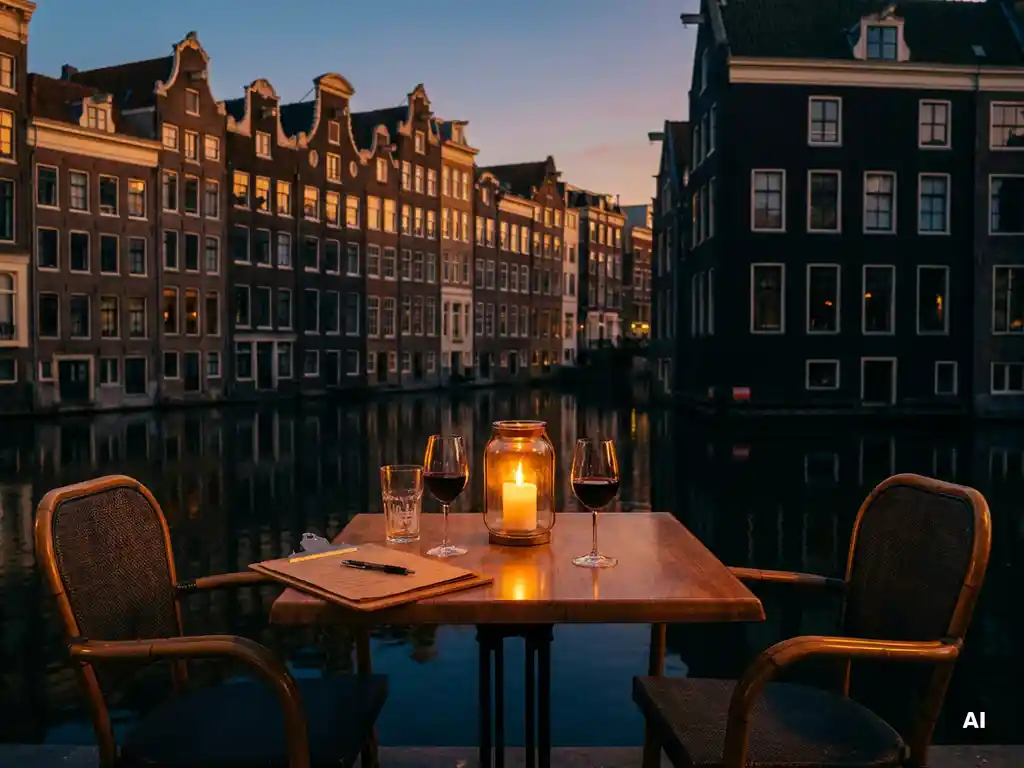
Yes, restaurants in Amsterdam can apply to extend their terrace hours beyond the standard closing times. Extensions are not automatic; they require a formal permit application to the municipality, and approval depends on factors like location, noise sensitivity, and neighbourhood zoning rules. This article walks through how the process works and what restaurants need to know.
What are the standard terrace closing times in Amsterdam?
In Amsterdam, most restaurant terraces must close by 23:00 on weekdays and by 01:00 on Fridays and Saturdays. These are the default closing times set by the municipality for outdoor seating areas. Sunday closing times typically follow the weekday rule, though local district rules can introduce variations.
These times apply to the use of the terrace itself, meaning guests must leave the outdoor area and any furniture must be cleared or secured. The interior of the restaurant may operate under different, separately licensed hours. It is worth noting that “closing” in this context means the terrace must be vacated, not simply that music or service stops.
The standard times exist primarily to protect residents from noise disturbance. Amsterdam is a dense city, and outdoor dining generates a level of ambient noise that carries easily through narrow streets and canal-side buildings. The municipality treats terrace hours as a noise management tool as much as a licensing formality.
How can a restaurant apply to extend its terrace hours?
A restaurant can apply for extended terrace hours by submitting a request to the relevant Amsterdam district office (stadsdeel) as part of its terrace permit application. The application must specify the requested hours, describe the terrace setup, and demonstrate that the extension is compatible with local zoning and noise regulations.
The process generally involves the following steps:
- Check current permit conditions: Review the existing terrace permit to understand what is already approved and what changes require a new or amended application.
- Contact the district office: Each of Amsterdam’s seven districts handles its own terrace permits. The right point of contact depends on where the restaurant is located.
- Submit a formal request: This typically includes the terrace floor plan, proposed hours, and any supporting information about noise mitigation measures.
- Wait for assessment: The district reviews the application, may consult neighbours or local residents, and issues a decision. Processing times vary but can take several weeks.
- Comply with any conditions: Extensions are often granted with conditions attached, such as sound restrictions, reduced furniture after a certain hour, or limits on the number of guests outdoors.
Restaurants applying for the first time or expanding an existing terrace will typically need to go through the full terrace permit application process in Amsterdam before requesting any hour extension.
What factors decide whether an extension gets approved?
Whether a terrace hour extension is approved depends primarily on the location’s zoning classification, the density of nearby residential buildings, and the applicant’s track record with noise complaints. There is no blanket rule; each case is assessed individually by the district.
The most influential factors include:
- Zoning designation: Areas classified as entertainment zones or mixed-use commercial zones are more likely to receive extensions than residential-priority areas.
- Proximity to homes: Terraces directly beneath or adjacent to residential windows face much stricter scrutiny. The closer the housing, the harder the extension is to justify.
- Noise history: A restaurant with prior noise complaints or enforcement actions will find it significantly harder to obtain an extension.
- Proposed mitigation measures: Applicants who can demonstrate noise reduction steps, such as acoustic barriers, reduced music volume, or controlled guest flow, improve their chances.
- Local neighbourhood input: Residents and neighbourhood associations (buurtverenigingen) may be consulted, and sustained objections can block or delay approval.
Are terrace hour rules different across Amsterdam neighbourhoods?
Yes, terrace hour rules do vary across Amsterdam’s districts and neighbourhoods. While the municipality sets baseline standards, each stadsdeel has the authority to apply stricter rules or grant specific exemptions depending on local character and resident density. The result is a patchwork of regulations that can differ street by street.
The Leidseplein and Rembrandtplein areas, for example, historically operate under more permissive frameworks given their established entertainment function. By contrast, quieter residential neighbourhoods in areas like De Pijp or the Jordaan apply tighter controls, even where the street-level appearance might suggest otherwise.
For restaurant operators, this means the district office is always the definitive source of information, not general municipality guidelines. What applies to a terrace on the Amstel may not apply to one two canals away. When in doubt, requesting a pre-application meeting with the local district is a practical first step before investing time in a full permit application.
How Klagen Niet Klagen helps you navigate Amsterdam’s rules
Amsterdam’s permit landscape is dense, often opaque, and occasionally maddening even for people who have lived here for decades. Klagen Niet Klagen exists precisely to cut through that fog, offering honest, insider commentary on how Amsterdam actually works, not how the brochures say it does.
- Straight answers to the questions Amsterdam residents and business owners actually have
- Commentary written from over thirty years of lived experience in the city
- No tourism-board spin, no advertorial softening, just honest, informed perspective
- A growing archive of articles covering Amsterdam city life, culture, and the rules that shape it
If you have a question about Amsterdam that no one seems to answer honestly, get in touch, or keep reading.
And if you want to experience Amsterdam at its most alive and irreverent, an evening at Boom Chicago is hard to beat. Sharp comedy, a warm crowd, and a stage that has been making sense of this city since 1993. Check the shows and agenda and come see what thirty years of Amsterdam life looks like when it is funny on purpose.
Frequently Asked Questions
What happens if a restaurant operates its terrace beyond its permitted hours?
Operating a terrace beyond permitted hours is a violation of the terrace permit and can result in enforcement action by the district, including fines, a formal warning, or in repeated cases, suspension or revocation of the terrace permit altogether. Inspectors from the municipality do carry out checks, particularly in response to noise complaints from residents. For restaurants seeking an extension, a clean compliance record is one of the strongest arguments in their favour, so breaching current conditions is counterproductive on every level.
Can a restaurant appeal if its extension request is rejected?
Yes, restaurants have the right to submit a formal objection (bezwaar) against a rejected application within six weeks of receiving the decision. If the objection is also denied, the case can be escalated to the administrative court (bestuursrechter). In practice, many rejections stem from incomplete applications or insufficient noise mitigation proposals rather than outright policy bars, so it is worth reviewing the grounds for refusal carefully before deciding whether to appeal or simply reapply with a stronger submission.
Is it possible to get a temporary terrace hour extension for a one-off event?
Yes, Amsterdam’s districts can grant temporary or one-off exemptions for special events, such as a private function, a seasonal celebration, or a licensed event night. These are handled separately from the standard permit process and typically require a specific event notification or ontheffing request submitted well in advance. Approval is still subject to the same location and noise sensitivity criteria, and conditions such as guest limits or earlier end times are commonly attached.