
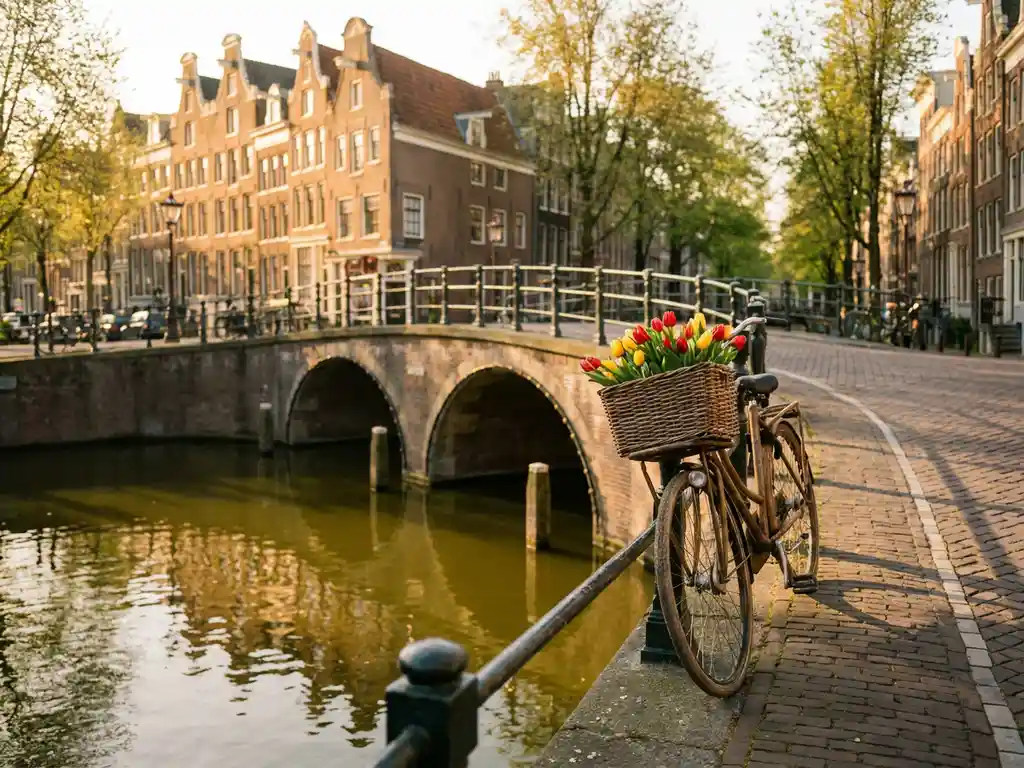
A perfect Amsterdam weekend in 2026 means skipping the tourist traps, picking one or two neighbourhoods as your base, and spending your time the way locals actually do: cycling, eating well, and stumbling into something unexpected. The city rewards people who slow down and stay curious rather than racing through a checklist. Here is how to do it properly.
What does a perfect Amsterdam weekend actually look like in 2026?
A perfect Amsterdam weekend balances spontaneity with a loose structure: a neighbourhood base you can walk and cycle from, a mix of markets, food, water, and culture, and enough breathing room to follow what catches your eye. Two days is enough to go deep if you resist the urge to see everything. The visitors who enjoy Amsterdam most are the ones who treat it like a city, not a theme park.
The honest truth about Amsterdam in 2026 is that the centre is more crowded than ever on weekends. The Rijksmuseum queue, the Anne Frank House, the Red Light District at night: all of these are perfectly real parts of the city, but none of them are where you will find the Amsterdam that makes people want to move here. The best Amsterdam experiences happen slightly off the main drag, in the morning before the tour groups arrive, or in the evening when the day-trippers have gone home.
Think of the weekend in two distinct rhythms: Saturday as the day you explore and eat and move around, Sunday as the day you settle in, slow down, and let the city come to you. That contrast is what makes a two-day visit feel genuinely satisfying rather than exhausting.
Which neighbourhoods should you base yourself in for a weekend?
For a weekend in Amsterdam, the best neighbourhoods to base yourself in are De Pijp, the Jordaan, or Oud-West. All three put you within cycling distance of the city’s highlights while keeping you in areas where actual Amsterdammers live, eat, and spend their weekends. Staying in the historic centre is convenient but noisy, overpriced, and surrounded by souvenir shops.
De Pijp is the most dynamic of the three right now. It has the Albert Cuyp market, a dense concentration of good restaurants across every price point, and a genuinely mixed population that gives it energy without feeling performatively hip. It is also well connected by tram and close enough to the Museumplein that you can walk to the big museums without making a special trip.
The Jordaan suits people who want the classic Amsterdam canal aesthetic without the stag-party chaos of the Leidseplein area. The streets are narrow, the brown cafes are genuine, and the Saturday morning antiques market on the Looiersgracht is one of the best cheap Amsterdam experiences you will find anywhere in the city. Oud-West, meanwhile, is the neighbourhood that feels most like a normal, liveable city: the Kinkerstraat, the Ten Katemarkt, and a run of excellent independent restaurants make it a strong choice if you want to feel like a local rather than a visitor.
What’s the best way to spend a Saturday morning in Amsterdam?
The best Saturday morning in Amsterdam starts early, on a bike, heading to a neighbourhood market before the crowds arrive. The Albert Cuyp market in De Pijp opens at 9am and is at its best before 11. The Ten Katemarkt in Oud-West is smaller and more local. Either one gives you coffee, fresh stroopwafels, and a genuine cross-section of the city in one place.
Renting a bike is not optional. Amsterdam bike routes are built for exactly this kind of morning: flat, well-marked, and surprisingly easy to navigate once you accept that cyclists have right of way over almost everything. The Vondelpark is worth a loop early on a Saturday before it fills up with picnickers and tourists. From there, cycling north through the Jordaan and across to the NDSM wharf on the other side of the IJ gives you a completely different side of the city: industrial, creative, and almost entirely free of tour groups.
If markets are not your thing, the Stedelijk Museum opens at 10am and is consistently less crowded on Saturday mornings than the Rijksmuseum. The collection is world-class modern and contemporary art, and you can be in and out in ninety minutes without feeling rushed. Pair it with a coffee at one of the cafes on the Museumplein and you have a genuinely excellent morning.
Where should you eat and drink across the weekend?
Amsterdam’s food scene in 2026 is genuinely excellent across a wide range of price points, and the best cheap restaurants in Amsterdam are concentrated in De Pijp, Oud-West, and the streets around the Haarlemmerstraat. You do not need to spend a lot to eat well here. The city’s Indonesian and Surinamese restaurants in particular offer outstanding value and reflect Amsterdam’s actual culinary history far better than any tourist-facing Dutch restaurant.
Where to eat well without spending a lot
For a proper Dutch lunch, a broodje haring from a street herring cart is non-negotiable. It costs a few euros, it is authentically local, and it is one of those things that either converts you immediately or confirms that you and the Dutch have different ideas about fish. Either outcome is worth having. For dinner on Friday or Saturday night, look at the streets around the Ferdinand Bolstraat in De Pijp: the density of good, affordable restaurants is hard to match anywhere else in the city.
Where to drink like a local
Amsterdam’s brown cafes are the real drinking culture of the city. These are old, dark, wood-panelled bars that have been serving beer and jenever for decades. Cafe Hoppe on the Spui has been there since 1670. In the Jordaan, almost any brown cafe you walk into on a Saturday afternoon will be the right choice. Avoid the big branded beer terraces on the Leidseplein and Rembrandtplein unless you specifically want to be surrounded by other tourists.
What should you actually skip on a weekend visit?
On a weekend visit to Amsterdam, skip the Anne Frank House queue unless you have pre-booked weeks in advance, avoid the Heineken Experience entirely, and do not waste a precious Saturday evening in the Red Light District unless you are genuinely curious rather than just following a travel guide. These are not bad experiences, but they consume time and energy that would be better spent on things the city does uniquely well.
The canal boat tours deserve a more nuanced answer. An Amsterdam canal tour can be one of the best ways to understand the city’s layout and history, but the big open-top group boats that depart from Centraal Station are loud, crowded, and narrated in seven languages simultaneously. If you want to see Amsterdam from the water, rent a small electric boat with a group of friends and navigate the canals yourself. It is cheaper, quieter, and genuinely one of the best Amsterdam experiences available to a visitor.
Also worth skipping: any restaurant with a laminated menu and photos of the food displayed outside. Amsterdam has enough genuinely good places to eat that there is no reason to settle for tourist-trap pricing and mediocre bitterballen.
How do you make Sunday in Amsterdam feel different from Saturday?
Sunday in Amsterdam has a different energy: slower, quieter, and more local. The best way to make Sunday feel distinct is to go north. The Amsterdam Noord neighbourhood across the IJ ferry is one of the city’s most interesting areas for a Sunday morning: the EYE Film Institute, the A’DAM Tower, and the NDSM creative quarter are all within cycling distance of each other, and the ferry from behind Centraal Station is free and runs every few minutes.
Sunday is also the day to consider an Amsterdam day trip if you have already seen the city’s main neighbourhoods. Haarlem is twenty minutes by train and has a beautiful historic centre, excellent museums, and a fraction of the tourist density. Leiden is slightly further but equally rewarding. Both work as half-day trips that leave you back in Amsterdam in time for a Sunday evening meal.
If you are staying in the city, Sunday afternoon is when the Vondelpark reaches its best: families, musicians, people reading on the grass, and a general sense that Amsterdam is doing exactly what it wants to be doing. End the weekend with dinner somewhere in the Jordaan, a final beer in a brown cafe, and the quiet satisfaction of having actually seen the city rather than just photographed it.
How Klagen Niet Klagen helps you plan a real Amsterdam weekend
Most Amsterdam weekend guides are written by people who spent three days here on a press trip. Klagen Niet Klagen is written by someone who has lived and worked in the city since 1993, built one of its most beloved cultural institutions, and has strong opinions about what makes Amsterdam genuinely worth your time and what is just noise.
- Honest, insider commentary on Amsterdam neighbourhoods, food, culture, and city life, written in English for people who want more than a listicle
- A clear Klagen / Niet Klagen framework: the good, the frustrating, and the things that make Amsterdam impossible to leave
- Long-form essays and opinion pieces that hold up over time, not trend-chasing content that expires in a week
- A perspective shaped by over thirty years of lived Amsterdam experience, not a tourism board brief
If you want to understand Amsterdam rather than just visit it, the blog archive is the place to start. Read a few pieces before you arrive and you will see the city completely differently.
And while you are planning your weekend, put one evening aside for Boom Chicago. After more than thirty years, it remains one of the sharpest, funniest, most Amsterdam-specific things you can do on a night out in this city. The shows are in English, the comedy is genuinely good, and the audience is a perfect mix of locals and international visitors who all end up laughing at exactly the same things. Check the current shows and agenda and book ahead, especially on weekends. It is the kind of evening that makes you feel like you actually got Amsterdam, not just passed through it.
Frequently Asked Questions
How far in advance should I book accommodation in Amsterdam for a weekend trip in 2026?
For a weekend visit in 2026, aim to book at least 6–8 weeks in advance, especially if you want to stay in De Pijp, the Jordaan, or Oud-West — the neighbourhoods most worth your time. Weekend availability in these areas fills up fast, and last-minute options tend to push you back into the overpriced, noisy centre. Use booking platforms with a neighbourhood filter and prioritise location over hotel stars.
Is it easy to rent a bike as a visitor, and do I need any prior cycling experience?
Renting a bike in Amsterdam is straightforward — rental shops are everywhere, and most require nothing more than a deposit and an ID. You do not need to be an experienced cyclist, but you do need to pay attention: tram tracks, pedestrians stepping off pavements, and other cyclists moving fast are all genuine hazards. Spend the first ten minutes on quieter side streets to get your bearings before joining the main cycling routes, and always use the designated bike lanes.
What's the best way to get from Amsterdam Centraal to the neighbourhoods recommended in this post?
De Pijp, Oud-West, and the Jordaan are all reachable from Centraal Station in under 20 minutes by tram, and even faster by bike. Trams 3 and 12 cover most of the key routes south, and the GVB app makes navigation easy with real-time departures. If you arrive with luggage, take the tram to your accommodation first, then rent a bike for the rest of the weekend — it is the most practical and enjoyable way to move around.