
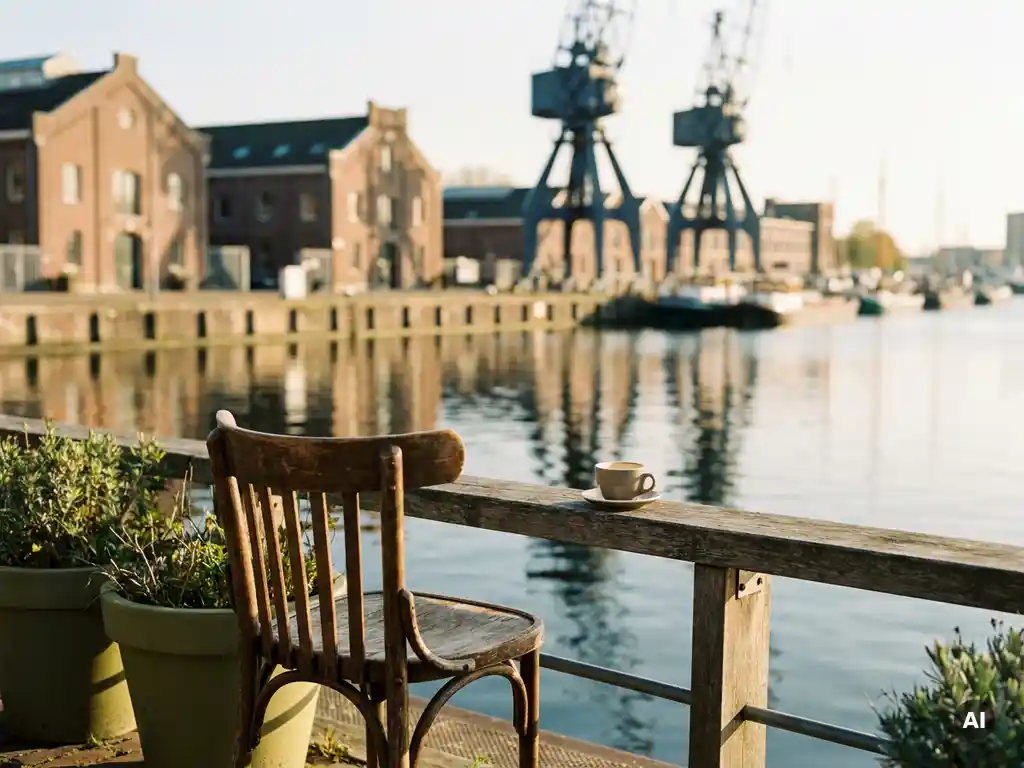
Marineterrein Amsterdam is no longer a hidden gem, but it is not overrun either. It sits in that interesting middle ground: known enough to attract a steady crowd, but still relaxed enough to feel like a genuine local spot rather than a tourist attraction. Whether it feels busy or quiet depends heavily on the day, the season, and what you are there to do. Here is what you actually need to know before you go.
What is Marineterrein Amsterdam actually like now?
Marineterrein Amsterdam is a former naval complex turned open innovation district on the eastern edge of the city centre. It is a working campus during the week, home to tech startups, research institutes, and creative organisations, but it opens up to the public in ways that most Amsterdam neighbourhoods simply do not. The waterfront is freely accessible, the swimming spot in the IJ is one of the few places in the city where you can legally and safely take a dip, and the overall atmosphere is genuinely relaxed.
What makes Marineterrein feel different from, say, the NDSM wharf or the Houthavens is the mix of functions happening simultaneously. On a warm afternoon you might have people swimming, researchers cycling between buildings, a food truck doing brisk business, and a group of kids playing near the water. It does not feel staged or curated in the way that some Amsterdam “hip neighbourhood” spots do. There is a functional quality to it that keeps things honest.
The terrain itself is spacious by Amsterdam standards. The open layout means that even when people are around, it rarely feels claustrophobic. That is a genuine rarity in a city where every square metre of public space is contested.
How busy does Marineterrein get on a typical day?
On a typical weekday, Marineterrein is quiet. The campus workers are there, but the public areas feel calm and unhurried. Weekends and warm summer days are a different story: the swimming spot draws a real crowd, and the waterfront fills up with people looking to enjoy the sun, the water, and the relative peace. It gets busy, but not unpleasantly so.
The peak moments to be aware of are:
- Sunny summer weekends: The IJ swimming spot becomes genuinely popular, and you will share the waterfront with a lot of people. Arrive early or come on a weekday.
- After-work hours in good weather: The transition from campus to social space happens fast when the sun is out. Expect a lively crowd between 5 and 8 in the evening.
- Events and open days: Marineterrein occasionally hosts public events that bring in larger numbers. Worth checking before you visit.
Outside of those windows, the terrain is consistently calm. It is one of the few spots in central Amsterdam where you can genuinely sit by the water without feeling like you are in competition with half the city for a patch of ground.
Who actually goes to Marineterrein, tourists or locals?
Marineterrein draws mostly locals and Amsterdam residents rather than tourists. The crowd skews young, educated, and city-savvy: the kind of people who know their way around Amsterdam well enough to have moved beyond the Vondelpark and the Jordaan. You will find expats, students, campus workers, and neighbourhood regulars. International visitors are rare, partly because Marineterrein does not appear prominently on most tourist itineraries and partly because it lacks the obvious “attraction” hook that draws tour groups.
That local character is a big part of what makes it appealing. The atmosphere is relaxed in the way that only places without a tourist economy tend to be. Nobody is selling you anything particularly hard. Nobody is posing for content in a way that makes you feel like you have stumbled into someone else’s Instagram shoot. It feels like a place people actually use rather than perform in.
That said, word is spreading. As the Marineterrein swimming spot gets mentioned more frequently as a new hotspot in Amsterdam, the balance may shift. For now, though, it remains predominantly a local affair.
Is Marineterrein still worth visiting in 2026?
Yes, Marineterrein is absolutely worth visiting in 2026, particularly if you are looking for a swimming spot that does not feel like a tourist attraction, or if you want a waterfront experience that reflects how Amsterdam residents actually spend their time. It is one of the more genuinely interesting public spaces the city has developed in recent years, and it has not yet lost the quality that makes it interesting.
The case for going:
- The IJ swimming spot is one of the best in the city, and access remains free and open.
- The atmosphere is relaxed and authentically local in a way that is increasingly hard to find in central Amsterdam.
- The terrain is spacious enough that even on busy days it does not feel overwhelming.
- It offers a genuinely different side of Amsterdam that most visitors and even many long-term residents have not explored.
The case for managing your expectations: if you arrive on a hot Saturday afternoon expecting to have the waterfront to yourself, you will be disappointed. And if you come hoping for a polished experience with clear signage, a bar, and a well-staffed swimming area, this is not that. Marineterrein rewards people who are comfortable with a slightly rough-around-the-edges, functional Amsterdam vibe. If that sounds like you, it is one of the better things the city has going right now.
How Klagen Niet Klagen helps you find the real Amsterdam
Marineterrein is exactly the kind of place that Klagen Niet Klagen exists to write about: not a tourist trap, not a PR-polished hotspot, but a real part of the city that rewards curiosity and honest assessment. If you want Amsterdam commentary that goes beyond the surface, this is where you will find it.
- Honest, insider takes on Amsterdam neighbourhoods, spots, and cultural moments, written by someone who has lived and worked here for over three decades.
- No tourism board influence, no advertorial pressure, no sanitised city-guide framing.
- Long-form essays and opinion pieces that give you the full picture, including the parts that are less flattering.
- Content written for expats, curious visitors, and internationally minded Amsterdammers who want more than a top-ten list.
If this piece gave you a more useful picture of Marineterrein than you would have found elsewhere, there is plenty more where that came from. Explore the full blog archive and find your next Amsterdam rabbit hole. And if you want to get in touch or share your own take, the contact page is always open.
One more thing: if you are spending time in Amsterdam and want to experience the city at its most alive, come and see a show at Boom Chicago. After more than thirty years, it remains one of the sharpest, funniest, and most genuinely Amsterdam things you can do on a night out. Check the shows and agenda and book before it sells out, it does.
Frequently Asked Questions
Can you actually swim at Marineterrein, and is it safe?
Yes, the IJ swimming spot at Marineterrein is one of the few places in Amsterdam where swimming is both legal and considered safe. The water quality is monitored, and the setup is designed for public use, though it is not a staffed or lifeguarded facility in the traditional sense. Come prepared: bring your own towel, know your swimming ability, and do not expect the infrastructure of a managed lido.
What is the best time of day to visit Marineterrein if I want to avoid the crowds?
Weekday mornings are your best bet for a genuinely quiet visit. The campus workers are around, but the public areas feel calm and the waterfront is largely yours. If a weekend visit is unavoidable, aim to arrive before 11am on a sunny day, as the swimming spot fills up quickly once the temperature rises. Overcast days are also surprisingly pleasant and noticeably less busy.
Is there anything to eat or drink at Marineterrein, or should I bring my own?
There is usually a food truck or two operating on the terrain, particularly on warmer days and weekends, but the offering is limited and inconsistent. Do not rely on finding a full café setup or a well-stocked bar. The safest approach is to bring your own food and drinks, which also fits the relaxed, self-sufficient vibe of the place far better than expecting a hospitality service.
How do I get to Marineterrein from the city centre?
Marineterrein is easily reachable by bike from the city centre in around 10 to 15 minutes, which is by far the most practical option and the way most locals arrive. Public transport is also viable: tram and bus connections to the eastern docklands area are reasonably good, and the terrain is walkable from several stops. Arriving by car is possible but parking in this part of Amsterdam is limited and not really in the spirit of the place.
Are there any rules or access restrictions I should know about before visiting?
Marineterrein is a working campus, which means some buildings and areas are not publicly accessible. The waterfront and outdoor public spaces are freely open, but you should expect to encounter gates, security points, or restricted zones if you wander deeper into the campus. Respect the working environment, particularly on weekdays, and stick to the clearly public-facing areas unless you have a specific reason to be elsewhere.
Is Marineterrein suitable for families with young children?
It can be, with some caveats. The open space and waterfront make it appealing for families, and the relaxed atmosphere is a genuine plus. However, the swimming area is not a supervised or child-proofed facility, so parents need to be attentive near the water. The terrain is also not particularly set up for young children in terms of play equipment or dedicated family amenities, so manage expectations accordingly.
Will Marineterrein still feel like a local spot in a few years, or is it heading toward becoming a tourist attraction?
That is the honest question hanging over the place. For now, it remains predominantly local, but the trajectory is worth watching. As the IJ swimming spot gains more mentions in travel media and Amsterdam recommendation lists, the crowd composition will likely shift gradually. The best way to experience Marineterrein as it currently is, rather than as it might become, is to go sooner rather than later and to visit on a weekday when the tourist-to-local ratio is most favourable.