
Is Amsterdam worth visiting in winter?
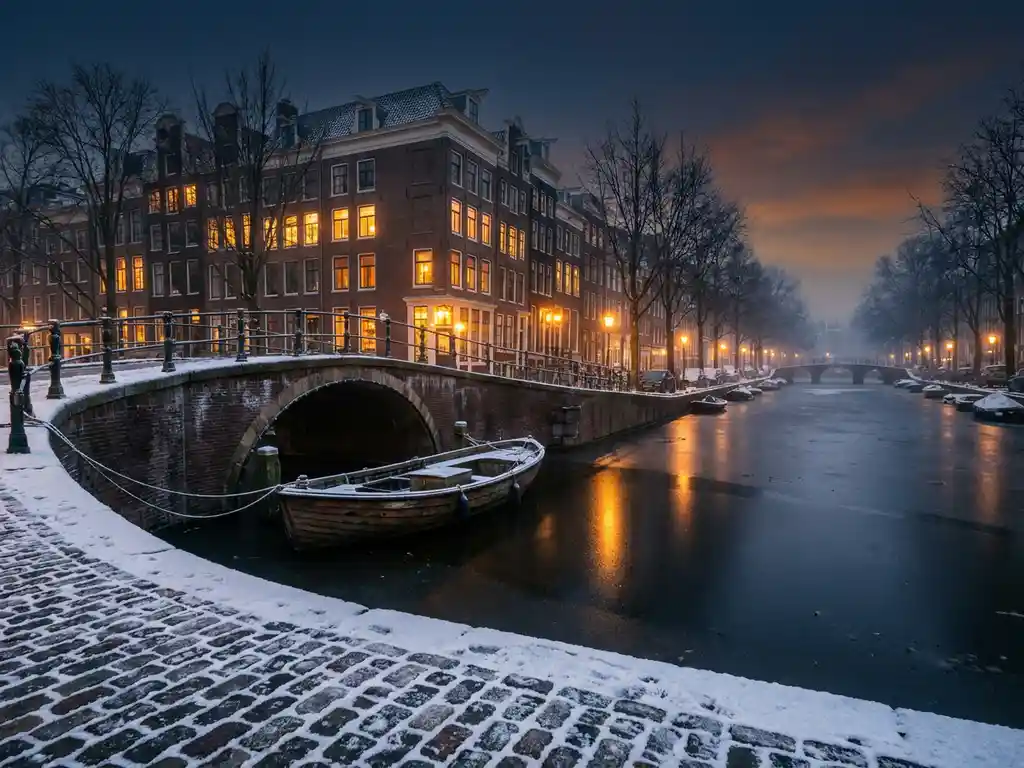
Amsterdam in winter is absolutely worth visiting. The city loses its summer crowds, prices fall across hotels and attractions, and the canals and gabled houses look genuinely magical under grey skies and occasional frost. For anyone who wants to experience Amsterdam as a living city rather than a theme park, winter is one of the most rewarding times to come.
The honest caveat is that Dutch winter weather is not romantic in the postcard sense. It is cold, frequently wet, and reliably grey from November through February. But Amsterdammers have built an entire culture around making the indoors feel worth staying in, and that culture is very much on display in winter. Cosy brown cafés, excellent museums with manageable queues, and a genuine sense that the city belongs to its residents again, rather than tour groups, make the season compelling for anyone with a genuine curiosity about Amsterdam.
If your priority is sunshine and outdoor dining, come in June. If your priority is actually understanding Amsterdam, winter makes a strong case.
What are the most popular indoor activities in Amsterdam in winter?
The most popular indoor activities in Amsterdam in winter include the Rijksmuseum, the Van Gogh Museum, the Anne Frank House, the Amsterdam Museum, and live performances at venues like Boom Chicago. These options cover art, history, comedy, and culture, and most are within walking or cycling distance of the city centre.
The Rijksmuseum is the obvious anchor. Its collection of Dutch Golden Age painting, including Rembrandt and Vermeer, is world-class by any standard, and winter queues are a fraction of what you face in summer. Book a timed entry in advance regardless of the season, but in January or February you will often find yourself in rooms that feel genuinely uncrowded, which is how great art should be experienced.
The Van Gogh Museum is similarly excellent in winter. The permanent collection tells the story of Van Gogh’s development as a painter with unusual clarity, and the smaller crowds mean you can actually stand in front of a painting and think, rather than being shuffled forward by the group behind you.
For something less expected, the Amsterdam Museum of the Tropics (Tropenmuseum) is a genuinely underrated option, and the EYE Film Institute across the IJ offers a striking building, a strong programme, and a café with one of the better views in the city. For live comedy and improv shows, Boom Chicago runs performances throughout the winter season, which makes for a warm, high-energy evening that is distinctly different from a museum visit.
Where can you go ice skating in Amsterdam?
The main ice skating options in Amsterdam in winter are the temporary outdoor rink at Museumplein, which typically opens in December and runs through January, and the indoor Jaap Eden IJsbaan in the east of the city, which operates as a full-size rink throughout the winter season. Natural skating on the canals happens occasionally but cannot be counted on.
Museumplein is the most atmospheric option. Skating in front of the Rijksmuseum with mulled wine available nearby is exactly as enjoyable as it sounds, and the rink is accessible for all skill levels. It gets busy on weekends, so a weekday morning visit is the smarter move.
The Jaap Eden IJsbaan is the choice for serious skaters or anyone who wants a longer session. It is a full Olympic-size rink, well-maintained, and less crowded than Museumplein. Skate rental is available at both venues.
The dream of skating the canals is real but rare. The canals freeze only when temperatures stay well below zero for an extended period, which happens perhaps once every several years. When it does happen, the entire city comes out, and it is one of those Amsterdam experiences that locals talk about for decades. Do not plan your trip around it, but if the temperature forecast looks promising, pay attention.
What are the best Amsterdam winter markets and festivals?
The best Amsterdam winter markets and festivals include the Amsterdam Light Festival, which runs from late November through January, and a range of Christmas and winter markets concentrated around the Amstelveld, the Spui, and various neighbourhood squares. These events give Amsterdam’s winter calendar a genuine sense of occasion.
The Amsterdam Light Festival is the standout event of the winter season. Artists from around the world create large-scale light installations along the canals and in public spaces across the city. You can experience it on foot, by bicycle, or on a canal boat, and the boat route in particular offers a perspective on Amsterdam’s canal architecture that is hard to match at any other time of year. The festival has grown considerably in quality and ambition over the years and is now a legitimate cultural event rather than just a tourist attraction.
Winter markets in Amsterdam tend to be smaller and more neighbourhood-focused than their German counterparts, which is either a feature or a limitation depending on your expectations. The Amstelveld market and the various neighbourhood versions in the Jordaan and De Pijp are worth an hour of your time and feel authentically local rather than staged for visitors.
What are the cosiest cafés and bars to visit in winter?
The cosiest cafés and bars in Amsterdam in winter are the traditional brown cafés, known locally as bruine kroegen. These are wood-panelled, candlelit, and built around the Dutch concept of gezelligheid, which translates loosely as cosiness or conviviality but carries a deeper cultural weight. The Jordaan neighbourhood has the highest concentration of genuinely good ones.
Café ‘t Smalle on the Egelantiersgracht and Café Papeneiland on the Prinsengracht are two of the most atmospheric. Both have been operating for well over a century, and both feel entirely unchanged by the passage of time, which in Amsterdam is either a compliment or a mild criticism depending on your mood. In winter, with rain against the windows and a glass of Dutch jenever in hand, they are hard to beat.
For coffee rather than alcohol, Amsterdam has developed a genuinely strong specialty coffee culture over the past decade. Neighbourhood roasters and independent cafés in the Jordaan, De Pijp, and Oud-West offer excellent coffee alongside the kind of unhurried atmosphere that makes a winter afternoon in Amsterdam feel like a reasonable use of a life. The key difference from a tourist café is that these places are full of people who actually live here, which changes the energy entirely.
How cold does Amsterdam get in winter and what should you wear?
Amsterdam winters are cold and damp rather than severely cold. Average temperatures in December, January, and February sit between 2°C and 7°C, with frost possible but heavy snowfall rare. The combination of wind and persistent rain makes it feel colder than the numbers suggest, so layering and waterproofing are more important than heavy insulation alone.
The practical Amsterdam winter wardrobe is built around a few non-negotiable items. A waterproof outer layer is essential, not optional. Dutch rain is not always dramatic, but it is persistent and horizontal when the wind picks up. Good waterproof shoes or boots matter more than most visitors expect, particularly if you plan to cycle, which you should.
- Waterproof jacket or coat: The single most important item. A stylish wool coat looks better but will be soaked within twenty minutes of a typical Amsterdam afternoon.
- Thermal base layers: Lightweight merino wool base layers add significant warmth without bulk and work well under normal clothes.
- Waterproof shoes or ankle boots: Amsterdam’s cobblestones collect water, and wet feet will end a good day quickly.
- Gloves, hat, and scarf: Wind off the canals is real. These are not optional accessories in January.
- Packable umbrella: Amsterdammers cycle through rain rather than using umbrellas, but as a visitor on foot, a compact umbrella earns its place in a bag.
The broader point is that Amsterdam in winter rewards preparation. Dress well for the conditions and the city opens up. Dress poorly and you spend the afternoon looking for somewhere warm to stand, which is a waste of a genuinely interesting place to be.
How Klagen Niet Klagen helps you get more from Amsterdam in winter
Most Amsterdam content online was written by someone who visited for four days in August and has strong opinions about stroopwafels. Klagen Niet Klagen is something different: honest, long-form commentary on Amsterdam written by someone who has lived and worked here for over thirty years and has no reason to make the city sound better or worse than it actually is.
- Practical, opinionated guidance on Amsterdam neighbourhoods, seasons, and experiences, written for people who want depth rather than a listicle
- Cultural context that helps you understand why Amsterdam works the way it does, not just what to do while you are here
- An honest take on what is genuinely worth your time and what is overrated, including in winter
- Regular new essays and commentary on the blog archive covering everything from city life to Dutch culture to the contradictions that make Amsterdam endlessly interesting
If you want to understand Amsterdam rather than just visit it, Klagen Niet Klagen is the place to start.
And if you are looking for something genuinely entertaining to do on a winter evening in Amsterdam, Boom Chicago has been making audiences laugh since 1993. The shows are sharp, fast, and rooted in the kind of honest Amsterdam perspective that this blog tries to bring to writing. Check the current shows and agenda and book ahead, because a warm room full of people laughing is exactly what a cold Amsterdam evening calls for. Questions? Get in touch directly.
Frequently Asked Questions
Is it possible to cycle in Amsterdam in winter, or is it better to use public transport?
Cycling in Amsterdam in winter is entirely doable and is genuinely how most locals get around, even in rain and cold. The key is dressing appropriately — waterproof jacket, gloves, and sturdy shoes — and accepting that you will occasionally get wet. If cycling feels like too much, Amsterdam’s tram and metro network is excellent and covers most of the city efficiently, but renting a bike for at least part of your visit gives you a perspective on the city that no tram window can match.
How far in advance should I book hotels and attractions for a winter visit to Amsterdam?
For most of winter — particularly January and February — Amsterdam is relaxed enough that you do not need to book months ahead, but a week or two in advance for hotels is sensible to secure good rates. The Anne Frank House is the main exception and requires advance booking year-round, as timed entry slots fill up quickly regardless of season. The Amsterdam Light Festival period (late November through January) also sees a modest uptick in visitors, so booking accommodation earlier during those weeks is worthwhile.
What are the most common mistakes first-time winter visitors make in Amsterdam?
The most common mistake is underestimating the wind and rain and arriving without proper waterproof gear — a wool coat and fashion trainers will make you miserable within hours. A close second is not booking the Anne Frank House in advance and losing an afternoon to a sold-out queue. Many first-time visitors also overlook the neighbourhoods beyond the city centre, particularly the Jordaan and De Pijp, which are where Amsterdam’s best brown cafés, independent coffee shops, and local winter atmosphere are actually found.