
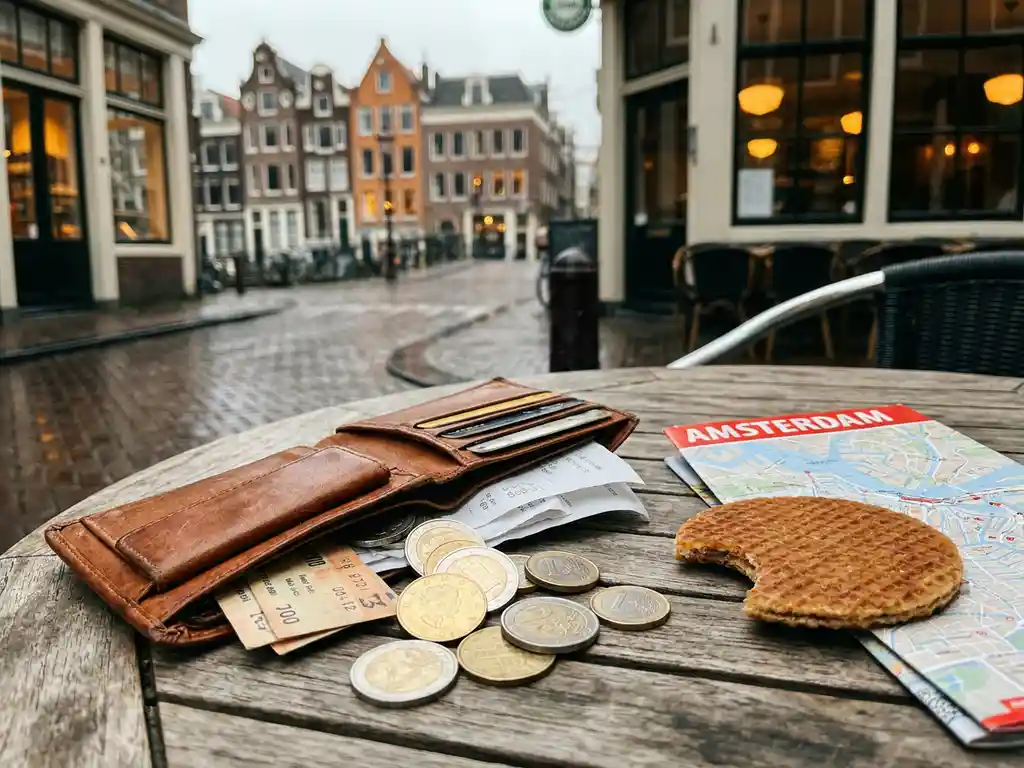
Amsterdam’s hidden costs catch most visitors off guard, and the total bill often runs 20 to 40 percent higher than travellers expect based on headline prices alone. Tourist tax, museum surcharges, transport fees, and the sheer cost of eating and drinking in a major European city all stack up fast. The sections below break down exactly where the money goes — and how to plan around it.
How much does Amsterdam’s tourist tax actually add to your bill?
Amsterdam’s tourist tax adds a meaningful chunk to every hotel stay. As of 2026, the city charges 12.5 percent of the room rate per night as a tourist tax (toeristenbelasting), on top of whatever you’ve already paid for the room. On a 150-euro-per-night hotel room for four nights, that’s an extra 75 euros you won’t see advertised on most booking platforms until checkout.
This is one of the highest tourist tax rates in Europe, and Amsterdam has raised it repeatedly over the years as the city tries to manage visitor numbers. Cruise passengers also pay a flat per-person fee when docking. The tax applies to hotels, hostels, Airbnb-style rentals, and campsites alike, so there’s no category of accommodation that escapes it. Budget carefully: always check the total price including taxes before booking, because the difference between the displayed rate and the final bill can be genuinely surprising.
Why is eating and drinking in Amsterdam so expensive?
Eating and drinking in Amsterdam is expensive primarily because of high labour costs, steep rents in the city centre, and the Netherlands’ relatively high VAT on food and hospitality. A sit-down lunch for two in a mid-range canal-side restaurant can easily cost 50 to 70 euros before any drinks. Add a couple of beers or glasses of wine and you’re well past 80.
The tourist trap factor is real and geographic. Restaurants within a five-minute walk of Dam Square, the Rijksmuseum, or the Anne Frank House operate in one of the most expensive real estate markets in the Netherlands. Their rent is enormous, and that cost lands directly on your plate. The Amsterdam locals guide principle applies here: the further you walk from the postcard-perfect spots, the better the value.
For genuinely affordable eating, the Pijp neighbourhood, Oud-West, and the streets around Javastraat in Oost are where locals actually eat. These areas offer some of the best cheap restaurants Amsterdam has to offer — think Indonesian, Surinamese, and Turkish spots where a full meal costs under 15 euros. The tourist corridor is simply a different economy.
What are the fees tourists miss when visiting Amsterdam museums?
The most commonly missed museum fee in Amsterdam is the booking surcharge. The Rijksmuseum, the Van Gogh Museum, and the Anne Frank House all require timed entry tickets booked in advance, and they charge an additional booking or service fee on top of the base admission price. At the Anne Frank House, for instance, this surcharge has historically added several euros per ticket to the already high entry cost.
Beyond surcharges, many visitors don’t account for the full cost of the Amsterdam Museum Card (Museumkaart). While the card pays for itself quickly if you’re visiting multiple institutions, it has an upfront cost of around 65 euros for adults, and not every museum or attraction in the city accepts it. The EYE Film Museum, NEMO Science Museum, and several smaller galleries are included, but the Anne Frank House is not, which surprises a lot of visitors.
Coat and bag check fees, audio guide rentals, and paid photography permits in certain venues are smaller costs that add up across a multi-day museum itinerary. None of these are hidden in a deceptive sense, but they’re rarely factored into pre-trip budgets. Budget an extra 5 to 10 euros per museum visit beyond the headline ticket price and you’ll be closer to the real number.
How much do transport costs add up for visitors in Amsterdam?
Transport costs in Amsterdam can add 15 to 25 euros per person per day if you’re relying on public transit and occasional taxis without a plan. A single GVB tram or metro journey costs around 1.08 euros with an OV-chipkaart, but buying disposable single-use tickets is significantly more expensive, and many visitors don’t realise the OV-chipkaart requires a deposit plus a minimum balance to function.
Bike rental is often the smarter financial move for stays of more than two days. A decent rental bike costs roughly 12 to 18 euros per day, but day rates drop considerably on multi-day rentals. For visitors who want to explore Amsterdam bike routes properly — including the longer rides out to Vondelpark, the IJ waterfront, or even day trips to nearby towns — a rental bike pays for itself in saved tram fares within a day or two.
Taxis and ride-hailing services are expensive by European standards. A short trip across the centre can cost 12 to 18 euros. Canal tours, ferries to the NDSM Wharf, and tourist water taxis add further transport costs that visitors rarely budget for in advance. The free GVB ferries behind Centraal Station are a legitimate exception and one of the genuinely free things to do in Amsterdam worth knowing about.
Are there entry fees or fines tourists don’t expect in Amsterdam?
Yes. Amsterdam has several fees and fines that catch visitors off guard. The most financially painful is the fine for cycling without lights after dark, which can run to 100 euros or more. Rental companies don’t always provide lights automatically, and the police do enforce this, particularly in autumn and winter when darkness falls early.
Smoking cannabis in public is technically restricted to designated areas, and fines for violations in prohibited zones have increased as the city tightened enforcement. Drinking alcohol on the street in certain areas, particularly around Centraal Station and Leidseplein, is also subject to fines. These aren’t obscure technicalities — they’re actively enforced, especially during busy periods.
Parking costs for visitors arriving by car are among the highest in Europe in the city centre, with rates exceeding 7 euros per hour in some zones. Many visitors assume the park-and-ride facilities outside the ring road are optional conveniences rather than the sensible, much cheaper alternative they actually are. And if you overstay a paid parking slot, the clamping and release fee is genuinely eye-watering.
What’s the cheapest time of year to visit Amsterdam?
The cheapest time to visit Amsterdam is January through early March, excluding the Christmas and New Year period. Hotel rates drop significantly, museums are quieter, and the city feels more like itself — less performative, more lived-in. The Amsterdam weather guide reality is that winters are cold, grey, and often rainy, but rarely extreme, and the canal scenery in winter light has its own appeal.
Late November is also good value before the Christmas markets arrive and push prices back up. The shoulder seasons of April and October are a middle ground: better weather than deep winter, but prices start climbing in April as tulip season draws visitors from across the world. Keukenhof is open only in spring, which makes that period unavoidably busy and expensive around the bulb fields.
Summer — June through August — is peak pricing season across every category: hotels, restaurants, canal tours, and bike rentals all cost more. If your schedule is flexible, a late January or February visit offers the biggest savings and some of the most authentic Amsterdam experiences, simply because the city isn’t performing for an audience of millions.
How Klagen Niet Klagen helps you spend smarter in Amsterdam
Knowing what Amsterdam actually costs is the difference between a trip that delivers and one that leaves you feeling shortchanged. Klagen Niet Klagen exists precisely to give you the kind of honest, insider perspective that tourism boards and booking platforms won’t. Here’s what the blog brings to the table:
- Honest takes on where Amsterdam’s costs are justified and where they’re a straight-up tourist premium
- Neighbourhood-level guidance on the best cheap restaurants Amsterdam actually has, written by someone who eats there regularly
- Commentary on Amsterdam’s best neighbourhoods from the perspective of someone who has lived and worked in the city for over three decades
- Practical, opinionated advice on the best Amsterdam experiences that don’t require spending a fortune
- Long-form essays that go beyond the surface to explain why the city works the way it does
Browse the full blog archive for more articles that cover Amsterdam from the inside out — not as a destination to be marketed, but as a city worth understanding.
And while you’re planning your Amsterdam visit, don’t overlook one of the city’s genuinely great evenings out. Boom Chicago’s shows have been making Amsterdam audiences laugh since 1993 — sharp, improvised, and entirely in English. If you want to experience the city’s creative energy in a room full of people who actually live here, check the agenda and book a seat. It’s the kind of night that makes Amsterdam feel like a place you understand, not just one you’ve visited.
Frequently Asked Questions
How much should I realistically budget per day for Amsterdam beyond accommodation?
A realistic daily budget beyond accommodation is around 80 to 120 euros per person for a mid-range experience — covering meals, transport, one museum entry, and a drink or two. If you’re eating away from the tourist corridor, using an OV-chipkaart or rental bike, and booking museum tickets in advance to avoid last-minute premium options, you can comfortably come in at the lower end. Budget travellers eating at local spots in De Pijp or Oost and cycling everywhere can manage on 50 to 60 euros per day, while those dining canal-side and taking taxis regularly should plan for 150 euros or more.
What's the single most common budgeting mistake first-time visitors to Amsterdam make?
The most common mistake is budgeting based on the room rate alone and ignoring the 12.5 percent tourist tax, booking surcharges, and the cumulative cost of transport and museum fees. Many visitors also underestimate how quickly food and drink costs escalate when eating in the tourist corridor — a couple of meals near the Rijksmuseum or Anne Frank House can blow a full day’s food budget in one sitting. The fix is simple: always check the final checkout total when booking accommodation, pre-book museum tickets to see the real all-in price, and build in a 20 to 30 percent buffer on your overall trip estimate.
Is the Museumkaart worth buying for a short trip, or only for longer stays?
The Museumkaart starts paying for itself from around three to four museum visits, so for a three-day trip with a packed cultural itinerary it can absolutely be worth the roughly 65-euro upfront cost. The key caveat is to check which museums on your personal list actually accept it — the Anne Frank House is the most notable exclusion, and some visitors build an itinerary around the card only to find their top priority isn’t covered. If your list includes the Rijksmuseum, Van Gogh Museum, Stedelijk, EYE, and NEMO, the card pays for itself easily within a single day of museum-hopping.