
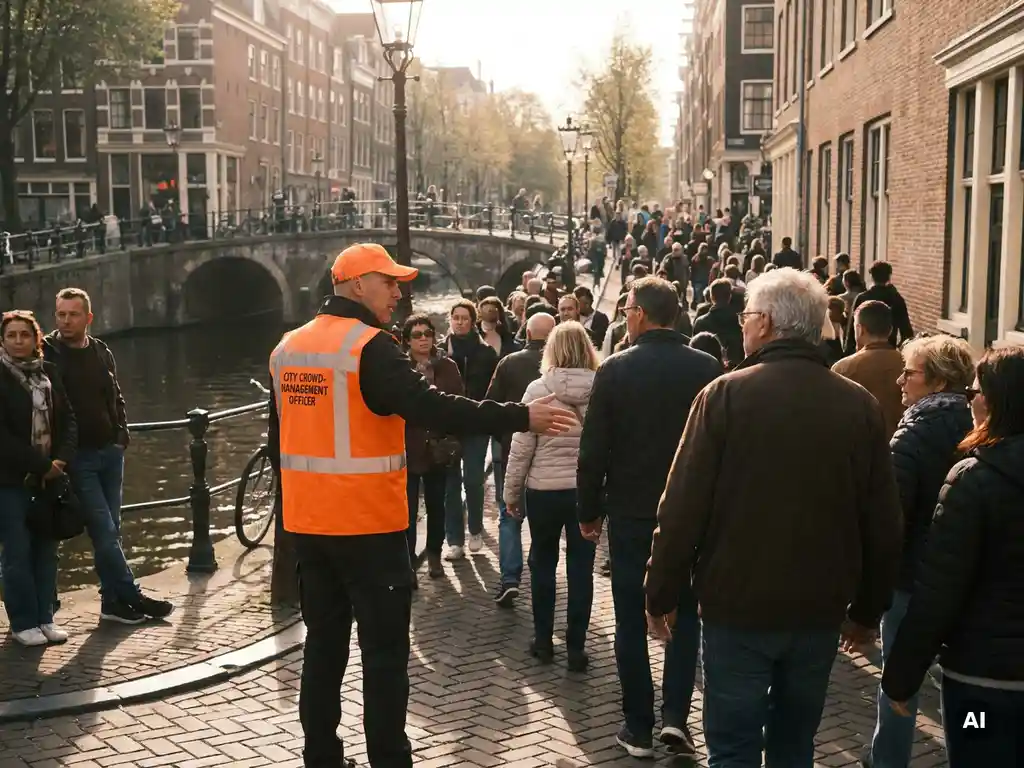
Amsterdam has introduced a range of measures to manage crowds in the city centre, including tourist taxes, cruise ship restrictions, hotel moratoriums, and active campaigns to redirect visitors to less-visited neighbourhoods. The city has made crowd control a formal policy priority, particularly since the post-pandemic surge in visitor numbers. Below, this article unpacks what those measures actually look like, whether they are working, and what more could realistically be done.
Which specific measures has Amsterdam introduced to reduce downtown crowding?
Amsterdam has introduced several concrete measures targeting crowds in the Amsterdam city centre, ranging from financial disincentives to outright bans. The most significant include a raised tourist tax, restrictions on new hotel construction, a ban on new short-stay rental licenses in the most crowded districts, and the phased removal of large cruise ships from the central IJ waterfront.
The tourist tax in Amsterdam is now among the highest in Europe, which is a deliberate signal rather than just a revenue tool. The city has also banned alcohol consumption in certain streets around the Red Light District during peak hours, introduced fines for disruptive behaviour, and limited the number of tour groups allowed in specific areas at one time. Some streets in De Wallen have seen physical interventions too, with barriers and signage designed to slow foot traffic and reduce the sense of a free-for-all.
Perhaps the most symbolically significant move was the decision to relocate cruise ship terminals away from the city centre. Large ships docking within walking distance of Dam Square deposited thousands of day-trippers at once into an already saturated area. Moving those terminals further from the centre was a meaningful structural change, not just a cosmetic one.
How does Amsterdam spread visitors away from the city centre?
Amsterdam actively promotes what it calls “spreading”, encouraging visitors to explore neighbourhoods beyond the historic centre. The city’s tourism board, now rebranded with a deliberately low-key identity, has run campaigns specifically aimed at steering tourists toward areas like Amsterdam Noord, Oost, and the Nieuw-West district rather than concentrating them in the canal belt and De Wallen.
The logic is straightforward: if you cannot reduce the total number of visitors, you can at least dilute their impact by distributing them across a larger urban footprint. Practical tools used to achieve this include:
- Promoting cultural institutions outside the centre, such as the NDSM wharf in Noord and the Tropenmuseum in Oost
- Partnering with hotels and booking platforms to surface accommodation options in less central neighbourhoods
- Adjusting public transport routes and marketing to make peripheral areas feel more accessible
- Reducing Amsterdam’s own international marketing spend and shifting the tone from “come visit” to “come if you’re the right kind of visitor”
Whether tourists actually follow these nudges is another question. The canal belt remains the primary draw for most visitors, and no amount of brochure design changes that fundamental pull.
Are Amsterdam’s crowd control efforts actually working?
Honestly? Partially, at best. Some of the structural changes, particularly around cruise ships and hotel construction limits, have had measurable effects. But the overall volume of visitors to the Amsterdam city centre has not dropped significantly, and on summer weekends the pressure on the historic centre remains intense by any reasonable measure.
The tourist tax increase has generated revenue, but there is little evidence it deters visitors in meaningful numbers. People who have already booked flights and accommodation from abroad do not cancel a trip because the city tax went up by a few euros. The deterrent effect, if any, operates at the margins.
The spreading campaigns have had some success in raising the profile of neighbourhoods like Noord, but the honest reality is that most visitors still spend the majority of their time within a fifteen-minute walk of Central Station. Changing deeply ingrained tourist behaviour is slow work, and Amsterdam is competing with its own global brand identity, which is inseparable from those canals, that architecture, and that particular concentrated geography.
Where the city has been most effective is in setting a tone. Amsterdam has made it clear, more clearly than almost any comparable European city, that it is not interested in maximising visitor numbers at all costs. That shift in posture is real, even if the crowds on Warmoesstraat on a Saturday night suggest the message has not fully landed yet.
What more could Amsterdam realistically do about overtourism?
The most impactful levers Amsterdam has not yet fully pulled involve demand management at the entry point rather than dispersal after arrival. A city-wide visitor cap or a pre-registration system for high-demand areas would represent a genuine structural shift, though both carry significant political and legal complexity within the EU’s freedom of movement framework.
More realistic near-term options include:
- Stricter enforcement of existing rules, particularly around short-term rentals and tour operator conduct
- Dynamic pricing for popular attractions, which already exists in some form but could be extended and made more aggressive during peak periods
- Further restrictions on bachelor and bachelorette party tourism, which the city has already signalled interest in limiting
- Stronger coordination with airlines and booking platforms to reduce the marketing of Amsterdam as a cheap weekend destination
- Investment in infrastructure in peripheral neighbourhoods to make them genuinely compelling rather than consolation prizes
The deeper challenge is that Amsterdam’s economy is substantially dependent on tourism, and the businesses, workers, and tax revenues tied to that sector create real political resistance to aggressive demand reduction. The city wants fewer problematic visitors, but it does not necessarily want fewer visitors overall, and that ambiguity limits how bold any policy can realistically be.
What Amsterdam could do more of is make the case publicly and consistently that a less crowded city is a better product for everyone, including tourists. That is a harder argument to make than it sounds, but it is probably the most honest one available.
How Klagen Niet Klagen covers Amsterdam’s crowd problem
Klagen Niet Klagen exists precisely for topics like this one: issues where the official line is optimistic, the reality is messier, and most English-language coverage either sanitises the problem or reduces it to outrage clickbait. This blog offers something different.
- Honest, insider perspective on how crowd management policies actually play out in daily Amsterdam life
- Long-form commentary that goes beyond headlines and press releases
- A consistent editorial voice with over three decades of lived Amsterdam experience behind it
- Coverage written for people who actually live here or genuinely want to understand the city, not just visit it
If you want commentary on Amsterdam that does not read like a tourism board memo, find out more about the blog and what drives it, or explore the full archive for more pieces on the city’s contradictions, policies, and culture.
And if you want to experience Amsterdam in a way that has nothing to do with queuing outside a museum or navigating a stag party on Leidseplein, consider spending an evening at Boom Chicago. Live comedy, sharp writing, and a room full of people who actually get the joke. It is one of the best things Amsterdam has produced in the last thirty years, and it still feels like a genuine discovery rather than a tourist trap. Check the shows and agenda and see what is on.
Frequently Asked Questions
How does Amsterdam's tourist tax compare to other major European cities, and does it actually change visitor behaviour?
Amsterdam’s tourist tax currently sits at 12.5% of the accommodation price plus a per-person nightly fee, making it one of the steepest in Europe — significantly higher than cities like Berlin, Lisbon, or even Venice. However, as the post notes, there is little solid evidence that it deters visitors who have already committed to a trip. The tax functions more as a revenue instrument and a political signal than a genuine demand-reduction tool, and most tourism economists would agree that price sensitivity in short-break travel is low once flights are already booked.
What is the difference between Amsterdam's approach to overtourism and what cities like Venice or Barcelona are doing?
Venice has introduced a day-tripper entry fee for its historic centre, while Barcelona has taken a more confrontational stance, including actively reducing short-term rental licences and facing significant public protest movements against tourism. Amsterdam’s approach has been more incremental and policy-layered — combining taxes, construction limits, behavioural campaigns, and infrastructure changes — rather than a single headline-grabbing measure. The key distinction is that Amsterdam has tried to reshape the type of visitor rather than impose hard caps, which is a softer but also slower strategy.
If I'm visiting Amsterdam, are there practical ways to avoid the worst of the crowds while still experiencing the city properly?
Yes, and they are less complicated than most travel guides suggest. Visiting outside June to August makes an immediate difference, as does starting your day before 9am in areas like De Wallen or the Jordaan, when the streets are genuinely quiet. Beyond timing, taking the free ferry behind Central Station to Amsterdam Noord, or spending an afternoon in the Oost neighbourhood around the Tropenmuseum and Dappermarkt, gives you a version of the city that most short-stay visitors never see — and which locals would argue is closer to the real Amsterdam anyway.
Could Amsterdam legally introduce a hard cap on daily visitor numbers, and what would that actually require?
Within the EU’s freedom of movement framework, capping visitor numbers for EU citizens raises serious legal complications, making a blanket daily cap politically and legally difficult to implement. However, area-specific restrictions — such as timed entry systems for particular streets or districts, similar to what some natural heritage sites already use — are legally more defensible and have been floated in policy discussions. The practical barrier is less legal than political: enforcement requires infrastructure, staffing, and a level of public consensus that Amsterdam has not yet fully built.
What are the most common mistakes tourists make that contribute to the overcrowding problem in Amsterdam's centre?
The single biggest pattern is concentrating an entire multi-day visit within a fifteen-minute radius of Central Station, which is exactly the behaviour Amsterdam’s spreading campaigns are trying to change. Booking accommodation in the canal belt or De Wallen area, visiting the Rijksmuseum and Anne Frank House on the same day without pre-booking, and choosing Friday or Saturday arrivals all compound the pressure on the same small geography. Spreading visits across less obvious neighbourhoods, pre-booking timed entry to major attractions, and arriving mid-week where possible are the simplest adjustments visitors can make — and they tend to produce a better experience anyway.