
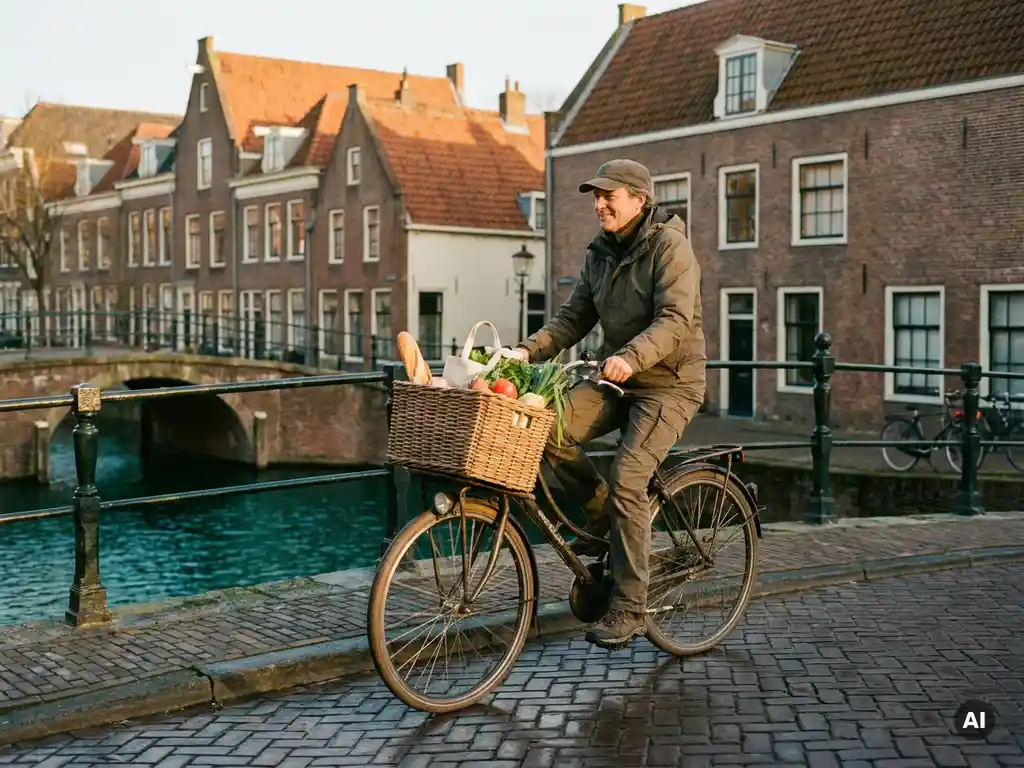
“Amsterdam reclaimed for residents” means, in practice, a city that actively prioritises the daily needs of people who live and pay taxes here over the short-term demands of tourists, investors, and outside commercial interests. It means housing you can afford, streets that function for locals, and public services shaped around permanent community life rather than visitor throughput. The questions below unpack what this looks like when you move from slogan to street level.
Who counts as a resident in Amsterdam’s policy thinking?
In Amsterdam’s official policy framework, a resident is anyone registered in the Basisregistratie Personen (BRP), the municipal population register. That definition sounds simple, but in practice it creates a tiered reality. Long-term expats who are fully registered, pay local taxes, and have lived here for a decade are legally residents. Yet they often feel invisible in the political conversation, because Dutch-language media and Dutch-speaking civic culture dominate the debate.
The policy definition also struggles with edge cases that are very much Amsterdam realities. Short-stay rental platforms have blurred the line between resident and temporary occupant. Students registered for three years and then gone. Highly skilled migrants on rolling work permits who never quite cross the threshold into feeling politically included. When city hall talks about “residents,” it often means a relatively stable, Dutch-speaking, long-term population. Everyone else tends to fall through the cracks of the rhetoric, even when the policies directly affect them.
This matters because who you imagine as a resident shapes every decision that follows. If your mental model of a resident is a Dutch family in the Rivierenbuurt, you design policy for that person. If you include the Nigerian nurse in Noord, the British UX designer in De Pijp, and the Indonesian student in Oost, the priorities look quite different.
What does Amsterdam’s city government actually do to protect residents?
Amsterdam’s municipal government has introduced several concrete measures aimed at protecting residents from the pressures of mass tourism and speculative housing. The most visible tools include the short-stay rental cap (limiting Airbnb-style lets to a maximum number of nights per year), the hotel moratorium in certain districts, and the buyout ban on affordable housing in designated neighbourhoods. These are real interventions, not just aspirational language.
The city has also invested in social housing allocation, attempted to regulate tourist numbers in the historic centre, and introduced zoning rules that limit the conversion of ground-floor retail into tourist-facing businesses. In 2026, the pressure on the inner city remains intense, but the policy toolkit is more developed than it was ten years ago.
Where the execution gets complicated is enforcement. Amsterdam is a city with a large surface area, a stretched municipal budget, and a significant informal economy. Rules exist on paper that are inconsistently applied on the ground. A short-stay ban in one street coexists with an openly advertised holiday rental three doors down. Residents notice this gap between stated policy and lived reality, and it erodes trust in the whole framework.
Why do residents still feel the city isn’t working for them?
Residents still feel left behind because the structural pressures outpace the policy responses. Housing remains the sharpest pain point: social housing waiting lists stretch to well over a decade in many categories, the private rental market is expensive and precarious, and buying property in Amsterdam requires a household income that excludes most of the people who actually make the city run. Teachers, nurses, artists, and mid-level professionals are being quietly pushed out to Almere and Zaandam.
Beyond housing, there is a subtler erosion of everyday livability. Neighbourhood shops that served locals for generations have been replaced by tourist-facing businesses. Public space in the centre is managed for visitor flow rather than resident comfort. The noise, the crowds, and the sheer volume of people passing through create a quality of life that residents describe as exhausting rather than vibrant.
There is also a political representation problem. Residents who are not Dutch citizens cannot vote in national elections and have limited leverage in local ones. Even those who can vote find that the loudest voices in Amsterdam’s political debate are often developers, hospitality industry lobbyists, and heritage preservationists, not the people who need a reasonably priced flat within cycling distance of their jobs.
What would a genuinely resident-first Amsterdam look like?
A genuinely resident-first Amsterdam would start with housing as infrastructure rather than investment. That means treating affordable homes the way the city treats roads and schools: as public goods that require sustained public commitment, not as assets to be maximised for yield. It would mean building faster, protecting existing social housing more aggressively, and closing the loopholes that allow speculative short-term letting to hollow out residential neighbourhoods.
It would also mean redesigning how public space is allocated. Streets, squares, and waterfronts that are currently managed for maximum tourist throughput could instead be designed around the rhythms of people who live there: morning commuters, school runs, evening walks, weekend markets that serve the neighbourhood rather than perform for visitors. That is not anti-tourist, it is simply a different hierarchy of priorities.
A resident-first city would also invest in multilingual civic participation. If a significant portion of your registered population does not speak Dutch fluently, holding all meaningful public consultation in Dutch is not neutral, it is exclusionary. Extending genuine political voice to long-term residents regardless of citizenship status is not a radical idea; several European cities already do it, and Amsterdam’s own progressive self-image would suggest it should be leading here rather than lagging.
Finally, it would require honesty about trade-offs. Amsterdam cannot be simultaneously the world’s most visited short-break destination and a comfortable, affordable city for the people who live there. Choosing residents first means accepting that some tourist revenue gets left on the table. That is a political choice, and the city has been reluctant to make it explicitly. Naming that choice honestly would be a start.
How Klagen Niet Klagen covers the resident side of Amsterdam
Klagen Niet Klagen exists precisely because this conversation is rarely had with the honesty it deserves. Written from over thirty years of living and building in Amsterdam, the blog takes the resident perspective seriously, not as a policy category but as a lived experience with real contradictions and real frustrations. Here is what you get when you read it:
- Long-form essays on Amsterdam city life that go beyond tourism-board optimism and Dutch-media insularity
- An English-language voice that speaks to expats, international visitors, and globally minded Dutch readers equally
- Honest commentary on the gap between Amsterdam’s progressive reputation and its on-the-ground reality
- A consistent editorial perspective from someone with genuine skin in the game, not a journalistic outsider or a sponsored content machine
- The Klagen / Niet Klagen framework: the city’s real tensions, named and examined rather than smoothed over
If you want Amsterdam commentary that treats you as an intelligent adult, find out more about the blog and what drives it, or get in touch directly if you have something to say.
And if you want to experience Amsterdam’s sharpest, most honest cultural commentary in a live setting, Boom Chicago has been doing exactly that since 1993. Thirty-plus years of improvised comedy rooted in this city, its contradictions, and the people who call it home. The same instinct that drives this blog drives every show: say the true thing, make it funny, and trust the audience to handle it. If that sounds like your kind of evening, it probably is.
Frequently Asked Questions
How can I, as a registered expat resident, actually get involved in Amsterdam's local policy decisions?
Non-Dutch EU citizens can vote in Amsterdam’s municipal elections, which is one of the most direct levers available. Non-EU residents can engage through neighbourhood councils (wijkraden), public consultations (inspraakprocedures), and resident platforms like Mijn Amsterdam — though most of these operate primarily in Dutch. Connecting with expat-inclusive advocacy groups or organisations that push for multilingual civic participation is a practical way to amplify your voice beyond the ballot box.
What are the most common mistakes residents make when trying to report housing violations or illegal short-stay rentals in their building?
The most common mistake is reporting anonymously without documenting evidence first — the municipality’s enforcement team needs specifics like addresses, listing URLs, and dates to act. Use Amsterdam’s dedicated reporting tool (meldpunt.amsterdam.nl) and include screenshots of active rental listings alongside your complaint. Following up is equally important: enforcement is under-resourced, and a single report often gets deprioritised without a paper trail of persistent, documented complaints.
Is the situation in Amsterdam unique, or are other European cities facing the same resident-versus-tourism tension?
The tension is widespread — Barcelona, Lisbon, Venice, and Edinburgh are all grappling with near-identical pressures around housing affordability, tourist saturation, and the erosion of neighbourhood character. What makes Amsterdam’s case distinctive is the combination of its compact historic centre, its globally recognised brand as a liberal, permissive city, and a housing market that was already under severe pressure before short-term rentals accelerated the problem. Looking at how Barcelona’s tourist tax reinvestment or Lisbon’s rezoning experiments have played out offers useful, if imperfect, comparisons.
If Amsterdam genuinely prioritised residents over tourism revenue, how significant would the economic impact actually be?
Tourism contributes roughly €88 billion annually to the broader Dutch economy, with Amsterdam as its engine — so the trade-off is real, not rhetorical. However, economists who study overtourism increasingly argue that the costs borne by residents (suppressed wages, inflated rents, degraded public services) are largely invisible in headline tourism figures. A resident-first rebalancing would likely reduce visitor volume and hospitality sector revenue while potentially increasing productivity in sectors like healthcare, education, and tech — the industries that actually depend on workers being able to afford to live in the city.
What practical steps can long-term residents take right now to find affordable housing in Amsterdam given the current market?
Register with Woningnet as early as possible if you haven’t already — social housing allocation is almost entirely seniority-based, and every year without registration is a year of queue position lost. In the private market, platforms like Funda and Pararius remain the primary search tools, but also explore housing cooperatives (wooncoöperaties) and anti-squat (antikraak) arrangements as interim options. Staying informed about the city’s new-build projects in areas like Haven-Stad and Zuidoost can also surface opportunities before they hit the open market.