
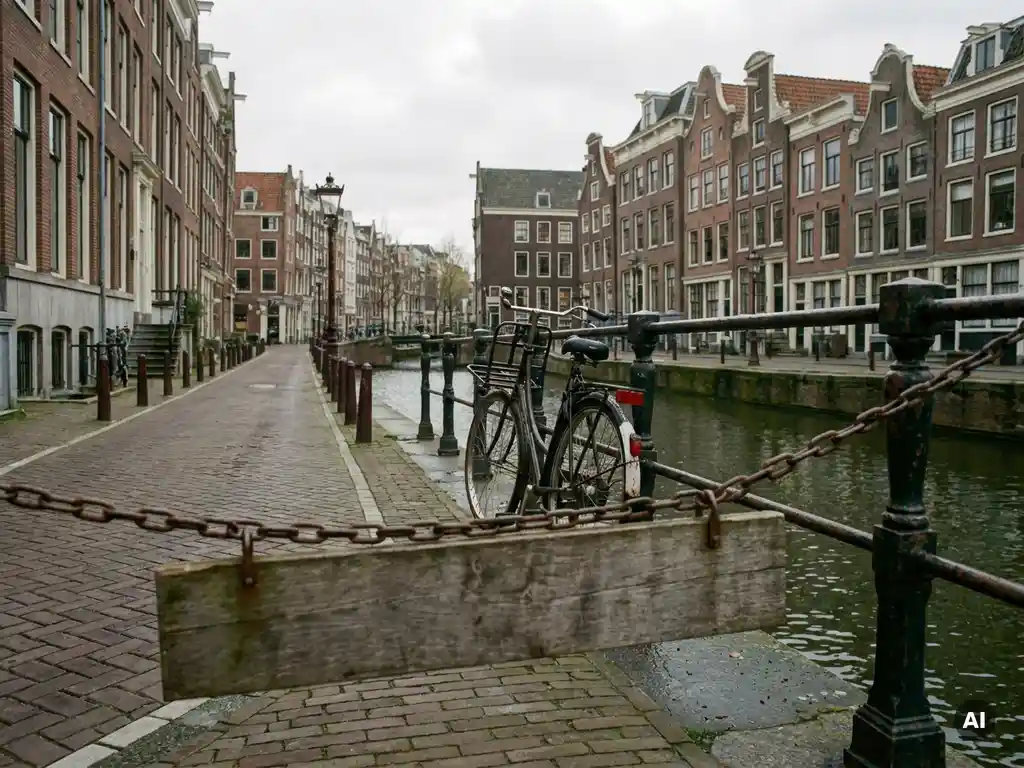
Yes, Amsterdam is actively creating and expanding resident-only spaces, though the effort is still in its early stages. The city has introduced a range of measures designed to give locals priority access to housing, public areas, and cultural life, a direct response to decades of unchecked tourism growth and a housing market that has pushed many long-term residents out. This article breaks down what already exists, why it matters, and how other cities are handling the same challenge.
What kinds of resident-only spaces already exist in Amsterdam?
Amsterdam already has several categories of protected resident space, most notably in housing and parking. The city’s resident parking permit system restricts car access in large parts of the inner city to registered locals. Social housing allocation gives priority to Amsterdam residents, and recent policy changes have tightened rules around short-term rental platforms like Airbnb to claw back housing stock for people who actually live here full time.
Beyond housing and transport, the city has experimented with limiting tourist access to certain neighbourhoods and attractions. The red-light district has seen access restrictions trialled at busy periods, and some local markets have introduced rules that prioritise Dutch-made goods and local vendors over tourist-facing souvenir stalls. These are not always framed explicitly as “resident-only” measures, but the intent is the same: to preserve functional, liveable space for people who call Amsterdam home.
There is also a softer category of resident-oriented space: community gardens, neighbourhood cultural centres, and locally funded social clubs that receive city subsidies specifically to serve residents rather than visitors. These spaces rarely make international headlines, but they represent a quiet, ongoing effort to keep Amsterdam from becoming entirely a stage set for tourism.
Why is Amsterdam considering protected spaces for residents?
Amsterdam is considering stronger resident protections because the city’s popularity has created a genuine livability crisis. Overtourism has driven up housing costs, crowded public spaces, and fundamentally changed the character of neighbourhoods that were once primarily residential. The city received tens of millions of visitors in recent years, in a metropolitan area with a population of roughly one million, a ratio that puts enormous pressure on infrastructure, culture, and community.
The housing dimension is particularly acute. Short-term rentals removed thousands of properties from the long-term rental market, pushing rents to levels that make it nearly impossible for teachers, nurses, artists, and other essential workers to afford to live in the city. Amsterdam’s city identity has long been tied to its diversity of residents, not just wealthy expats and tourists, but a genuine mix of people. That mix is under threat.
There is also a cultural argument. Amsterdam’s creative reputation, its comedy scene, its art world, its experimental spirit, was built by people who lived cheaply and thought freely. When those people can no longer afford to stay, the city loses the very quality that made it attractive in the first place. Resident-only protections are, in part, an attempt to preserve the conditions that made Amsterdam worth visiting.
How do other European cities protect space for local residents?
Several European cities have gone further than Amsterdam in creating formal protections for residents, offering useful models. Venice has introduced tourist entry fees and is actively exploring caps on daily visitor numbers. Barcelona has halted new tourist apartment licences entirely and has introduced resident-priority zoning in the most pressured neighbourhoods. Lisbon has implemented “local housing” designations that restrict certain properties from being converted to short-term rentals.
Regulatory approaches
The most effective regulatory tools tend to combine housing policy with public space management. Barcelona’s superblocks model, for example, reclaimed street space from cars and returned it to pedestrians and residents, functionally creating resident-priority zones without needing to ban tourists outright. The distinction is important: rather than excluding visitors, the best approaches redesign spaces so that residents have genuine priority access and usability.
Cultural and community protections
Some cities have gone beyond physical space to protect cultural infrastructure. Berlin has implemented protections for music venues, artist studios, and community spaces that face pressure from rising rents and tourism-driven development. The logic is that a city’s culture is inseparable from the people who create it, and protecting those people’s ability to stay is as important as protecting any particular building or square.
Amsterdam has studied these approaches closely. The challenge is that the Dutch legal and political context is different, property rights are strong, and the city’s international reputation as an open, welcoming place creates political resistance to measures that can be framed as exclusionary.
What do Amsterdam residents actually think about resident-only zones?
Amsterdam residents are broadly supportive of measures that protect their access to housing and public space, but opinion divides sharply on implementation. Most long-term locals welcome restrictions on short-term rentals and tourist accommodation, they have watched housing costs rise and neighbours disappear into more affordable cities. The desire to reclaim Amsterdam for residents is genuine and widespread.
Where it gets complicated is around the definition of “resident.” Amsterdam has a large and long-established expat community, and many of those people feel just as invested in the city’s livability as Dutch-born locals. The perspective of long-term international residents is often absent from policy debates conducted entirely in Dutch, which itself creates a kind of informal exclusion.
There is also a generational dimension. Younger Amsterdammers who grew up in the city are often the most vocal about resident protections, having seen their social networks dispersed by unaffordable rents. Older residents sometimes take a more pragmatic view, recognising that tourism revenue funds public services and cultural institutions they value. The tension between these positions is real and unlikely to be resolved cleanly by any single policy.
What most residents agree on is that the current balance is wrong. The city has tilted too far toward visitor experience at the expense of resident quality of life, and some form of correction is overdue. Whether that correction comes through formal resident-only zones or through broader housing and planning reform is the live question in Amsterdam politics right now.
How Klagen Niet Klagen covers Amsterdam’s resident debate
Klagen Niet Klagen exists precisely for conversations like this one. Amsterdam reclaimed for residents is not just a policy question, it is a question about identity, belonging, and what kind of city Amsterdam wants to be. That is the territory this blog is built to explore, from the inside, without a tourism board brief or an advertiser to keep happy. Here is what you get here that you will not find elsewhere:
- Long-form essays on Amsterdam city life written by someone who has lived and built here for over three decades
- An honest, opinionated take on overtourism, housing, and the cultural pressures reshaping the city
- A perspective that includes the international resident experience, not just the Dutch-language debate
- Commentary that names the real tensions without diplomatic softening or PR polish
- A growing archive of articles on Amsterdam’s contradictions, charms, and frustrations
If you want to understand Amsterdam beyond the surface, this is the place to keep reading. Explore the blog, share what resonates, and get in touch if you have a take worth adding to the conversation.
And if you want to experience Amsterdam’s sharpest, most honest cultural commentary in live form, Boom Chicago has been doing exactly that since 1993. The comedy is smart, the crowds are international, and the shows have a way of saying out loud what everyone in the city is already thinking. Check the latest shows and agenda, it is the kind of night out that makes you feel like a real Amsterdammer, even if you just arrived.
Frequently Asked Questions
Can tourists still visit Amsterdam freely, or are resident-only zones legally enforced exclusions?
Resident-only zones in Amsterdam are not blanket bans on tourists — they are targeted measures that give residents priority access to specific resources like housing, parking, and certain market spaces. Tourists can still move freely through the city, but they may encounter entry fees, timed access windows, or capacity limits in the most pressured areas. The goal is to rebalance the city’s functionality for those who live there, not to make Amsterdam unwelcoming to visitors.
What practical steps can Amsterdam residents take right now to benefit from existing protections?
Residents should start by registering with the municipality (inschrijven bij de gemeente) if they haven’t already, as most resident-priority benefits — from parking permits to social housing priority — are tied to official registration at a local address. It’s also worth checking eligibility for resident parking permits through the City of Amsterdam’s website, and staying informed about short-term rental regulations if you rent your property, since enforcement has tightened significantly. Engaging with your local neighbourhood council (wijkraad) is another practical way to influence how resident protections are shaped in your specific area.
How does Amsterdam's Airbnb crackdown actually work, and has it made a measurable difference to housing availability?
Amsterdam has progressively tightened its short-term rental rules: hosts must register their property, are limited to renting it out for a maximum of 30 nights per year, and must live there as their primary residence — effectively banning professional short-term letting in most cases. Entire neighbourhoods in the city centre have had short-term rental permits revoked or frozen entirely. While it’s difficult to isolate the impact from broader market forces, the city has reported thousands of properties returning to the long-term rental market since the stricter rules came into force, though housing affordability remains a serious challenge.
Are long-term international residents treated the same as Dutch nationals when it comes to resident protections?
In legal terms, most resident protections apply equally to anyone officially registered as living in Amsterdam, regardless of nationality — EU citizens in particular have broadly the same access to housing queues and public services as Dutch nationals. In practice, however, language barriers and a policy debate conducted primarily in Dutch mean that international residents are often less aware of their rights or less able to participate in shaping local policy. Advocacy groups and English-language platforms like Klagen Niet Klagen play an important role in bridging that gap.
What is the biggest mistake Amsterdam could make in trying to protect resident spaces?
The biggest risk is implementing measures that are symbolically strong but structurally shallow — for example, restricting tourist access to one neighbourhood while doing nothing about housing affordability, which simply displaces the problem rather than solving it. Effective resident protection requires coordinated action across housing policy, public space design, cultural infrastructure funding, and short-term rental enforcement simultaneously. Cities like Barcelona have shown that piecemeal approaches tend to generate political controversy without delivering meaningful relief to residents.