
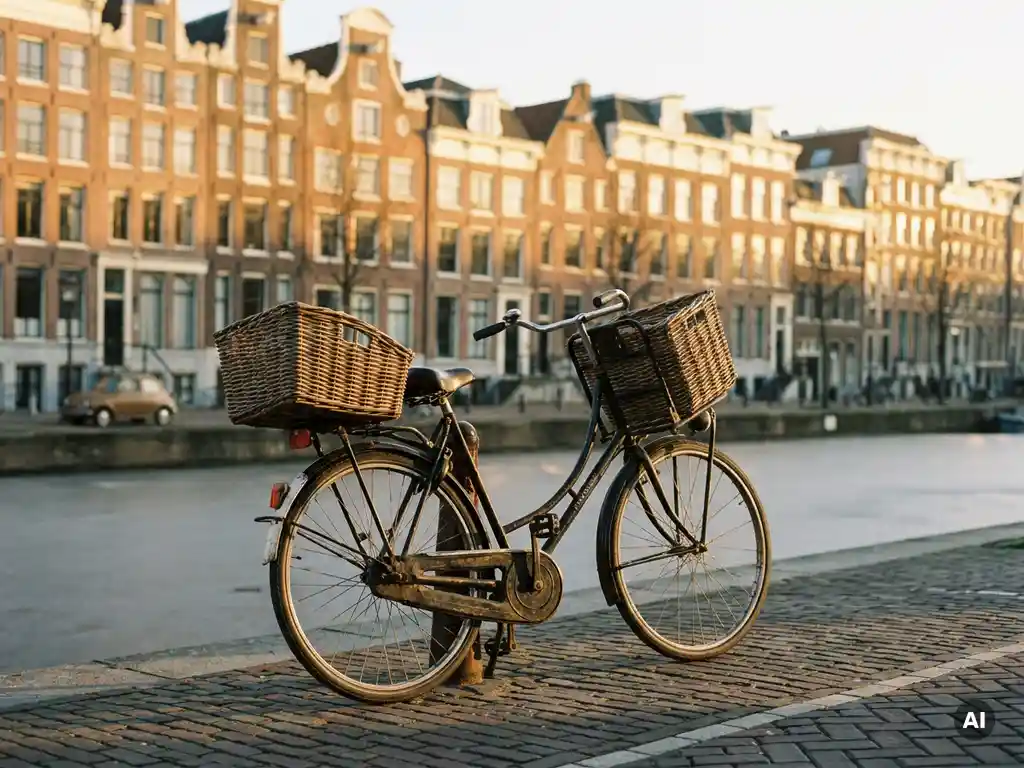
Amsterdam’s city center is becoming increasingly car-free, but it is not there yet. Large parts of the historic center have already been closed to through traffic, and the city continues to remove parking spaces and restrict car access year by year. The full picture is more nuanced than a simple yes or no, so here is what is actually happening, street by street and policy by policy.
What parts of Amsterdam’s city center are already car-free?
Several key areas of Amsterdam’s city center are already fully car-free or effectively closed to private vehicles. The most prominent example is the area around Damrak, Rokin, and the immediate surroundings of Dam Square, where private cars have been banned for years. Large sections of the canal ring, particularly around the Jordaan and parts of the Grachtengordel, are accessible only to residents, delivery vehicles, and emergency services.
The city has also pedestrianized major shopping streets like Kalverstraat and Leidsestraat, where cars have not been welcome for decades. More recently, the area around the Waterlooplein and parts of the Nieuwmarkt neighborhood have seen significant reductions in car access. In practice, if you try to drive a private car through the historic center, you will quickly find yourself blocked by rising bollards, restricted access signs, or simply nowhere useful to go.
How is Amsterdam reducing car access in the city center?
Amsterdam is reducing car access through a combination of physical barriers, parking removal, and permit restrictions. The city has systematically eliminated thousands of on-street parking spaces over the past decade, raised parking permit prices to levels that make car ownership in the center genuinely expensive, and installed automated bollard systems that physically block unauthorized vehicles from entering restricted zones.
The city also uses a zone-based permit system that limits who can park where, and has progressively shrunk the areas where residential parking permits are even available. Delivery windows for freight vehicles have been tightened, and the city has invested heavily in alternatives: more cycling infrastructure, expanded public transport links, and dedicated cargo bike logistics schemes for businesses. The approach is gradual and deliberate. Amsterdam rarely bans cars with a single dramatic announcement. It simply makes driving less convenient, less affordable, and less necessary, one street at a time.
What’s the difference between car-free and car-restricted in Amsterdam?
Car-free means no private vehicles at all, not even to drop someone off or make a delivery. Car-restricted means access is limited to specific users, times, or purposes, such as residents, permit holders, or delivery vehicles during approved hours. Most of Amsterdam’s city center falls into the car-restricted category rather than being fully car-free.
This distinction matters because it shapes the daily experience on the street. A car-restricted zone might still see delivery vans in the morning, taxis dropping off passengers, or residents pulling into their garage. A genuinely car-free zone, like Kalverstraat, has none of that. The city tends to use car restriction as the practical tool, reserving full pedestrianization for the most densely used shopping and tourist streets where even limited vehicle access creates genuine safety and congestion problems.
Will Amsterdam’s entire city center eventually go car-free?
A fully car-free city center across all of Amsterdam’s historic core is unlikely in the near future, but the direction of travel is clear. The city’s long-term mobility plans consistently point toward fewer cars, more space for pedestrians and cyclists, and a center where private vehicle access becomes the exception rather than the rule. Full car-free status for the entire center would require solving significant logistical challenges around residents, businesses, and emergency access.
What is more realistic, and already underway, is a city center where the vast majority of streets feel car-free even if they are technically car-restricted. When parking is gone, through traffic is blocked, and delivery windows are narrow, the practical difference between “car-free” and “car-restricted” becomes almost invisible to the person walking or cycling through. Amsterdam is not racing toward a symbolic ban. It is quietly engineering a city where bringing a car to the center simply stops making sense.
How Klagen Niet Klagen helps you understand Amsterdam’s changing streets
Amsterdam’s car-free ambitions are one of the most visible and debated changes reshaping the city, and they deserve more than a press release summary or a tourist-friendly spin. Klagen Niet Klagen covers exactly this kind of topic: the real, lived experience of Amsterdam’s urban transformation, written by someone who has been watching this city change for over thirty years.
- Honest, insider commentary on Amsterdam city policy, without the tourism board gloss
- Long-form essays that go beyond headlines and explain what changes actually mean for residents, visitors, and businesses
- A consistent editorial voice grounded in decades of Amsterdam experience
- Content written in English for globally minded readers who want substance, not a listicle
If you want to stay informed about how Amsterdam is evolving, and what to make of it, find out more about the blog and explore the full archive. There is always something worth reading, and usually something worth arguing about.
And while you are thinking about Amsterdam street life, consider spending an evening somewhere the city’s energy is very much alive. Boom Chicago has been part of Amsterdam’s creative scene since 1993: sharp, funny, and deeply rooted in the city. If you have not been to a show, it is one of the best ways to experience Amsterdam culture without a single car in sight. Check the shows and agenda and come see what all the fuss is about.
Frequently Asked Questions
If I'm visiting Amsterdam as a tourist, do I need to worry about accidentally driving into a restricted zone?
Yes, this is a real risk worth taking seriously. Amsterdam’s restricted zones are enforced by automatic number plate recognition cameras and rising bollards, and fines for unauthorized entry can be significant. If you are arriving by car, the practical advice is to park at one of the city’s P+R (Park and Ride) facilities on the outskirts and use public transport or cycling to reach the center — it is faster, cheaper, and far less stressful than navigating the restrictions.
How do residents who live in the car-restricted zones actually manage day-to-day?
Residents with valid permits can still drive in and out of restricted zones, but many find that owning a car in Amsterdam’s center is simply not worth the cost or hassle. Permit prices in the most central areas have risen sharply by design, and available permit slots are limited. Many center residents rely on a combination of cycling, public transport, and occasional car-sharing services like Greenwheels for trips that genuinely require a vehicle.
What are the biggest mistakes people make when trying to drive in or around Amsterdam's city center?
The most common mistake is assuming that because a street appears on a map, it is open to through traffic — in Amsterdam’s center, this is frequently not the case. Drivers also underestimate how thoroughly parking has been removed; circling for a space that no longer exists is a frustrating and expensive lesson. The second big mistake is ignoring the time-based restrictions on delivery and access zones, which can mean a legal entry in the morning becomes an illegal one by midday.