
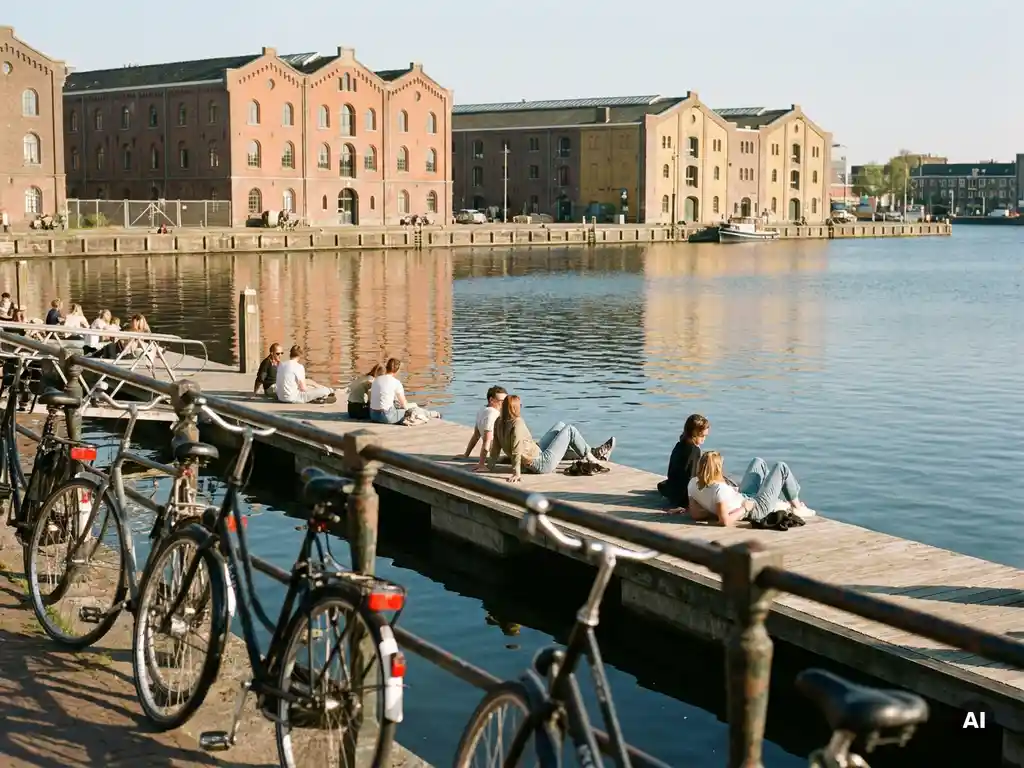
Marineterrein became popular with Amsterdam locals recently because it opened up as a genuinely accessible, car-free waterfront space where you can swim, relax, and breathe without fighting through tourist crowds. The shift happened gradually as word spread that this former naval complex on the IJ waterfront had transformed into something rare in Amsterdam: a calm, authentic spot that feels like it belongs to the city rather than to its visitors. Below, the key questions about Marineterrein are answered one by one.
What changed at Marineterrein to attract Amsterdam locals?
Marineterrein changed because it transitioned from a closed, restricted military site into a publicly accessible innovation district and recreational waterfront area. The opening of the terrain to the general public, combined with the development of a natural swimming zone in the IJ, gave Amsterdam locals something they had been quietly desperate for: a waterfront swimming spot that is clean, calm, and not overrun by selfie sticks.
For decades, the Marineterrein was off-limits. It sat right on the water, in the heart of the city, essentially invisible to the people who lived nearby. When it began opening up, the contrast was striking. Here was a large, green, relatively quiet stretch of waterfront with actual places to sit, swim, and exist without being marketed at. Locals noticed quickly. The word spread not through advertising but through the oldest Amsterdam channel: one person telling another at a birthday party that they had found somewhere genuinely good.
The swimming area itself, a filtered natural water zone, deserves particular credit for the spike in local interest. Amsterdam has surprisingly few places where you can actually get in the water safely and comfortably. Marineterrein filled that gap in a way that felt both practical and almost luxurious by city standards.
What can you actually do at Marineterrein Amsterdam?
At Marineterrein Amsterdam, you can swim in a monitored natural water zone, walk or cycle through a car-free historic terrain, grab food and drinks at on-site venues, and attend events ranging from markets to cultural programming. It functions as a mix of urban park, innovation campus, and waterfront leisure space.
The swimming is the headline attraction, especially in summer. The designated swimming area is sheltered from IJ boat traffic, which makes it safer and calmer than trying to swim anywhere else along the waterfront. There are changing facilities, and the setup is relaxed rather than regimented.
Beyond swimming, the terrain itself is worth exploring. The historic naval buildings give it an atmosphere that is hard to manufacture. There are cafes and food spots that cater to the people who actually work and spend time there, which means the quality tends to be decent without being inflated for tourists. Events pop up regularly, from outdoor film screenings to community markets, and the programming tends to reflect the character of the neighbourhood rather than the tourism calendar.
It is also simply a pleasant place to walk. The combination of water views, historic architecture, and low car presence makes it feel like a different city from the one grinding away just outside its gates.
Why do Amsterdam locals prefer Marineterrein over busier spots?
Amsterdam locals prefer Marineterrein over busier spots because it offers the rare combination of a central location and genuine calm. Most popular Amsterdam waterfront or park areas have been thoroughly absorbed into the tourist circuit. Marineterrein has not, at least not yet, which makes it feel like something that still belongs to the people who live here.
The Vondelpark is beautiful but can feel like an obstacle course in summer. The IJ waterfront near Central Station is dramatic but relentlessly busy. Even the quieter parks in the Jordaan or De Pijp fill up quickly on a warm weekend. Marineterrein sits in a slightly different category because its access point and overall vibe still filter out a large chunk of casual tourist traffic.
There is also something psychologically appealing about a space that was previously closed. Locals who remember when you could not enter feel a mild but real sense of ownership over the fact that they can now. It is theirs in a way that the Rijksmuseum square will never be again.
The Marineterrein swimming spot specifically draws people who want to cool off without the chaos. In a city where summer heat increasingly has nowhere good to go, that matters more than it used to.
Is Marineterrein a permanent public space or still temporary?
Marineterrein is not fully permanent in the sense of a traditional public park, but it is not a temporary pop-up either. It operates under a long-term development model where the terrain is being gradually transformed into a mixed-use innovation district with public access built in as a core feature, not an afterthought.
The city of Amsterdam and the organizations managing the terrain have committed to keeping public access and recreational use central to its identity. The swimming area, the public paths, and the event programming are all part of a deliberate strategy to make Marineterrein a living part of the city rather than a sealed-off tech campus.
That said, the terrain is still evolving. New buildings are being developed, new tenants are moving in, and the balance between innovation district and public leisure space will continue to shift. The honest answer is that what Marineterrein looks like in five years will depend on decisions being made right now, which is exactly why locals are paying attention and showing up. Presence is a form of influence in Amsterdam, and the people who use a space are the ones who get to shape its future.
For now, the access is real, the swimming is real, and the calm is real. That is enough to make it one of the more interesting new hotspots in a city that does not produce them as often as it used to.
How Klagen Niet Klagen helps you navigate Amsterdam like a local
Finding a place like Marineterrein is exactly the kind of thing that does not show up in a travel guide or a sponsored city roundup. It shows up when you know someone who has been living in Amsterdam long enough to notice when something genuinely good appears. That is what Klagen Niet Klagen is built for.
- Honest, insider commentary on Amsterdam city life written from over three decades of experience in the city
- No tourism board influence, no advertorial pressure, no polished PR spin
- Long-form essays and opinion pieces that go beyond surface-level tips to explain why Amsterdam works the way it does
- A perspective that is equally useful for expats, international visitors, and curious locals who want a fresh angle on their own city
- Regular updates on the blog archive covering the places, people, and tensions that make Amsterdam worth paying attention to
If you want to stay ahead of the next Marineterrein rather than arriving two summers after everyone else, read more about the blog and what it covers. The best Amsterdam spots are always found through the right source.
And if you want the full Amsterdam experience in one evening, that means a night at Boom Chicago. Sharp comedy, genuine Amsterdam energy, and a room full of people who get the joke. Check the shows and agenda and book before it sells out, because the good things in this city always do.
Frequently Asked Questions
How do I get to Marineterrein from Amsterdam city centre?
Marineterrein is located on the eastern IJ waterfront, roughly a 15-minute walk or a short cycle from Amsterdam Centraal Station. You can reach it via Kattenburgerstraat or cycle along the waterfront from the city centre — both routes are straightforward and bike-friendly. Given that the terrain itself is car-free, arriving by bike or on foot is not just the easiest option, it also sets the right tone for the experience waiting inside.
Is there an entry fee to visit Marineterrein or use the swimming area?
General access to Marineterrein as a public terrain is free, and walking or cycling through the area costs nothing. The swimming zone is also free to use during its open season, though it operates within set hours and is supervised for safety reasons. It is worth checking the Marineterrein website before visiting in summer, as specific facilities or events may have their own ticketing or capacity rules.
What is the best time of year to visit Marineterrein for swimming?
The swimming area at Marineterrein is typically open during the warmer months, running roughly from late spring through early autumn, with peak season falling in July and August when the water is warmest and the longest days make evening swims genuinely worthwhile. Weekday mornings are the quietest window if you want the water largely to yourself. As the spot grows in local popularity, arriving early on summer weekends is increasingly good advice.