
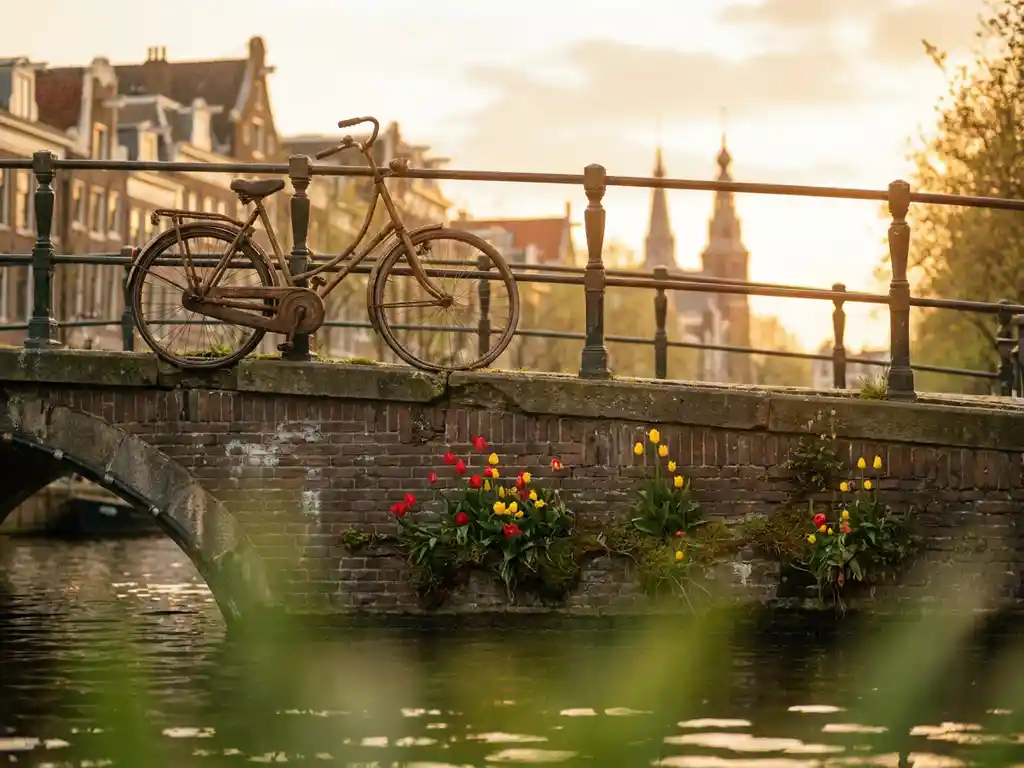
Amsterdam’s best free experiences are genuinely excellent, not just budget compromises. The city’s canals, markets, parks, neighbourhoods, and cultural spaces offer a full day of rich, rewarding exploration without spending a single euro. Whether you live here or you’re visiting for a weekend, the free version of Amsterdam is often the most authentic version of the city.
What makes Amsterdam unusual is that so much of what defines the city — its architecture, its street life, its waterways, its neighbourhood culture — exists entirely in the open air and public space. You don’t need a ticket to understand Amsterdam. You just need to know where to look.
Below, the most useful questions about free things to do in Amsterdam get direct, honest answers — from someone who has lived and worked here for over three decades.
Where in Amsterdam can you spend a full day for free?
You can spend a genuinely full and satisfying day in Amsterdam without paying for anything. Start in the Jordaan, walk through the Negen Straatjes, follow the canals east toward the Plantage, cut through Artis to the Entrepotdok, and end the afternoon in Vondelpark. That route alone covers some of the most beautiful urban scenery in Europe.
The key is understanding that Amsterdam’s real value is in its public space. The canal ring, a UNESCO World Heritage Site, is entirely free to walk. The city’s historic architecture lines every street. The markets at Noordermarkt on Saturday mornings or Albert Cuyp on any weekday cost nothing to browse. Vondelpark on a warm afternoon is one of the best free experiences in any European city — locals picnicking, musicians playing, dogs running free.
If you structure your day around walking and neighbourhood exploration rather than attractions, you will consistently have a better time than people paying for the obvious tourist experiences. This is not a budget tip. It is genuinely how Amsterdam works best.
What free museums and cultural spaces does Amsterdam offer?
Several of Amsterdam’s most rewarding cultural spaces are completely free to enter. The Rijksmuseum gardens are open to the public at no cost, and the outdoor space alone — with its sculptures and architecture — is worth a visit. The Amsterdam Public Library (OBA) on Oosterdokskade is a genuinely impressive building with free access, great views from the top floor, and a welcoming atmosphere for anyone who wants to sit, read, or simply look out over the city.
The Stedelijk Museum and the Rijksmuseum have permanent collections that require tickets, but both regularly host free events and open evenings. The FOAM photography museum occasionally offers free entry periods. Kunststad, the large creative complex in Amsterdam-Noord, is free to explore and houses dozens of artist studios and creative spaces.
Amsterdam-Noord more broadly deserves attention as a free cultural destination. The EYE Film Museum building is architecturally striking and free to enter (exhibitions cost extra). The NDSM Wharf is a vast former shipyard turned creative hub with street art, studios, and a genuinely different energy from the city centre — and the ferry from Centraal Station to get there costs nothing.
Are there free live performances and events in Amsterdam?
Yes, Amsterdam has a steady calendar of free live performances and public events throughout the year. Vondelpark Open Air Theatre runs a full summer programme of free concerts, theatre, and children’s performances from June through August — it has been a beloved Amsterdam institution for decades. The programme covers everything from classical music to cabaret to dance.
Museumplein regularly hosts free outdoor events, particularly around Koningsdag (King’s Day) and other national celebrations. The Concertgebouw offers free lunchtime concerts on Wednesdays — these are genuinely excellent performances in one of the world’s great concert halls, available to anyone who shows up.
Street performance and live music are woven into Amsterdam’s public life. Leidseplein and Rembrandtplein attract buskers of real quality. During the summer months, impromptu performances appear across the city. If you want to see live comedy and theatre in Amsterdam, that is a paid experience — but the free outdoor performance culture in this city is rich enough to fill an entire visit on its own.
What does Amsterdam look like from the water for free?
The best free water experience in Amsterdam is the GVB ferry service from Centraal Station across the IJ to Amsterdam-Noord. These ferries run constantly, are free for pedestrians and cyclists, and give you an unobstructed view of the Amsterdam skyline from the water. The crossing takes only a few minutes, but the perspective it offers is one most visitors never see.
For a longer water experience, walking along the Amstel river south of the city centre costs nothing and gives you a completely different, quieter view of Amsterdam — houseboats, drawbridges, and the occasional windmill. The Prinsengracht, Keizersgracht, and Herengracht are all best understood on foot along the canal edges, where the reflections, the bridges, and the architecture create the Amsterdam that ends up in every photograph.
Paid canal tours exist and some are good, but the honest answer is that walking the canal ring yourself, at your own pace, gives you more time and more freedom than any boat. The best Amsterdam canal experience is not a tour — it is a slow afternoon walk with no agenda.
Which Amsterdam neighbourhoods are most rewarding to explore on foot?
The Jordaan is the most rewarding neighbourhood for free exploration in Amsterdam. It is dense with visual interest — narrow streets, hidden courtyards called hofjes, independent shops, and canal views at every turn. It rewards slow walking and genuine curiosity. The Negen Straatjes (Nine Streets) that cut across the main canals are among the most pleasant streets in Europe to simply wander.
De Pijp is the neighbourhood that feels most alive on a daily basis. The Albert Cuyp market runs through its centre six days a week and is free to walk through — it is one of the largest street markets in Europe and a genuine cross-section of Amsterdam life. The neighbourhood’s cafes, side streets, and architecture make it one of the best Amsterdam neighbourhoods for anyone who wants to see the city as it actually functions.
Amsterdam-Noord is the neighbourhood that surprises people most. A free ferry ride from Centraal Station delivers you into a completely different urban atmosphere — post-industrial, creative, and noticeably less crowded than the centre. The NDSM Wharf, the Buiksloterweg area, and the streets around the EYE Film Museum all offer a version of Amsterdam that feels genuinely current rather than preserved for tourism.
For architecture and history, the Plantage neighbourhood east of the city centre is undervisited and completely free to explore. Wide streets, beautiful nineteenth-century buildings, and proximity to the Hortus Botanicus make it one of the most pleasant walks in the city.
What free Amsterdam experiences do most visitors miss entirely?
Most visitors miss the hofjes — Amsterdam’s hidden courtyard gardens tucked behind unmarked doors in the Jordaan and the city centre. These were originally built as almshouses and many are still residential, but several are open to respectful visitors during daytime hours. The Begijnhof, just off Spui, is the most famous and genuinely worth finding. Stepping inside feels like the city has gone quiet.
The Hortus Botanicus garden is technically paid, but the streets around the Plantage and the Artis zoo perimeter are free to walk and give a sense of one of Amsterdam’s most elegant and undervisited areas. The Entrepotdok, a long row of former warehouse buildings converted into apartments, is one of the most photogenic streets in the city and almost no one goes there.
Amsterdam’s street art scene in Noord and the NDSM Wharf is genuinely world-class and entirely free. The IJ-Hallen flea market at NDSM — Europe’s largest indoor flea market — charges a small entry fee but is worth mentioning as a near-free experience that most visitors never discover.
Finally, the thing most visitors miss is simply slowing down. Amsterdam’s real character reveals itself in the details — the way light hits the canal in the morning, the rhythm of cyclists at an intersection, the sound of a neighbourhood on a quiet Sunday. None of that costs anything. It just requires paying attention.
How Klagen Niet Klagen helps you get more from Amsterdam
Finding the best Amsterdam experiences — free or otherwise — is much easier when you have access to genuinely honest, insider commentary rather than tourist-board content. That is exactly what Klagen Niet Klagen exists to provide.
- Long-form essays and opinion pieces on Amsterdam city life, written from over thirty years of experience living and working here
- Honest takes on what is actually worth your time — and what is overrated or overhyped
- Neighbourhood guides, cultural commentary, and local perspective that no tourism website will give you
- Content written for people who want to understand Amsterdam, not just visit it
- A consistent, independent editorial voice with no advertorial agenda or tourism-board influence
If you want to keep exploring Amsterdam through this kind of lens, the full blog archive has more where this came from. Read it before your next walk. You will notice things you would otherwise have walked straight past.
And if you are looking for a genuinely great paid experience in Amsterdam — one that captures the city’s wit, energy, and irreverence in a single evening — Boom Chicago is it. Founded in Amsterdam in 1993, it is the city’s home of world-class comedy and improvisation theatre, and it has been making locals and visitors laugh for over thirty years. Check the current shows and agenda and book a night that Amsterdam will remember. Or at least one you will.
Frequently Asked Questions
Is Amsterdam genuinely enjoyable on a free itinerary, or does it feel like you're missing out?
Amsterdam is one of the rare European cities where the free version is arguably the best version. The canal ring, the neighbourhoods, the markets, and the public cultural spaces are the heart of what makes Amsterdam worth visiting — and none of them require a ticket. Paid attractions like the Anne Frank House or the Van Gogh Museum are worthwhile on their own terms, but skipping them doesn’t leave a gap; it often just means more time for the city itself.
What's the best time of year to explore Amsterdam for free?
Late spring through early autumn (May to September) is when Amsterdam’s free outdoor life is at its richest — Vondelpark fills up, the Open Air Theatre programme runs, canal-side terraces buzz, and the city is at its most visually alive. That said, Amsterdam in winter has its own rewards: the canals under low grey light, the quieter streets, and the Concertgebouw’s free Wednesday lunchtime concerts running year-round. Avoid major event weekends like Koningsdag if you want space to actually enjoy the public areas.
How do I find the open hofjes in the Jordaan without accidentally disturbing residents?
The safest approach is to stick to the hofjes that are publicly documented as visitor-friendly, with the Begijnhof (off Spui) being the most accessible and well-signposted. For the Jordaan hofjes, a slow walk along Karthuizerstraat, Elandsstraat, and Lindengracht will reveal several — look for unmarked wooden doors left slightly ajar during daytime hours, which typically signals they are open to respectful visitors. The key etiquette is simple: enter quietly, don’t photograph residents or their windows, and leave the same way you came in.