
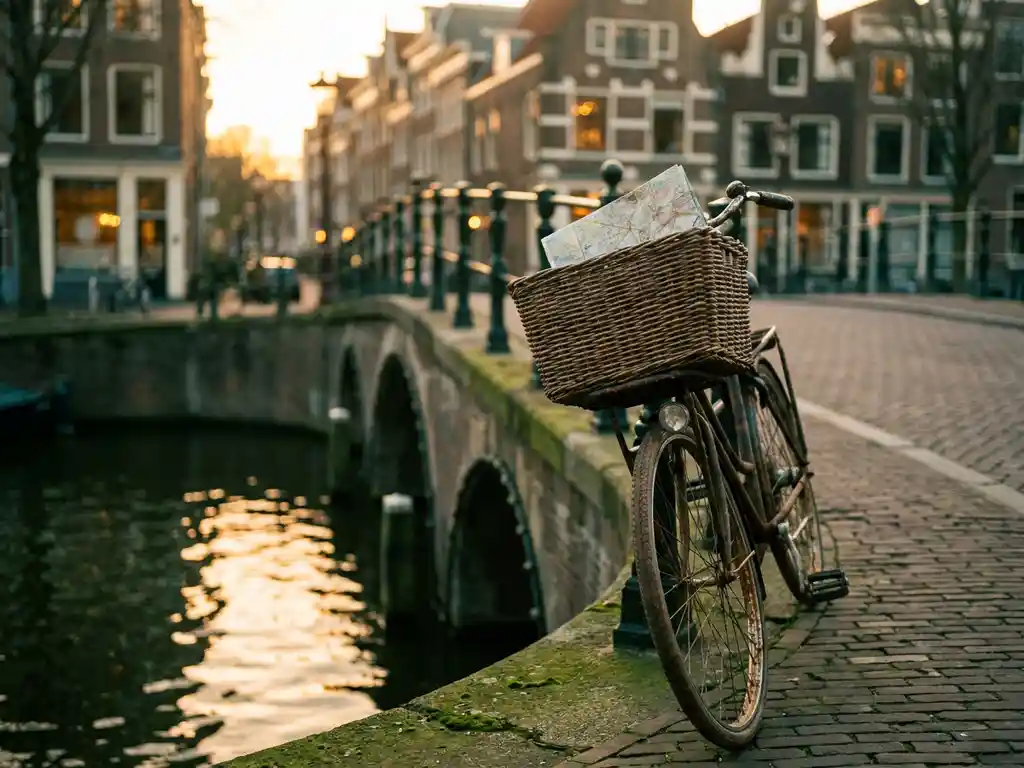
The best Amsterdam experiences for curious travelers go well beyond the Rijksmuseum and a canal boat selfie. Amsterdam rewards people who slow down, wander off the main tourist drag, and engage with the city on its own terms. Whether you have a weekend or a week, the neighborhoods, food scenes, cultural venues, and local rhythms of this city offer something genuinely surprising at every turn. The sections below answer the questions most curious visitors actually have — the ones no tourism board will answer honestly.
What makes Amsterdam different from other European city breaks?
Amsterdam is different from other European city breaks because it is a genuinely livable city that happens to be beautiful, rather than a monument that happens to have residents. The scale is human, the infrastructure is built around cyclists and pedestrians, and the culture is shaped by centuries of pragmatic tolerance rather than imperial grandeur. That combination is rare in Europe.
Unlike Paris or Rome, Amsterdam does not perform for tourists. The city has its own strong identity — opinionated, direct, and quietly proud — and visitors who pick up on that quickly find themselves having a completely different experience than those who stay on the beaten path. The Dutch directness that can feel abrasive at first is actually one of the city’s best features: people say what they mean, service is honest, and nobody is trying to upsell you a gondola ride.
The canal ring itself is a UNESCO World Heritage Site, but what makes it special is not just the architecture. It is the fact that people actually live in those narrow houses, cycle past them every morning, and moor their houseboats right alongside the tourist cruises. Amsterdam’s beauty is functional, not decorative. That is what sets it apart.
Which Amsterdam neighborhoods are worth exploring beyond the center?
The Amsterdam neighborhoods most worth exploring beyond the center are De Pijp, Noord, Oud-West, and the Jordaan’s quieter northern edges. Each has a distinct character, a local food scene, and far fewer tour groups than the canal ring and Leidseplein area. These are the parts of the city where people actually live and spend their weekends.
De Pijp
De Pijp is the most densely populated neighborhood in the Netherlands and feels like a village within a city. The Albert Cuyp market runs through its heart six days a week, the side streets are full of independent cafes and restaurants, and the mix of long-term residents and newer arrivals gives it an energy that feels genuinely urban without being overwhelming. It is one of the best Amsterdam neighborhoods for aimless wandering.
Amsterdam Noord
Noord is the neighborhood that surprises people most. A free two-minute ferry from Central Station drops you into a completely different Amsterdam: former industrial shipyard buildings converted into creative spaces, street art, excellent coffee, and the NDSM wharf, which hosts some of the city’s best events. Noord has the feel of a city that is still figuring itself out, which makes it one of the most interesting places to spend an afternoon.
Oud-West
Oud-West sits between the Vondelpark and the Jordaan and is where many of the city’s expat professionals and creative freelancers have settled. The Ten Katemarkt on Saturdays is a local institution, the coffee bars are excellent, and the streets feel lived-in rather than curated for visitors. If you want to understand what daily life in Amsterdam actually looks like, this is a good place to start.
What are the best food and market experiences in Amsterdam?
The best food and market experiences in Amsterdam include the Albert Cuyp market, the Foodhallen in Oud-West, the Ten Katemarkt, and the Indonesian and Surinamese restaurants scattered through De Pijp and the Indische Buurt. Amsterdam’s food scene reflects its colonial history and immigrant communities far more than its Dutch heritage — which is honestly a good thing for your palate.
Dutch food itself is hearty and honest rather than refined. Stroopwafels, raw herring with onions, bitterballen, and stamppot all deserve to be tried at least once. But the city’s best cheap restaurants in Amsterdam are often Indonesian, Surinamese, or Turkish — the rijsttafel (rice table) at a traditional Indonesian restaurant is one of the most genuinely Amsterdam dining experiences you can have, and it rarely costs more than a mid-range pasta in the tourist center.
The Albert Cuyp market is the most famous, and it earns its reputation. It is large, loud, affordable, and genuinely used by locals for weekly shopping. The Foodhallen is a covered food market in a former tram depot and offers a more curated but still excellent range of street food options. For something smaller and more neighborhood-scale, the Ten Katemarkt on Saturday mornings in Oud-West is one of the best ways to spend a morning in the city.
How do you experience Amsterdam like a local rather than a tourist?
To experience Amsterdam like a local, get a bike, avoid the Red Light District during peak evening hours, eat where the menus are not translated into six languages, and spend at least one full morning in a neighborhood that is not on the main tourist circuit. The Amsterdam locals guide can be summarized simply: slow down, cycle, and follow your curiosity rather than a map.
Cycling is not optional if you want to understand the city. The entire infrastructure is built around it, and the moment you are on a bike, Amsterdam opens up in a way it never does on foot or by tram. The Amsterdam bike routes along the Amstel river, through the Vondelpark, and out toward the eastern harbor are beautiful, practical, and free. Renting a simple city bike for the day costs very little and changes your entire relationship with the city.
Locals also use the city’s brown cafes — bruine kroegen — as living rooms. These are old, slightly dark, beer-focused bars with no cocktail menus and no DJ. They are social institutions, and sitting in one for an hour with a beer and a newspaper is one of the most authentically Amsterdam things you can do. The tourist bars around Leidseplein and Rembrandtplein are fine, but they are not Amsterdam.
What cultural experiences in Amsterdam do most visitors miss?
Most visitors to Amsterdam miss the EYE Film Museum in Noord, the Tropenmuseum, the Stedelijk Museum for modern art, live comedy and improv theater, and the city’s extraordinary range of smaller music venues. The Rijksmuseum and Van Gogh Museum are genuinely world-class, but they represent only one layer of a very deep cultural city.
The EYE Film Museum, accessible by ferry from Central Station, is architecturally stunning and hosts an excellent program of screenings and exhibitions. The Tropenmuseum deals honestly and thoughtfully with the Netherlands’ colonial history — it is one of the most interesting museums in the country and is consistently overlooked by visitors who have not heard of it.
For live performance, Amsterdam has a thriving comedy and improv scene that most visitors never encounter. The best English shows Amsterdam has to offer include live improv comedy performed in English — a format that Boom Chicago essentially introduced to the Netherlands in 1993 and has been developing ever since. If you want a cultural experience that is funny, sharp, and completely impossible to replicate anywhere else in Europe, an evening of live comedy in Amsterdam belongs on your list.
Amsterdam immersive experiences have also expanded significantly in recent years, with a range of site-specific theater, interactive art installations, and performance events that take place in unusual locations across the city. These are worth seeking out if you want something beyond the traditional museum format.
When is the best time to visit Amsterdam for an authentic experience?
The best time to visit Amsterdam for an authentic experience is late spring (May to early June) or early autumn (September to October). These months offer reasonable weather, manageable crowds, and a city that is functioning normally rather than being overrun by summer tourism. The Amsterdam weather guide is simple: it rains year-round, so pack accordingly regardless of when you visit.
July and August are the most popular months, but they are also the most crowded and the most expensive. Hotel prices peak, the main attractions have long queues, and the city’s character gets somewhat buried under the sheer volume of visitors. If you visit in August, you will see Amsterdam — but you will not see it at its best.
King’s Day on April 27th is a genuinely extraordinary Amsterdam experience: the entire city turns orange, the canals fill with boats, and the street markets and outdoor parties run all day. It is chaotic, loud, and completely unlike anything else in Europe. If you can handle the crowds, it is one of the most memorable days you can spend in any city. The Amsterdam weekend guide for King’s Day is simple: arrive the night before, wear orange, and do not plan anything structured for the day itself.
Winter in Amsterdam is underrated. From November through February, the city is quiet, the light on the canals is beautiful, and the museums are accessible without queuing. It is cold and often grey, but the brown cafes come into their own, the Christmas markets are genuinely atmospheric, and you get a version of the city that feels more honest than its summer self.
How Klagen Niet Klagen helps you get more from Amsterdam
If you are looking for Amsterdam commentary that goes deeper than a top-ten list and is honest enough to tell you what is actually worth your time, Klagen Niet Klagen is built exactly for that. Written from over thirty years of living and working inside Amsterdam’s creative scene, the blog covers the city with the kind of specificity and candor that no tourism board would ever commission.
- Long-form essays on Amsterdam neighborhoods, culture, and city life — written for people who actually want to understand the city
- Honest takes on what Amsterdam gets right and what it gets wrong, without the diplomatic softening of mainstream travel content
- Practical cultural context that helps visitors and expats alike make sense of Dutch directness, city politics, and the unspoken rules of Amsterdam life
- A consistent editorial voice grounded in comedy, entrepreneurship, and genuine skin in the game
Explore the full blog archive for more Amsterdam guides, opinion pieces, and cultural commentary written for curious, intelligent readers who want more than a sanitized city guide.
And if you are going to be in Amsterdam and want a live cultural experience that is sharp, funny, and entirely English-language, Boom Chicago has been doing exactly that since 1993. The shows are the kind of thing you will still be talking about on the flight home. Check the current shows and agenda to see what is on during your visit, or get in touch if you want to know more. It is one of those Amsterdam experiences that genuinely cannot be replicated anywhere else.
Frequently Asked Questions
How much time do I actually need to experience Amsterdam beyond the main tourist attractions?
Three full days is the minimum to get a genuine feel for Amsterdam beyond the Rijksmuseum and canal ring — ideally split across at least two or three different neighborhoods. A week gives you enough time to slow down, get lost on a bike, discover a favorite brown cafe, and still catch a live show or a market morning. The biggest mistake visitors make is packing too much in and treating Amsterdam like a checklist rather than a city to inhabit, even temporarily.
What are the most common mistakes first-time visitors make in Amsterdam?
The most common mistake is spending too much time in the tourist center — the area around Dam Square, Leidseplein, and the Red Light District — without venturing into the neighborhoods where the city actually lives. A close second is skipping the bike entirely, which means missing the single best way to understand Amsterdam’s scale and rhythm. Booking nothing in advance is also a real problem: the Rijksmuseum, Van Gogh Museum, and popular shows like Boom Chicago sell out, especially in summer, and walk-up availability is not guaranteed.
Is Amsterdam a good destination for solo travelers?
Amsterdam is one of the best cities in Europe for solo travel. The city is safe, compact, easy to navigate by bike or tram, and full of social spaces — brown cafes, markets, and live performance venues — where being alone is completely unremarkable. The Dutch directness that can feel blunt in other contexts is actually reassuring for solo visitors: people are honest, helpful, and not inclined to waste your time with pleasantries.